
A good frying pan is the one tool in the kitchen that gets used almost every day, and it is also the one most likely to disappoint. The best frying pans in 2026 are the ones that stay flat on the hob after years of heat, release an egg without a fight, and brown food evenly from the centre to the edge. Both problems come from the same root causes, thin metal, poor heat distribution, and a surface that was never built to last. This guide looks at stovetop frying pans only, the single pan you reach for to fry eggs, sear chicken, sauté vegetables, and make a quick pan sauce, and judges them on the things that matter in daily use: warp resistance, heat distribution, release, weight, handle comfort, hob compatibility, and how long the pan actually lasts.
Key Takeaways
- Base thickness is the best predictor of warp resistance: a heavy, flat base stays flat, while a thin, light pan bends on high heat.
- No single material wins at everything: stainless steel browns best, nonstick releases best, cast iron holds heat best, and ceramic is the easiest to clean when new.
- Most frying pans fail because they are overheated empty or blasted on the highest setting; medium heat and a short preheat protect every surface.
- A 28-centimetre pan suits most households, while a 24-centimetre pan is better for one or two people and a 30-centimetre pan suits family cooking.
- Plan on replacing a nonstick or ceramic frying pan every three to five years, but a good stainless steel or cast iron pan can last decades with basic care.
Why Frying Pans Warp
Warping happens when one part of a pan heats and expands faster than another. A thin aluminium base on a gas hob is the classic case: the ring of flame heats the centre far more than the edges, the metal expands unevenly, and the base bows upward or twists. Once a pan has warped, it rocks on a flat hob, oil runs to one side, and pancakes brown in the middle while staying pale at the edge. The defence is thickness and construction. A pan with a thick, bonded base spreads heat across the whole surface before any one spot can overheat, and a fully clad body, where layers of metal run up the sides, heats far more evenly than a pan with a thin disc stuck to the bottom. Weight is a useful clue in the shop: pick up a 28-centimetre pan, and if it feels feather-light, its base is probably too thin to stay flat. A pan that weighs around 900 grams to 1.2 kilograms in that size has enough metal to resist warping and to hold its heat when food goes in.
Why Frying Pans Stick
Sticking is not always the pan’s fault. Food sticks when the surface is too cool, too hot, too dry, or too rough, and each material has its own rules. Stainless steel sticks when cold food hits a cold pan, because proteins bond to bare metal before a crust can form; the fix is to preheat the pan, add oil, wait until the oil shimmers, and then add food and leave it alone until it releases naturally. Always preheat on medium, for a minute or two, with a little oil or butter in the pan.
The Four Materials That Matter
Every frying pan on the market is made from one of four materials, or a combination of them, and each one trades something away. Choosing well means matching the material to the way you actually cook, not to the claims on the box.
Stainless Steel: The Best All-Rounder for Browning
Stainless steel is the hardest-working frying pan material, and the one most serious cooks reach for when browning matters. It produces the deep brown crust on a steak or a chicken thigh that nonstick simply cannot match, because it can take high heat and because food actually contacts the metal. Its weakness is sticking: eggs, fish, and pancakes need oil and technique, and a stainless pan demands a little patience while food releases. For a cook who wants one pan that does almost everything and lasts, stainless steel is the strongest choice, and it is the material to pick if you only buy one frying pan this year.
Nonstick: The Easiest for Eggs and Delicate Food
Nonstick frying pans are the easiest to cook with and the easiest to clean, which is why almost every kitchen has one. Eggs slide, fish lifts cleanly, and washing takes seconds. The trade-off is lifespan. Even the best nonstick coating is a wearing part: it thins with heat, scratches, and time, and most nonstick pans need replacing after three to five years of daily use. For a closer look at which coatings hold up longest, see our guide to the best nonstick pans of 2026.
Cast Iron: The Best for Searing and Heat Retention
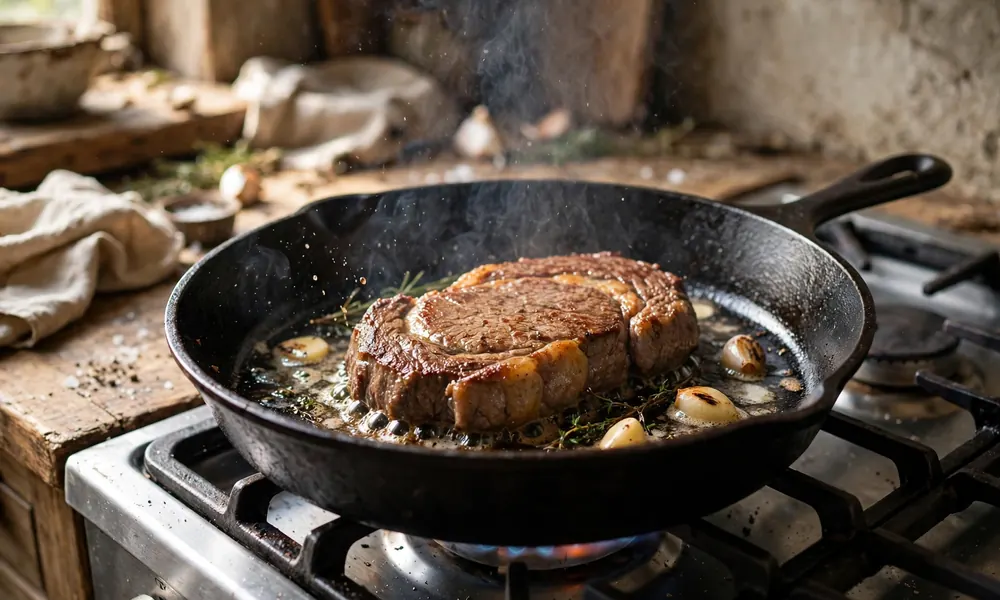
Cast iron holds heat like no other frying pan material. Once hot, it stays hot, even when a cold steak lands in it, which is why it produces the deepest, most even sear of any pan. For cooks who sear meat often and do not mind a heavier pan, cast iron is unbeatable, and our guide to the best cast iron skillets of 2026 covers the sizes and weights worth buying.
Ceramic: The Easiest to Clean When New
Ceramic-coated frying pans are the newest option, and they are genuinely impressive for the first year or two. Food releases beautifully, they contain no PTFE, they handle slightly higher heat than traditional nonstick, and they come in colours that look good hanging in the kitchen. The problem is durability: ceramic coatings lose their nonstick performance faster than PTFE, often within one to two years of daily use, and once the surface starts to grip, it rarely recovers.

Frying Pan Sizes: What Actually Fits Your Cooking
Size is the most common buying mistake, because a pan that is too small crowds food and a pan that is too large will not heat evenly on a small burner. A 24-centimetre pan suits one or two people, fries two eggs comfortably, and fits easily on any hob. A 28-centimetre pan is the standard family size: it fries four eggs, sears two chicken breasts without crowding, and makes a pan sauce for four. If you can only own two frying pans, buy a 24-centimetre and a 28-centimetre in different materials, for example a stainless 28-centimetre for searing and a nonstick 24-centimetre for eggs. If you are kitting out a whole kitchen rather than buying one pan, our guide to the best cookware sets of 2026 compares full sets by material and value.
The Best Frying Pans of 2026 by Type
The pans below are the strongest choices in each material, judged on warp resistance, heat distribution, release, durability, and value. They are types rather than fleeting models, so the advice holds whichever brand you buy from.
Best Overall: A Tri-Ply Stainless Frying Pan
A tri-ply stainless frying pan with an aluminium core is the best single frying pan most cooks can buy. It browns better than any coated pan, takes any heat, lasts for decades, and goes from hob to oven without a second thought.
Best Nonstick: A Heavy-Based Multi-Layer Pan
The best nonstick frying pan is a heavy one. Look for a thick aluminium body, two or three reinforced coating layers, a flat induction-compatible base, and a maker that states a maximum temperature. The 24-centimetre size is ideal for eggs and pancakes, while the 28-centimetre suits family breakfasts.
Best Cast Iron: A Pre-Seasoned Everyday Pan
A pre-seasoned cast iron frying pan is the best choice for cooks who sear meat, roast in the oven, and want a pan that improves with age. The 26 to 30-centimetre sizes suit most households, and a helper handle makes the larger sizes manageable.
What size frying pan should I buy first?
A 28-centimetre pan is the best first frying pan for most households, because it fries four eggs, sears two chicken breasts, and makes a pan sauce for four people. If you cook for one or two, a 24-centimetre pan is easier to handle and heats more evenly on a small burner.
Why does my frying pan warp?
A frying pan warps when its base heats unevenly or cools suddenly, usually because the metal is too thin, the burner is too hot, or a hot pan is plunged into cold water. A thick, heavy base, medium heat, and letting the pan cool before washing are the best defences.
Are expensive frying pans worth it?
An expensive pan is worth it when the extra money buys a thicker base, better construction, and a longer life, which is usually true for stainless steel and cast iron. For nonstick and ceramic, where the coating wears out anyway, a mid-priced heavy pan is better value than a premium one.
Can I use a frying pan on induction?
Only if the base is magnetic, which means stainless steel, cast iron, or aluminium with a steel base plate. Test a pan with a fridge magnet: if it sticks firmly to the base, it will work on induction.
How do I stop food sticking to stainless steel?
Preheat the pan on medium, add oil and wait until it shimmers, then add food and leave it alone until a crust forms and it releases naturally. Cold food on a cold pan is the main cause of sticking, so patience and heat are the cure.
When should I replace a nonstick frying pan?
Replace it when food starts to catch in the centre, the coating looks scratched or patchy, or the base has warped and rocks on the hob. For most daily-use pans, that happens after three to five years, and sooner if the pan has been used on high heat or in the dishwasher.
Frying Pan Comparison Table
| Material | Warp resistance | Release | Browning | Typical lifespan | Best for |
|---|---|---|---|---|---|
| Stainless steel | Excellent | Fair, needs technique | Excellent | Decades | Searing, sauces, everyday cooking |
| Nonstick | Good if heavy-based | Excellent | Fair | 3 to 5 years | Eggs, fish, pancakes |
| Cast iron | Excellent | Good once seasoned | Excellent | Decades | Steak, roasting, high heat |
| Ceramic | Good if heavy-based | Excellent when new | Fair | 1 to 2 years | Eggs, vegetables, PTFE-free cooking |
| Hard-anodised aluminium | Good | Good with coating | Good | 3 to 5 years | Budget everyday cooking |
Before You Buy Checklist
- Measure your largest burner and match the pan size to it, so the base sits fully on the heat.
- Check the base symbol for your hob type, especially induction, before you pay.
- Pick the pan up and check its weight: a 28-centimetre pan should feel solid, not feather-light.
- Run a straight edge across the base and check it sits flat with no rocking or gaps.
- Count the rivets on the handle and check it feels secure and balanced in your hand.
- Confirm the oven-safe temperature and whether the handle is all metal or plastic.
Frequently Asked Questions
Bottom Line
The best frying pans in 2026 are not the flashiest or the most expensive, they are the ones that stay flat, heat evenly, and release food cleanly for years. Buy a heavy-based pan in the material that matches your cooking, size it to your burner, keep it off full heat when empty, and let it cool before washing. Do that, and the pan you buy this year will still be frying eggs properly when the next model comes along.


