
A watch is the one accessory most people check a dozen times a day without thinking about it. A good watch does its job so quietly that you forget it is there, telling the time at a glance, sitting comfortably on your wrist, and still looking right years after you bought it. A bad watch does the opposite. It runs fast or slow, pinches or slides around, fogs up in the rain, and looks tired within months, long before the strap gives up altogether.
The difference between the best and the worst watches of 2026 is not mainly about price. A modest watch with a solid movement, a clear dial, and a well-made strap will serve you better than a flashy one with a weak movement and a cheap case. The best watches are honest about what they are: accurate, comfortable, water resistant enough for real life, and built to be repaired rather than thrown away. If your wrist already carries a screen instead of hands, our comparison of the best and worst smartwatches of 2026 covers the digital side of the same decision.
Key Takeaways
- Accuracy and a clear, readable dial matter more than brand or looks, because a watch you cannot read at a glance is failing at its only job.
- A good movement, whether quartz or automatic, keeps time within a few seconds a day, while a bad one drifts, stops, or needs a new battery every few months.
- Comfort decides whether a watch gets worn: the case should fit your wrist, the strap should not pinch or sweat, and the weight should disappear after a few minutes.
- Buy the watch for the life you actually live, not the one in the advertisement, and check the warranty and the cost of a service before you pay.
What Makes a Watch Good or Bad
Accuracy is the first thing to check, and the easiest to test. A good quartz watch loses or gains only a few seconds a month, and a good automatic only a few seconds a day. A bad watch can drift by minutes in a week, which means you stop trusting it and start checking your phone instead. When that happens, the watch has become decoration, and expensive decoration at that. Check it against a reliable clock after a week of wear. A watch that cannot keep time is not a bargain at any price.
Readability is the second thing, and it matters more than most buyers expect. A good dial has clear hands, plain markers, and enough contrast to read in dim light, at arm’s length, without squinting. Luminous hands and markers that actually glow for hours are worth having, because you will glance at your watch in a dark cinema, a night flight, and a dim restaurant. The worst dials are cluttered with extra sub-dials, fake complications, and shiny decoration that looks busy in the shop and unreadable everywhere else. If you cannot tell the time in three seconds, the design has failed.
Comfort and fit are the third thing, and they decide whether the watch leaves the drawer. A case that is too big for your wrist will catch on cuffs and bang into door frames, while one that is too small looks lost and feels fiddly. The strap matters just as much: good leather is supple and stitched cleanly, a good steel bracelet has solid links and a clasp that clicks shut firmly, and good rubber is soft rather than sticky. The worst watches use stiff leather that cracks, hollow bracelets that rattle, and clasps that pop open at the worst moment. Try the watch on, wear it around the shop for ten minutes, and trust your wrist more than the mirror.
The Best Side: Watches That Earn Their Place
The best watches of 2026 keep good time without fuss, stay comfortable from morning to night, and are built to last. Here are the three kinds worth buying this year.
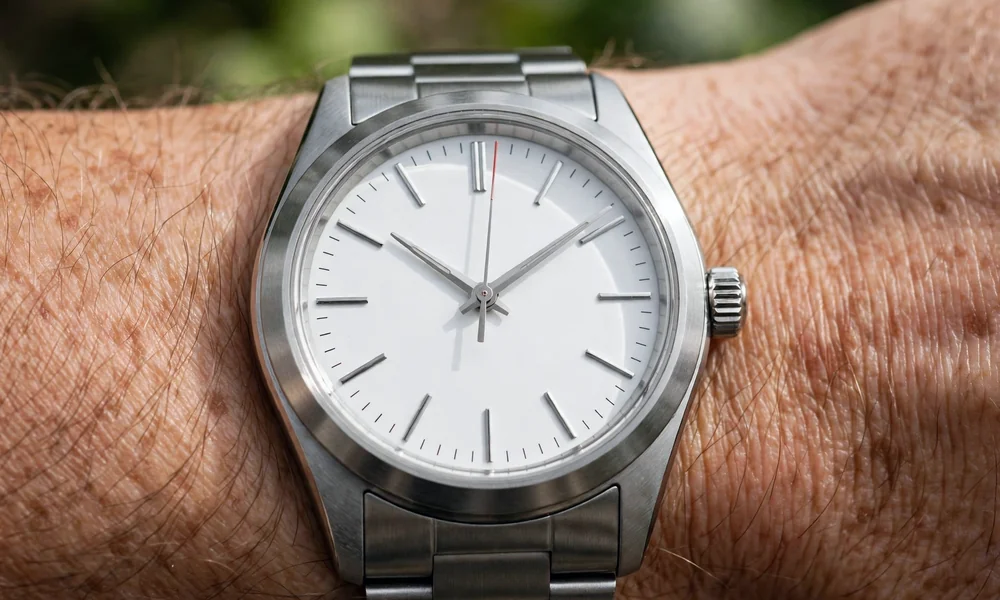
Best for daily wear: a simple steel watch with a clear dial. For most people, this is the watch to buy. A plain steel case, a white or black dial with clear markers, a sapphire or hardened mineral crystal, and a reliable quartz or automatic movement will cover work, weekends, and evenings out without ever looking wrong. The best models keep the case slim enough to slide under a shirt cuff and the water resistance high enough to survive rain, washing up, and a swim. Buy one good everyday watch and you may never need another.
Best for dressing up: a slim leather-strap dress watch. A dress watch has a different job, and the best ones understand it. They are thin, light, and quiet, with a plain dial, slim hands, and a leather strap in black or dark brown that sits flat under a cuff. They do not try to look sporty or technical, and they do not need luminous paint or a rotating bezel. The best use a slim automatic or hand-wound movement, a sapphire crystal, and a strap that softens with wear rather than cracking. What matters most is proportion: the case should sit neatly on your wrist and the strap should match the shoes and belt, because a dress watch is part of an outfit, not a separate statement.
Best for active days: a tough diver or field watch. If your days involve water, dust, and hard knocks, a good diver or field watch is the best buy. The best models have a screw-down crown, a solid case, a unidirectional bezel that turns with a firm click, and luminous markers bright enough to read underwater or in the dark. Remember that a watch rated to one hundred metres is a far safer bet for swimming than one rated to thirty, which is really only proof against splashes and rain.

The Worst Side: Watches to Walk Away From
The worst watches of 2026 sit at the top of sponsored listings, promise luxury looks for very little money, and photograph beautifully. Then you wear one for a month, and the problems start.
Worst for accuracy: fashion watches with weak quartz movements. The worst offenders are watches sold as fashion accessories, where the name on the dial costs more than the movement inside. They use the cheapest quartz movements available, with plastic parts and no regulation, so they drift by minutes a week and eat batteries. The cases look expensive in a photograph, but the hands are loosely fitted, the date changes at the wrong hour, and the second hand stutters rather than ticking cleanly. A watch that cannot keep time is not a watch at all, and no amount of gold plating changes that.
Worst for comfort: oversized watches with hollow bracelets. The worst offenders are huge, heavy cases hung on hollow-link bracelets that rattle, pinch arm hair, and pull loose within months. The clasp is usually the first thing to fail, popping open on a crowded train or while you are carrying shopping, and no spare links are available when one breaks. A watch that is too big for your wrist also catches on everything, from shirt cuffs to car doors, so the case picks up scratches in the first week. Size is not a measure of quality, and a watch that fights your wrist all day will end up in a drawer.
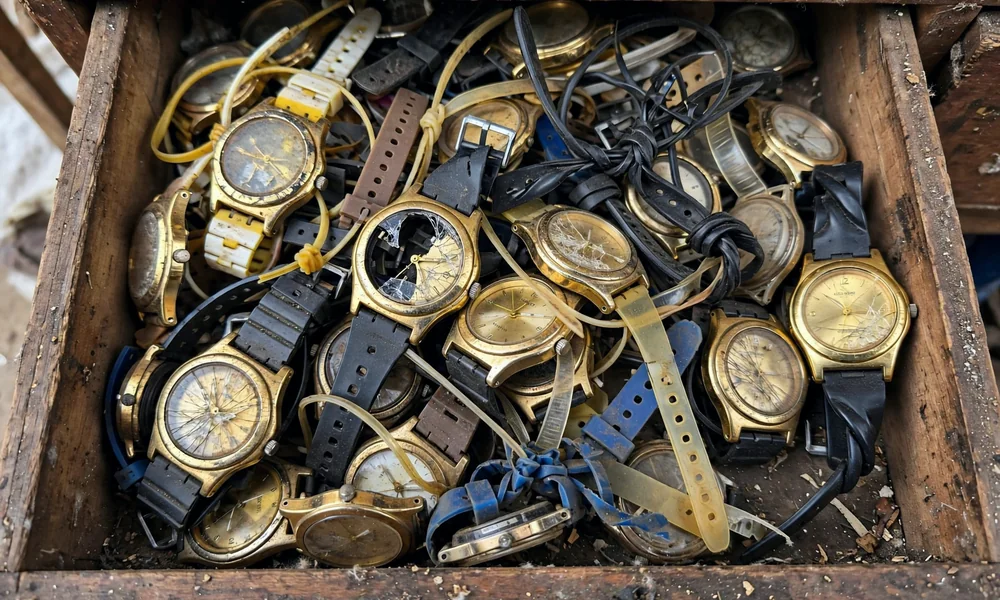
Worst for durability: watches with fake water resistance and soft glass. The worst offenders claim water resistance they do not have, with a dial that says waterproof and a case back that was never pressure tested. They fog up after a shower, and the movement corrodes silently until the watch stops altogether. Their crystals are soft mineral glass or plastic that scratches on a desk edge, and the gold or black coating on the case wears off in patches within a year. Real durability is boring to advertise and expensive to build, which is why the worst watches fake it with words instead.
Worst for value: imitation luxury watches and lookalikes. The worst value of all is a watch designed to look like a famous luxury model at a fraction of the price. The copy is never as good as the original, and it is usually worse than an honest watch at the same price, because the money went into copying the look rather than building a good movement. These watches are hard to service, hard to sell on, and embarrassing to own once anyone looks closely, and they are often sold with no warranty worth the paper it is written on. If you like the look of a famous watch, save for the real thing, or buy an honest watch of your own instead.
How to Choose a Watch in 2026
Start with your wrist, not the advertisement. Measure your wrist, try on watches in the size range that suits it, and pay attention to how the case sits and how the strap feels after ten minutes. The case diameter is only part of the story: the lug-to-lug length matters just as much, because long lugs overhang a narrow wrist.
Then decide what the watch has to survive. If you swim, look for one hundred metres of water resistance and a screw-down crown. If you work with your hands, look for a sapphire crystal and a solid case, because a scratched crystal ruins a watch faster than anything else. If you travel, a simple, reliable quartz movement will serve you better than a delicate complication you never use. Match the watch to the hardest day it will face, not the easiest.
Finally, check the running costs before you buy. Ask how much a battery change costs, how much a service costs, and how long the warranty lasts. A cheap watch that needs a new battery every six months and cannot be repaired is more expensive over five years than a good watch that costs twice as much and needs a service once. If you track your health as well as the time, our comparison of the best and worst fitness trackers of 2026 will help you decide whether a tracker belongs on your other wrist. And if you still wake up to a phone alarm, our guide to the best and worst alarm clocks of 2026 covers the other timekeeper in your home.
The Verdict
The best watches of 2026 are the honest ones. They keep good time, they are easy to read, they sit comfortably on the wrist, and they are built to be worn every day and repaired when they need it. They do not need to be expensive, and they do not need to shout. A simple steel watch for daily wear, a slim dress watch for formal days, and a tough diver for active days will cover almost every life, and any one of them, bought well, will still be working in ten years.
The worst watches are the ones that promise luxury and deliver disappointment: weak movements, hollow bracelets, fake water resistance, and imitation designs that fall apart within a year. They cost less at the till and far more over time, because you pay for them again in replacements and a drawer full of broken watches. Spend your money on the movement, the crystal, and the strap, buy from a maker who will still be there when you need a service, and choose the watch that fits your wrist and your life. That is the whole secret, and it has not changed in a hundred years.


