Brass Polish That Restores the Glow in 2026
The best brass polish restores the glow because it lifts tarnish without scratching the metal, and leaves a thin layer that slows the next round of dulling. Brass goes dull in every home: candlesticks lose their shine in a drawer, door handles darken where hands touch them daily, and a lamp base turns brown at the edges. The right brass polish brings it all back in minutes, and this guide compares the polishes that work in 2026, from gentle creams for antiques to stronger pastes for battered hardware.
Brass polish is not one product but a family of them. A cream is gentle and easy to control, a paste cuts faster on heavy tarnish, a liquid suits large flat surfaces, and impregnated wadding is the quickest way to touch up a handle that is only slightly dull. Pick the wrong type and you either spend an hour rubbing with little to show for it, or you risk a piece never meant to be polished at all.
Key Takeaways
- A gentle cream polish is the safest first choice for most brass, and it rarely scratches antique metal.
- A paste cuts faster on heavy tarnish, but it needs a light hand on thin or lacquered pieces.
- Test any polish on a hidden spot first, because lacquered brass should not be polished.
- Brass tarnishes differently from silver and copper, so a polish made for another metal is not automatically right.
- A thin coat of wax after polishing keeps the shine far longer than polishing alone.
Why Brass Goes Dull in the First Place
Brass is an alloy of copper and zinc, and it is the copper that reacts with air. Oxygen and moisture slowly build a dull layer of oxides on the surface, and in a kitchen or bathroom the process speeds up, because steam, cooking fumes and salty air push it along. Brass handled often stays brighter, because regular handling rubs the surface clean, while brass shut away in a drawer can look worse than a piece used daily.
None of this means the brass is ruined. Tarnish is only skin deep, and it comes off with the right polish and a soft cloth. A dull piece needs a gentle cream and ten minutes; a brown or nearly black piece needs a paste and patience. A piece that feels sticky or peels at the edges may be lacquered, and polish cannot reach the metal through lacquer, so rubbing only damages the coating.
The simplest test takes five seconds. Rub a hidden corner with a soft cloth and a dab of cream polish. If the cloth turns dark and the metal brightens, the brass is unlacquered and ready to polish. If the cloth stays clean, the piece is lacquered, and it should only be washed with warm soapy water and dried straight away.
Brass Is Not Silver or Copper
It is tempting to reach for whatever metal polish is already in the cupboard, but brass has its own chemistry. Silver tarnishes when it reacts with sulphur in the air, turning yellow, then brown, then almost black. Copper is softer than brass and tarnishes into a greenish brown. Brass sits between the two: harder than copper, so it can take a stronger polish, but still soft enough that a harsh abrasive leaves fine scratches.
Our guide to silver polish that brings back the shine covers the same ideas for silver, but its formulas are tuned for a different metal, and a silver dip that works on a chain can be far too aggressive on a thin brass tray. Our guide to copper polish that restores the shine is built around copper’s softness, and a brass paste used on copper can scratch it. Keep them separate.
The other neighbour worth knowing is wood. Brass hardware lives on wooden doors, drawers and furniture, and polish dripped onto a varnished surface can leave a pale mark. Wipe drips away at once, and polish the brass before the wood, not after. Our guide to furniture polish that brings back the shine explains how to care for the wood around the brass once the metalwork gleams again.
The Main Types of Brass Polish
Cream polish is the workhorse: a smooth, mild abrasive in a cream base, easy to control with a pea-sized dab on a soft cloth and small circles. Creams suit candlesticks, trays and lamps, because they get into engraved detail without flooding it. The only weakness is speed on heavy tarnish.
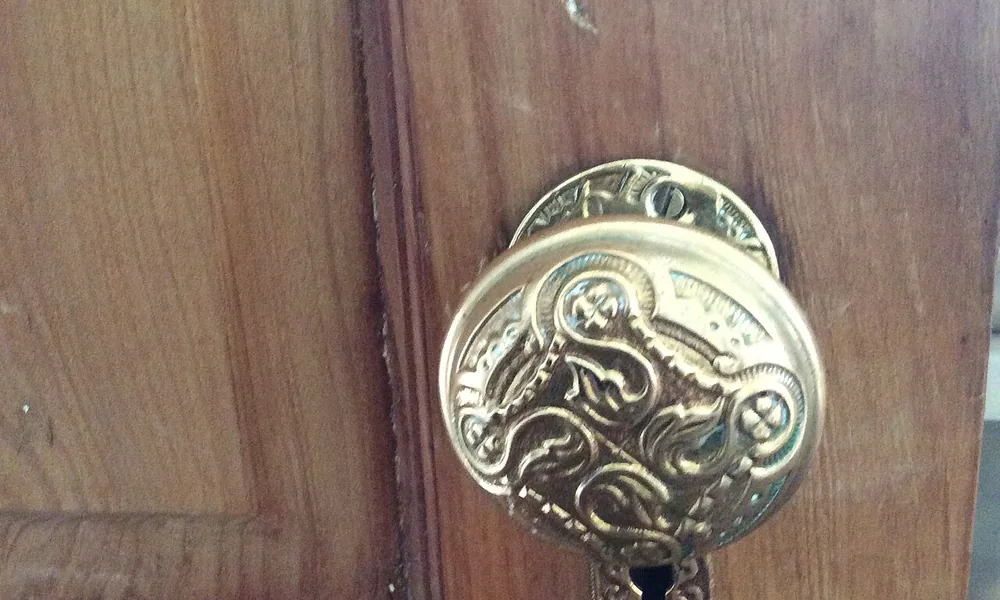
Paste polish is cream’s stronger cousin: thicker and slightly more abrasive, it cuts through years of neglect on door furniture, fire irons and garden brass far faster than a cream. The trade-off is control, because a paste can leave swirl marks if rubbed hard. Keep paste for tough jobs and cream for delicate ones.
Liquid polish is the fastest option for large, flat areas such as kick plates, plaques and wide trays. It spreads thin and wipes off cleanly, but it is the easiest to splash, so it suits a workbench with newspaper down rather than a dining table. Spray polish is similar but lighter, and best for quick touch-ups.
Impregnated wadding is cotton wool soaked in polish. Pull off a tuft, rub, and buff with a clean cloth. There is nothing to spill and nothing to measure, which makes it the tidiest option for a quick shine before guests arrive. It struggles with deep tarnish, but for maintenance it is hard to beat.

Brass Polish Compared
| Type | Best for | Speed | Gentleness | Price |
|---|---|---|---|---|
| Gentle cream | Antiques, candlesticks, engraved pieces | Medium | Very gentle | Low |
| Heavy-duty paste | Neglected hardware, fire irons, outdoor brass | Fast | Moderate | Low |
| Liquid polish | Large flat trays, plaques, kick plates | Fast | Gentle | Low |
| Spray polish | Quick touch-ups, light tarnish | Very fast | Very gentle | Medium |
| Impregnated wadding | Handles, small items, regular maintenance | Very fast | Gentle | Medium |
| Long-lasting cream with sealant | Pieces you want to stay bright for months | Medium | Gentle | Medium |
The Best Brass Polishes of 2026
Best Overall: A Gentle Cream Polish
The best brass polish for most homes in 2026 is a gentle cream. It handles the widest range of jobs, from a dull candlestick to a tarnished tray, without the risk of a stronger formula. Look for a cream that turns dark on the cloth as it works, because that colour change is the tarnish leaving the metal.
Best for Heavy Tarnish: A Strong Paste
For brass neglected for years, a paste earns its place. Door knockers gone brown, fire irons left in a damp hearth, and garden ornaments weathered to green all respond to a paste in a way a cream cannot match. Apply a thin layer, leave it for a minute, then rub in small circles, and wipe away the residue before it dries, because dried paste can leave a chalky film in engraved detail.
Best for Quick Touch-Ups: Impregnated Wadding
Some brass only needs a monthly once-over, and for that, wadding is the easiest option in 2026. A tuft from the tub, a minute of rubbing, and a buff with a clean cloth keeps door handles and small ornaments bright. There is no jar to open, no drips, and no measuring, and the tub lasts for months.
How to Polish Brass Step by Step
Start by washing the piece in warm soapy water and drying it completely. Polish rubbed over dust or grit acts like sandpaper, and a single grain can scratch a mirror finish. For fixed hardware such as a door handle, wipe it down with a damp cloth and dry it first.
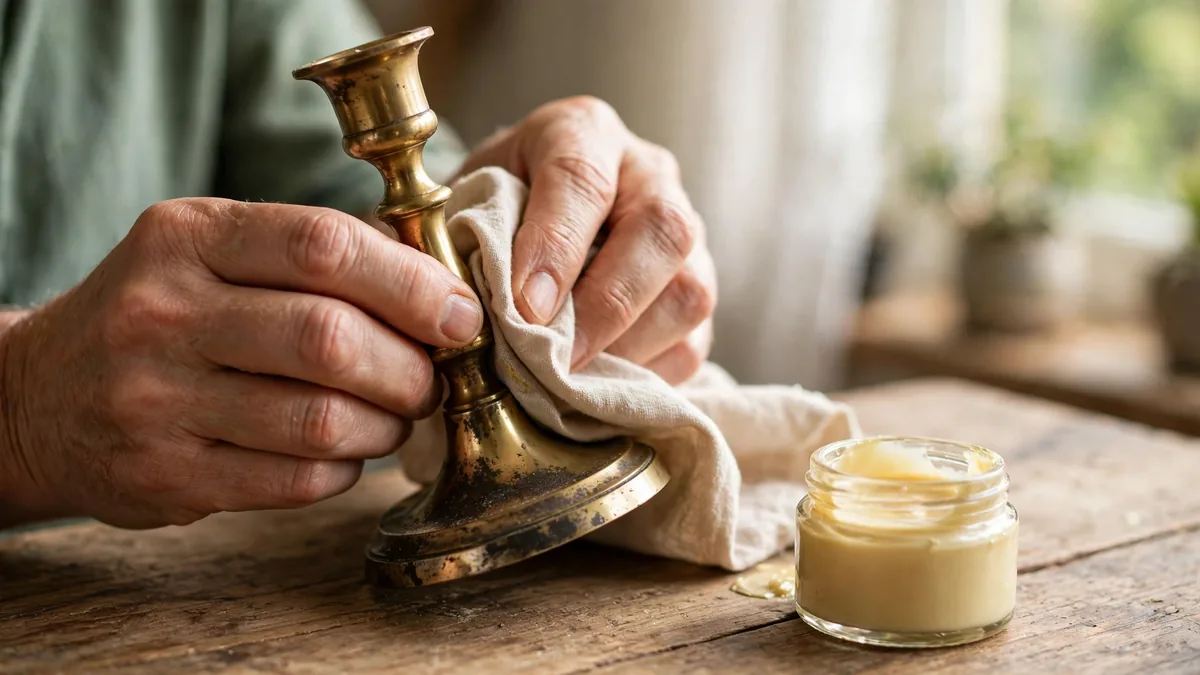
Put a pea-sized dab of cream or paste on a soft cotton cloth, never directly on the brass, and rub in small circles. Work one area at a time, press lightly, and keep the circles small around engraving. When the cloth turns dark, fold it to a clean section. On badly tarnished brass, repeat the process two or three times rather than pressing harder.
Once the piece is bright, buff it with a second, clean, dry cloth until no residue remains. Hold it up to the light and look for dull patches or chalky streaks, which mean polish is still on the surface. A soft toothbrush gets polish out of engraved lines. Finish with a thin coat of clear wax if you want the shine to last.
Mistakes That Ruin Brass
The most common mistake is reaching for a household cleaner instead of a brass polish. Bathroom sprays, degreasers and anything with bleach or ammonia can stain brass permanently, and vinegar or lemon juice etch the surface. Stick to a polish made for brass.
The second mistake is using the wrong cloth. Paper towels and scouring pads feel soft but leave fine lines, and old rags can hide grit. Use clean cotton cloths, one for applying polish and one for buffing, and wash them before they stiffen with dried polish.
The third mistake is polishing lacquered brass, where the coating is doing the protecting and polish only damages it. If the lacquer is peeling or yellowed, have the piece professionally stripped and re-lacquered. The fourth mistake is over-polishing: every polish removes a tiny amount of metal, so polishing a plated piece weekly will wear through the brass. Polish when the piece looks dull, not on a schedule.
Brass Polishing Checklist
- Wash and dry the brass before you start, so grit cannot scratch the surface.
- Test a hidden spot first to check the piece is unlacquered solid brass, not plated.
- Choose cream for delicate pieces, paste for heavy tarnish, wadding for touch-ups.
- Rub in small circles with a soft cotton cloth, and let the polish do the work.
- Buff with a clean dry cloth until no residue or chalky streaks remain.
- Finish with a thin coat of wax, and store polished brass dry, away from damp air.
Frequently Asked Questions
How often should I polish brass?
Polish brass when it looks dull, not on a fixed schedule. In a dry living room that may be twice a year; a bathroom or kitchen handle may need it every month or two. Light touch-ups with wadding between full polishes keep the shine without wearing the metal.
Can I use silver polish on brass?
You can in a pinch, but it is not ideal. Silver polish is made for silver’s sulphur tarnish, while brass tarnish is an oxide layer. A dedicated brass polish works faster and is less likely to leave a hazy finish.
How do I tell solid brass from brass-plated metal?
Look for wear points: if a handle shows silvery or grey metal where the gold colour has worn away, it is plated. A magnet helps too, because solid brass is not magnetic, while many plated pieces have a steel core. Plated brass needs the gentlest cream and a light hand.
Is homemade brass polish safe?
Homemade mixes based on vinegar, lemon or ketchup are acids that etch brass while they clean it, leaving a patchy surface that tarnishes faster. A commercial cream polish is cheap, predictable and far kinder to the metal.
Why does my brass go dull again so quickly?
Damp air is the main cause, so brass in a bathroom or near a cooker tarnishes fastest. A thin coat of clear wax after polishing slows it down, and storing pieces dry, away from rubber bands and wool, helps too.
Can brass polish remove green spots?
Yes, if the green is surface verdigris, a paste polish usually removes it with extra rubbing. If the green sits in pits or the metal feels rough underneath, the corrosion has gone deeper, and the piece may need professional restoration.
The Bottom Line
The best brass polish in 2026 is a gentle cream for most jobs, a strong paste for neglected brass, and wadding for quick touch-ups, chosen after a five-second test confirms the piece is unlacquered. Brass tarnishes because of its own chemistry, not because it is damaged, and the right polish restores the glow in minutes.