A terrarium kit is the easiest way to start a miniature glass garden without buying every part separately. Instead of hunting for a vessel, soil, pebbles, charcoal and moss in different shops, you open one box and find everything you need. The best terrarium kits of 2026 give you a sturdy glass vessel, layers that drain properly, and plants that survive the first month.
This guide explains what comes in a good kit, which type suits your home, and how to build and care for one that still looks good after six months.
Key Takeaways
- A terrarium kit is a boxed set with a glass vessel, drainage layers, soil, moss and usually small tools, so you can build a glass garden in one sitting.
- Closed kits suit ferns and moss and need watering only a few times a year, while open kits suit succulents and cacti that need dry air.
- Check what the box really contains: the best kits include charcoal and drainage pebbles, not just soil and a jar.
- Bright, indirect light suits almost every terrarium; direct sun can scorch plants through the glass in minutes.
What Comes in a Terrarium Kit
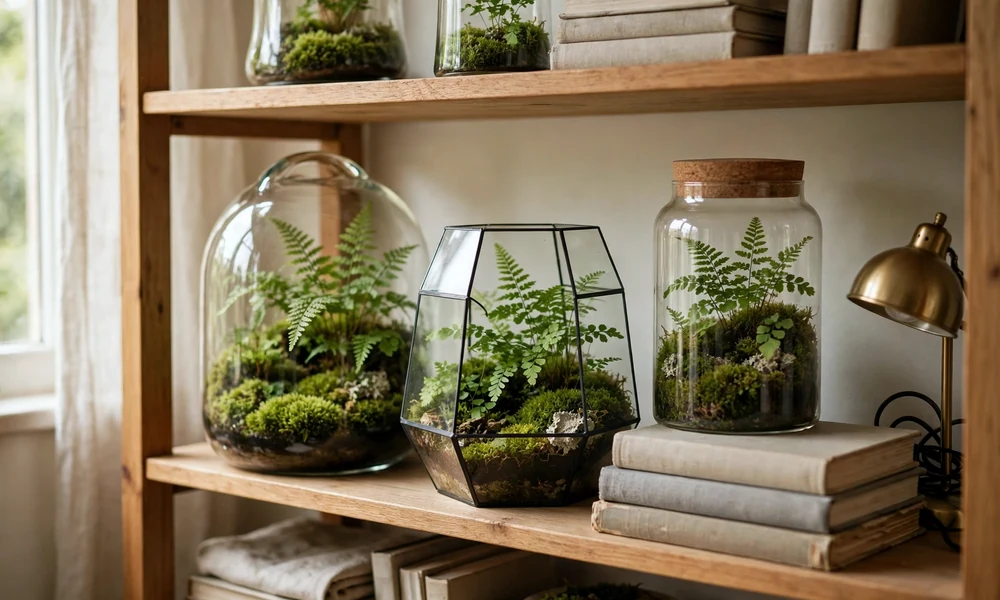
Every terrarium kit starts with the vessel, and the vessel decides almost everything else. Most kits use a glass jar, a globe, a geometric container or a lidded case, and the shape sets how much air moves inside and how easy the kit is to plant. A wide opening is easier to reach into, while a narrow neck or a lid keeps humidity high for ferns and moss.
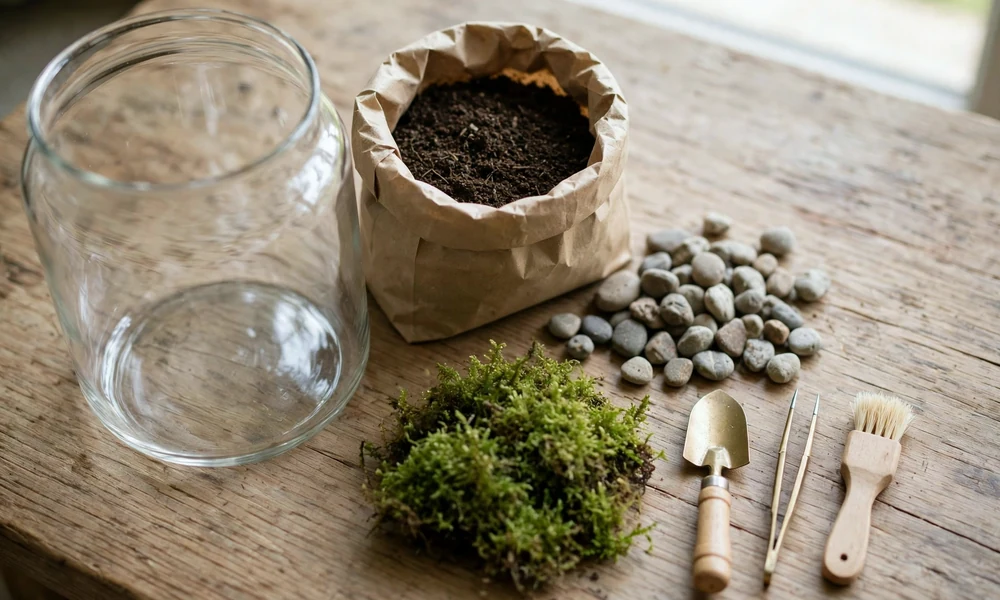
Under the plants, a good kit layers drainage pebbles at the bottom, then a thin layer of activated charcoal, then soil. The pebbles stop water pooling around the roots, and the charcoal keeps the damp space from turning sour. Kits that skip either look complete in the box but fail faster. Most kits also add moss, small stones or a piece of wood for shape, and small tools — a long spoon, tweezers and a tiny fork — because fingers alone cannot place a small fern neatly inside a narrow glass neck. Some kits include the plants as well, usually a small fern, moss and a fittonia, while others leave the planting to you.

The Best Terrarium Kits at a Glance
| Kit type | Best for | Plants inside | Watering | Key extra |
|---|---|---|---|---|
| Closed glass kit | Busy owners, humid plants | Ferns, moss, fittonia | A few times a year | Lid keeps humidity high |
| Open geometric kit | Sunny sills, succulents | Succulents, cacti | Every two to three weeks | Wide opening, easy to reach in |
| DIY starter kit | First-time builders | Your own choice | Depends on plants | Full tools and layered materials |
| Moss and fern kit | Shady rooms, desks | Moss, small ferns | A few times a year | Thrives in low light |
| Succulent kit | Bright rooms, beginners | Succulents, cacti | Every two to three weeks | Free-draining soil mix |
Closed Glass Kits: The Best Terrarium Kits for Ferns and Moss
A closed glass kit is the best terrarium kit for ferns and moss in 2026, because the lid or narrow opening turns the vessel into a warm, humid world of its own. Moisture evaporates from the soil, condenses on the glass and drips back down, so the plants water themselves for weeks at a time.
These kits suit busy people best, because they ask for almost nothing once they settle. Water sparingly at the start, close the lid, and check the glass every few days: a light mist that clears by the afternoon is healthy, while glass that stays fogged all day means too much water. Open the lid for a day and let the soil dry a little. Use small plants, since terrarium plants grow fast in humid glass.
Open Geometric Kits: The Best Terrarium Kits for Succulents
An open geometric kit is the best terrarium kit for succulents and cacti, because its wide opening keeps the air inside close to the air in the room. Succulents need dry air and good airflow, and they rot quickly in a sealed vessel, so the open shape is a practical choice, not just a style one. The wide mouth also makes planting easy, because you can reach in with both hands.
These kits need watering more often than closed ones, usually every two or three weeks, because the open top lets moisture escape. Water the soil, not the leaves, and use only a small amount: a heavy pour floods the shallow layers in seconds. Look for a free-draining mix with grit or coarse sand rather than ordinary potting soil, which holds water and rots succulent roots. Our guide to terrariums explains how open and closed glass suit different plants.
DIY Starter Kits: The Best Terrarium Kits for First-Time Builders
A DIY starter kit is the best terrarium kit for a first-time builder, because it teaches the craft instead of hiding it. The box contains every layer — pebbles, charcoal, soil and moss — plus the tools to place them, and the instructions walk you through the build in order. You learn why the drainage layer goes in first, why the charcoal matters, and how little water a terrarium needs.
These kits usually leave the plants to you, which is a strength rather than a gap. A kit that ships live plants through the post risks arriving with a crushed fern, while a plant-free kit lets you buy small, healthy plants locally and choose species that suit your light. Look for a vessel wide enough to work in, because a narrow-necked jar looks elegant but turns planting into a fiddly chore.
Moss and Fern Kits: The Best Terrarium Kits for Low Light
A moss and fern kit is the best terrarium kit for a shady room or a desk away from the window, because moss and small ferns tolerate low light better than any other terrarium plants. Moss needs almost no direct light at all, and a small fern grows slowly but steadily in bright, indirect light that would starve a succulent. These kits are usually closed, which suits both plants, and they are the most forgiving kits to own.
The trade-off is growth: ferns in humid glass grow fast, and a kit that looks sparse on day one can look crowded by month three. Trim the fern tips with small scissors, and remove any leaf that turns brown before it rots against the moss. Keep the kit out of direct sun, because the glass magnifies the heat and delicate fronds scorch in minutes.
Succulent and Cactus Kits: The Best Terrarium Kits for Bright Rooms
A succulent and cactus kit is the best terrarium kit for a bright room, because succulents genuinely like sun and dry air. The kit pairs an open vessel with a gritty, free-draining soil mix and two or three small succulents of different shapes, so the finished terrarium looks like a tiny desert landscape. These kits are the most forgiving about watering, since succulents store water in their leaves and would rather be dry than wet.
The mistake to avoid is treating a succulent kit like a closed fern kit. Never add a lid, never mist the leaves, and never use ordinary potting soil, because each traps the moisture succulents hate. Water only when the soil feels dry a couple of centimetres down, at the base of each plant. A good watering can with a narrow spout makes these small, precise pours much easier than a jug or a glass.
How to Choose the Right Terrarium Kit
Start with your light, not with the prettiest box. A bright, sunny sill suits an open succulent kit, a desk a few steps from a window suits a closed fern kit, and a shady corner suits a moss kit. Hold your hand where the terrarium will sit at midday: if you can feel strong sun on your skin, the glass will overheat there, and the kit belongs a step back from the window instead.
Next, read the contents list as if it were a recipe. A complete kit lists a glass vessel, drainage pebbles, activated charcoal, soil, moss and tools, and the absence of charcoal or pebbles is a warning sign. Check the vessel size too: a kit under fifteen centimetres across leaves no room for plants to grow, while a kit over thirty centimetres across is heavy once filled and hard to move.
How to Build Your Terrarium Kit in Six Steps
Building a terrarium kit takes about half an hour, and the order matters more than the speed. First, clean the glass with warm water and let it dry. Second, pour in a layer of drainage pebbles about two centimetres deep, spread evenly so water has somewhere to sit away from the roots. Third, add a thin layer of activated charcoal over the pebbles, which keeps the damp layers fresh.
Fourth, add the soil on top of the charcoal, enough to hold the plant roots, and press it down gently rather than packing it hard. Fifth, place the plants, tallest at the back and smallest at the front, and tuck moss around their bases to cover the bare soil. Sixth, add small stones or a piece of wood for shape, water very sparingly — a few spoonfuls, not a pour — and put the terrarium in bright, indirect light. Wait a week before watering again: light condensation that clears is healthy, while permanent fog means too much water.
Care and Mistakes to Avoid
The most common terrarium mistake is overwatering, and it kills more kits than anything else. A terrarium holds very little soil, the glass stops water evaporating, and a heavy pour floods the roots within minutes. Water a closed kit only a few times a year, and an open kit every two or three weeks, and always check the soil first: if the top couple of centimetres feel damp, wait.
The second mistake is direct sun, which turns a glass vessel into a tiny greenhouse and scorches ferns and moss in minutes. Bright, indirect light is ideal, and a grow light on a timer is safer than moving the terrarium into the sun in a dark home. The third mistake is choosing the wrong plants for the vessel: succulents in a closed kit rot, and ferns in an open kit dry out. Finally, remember that a terrarium is a living display, not a sealed ornament. Trim plants that outgrow the vessel, remove dead leaves before they rot, and replace a plant that fails. A good planter follows the same rule — the container must suit the plant — and a terrarium kit is no different.
Frequently Asked Questions
Do terrarium kits include live plants? Some do and some do not. Kits with plants usually include a small fern, a moss cushion and a fittonia, while plant-free kits let you choose your own plants locally, which is often better, because posted plants can arrive crushed.
How often should I water a terrarium kit? A closed kit needs water only a few times a year, because moisture cycles inside the glass. An open kit needs water every two or three weeks. Always check the soil first and water sparingly.
The Bottom Line
The best terrarium kit is the one that matches your home and your habits: a closed glass kit with ferns and moss suits a busy person who wants a living display with almost no watering, while an open kit with succulents suits a sunny sill and a hands-on plant keeper. Check the box for pebbles, charcoal, soil, moss and tools, build the layers in order, keep it out of direct sun, and water sparingly. Do that, and your small glass garden will bring the outdoors in for years.