Copper Polish That Restores the Shine in 2026
The best copper polish restores the shine because it removes tarnish without scratching the metal underneath, and it leaves a thin protective layer that slows the next round of dulling. This guide compares the copper polishes that actually work in 2026, from gentle creams for thin antique pieces to stronger pastes for battered saucepans, and explains which formula suits each piece of copper you own.
Copper polish is not one product but a family of them, and the differences matter more than the brand on the jar. A cream is gentle and easy to control on delicate pieces, a paste cuts faster on heavy tarnish, and a liquid works well on large flat surfaces. Our guide to silver polish that brings back the shine covers the same ideas for silver, but copper is softer and tarnishes differently, so it deserves its own approach.
Key Takeaways
- A gentle cream polish is the safest first choice for most copper, and it rarely scratches even soft antique metal.
- A paste cuts faster on heavy tarnish and burnt-on marks, but it needs a light hand on thin or lacquered pieces.
- Test any polish on a hidden spot first, because lacquered copper should not be polished at all.
- Buff with a soft, dry cloth in small circles, and wash off the residue before it dries on the surface.
- A thin coat of wax or a quick lacquer after polishing keeps the shine far longer than polishing alone.
How We Judged the Best Copper Polishes
We judged every copper polish on five things that decide whether a piece comes back gleaming. Cleaning power came first: how much tarnish it lifted with a reasonable amount of rubbing, and whether it handled heavy brown and green tarnish as well as light dulling. Next came gentleness, because a polish that scratches soft copper has failed no matter how shiny the result looks. Ease of use mattered too, since a polish that is hard to spread or leaves stubborn residue will not get used twice, and finally the finish, the depth and warmth of the shine it left behind.
Copper Polishes Compared
| Type | Best For | Strength | Finish | Watch Out For |
|---|---|---|---|---|
| Cream polish | Everyday copper, antiques | Gentle | Warm, soft shine | Slow on heavy tarnish |
| Paste polish | Saucepans, heavy tarnish | Strong | Bright, deep shine | Can scratch thin metal |
| Liquid polish | Large flat surfaces | Medium | Even, bright shine | Runs and drips easily |
| Foam polish | Shaped pieces, handles | Medium | Soft, even shine | Harder to control the dose |
| DIY lemon and salt | Light tarnish, quick jobs | Gentle | Fresh, bright shine | Not for lacquered copper |
| Long-lasting sealant polish | Display pieces | Medium | Protected, lasting shine | Costs more than basic creams |
The 6 Copper Polishes Worth Buying
1. The Everyday Cream Polish
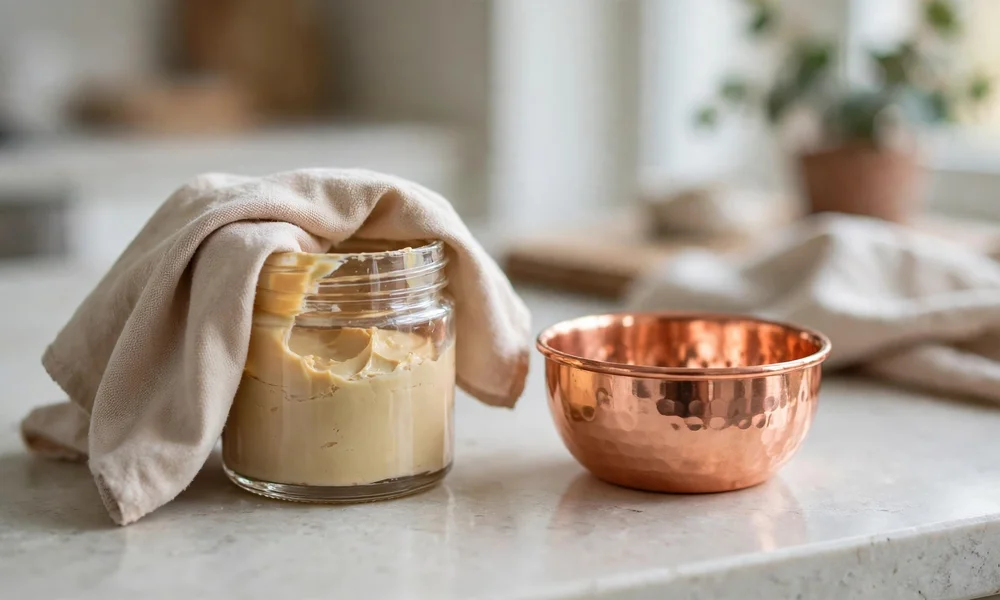
The everyday cream polish is the classic choice and the best starting point for most copper. It spreads smoothly, stays where you put it, and lifts light to medium tarnish with gentle rubbing, which makes it the safest polish for antiques, thin-walled pieces and anything you are not sure about. The cream format gives you control: you can work a small area at a time, see the shine coming back as you buff, and stop before you have gone too far. It is slow on heavy brown tarnish, but for copper that is polished regularly it is all you will ever need.
2. The Heavy-Duty Paste Polish
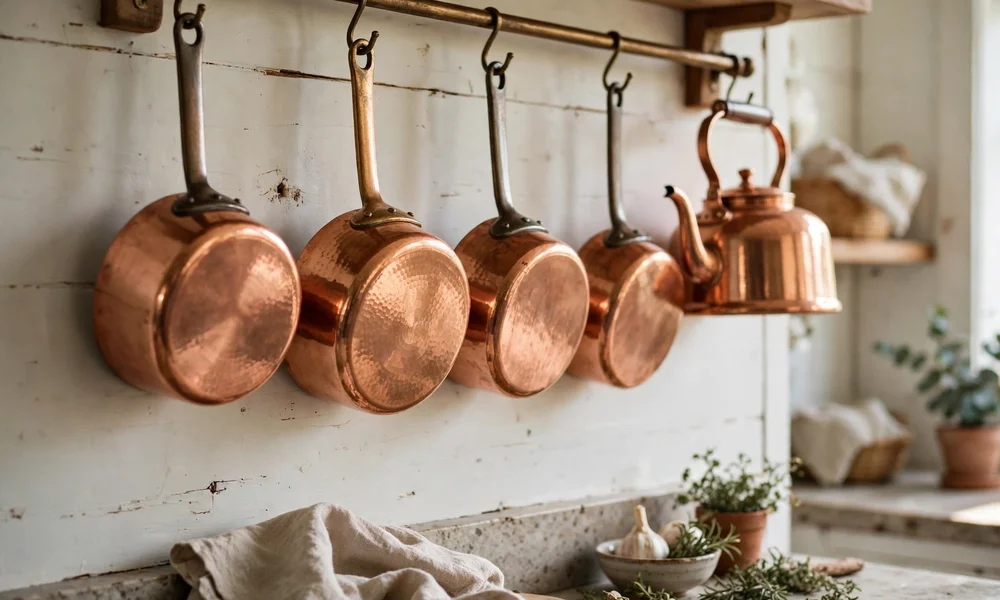
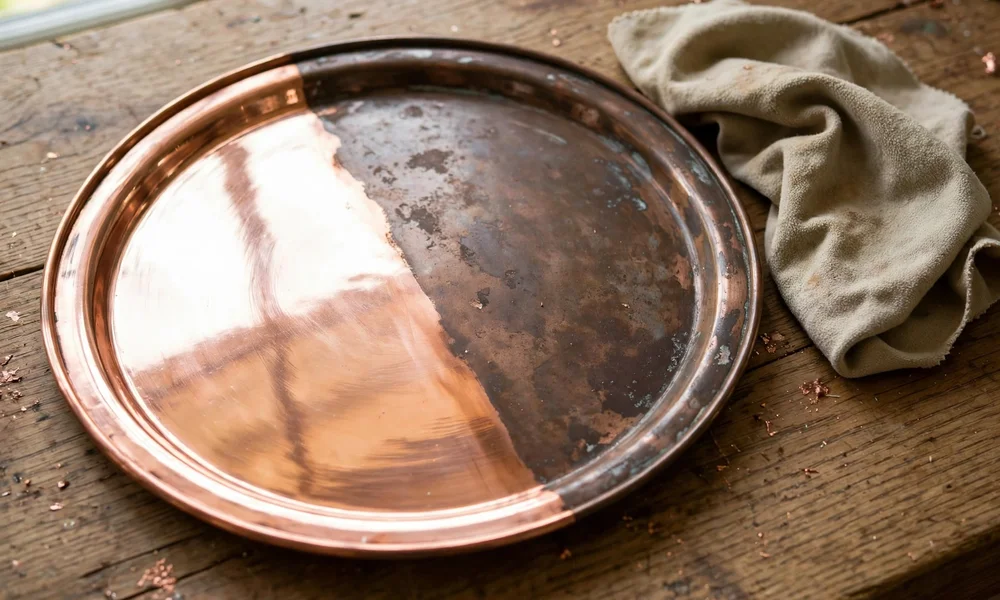
A heavy-duty paste polish is the pick for copper that has been neglected: saucepans with burnt-on marks, trays gone dark brown, and garden ornaments weathered by a season outside. The paste is thicker and more abrasive than a cream, so it cuts through tarnish faster and with less rubbing, and it clings to vertical surfaces instead of running off. For a battered stockpot for soups and stocks with a copper base, a paste is the fastest route back to a shine worth showing off.
3. The Liquid Polish
A liquid polish suits large, flat pieces of copper: trays, plaques, splashbacks and wide-bottomed pans, where a cream would take forever to spread. It goes on thin and even, covers a big area quickly, and buffs to a bright, uniform shine with little effort. The downside is control: liquid runs and drips, so it is awkward on shaped pieces, handles and anything with curves, and it is easy to use too much and leave streaks. On a big flat surface it is the quickest polish you will use.
4. The Foam Polish
A foam polish comes out as a light mousse that clings to shaped copper: handles, spouts, engraved trays and decorative pieces with ridges and curves. The foam gets into the hollows a cream struggles to reach, and it stays put on vertical surfaces while it works, which makes it the easiest polish for awkward shapes. For copper with detail work, foam reaches the places a cloth full of paste never will.
5. The Lemon and Salt DIY Fix
The lemon and salt fix is the old kitchen remedy, and it works surprisingly well on light tarnish. Cut a lemon in half, dip the cut face in fine salt, and rub it over the copper in small circles; the acid dissolves the tarnish while the salt gives just enough gentle abrasion to lift it. Rinse well and dry at once, because lemon juice left on copper will stain it. It costs almost nothing, smells fresh, and it is the fastest way to brighten a piece before guests arrive.
6. The Long-Lasting Sealant Polish
A sealant polish does two jobs at once: it cleans the copper and leaves a thin protective coating that slows the next round of tarnishing. It is the best choice for display pieces, such as copper pans hung on a wall or a decorative tray on a sideboard, where you want the shine to last for months rather than weeks. But the time they save is real: a sealed piece can go three times longer between polishes. If you love the look of copper but not the upkeep, this is the polish that makes it practical.
Cream vs Paste vs Liquid: Which Formula Suits Your Copper?
The formula you choose should match the piece, not the other way round. Cream is the all-rounder: gentle, controllable and safe on almost everything, and the right default if you only buy one polish. Paste is the specialist for heavy tarnish and hard-working cookware, where speed matters more than delicacy. Liquid is the choice for big flat surfaces, where coverage beats control. Foam is the answer for shaped and detailed pieces.
How to Polish Copper Step by Step
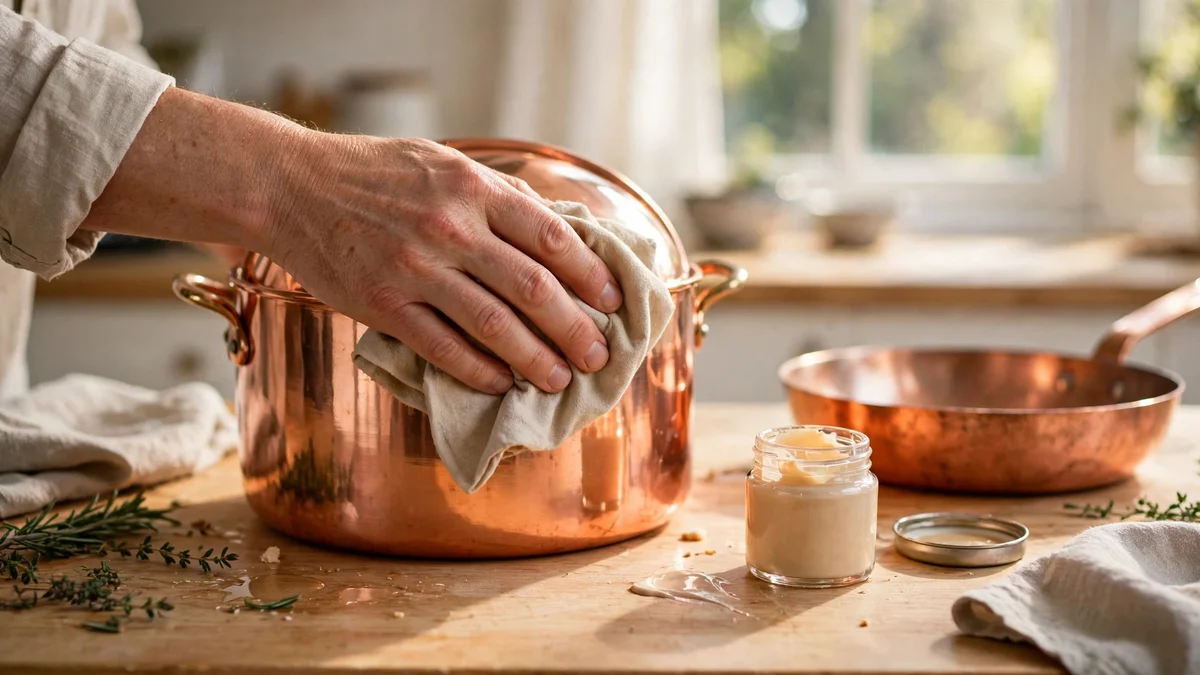
Start by washing the piece in warm soapy water and drying it completely, because grit and grease under a polish will scratch. Test the polish on a hidden spot and wait a minute to check for any reaction. Apply a small amount to a soft cloth, not straight onto the copper, and rub in small circles with light pressure, working one section at a time. As the tarnish lifts, the cloth will darken; refold it to a clean patch and keep going. When the whole piece is done, wash off the residue with warm water, dry it at once with a soft towel, and buff it with a clean, dry cloth until it gleams. Work in a ventilated room, and wear gloves if your skin is sensitive to polish.
DIY Fixes: Lemon, Vinegar and Ketchup
The kitchen cupboard holds three useful copper cleaners. Lemon and salt, described above, is the quickest for light tarnish. A paste of white vinegar and flour, left on the copper for ten minutes, lifts medium tarnish without much rubbing and rinses clean. Ketchup works too: its mild acidity and fine texture make it a gentle polish for small pieces, though it is messy and best kept for the sink rather than the dining table.
What Not to Do With Copper Polish
Never polish lacquered copper. Lacquer is a clear coating that protects the shine, and polishing strips it off in patches, leaving a blotchy finish that is hard to repair; if a piece looks permanently bright with no tarnish at all, it is probably lacquered, so wash it gently instead. Never use steel wool, scouring pads or gritty cleaners on copper, because they leave scratches that catch tarnish and dull faster. Never leave polish to dry on the surface, because dried residue is hard to remove and can stain. And never put polished copper in the dishwasher, where harsh detergents and heat will strip the shine and spot the metal in a single cycle.
Checklist: Before You Polish Copper
- Check whether the piece is lacquered: if it never tarnishes, wash it gently instead of polishing it.
- Test the polish on a hidden spot and wait a minute before doing the whole piece.
- Wash and dry the copper first so grit under the polish cannot scratch it.
- Use a soft cloth and light pressure, and refold the cloth to a clean patch as it darkens.
- Wash off all residue and dry at once, then buff with a clean, dry cloth.
- Seal the shine with wax or lacquer if the piece is for display and you want it to last.
Frequently Asked Questions
How often should I polish copper?
Copper used daily, such as a saucepan, needs polishing every few weeks to stay bright, while display pieces sealed after polishing can go for months. Polishing little and often is easier than letting heavy tarnish build up and needing a strong paste.
Does copper polish work on brass too?
Many copper polishes work on brass, since both are soft metals that tarnish in a similar way, but check the label first. Brass fittings such as cabinet knobs that finish a kitchen are often lacquered, and lacquered brass should be washed, not polished.
Can I use vinegar on copper?
Yes, in a paste with flour or salt, white vinegar is a safe and effective copper cleaner for unlacquered pieces. Rinse it off thoroughly and dry the copper at once, because vinegar left sitting on the metal can stain it.
Why does my copper go green?
The green coating is verdigris, a layer that forms when copper sits in damp air for a long time. It is not dangerous on a decorative piece, but it should be polished off cookware before use, and the piece dried properly afterwards.
How do I keep copper shiny after polishing?
Dry it fully after every wash, store it somewhere dry, and apply a thin coat of microcrystalline wax or a clear lacquer. Display pieces kept out of steamy kitchens stay bright far longer than those above a hob.
Is copper polish safe for copper cookware?
Yes, provided you wash the piece thoroughly with warm soapy water after polishing and before cooking. Polish residue is not food-safe, so rinse well, dry it, and never polish the inside of a pan you cook in.
The Bottom Line
The best copper polish restores the shine because it matches the job: a gentle cream for everyday pieces and antiques, a stronger paste for battered cookware, and a sealant finish when you want the gleam to last. Start with the gentlest formula that might work, test it first, and step up only if the tarnish resists. Polish little and often, keep the piece dry, and copper will reward you with a warm shine for years.