
The best cutting boards in 2026 do far more than give you somewhere to chop an onion. A good board protects your knives, keeps food safe, and makes everyday cooking faster and more enjoyable, while a bad one dulls blades, slides across the worktop, and harbours bacteria in deep knife scars.
The best cutting boards share a few qualities: a surface that is kind to knife edges, enough space to work without food falling off the sides, a stable base that stays put, and a material you can clean properly after every use. Beyond that, the right choice depends on how you cook.
This guide rounds up the best cutting boards of 2026, from end-grain wood to colour-coded plastic and bamboo, with honest advice on what matters, what to skip, and how to look after the board you buy.
Key Takeaways
- Wood boards are kindest to knives and last for years with basic care; plastic boards are best for raw meat because they can go in the dishwasher.
- Buy the largest board your worktop and sink can handle — most cooks should aim for at least 18 by 12 inches.
- End-grain wood is the premium choice: it resists deep cuts and shows fewer knife marks over time.
- A board that slides is a safety hazard; choose one with grip feet, a heavy weight, or a damp cloth underneath.
- Replace plastic boards once knife scars turn deep and dark, because grooves trap bacteria that washing cannot reach.
What Makes a Great Cutting Board
A cutting board looks simple, but small design differences change how it performs every single day.
Material Comes First
Wood is the traditional choice for good reason. Hardwoods such as maple, walnut, and teak have a slight give that cushions a knife edge instead of blunting it, and wood fibres have natural antibacterial properties that help the surface stay hygienic when it is cleaned and dried properly. End-grain boards, where the wood fibres point upward like the bristles of a brush, are the gentlest of all on knives and tend to close up after a cut, hiding marks that would scar an edge-grain board.
Plastic boards made from high-density polyethylene are the practical workhorses of the modern kitchen. They are light, cheap, dishwasher-safe, and easy to sanitise after raw meat, which makes them the safest choice for handling chicken and fish.
Bamboo sits between the two. It is harder than most woods, which makes it very durable, but that hardness is also its flaw: bamboo can dull knives faster than maple or walnut.
Size and Thickness Matter More Than You Think
Most cutting boards sold in supermarkets are too small. A board that measures 12 by 9 inches leaves no room to pile chopped vegetables beside the piece you are still cutting, so food ends up on the worktop. Thickness matters too: a board under half an inch thick will flex and warp, while a board of one to two inches feels solid and stays flat for years.
Stability and Juice Grooves
A board that moves while you chop is dangerous. Heavy wooden boards stay put through their own weight, while lighter plastic boards need rubber feet or a damp tea towel underneath. Juice grooves, the channels carved around the edge of a board, catch liquid from tomatoes and roasts before it reaches your worktop.
The Best Cutting Boards of 2026
These are the boards that consistently perform best in 2026, judged on knife-friendliness, stability, hygiene, durability, and value. Each suits a slightly different kitchen, so the best pick depends on how and what you cook.
Best Overall: End-Grain Hardwood Board
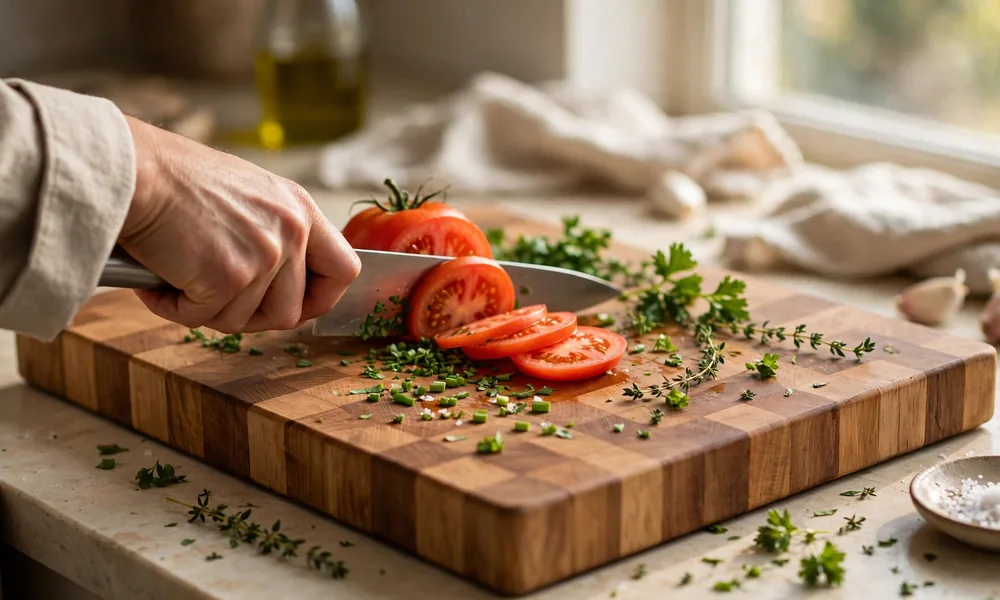
A thick end-grain maple or walnut board remains the best cutting board for most home cooks. Its upright fibres cushion every cut, so knives stay sharp far longer than they do on plastic or bamboo, and the surface seems to heal itself, with shallow marks closing up as the wood dries. A board of 18 by 12 inches and around two inches thick is heavy enough to stay perfectly still while you work. If you buy one board and one board only, this is the one.
Best for Raw Meat: Colour-Coded Plastic Set
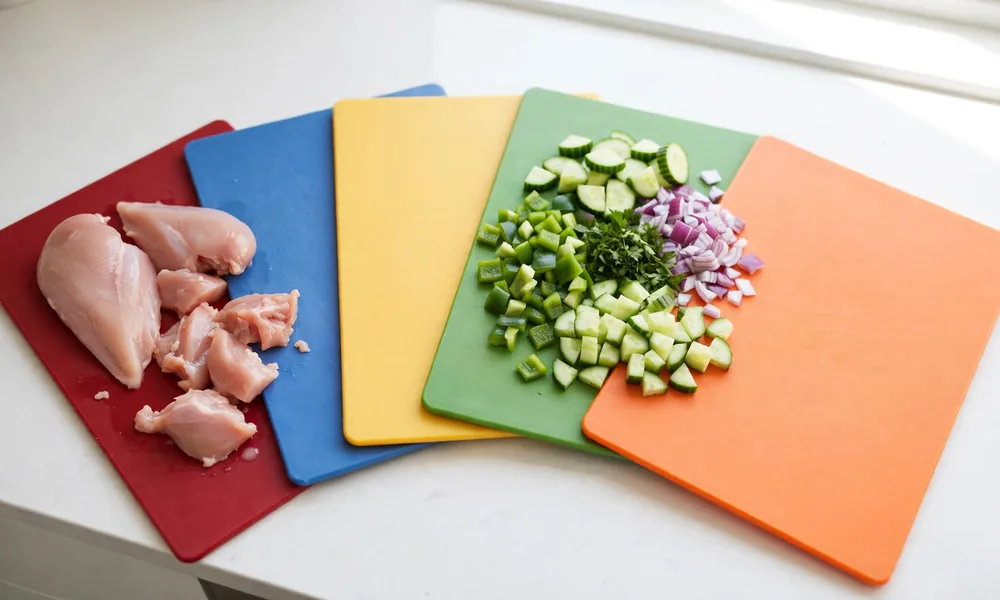
For households that cook meat and fish, a set of colour-coded plastic boards is the safest system you can buy. One colour for raw meat, one for fish, one for vegetables, and one for cooked food removes the guesswork that causes cross-contamination, and every board can go straight into the dishwasher on a hot cycle. At this price you can afford a set, and a set is what makes the system work. For the knives to use with them, our guide to the best knife sets of 2026 covers the blades that hold an edge longest.
Best Budget Wood: Edge-Grain Maple Board
If the price of an end-grain board makes you pause, an edge-grain maple board gives you most of the benefits for roughly half the money. The wood fibres run horizontally rather than vertically, so it shows knife marks a little more readily, but it is still far kinder to blades than plastic or bamboo, and it is lighter and easier to move around the kitchen. With the same simple care routine — oil monthly, wash by hand, dry upright — it will serve a busy kitchen for many years.
Best Large Board: Extra-Large Walnut Board
For cooks who prep big meals, an extra-large walnut board of around 24 by 18 inches changes the whole experience. There is room to chop a whole pile of vegetables without stopping to clear space, and the generous surface doubles as a carving station for a roast. Walnut is a little softer than maple, which makes it exceptionally gentle on knives, and its dark grain looks superb on the worktop.
Best for Small Kitchens: Compact Bamboo Board
Small kitchens need a board that does the job without swallowing the worktop. A compact bamboo board of about 15 by 10 inches is light, easy to store upright, and tough enough for daily chopping. It is harder on knives than maple, so keep your best blades for the wooden board if you own both, and use the bamboo board for quick everyday tasks. For cooks short on space, it is the most practical single board you can buy.
Cutting Boards Compared
The table below summarises how the main types of cutting board compare across the factors that matter most in daily use.
| Board Type | Kind to Knives | Hygiene | Maintenance | Typical Price | Best For |
|---|---|---|---|---|---|
| End-grain hardwood | Excellent | Very good | Oil monthly, hand wash | £60–£180 | Daily cooking, keen cooks |
| Edge-grain maple | Very good | Very good | Oil monthly, hand wash | £30–£80 | Best value wood board |
| Plastic set | Good | Excellent | Dishwasher safe | £15–£40 | Raw meat and fish |
| Bamboo | Fair | Good | Hand wash, oil occasionally | £15–£35 | Small kitchens, light prep |
| Extra-large walnut | Excellent | Very good | Oil monthly, hand wash | £90–£220 | Big meals, carving roasts |
| Glass or stone | Poor | Excellent | Dishwasher safe | £10–£30 | Serving only, not chopping |
Wood vs Plastic: Which Side Wins?
The wood-versus-plastic debate has run for decades, and the honest answer is that both win — at different jobs. Wood wins for everyday chopping: it is kinder to knives, it lasts longer, and a good wooden board becomes more beautiful with use. Plastic wins for raw meat, because it can be sanitised in the dishwasher at high temperature and replaced cheaply when it scars. The smartest kitchen setup is not one board but two: a wooden board for vegetables, bread, and herbs, and a plastic board reserved for raw meat and fish. If you bake as well as cook, a sturdy board also pairs well with the ovenware in our guide to the best baking sheets for cookies, which covers the pans that handle the other half of home baking.
How to Care for Your Cutting Board
A good board repays a little care many times over. Wooden boards should be washed by hand with hot soapy water, dried upright so air reaches both sides, and never left soaking in the sink, which causes warping and cracking. Once a month, rub in food-safe mineral oil with a soft cloth and leave it overnight; the oil fills the pores and stops water getting in. Plastic boards need less fuss — a hot dishwasher cycle after raw meat is the gold standard — but they should be retired once deep grooves appear. Store boards upright or hung on a rail so air circulates, and never stack a damp board flat against another surface.

When to Replace a Cutting Board
Even the best board does not last forever. Replace a plastic board when knife scars are deep enough to catch a fingernail, when dark staining will not wash out, or when it has warped so it rocks on the worktop. Replace a wooden board when it has cracked through, when it smells even after a salt-and-lemon scrub, or when it has warped beyond flattening. For more ideas on equipping the rest of the kitchen, our roundup of the best pizza stones for home ovens covers another tool that transforms everyday cooking.
Cutting Board Buying Checklist
- Measure your worktop and sink first, then buy the largest board that fits both comfortably.
- Choose wood for everyday chopping and a separate plastic board for raw meat and fish.
- Check the thickness: at least half an inch for plastic, at least one inch for wood.
- Test stability — the board should not slide or rock on a flat surface.
- Look for a juice groove if you carve roasts, or a reversible flat side for everyday prep.
- Budget for care: food-safe mineral oil for wood, and a replacement plastic board every year or two.
Frequently Asked Questions
What is the best cutting board material for knives?
End-grain hardwood, usually maple or walnut, is the kindest material for knives. Its upright fibres cushion the blade, so edges stay sharp far longer than on plastic, bamboo, or glass.
Are wooden cutting boards hygienic?
Yes, when they are cleaned and dried properly. Wood fibres draw moisture away from the surface, and bacteria struggle to survive in dry wood. Wash with hot soapy water after every use, dry upright, and keep a separate plastic board for raw meat.
Can cutting boards go in the dishwasher?
Plastic boards can, and should after raw meat. Wooden and bamboo boards must never go in the dishwasher: the heat and prolonged soaking cause warping, cracking, and glue failure.
How often should I replace a plastic cutting board?
Replace a plastic board when knife scars become deep and dark, usually after one to two years of regular use. Deep grooves trap bacteria that washing cannot reach, and a heavily scarred board is no longer safe for food preparation.
What size cutting board should I buy?
Most cooks should aim for at least 18 by 12 inches, which gives room to chop and gather without food falling off the sides. Larger boards of 24 by 18 inches suit big meal prep, while compact boards of 15 by 10 inches suit small kitchens.
Is bamboo better than wood for cutting boards?
Bamboo is tougher and more moisture-resistant than most woods, but it is harder on knives and can dull blades faster than maple or walnut. It is a good budget and small-kitchen option, but hardwood remains the better choice for serious daily cooking.
The Bottom Line
The best cutting boards of 2026 are the ones that fit how you actually cook. An end-grain hardwood board is the best single purchase for most kitchens, a colour-coded plastic set is the safest system for raw meat, and a large walnut board is worth every penny if you cook big meals. Buy the largest board your sink can handle, keep wood and plastic for their separate jobs, and replace scarred plastic before it becomes a hygiene risk. A good board is one of the cheapest upgrades a kitchen can get.


