A butcher block is not just a thick cutting board, and a cutting board is not a small butcher block. Butcher blocks are heavy slabs of end-grain or edge-grain hardwood, usually two inches thick or more, built to take daily chopping, hold a knife edge, and last for decades with a little oil. The best butcher blocks in 2026 are the ones that stay flat, resist deep cuts, feel solid under a cleaver, and age gracefully instead of cracking, warping, or drying out. This guide compares butcher blocks and cutting boards directly, so you can decide which one belongs in your kitchen, and it covers the things that decide whether a block is worth its price: wood species, thickness, end-grain versus edge-grain construction, oiling, size, and care.
Key Takeaways
- A butcher block is a thick hardwood slab, usually two inches or more, while a cutting board is a thin, light surface for quick slicing.
- End-grain blocks are kindest to knives and hide cut marks best, while edge-grain blocks cost less and are easier to keep flat.
- Maple is the best all-round wood for a butcher block, walnut is the most beautiful, and teak handles moisture best.
- A butcher block needs oiling every few weeks at first, then monthly, and must never be soaked or put in a dishwasher.
- Buy the largest block your counter and sink can handle, because a block that is too small sends food onto the worktop.
Butcher Blocks vs Cutting Boards: The Real Difference
The difference between a butcher block and a cutting board is thickness, weight, and intent. A cutting board is a portable work surface, usually half an inch to one inch thick, light enough to carry to the sink and wash under the tap. A butcher block is a piece of kitchen furniture, usually two to four inches thick and heavy enough that it stays where you put it. That weight is the point: a block does not slide while you chop, it does not flex under a cleaver, and its mass absorbs the force of every cut instead of passing it to your wrist. If you chop every day, cook for a family, or use a cleaver and heavy knives, a block earns its place. If you chop an onion now and then and want something light to wash quickly, a thin board is the better tool. For a closer look at the thin-board side of the comparison, see our guide to the best cutting boards of 2026, which covers plastic, bamboo, and thin wood boards in detail.
End-Grain vs Edge-Grain: The Construction That Matters Most
How a butcher block is put together matters more than its brand. End-grain blocks are made by standing short pieces of wood on end, so the fibres point upward like the bristles of a brush. End-grain blocks are the premium choice, and they are also the most expensive, because they use more wood and more labour.
Wood Species: Maple, Walnut, Teak, and the Rest
The wood a block is made from decides its hardness, its colour, its resistance to moisture, and its price. Not every hardwood is suitable, and the differences are practical, not just cosmetic.
Maple: The Best All-Rounder
Hard maple is the classic butcher block wood, and for good reason. It is hard enough to resist deep cuts, closed-grained enough to resist moisture and bacteria, pale enough to show food clearly, and affordable compared with walnut or teak. A maple end-grain block is the default recommendation for a first butcher block, and it is the wood most professional butchers have used for generations.
Walnut: The Most Beautiful
Walnut is the most beautiful butcher block wood, with deep brown tones and rich grain that make a block look like furniture. Walnut costs more than maple, often substantially more for a large block, so it is the choice for a cook who wants the block to be a centrepiece as well as a tool.
Teak: The Best for Moisture
Teak is naturally oily, which makes it the most moisture-resistant butcher block wood and the best choice for a humid kitchen or a block that sits near the sink. It resists warping and cracking better than maple or walnut, and it needs oiling less often.
Cherry, Oak, and Bamboo
Bamboo is technically a grass, not a wood: it is very hard, which makes it durable but also harder on knife edges, and it is the most affordable option.
Thickness and Size: How Big Should a Butcher Block Be?
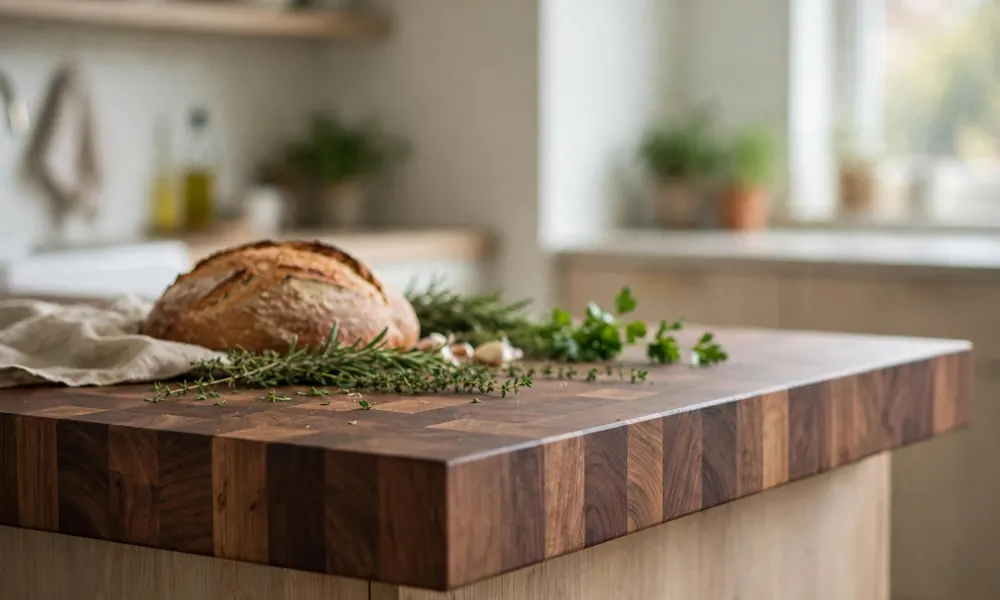
Thickness is what makes a block a block. A slab under one and a half inches thick is really a heavy cutting board, not a butcher block, and it will flex and warp like one. A true butcher block starts at two inches, and three to four inches is better for heavy chopping and cleaver work, because the extra mass keeps the block stable and gives it decades of resurfacing life.
Oiling and Care: The Routine That Keeps a Block Alive
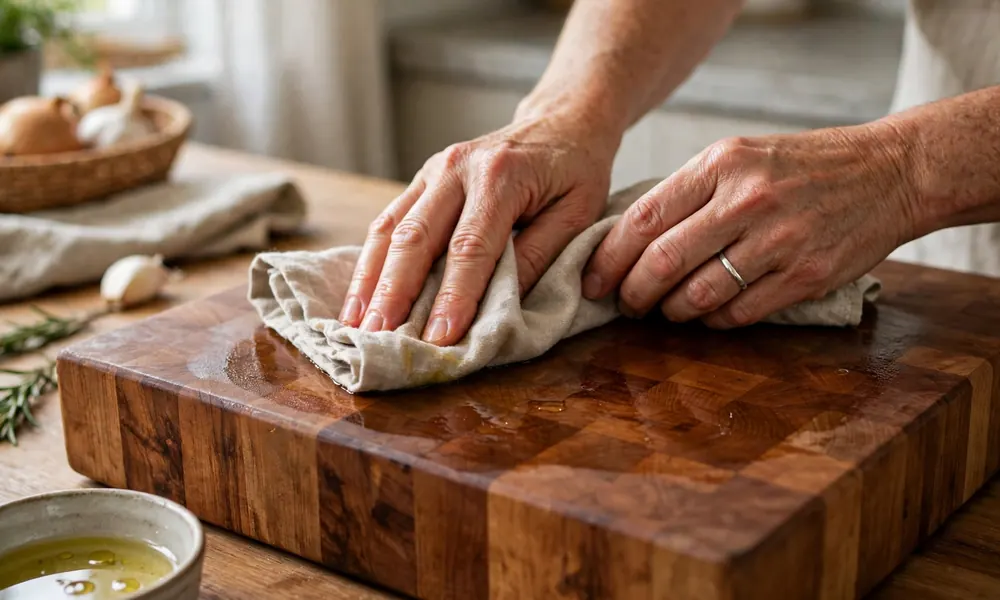
A butcher block is a living surface, and oiling is what keeps it from drying out, cracking, and absorbing stains. The rule is simple: oil a new block every day for the first week, every week for the first month, and then monthly for the rest of its life. Daily cleaning is just as important: scrape off food, wipe with a damp cloth and a little mild soap, rinse, and dry immediately. A simple water test tells you when oiling is due: sprinkle a few drops of water on the surface, and if they bead up, the block is still protected, but if they soak in and darken the wood within a minute, it is time to oil again. New blocks drink oil quickly, so do not be surprised if the first few coats disappear almost overnight. Never soak a block, never put it in a dishwasher, and never leave it standing in a puddle.
Butcher Block vs Cutting Board Comparison Table
| Feature | Butcher block | Cutting board |
|---|---|---|
| Thickness | 2 to 4 inches | Half an inch to 1 inch |
| Weight | 7 to 15 kilograms, stays put | Under 2 kilograms, portable |
| Knife-friendliness | Excellent, especially end-grain | Good for wood, poor for glass or stone |
| Best for | Daily chopping, cleavers, dough | Quick slicing, raw meat, small jobs |
| Cleaning | Wipe in place, dry at once | Wash under the tap, some go in the dishwasher |
| Maintenance | Oil monthly, resurface for decades | Little to none, replace every few years |
| Lifespan | Decades with care | 2 to 5 years |
| Price | Higher, a long-term buy | Low to moderate |
The Best Butcher Blocks of 2026 by Type
The blocks below are the strongest choices in each category, judged on wood quality, construction, thickness, stability, and value.
Best Overall: A Thick End-Grain Maple Block
A thick end-grain maple block is the best butcher block most cooks can buy. The end-grain surface is the kindest to knives, hides cut marks for years, and the maple is hard, affordable, and food-safe. Buy it at least two inches thick and at least eighteen by twelve inches, and expect it to last for decades with monthly oiling. It is heavy, it needs a permanent spot on the counter, and it demands a little care, but no other chopping surface combines durability, knife-friendliness, and longevity like it.
Best for Looks: A Walnut End-Grain Block
A walnut end-grain block is the choice for a cook who wants the block to look as good as it performs. The deep brown grain turns a work surface into a centrepiece, and the wood is hard enough for daily use while hiding stains better than pale maple.
Best Budget: An Edge-Grain Maple Block
Is a butcher block better than a cutting board?
For daily chopping, heavy knives, and cleaver work, yes: a butcher block is thicker, heavier, kinder to knives, and lasts far longer. For quick slicing, raw meat, and easy washing, a thin cutting board is more practical, and many kitchens are happiest with both.
How often should I oil a butcher block?
Oil a new block daily for the first week, weekly for the first month, and monthly after that. If the surface looks pale or dry, or water no longer beads on it, it needs oiling regardless of the schedule.
Can I put a butcher block in the dishwasher?
No, never. A dishwasher soaks the wood, strips the oil, and can crack and warp a block beyond repair. Wipe it with a damp cloth and mild soap, rinse lightly, and dry it immediately.
What is the best wood for a butcher block?
Hard maple is the best all-round choice: hard, closed-grained, affordable, and kind to knives. Walnut is the most beautiful, teak handles moisture best, and cherry is a good middle option.
How do I remove stains and smells from a butcher block?
Scrub the stain with a paste of salt and lemon juice, or sand it lightly with fine sandpaper and re-oil the area. For smells such as garlic or onion, a paste of bicarbonate of soda and water, left for an hour, usually removes them.
How long does a butcher block last?
With monthly oiling and sensible care, a thick hardwood butcher block lasts for decades, and it can be sanded and resurfaced many times. A thin cutting board, by contrast, usually needs replacing every two to five years.
Knives, Cleavers, and the Tools That Go With a Block
A butcher block earns its keep when it is paired with the right tools. A heavy chef’s knife is the everyday partner, and the block’s end-grain surface protects its edge far better than a plastic or glass board. A cleaver is the tool a block was originally made for: its weight and the block’s mass work together to cut through bone and tough joints without bouncing or sliding, and a thin board would flex and crack under the same force. For a closer look at the cleavers worth buying, see our guide to the best cleavers of 2026. A block also pairs well with a kitchen cart or island that gives it a permanent home at the right height, and our guide to kitchen carts that add counter space covers the carts that work best with a heavy block on top.
Before You Buy Checklist
- Measure your counter and your sink, and buy the largest block that fits both comfortably.
- Check the thickness: a true butcher block is at least two inches thick.
- Look at the surface pattern to confirm end-grain or edge-grain construction.
- Confirm the wood species and that the finish is food-safe mineral oil, not varnish.
- Lift the block, or check its weight, and make sure it has a permanent home on your counter.
- Buy food-safe mineral oil and a bench scraper at the same time, so care starts on day one.
Frequently Asked Questions
Bottom Line
Butcher blocks and cutting boards are not rivals, they are different tools for different jobs. A cutting board is light, quick, and easy to wash, while a butcher block is heavy, permanent, and built to last for decades. If you chop every day, use heavy knives, or want a surface that improves with age, a thick end-grain maple block is the best money you will spend on your kitchen. If you chop occasionally and want something light, keep a good thin board and save the block for later. Either way, buy the largest, thickest, best-wooded option you can afford, oil it regularly, and it will repay you every day you cook.