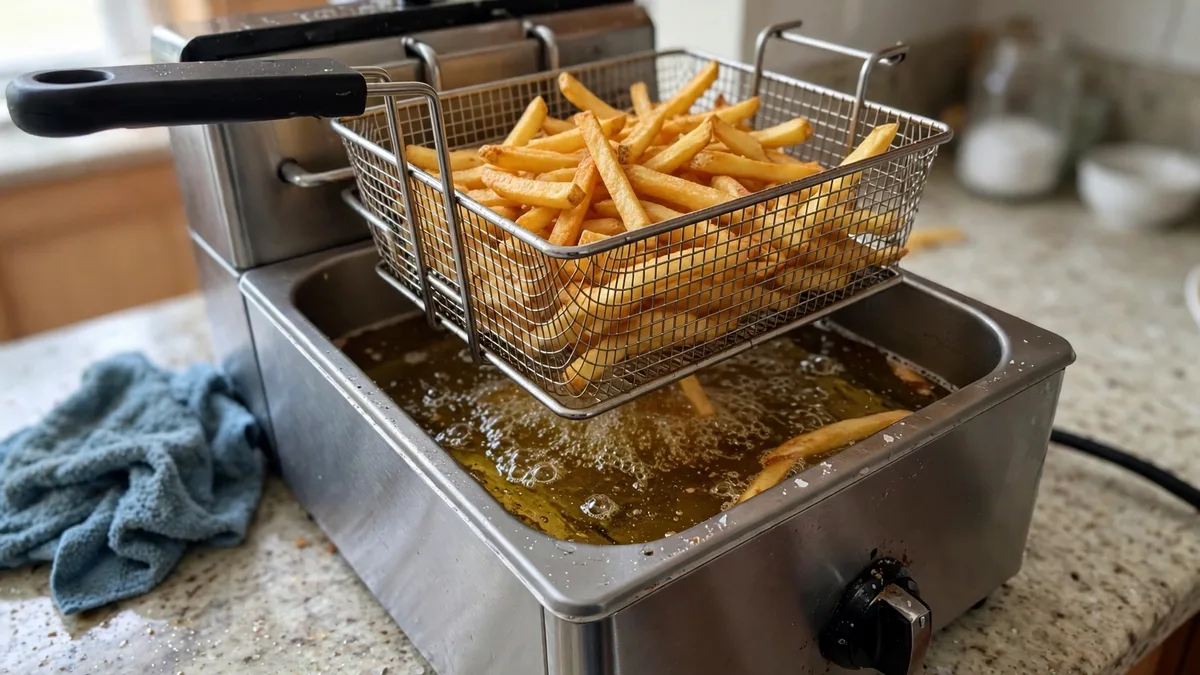
Nothing in the kitchen divides opinion quite like a deep fryer. To some cooks it is the only way to get truly crisp chips and golden fried chicken at home; to others it is a bulky box of hot oil that smells up the house. Both views have a point, which is why choosing the best deep fryer in 2026 is about matching the fryer to the way you actually cook. This guide covers oil deep fryers only, not air fryers, which use hot air instead. If you want crunch that only real oil gives, read on.
Key Takeaways
- An oil deep fryer beats an air fryer on crunch and browning, but it uses more oil, needs more cleaning, and takes up more space.
- Look for at least 1,500 watts, a thermostat that holds within 10 degrees, and a capacity that matches your household, not your ambitions.
- A removable oil container and dishwasher-safe basket turn cleaning from a dreaded chore into a ten-minute job.
- Good countertop fryers cost 60 to 150 dollars, and the extra money mostly buys even heat, better filtration and safer design.
- Oil temperature is everything: too cool and food turns greasy, too hot and it burns outside while staying raw inside.
- Never leave a fryer unattended, never fill it above the maximum line, and never put water near hot oil.
Deep Fryers Compared
| Type | Best for | Typical price | Weakest point |
|---|---|---|---|
| Single-basket countertop | Most households | $60–$150 | One food at a time |
| Dual-basket fryer | Families, parties | $120–$250 | Large, heavy, uses lots of oil |
| Compact mini fryer | One or two people | $40–$80 | Small batches, slower recovery |
| Outdoor propane fryer | Turkey, big batches | $80–$200 | Outdoor use only, needs care |
What an Oil Deep Fryer Actually Does
A deep fryer is a heated pot with a thermostat, a basket and a lid, and its whole job is to keep oil at a steady temperature while food cooks in it. When food hits oil at 175 to 190 degrees Celsius, the moisture on its surface turns to steam instantly, and that steam pushes outward, stopping oil from soaking in. That is why properly fried food is crisp rather than greasy: the oil cooks the outside fast and seals it, while the inside steams gently. The trick only works if the oil stays hot, which is why a good fryer recovers its temperature quickly after a cold basket goes in, and a weak one leaves you with soggy chips.
The parts are simple but they matter: the heating element warms the oil tank, the thermostat holds the set temperature, and the basket lets you lower food in and lift it out without fishing around in hot oil. A lid with a filter cuts down splatter and smell, a viewing window lets you check browning without lifting the lid, and a removable tank makes emptying the oil far less messy. Together these parts decide whether the fryer gets used weekly or gathers dust.
Capacity: Buy for Your Household, Not Your Dreams
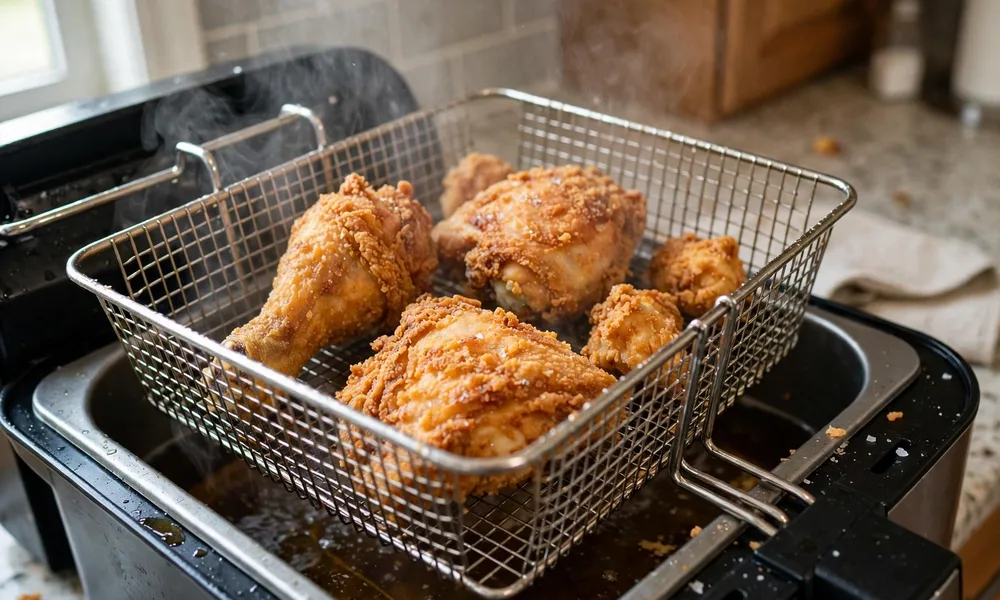
Capacity is measured in litres of oil, and it is the first number to get right. A compact fryer holding one to two litres suits one or two people. A standard family fryer holds three to four litres and handles dinner for four without endless batches. Larger dual-basket models hold five litres or more and can fry chips and fish at the same time, but they are heavy, use a lot of oil, and need serious counter space.
The mistake most buyers make is buying too big: a large fryer that only ever cooks two portions wastes oil, takes longer to heat, and is harder to clean. A fryer that is too small is just as frustrating, because overcrowding the basket drops the oil temperature and turns food greasy. For most households, three litres and a single basket is the right size.
Oil Temperature Control and Recovery
Temperature control is the difference between a fryer and a pot of oil on the hob. A decent thermostat holds the oil within about 10 degrees of the setting, and better models manage within 5 degrees. That accuracy matters because frying happens in a narrow window: most foods want 175 to 190 degrees, delicate items like tempura want it a little lower, and doughnuts want it steady or they brown unevenly.
Recovery time is the hidden spec that separates good fryers from bad ones. When you drop a basket of cold, wet food into hot oil, the temperature falls sharply, and the fryer must climb back fast or the food absorbs oil instead of crisping. Higher wattage helps: a 1,800-watt fryer recovers noticeably faster than a 1,200-watt one. Smaller batches also help, which is why experienced cooks fry in two modest batches rather than one overloaded one.
Which Oil Should You Use?
The best frying oils have a high smoke point and a neutral flavour: peanut oil, sunflower oil and refined rapeseed oil are the usual picks, and each handles repeated heating well. Peanut oil is the classic choice for its high smoke point and clean taste, though anyone with a nut allergy in the house should avoid it. Tallow, rendered beef fat, is the old-school option behind the best chips many people remember, with a rich flavour and excellent heat stability. Olive oil is a poor choice for deep frying: it smokes at lower temperatures, costs more, and its flavour is wasted in a fryer. Whatever oil you choose, filter it after each use and replace it when it darkens, smells stale, or starts smoking below its usual point.
Safety Features Worth Paying For
Hot oil demands respect, and the best fryers are designed around that fact. A locking lid that stays shut while frying stops splatter and keeps curious hands out. Cool-touch walls mean you can move the fryer without burning yourself, though the lid and basket will still be hot. A breakaway magnetic power cord is a small feature with a big job: if someone trips over the cord, it pulls free instead of dragging a pot of hot oil off the counter. An automatic shut-off that cuts power if the oil overheats is standard on most mid-range models.
Your own habits matter as much as the machine. Never fill a fryer above the maximum line, because oil expands as it heats and food displaces it further. Never put wet or frozen food straight into hot oil without shaking off ice crystals and excess water, since water in hot oil causes violent bubbling and splatter. Never leave a fryer unattended while it is on, and keep children and pets out of the kitchen while it is heating. Keep a lid nearby, not water: if oil ever catches fire, slide the lid on and switch the fryer off, and never throw water on an oil fire.
Cleaning and Oil Storage
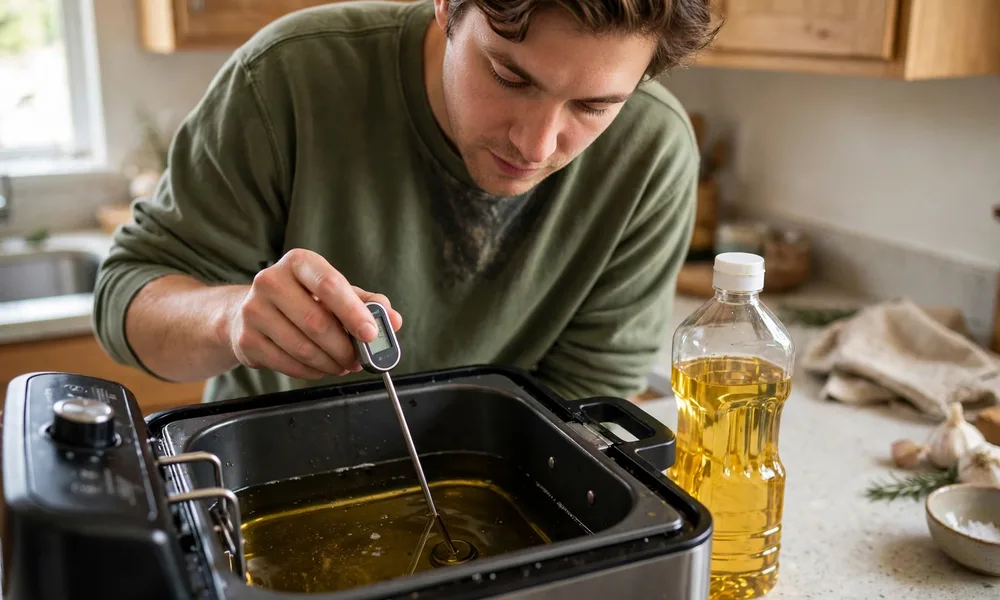
Cleaning is the reason most deep fryers end up unused, so buy for it deliberately. The best designs have a removable oil tank that lifts out for pouring and washing, a basket and lid that go in the dishwasher, and smooth surfaces with no crevices where grease can hide. Some mid-range models add a built-in filtration system that pumps the oil through a filter into a storage container, which extends the oil’s life and makes the whole process far less messy. It adds cost, but for regular fryers it pays for itself in saved oil and saved effort.
Used oil should be cooled completely, filtered through a fine sieve or coffee filter, and stored in a sealed container away from light. Most oils survive three to five frying sessions. Never pour oil down the sink. Let it cool, seal it in a container, and dispose of it with household waste or at a local recycling point.
The Best Deep Fryers in 2026
The best overall deep fryer in 2026 is a three-litre single-basket countertop model with around 1,800 watts, an accurate thermostat, a removable oil tank and a filter lid. It heats fast, recovers quickly, cleans without a fight, and suits a family of three or four, usually for 90 to 150 dollars.
The best budget pick is a compact one-to-two-litre fryer for 40 to 80 dollars. It cooks just as crisply for small batches, heats quickly because there is less oil, and stores easily. The compromises are a simpler thermostat, a basket that cannot be split, and slower recovery with a full load, none of which matters much if you fry for one or two people a few times a month.
Deep Fryer vs Air Fryer: An Honest Comparison
An air fryer is not a deep fryer, and pretending otherwise leads to disappointment. Air fryers circulate hot air around food with a little oil, which makes lighter, less messy versions of fried food, and they are faster to clean and cheaper to run. But they cannot match the deep, even crunch of food cooked in hot oil. Our guide to air fryers covers the hot-air side in detail, and many kitchens end up owning both.
Which one you need depends on what you cook. If you fry once a month or less, an air fryer probably covers you. If you love fried chicken, fish and chips or doughnuts and want them to taste like the real thing, an oil fryer is worth the space and the cleaning.
Buying Checklist
- Match capacity to your household: three litres suits most families, one to two litres suits one or two people.
- Choose at least 1,500 watts so the oil recovers temperature quickly after food goes in.
- Check the thermostat holds within 10 degrees and the display or dial is easy to read.
- Pick a removable oil tank and dishwasher-safe basket, or cleaning will put you off using it.
- Look for a locking filter lid, cool-touch walls, a breakaway cord and automatic shut-off.
- Measure your counter and cupboard first, and check the fryer fits with the lid open.
Frequently Asked Questions
How often should I change the oil?
Most oils last three to five frying sessions if you filter them after each use and store them sealed away from light. Replace it when it darkens, smells stale, or smokes at normal temperatures.
Can I fry frozen food in a deep fryer?
Yes, but shake off ice crystals first and fry in small batches, because frozen food drops the oil temperature fast. Add a little extra cooking time, and never overload the basket.
Why is my fried food greasy?
Greasy food almost always means the oil was too cool, the basket was overcrowded, or the food stayed in too long. Check the temperature with a thermometer, fry in smaller batches, and let the oil return to temperature between batches.
Can I reuse oil after frying fish?
You can, but the flavour carries over, so chips fried in fish oil will taste faintly of fish. Filter it well and keep it separate from your general frying oil.
Is a deep fryer safe in a small kitchen?
Yes, if you choose a compact model with cool-touch walls and a locking lid, and you give it clear space on the counter away from the edge. Keep the cord tucked away so nobody can snag it.
What temperature should I fry chips at?
Double-fry for the best results: first at about 160 degrees until the chips are soft but pale, then rest them, then fry again at 190 degrees until golden and crisp. The second fry is short, usually two to three minutes.
The Bottom Line
The best deep fryer in 2026 is the one you will actually use, so buy for your household, your counter space and your tolerance for cleaning, not for the biggest spec sheet. A three-litre single-basket fryer with strong heating, an accurate thermostat and a removable tank suits most families, while a compact model suits smaller households. Remember: hot oil, small batches, a good thermometer, and never water near the fryer.