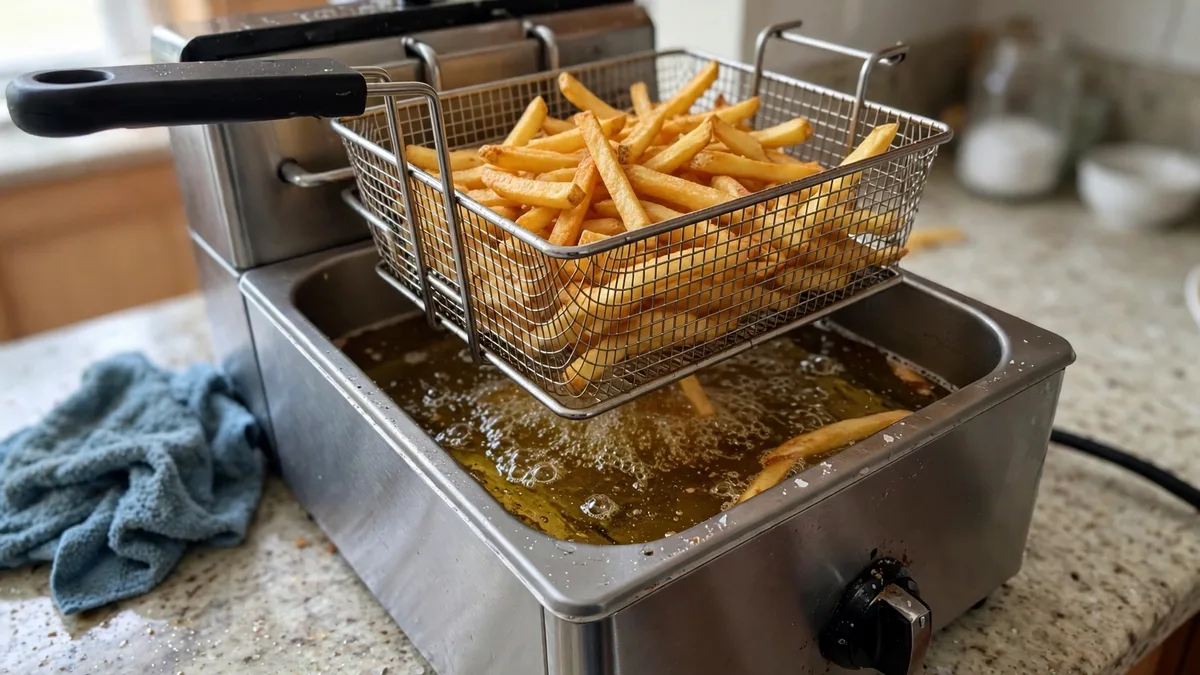
Tallow is the beef fat chefs reach for when they want deep flavour, a hard sear and potatoes that shatter when you bite them. It is rendered beef fat: fat from around a cow’s kidneys and loins, melted down slowly, strained and left to set into a firm, creamy-white block that smells faintly savoury and tastes almost neutral. For generations it was the fat in chip shops and steakhouse kitchens, then it fell out of fashion when cheap vegetable oils took over. Now chefs and home cooks are bringing it back, because no other fat fries quite so crisply or sears a steak quite so well, and a jar costs far less than butter.
This guide explains what tallow is, how it is rendered, how it behaves in the pan and the oven, and how to buy and use it well in 2026.
Key Takeaways
- Tallow is rendered beef fat: firm at room temperature, almost neutral in flavour, and creamy white when well made.
- Its smoke point is around 200 degrees Celsius, so it suits roasting, frying and searing better than most animal fats.
- Tallow fries the crispest chips and roast potatoes because it is almost pure fat and drains cleanly off food.
- Buy grass-fed tallow from a butcher when you can: it tastes cleaner and keeps longer than supermarket tubs.
- Store tallow in the fridge for months or the freezer for a year, and throw it out if it smells sharp, sour or stale.
What Tallow Actually Is
Tallow is beef fat that has been rendered: heated gently until the fat melts out of the tissue and separates from the water and cracklings left behind. The liquid fat is strained through cloth into jars and left to cool into a firm, sliceable solid. Good tallow is creamy white or faintly ivory, smooth rather than grainy, and smells clean and faintly beefy. Poor tallow is yellowish, grainy and smells distinctly of beef, and that smell carries into whatever you cook with it.
Tallow is not lard, dripping or shortening, though the three are often confused. Lard is rendered pork fat, softer than tallow and milder in flavour, and our guide to lard explains where pork fat wins, in pastry above all. Dripping is the fat that runs off a roast, juices and all. Shortening is a manufactured vegetable fat designed to behave like an animal fat in baking. Tallow is a single-ingredient, traditional fat: beef fat and nothing else.
How Tallow Is Rendered
Rendering is slow and gentle, and temperature is the whole secret. The fat is cut small, put in a heavy pot with a splash of water to stop it catching, and heated low for several hours. As it melts, the fat turns liquid and golden, the cracklings shrink and brown, and the water steams away. When the cracklings sink, the fat is strained through muslin into clean jars and left to set. Rendered too hot or too fast, tallow turns brown and beefy, and the smell never leaves it.

Most tallow comes from suet, the hard fat around the kidneys, which renders into the cleanest, firmest tallow. Fat trimmed from steaks renders too, but it is softer and stronger in flavour. Home rendering is simple: ask a butcher for suet, cut it fine, and give it an afternoon on the lowest heat. The cracklings left behind are a cook’s bonus, crisp and salty.
Smoke Point, Flavour and Texture
Tallow’s smoke point sits around 200 degrees Celsius, or about 400 degrees Fahrenheit, higher than butter, lard and most olive oils. That makes it a good frying and roasting fat, and one of the few animal fats that can handle a proper sear. Its flavour is mild and savoury: it tastes faintly of beef in the jar, but that mostly disappears in cooking, leaving food richer without tasting of beef. That is why it works in savoury dishes and, in small amounts, in pastry, where butter would dominate and oil would add nothing.
The texture is what sets tallow apart. It is firm and waxy at room temperature, melts cleanly at body heat, and sets again as food cools, which is why chips fried in tallow stay crisp for longer. It leaves no greasy film, because it drains off food so cleanly, and it does not spit the way butter does in the pan. It can be reheated, strained and used again several times before it darkens.
Tallow Against the Other Fats
No single fat does every job, and tallow is no exception. It wins on heat and crispness and loses on delicate flavour. The comparison below shows where each common fat stands.
| Fat | Smoke point | Flavour | Best for |
|---|---|---|---|
| Tallow | About 200°C | Mild, savoury | Frying, roasting, searing |
| Lard | About 190°C | Almost neutral | Pastry, roast potatoes |
| Butter | About 150°C | Rich, creamy | Baking, sauces, finishing |
| Shortening | About 190°C | None | Flaky pastry, frosting |
| Vegetable oil | About 220°C | Neutral | Everyday frying |
Shortening is the fat tallow is most often confused with in baking, and our guide to shortening explains why a manufactured vegetable fat behaves so differently in pastry. Tallow is the better frying fat by a clear margin, while shortening keeps the edge in cakes and frosting, where a flavourless fat is what you want. Butter still wins wherever its flavour is the point.
Tallow in the Pan: Roasting, Frying and Searing
For frying, tallow suits anything that needs steady, high heat: chips, fried chicken, fish and doughnuts all cook well in it, coming out crisp rather than greasy because tallow drains cleanly off food. Chips fried in beef tallow are the old chip-shop standard, golden outside and fluffy inside, and they stay crisp long after chips fried in oil have gone limp. To compare it with the liquid fats in your cupboard, our guide to vegetable oil covers smoke point, flavour and price across the common cooking oils.

Roast potatoes are where tallow earns its reputation. Parboil the potatoes, rough up the edges, and drop them into smoking-hot tallow in a heavy tray: the outsides crisp and shatter, and the insides stay soft and floury. The same trick works for roast carrots, parsnips and whole garlic. For searing, tallow takes a screaming-hot pan without smoking, so a steak gets a dark crust without a bitter edge.

Tallow in Baking and Pastry
Tallow has a smaller role in baking than lard, but it still earns its place. It makes a sturdy, crisp pastry for savoury pies and sausage rolls, where its firmness holds a shape butter cannot. It gives biscuits a short, crumbly texture and adds richness to bread doughs, where a spoonful softens the crumb and keeps the loaf fresh longer. In sweet baking use it in small amounts, blended with butter, so the butter brings flavour and the tallow brings structure. Work it cold: tallow pastry turns tough faster than butter pastry if handled too much.
Buying Tallow and Choosing the Right Kind
Good tallow starts with good fat, and the best source is a butcher who renders it in-house. Ask for grass-fed tallow if you can: it is cleaner in flavour, firmer in texture, and keeps longer than tallow from grain-fed cattle. Supermarket tubs are convenient and cheap, but they vary widely, so buy tallow that lists one ingredient, beef fat, with nothing else added. Avoid tubs that are yellow, soft or smell strongly of beef.
Tallow is sold as blocks, tubs and jars, and sometimes as whipped tallow, which is softer to spoon but no different in cooking. A block is the best value: creamy white, firm enough to slice, and faintly clean in smell. Buy a small block first, because flavour varies from butcher to butcher.
Mistakes That Spoil Tallow
The commonest mistake is overheating it. Tallow that smokes has gone past its best, and food cooked in it will taste bitter and burnt, so keep the heat just below the smoke point and back off at the first wisp. The second is reusing it too many times: tallow can be strained and reused three or four times, but each use darkens it and adds flavour from the last dish. The third is storing it badly, in a warm cupboard in a half-open tub, where it picks up smells and turns rancid.
Do not use tallow for delicate dishes where its savoury edge will show, do not mix it with butter in the pan unless you want the butter to burn, and do not leave it sitting in the fryer for weeks between uses.
Storage and Shelf Life
Tallow keeps well because it is almost pure fat with very little water. In a sealed jar in the fridge it lasts three to six months, in the freezer a year or more, and in a cool dark cupboard a few weeks. Keep it sealed and away from strong smells, and always use a clean spoon so crumbs and moisture do not get in. If it smells sharp, sour or stale, or has yellowed and tastes bitter, throw it out: rancid tallow cannot be saved.
Used frying tallow needs a little care. Let it cool, strain it through muslin into a clean jar, and label it with the date and what it last cooked. Keep fish tallow separate, and do not mix used tallow with fresh.
Checklist: Buying and Using Tallow
- Buy grass-fed tallow from a butcher when you can, and check the label lists only beef fat.
- Choose creamy-white, firm tallow that smells clean, never yellow or strongly beefy.
- Keep the heat just below the smoke point, around 200 degrees Celsius, and back off at the first wisp of smoke.
- Use tallow for chips, roast potatoes and searing, where heat and crispness matter most.
- Strain and label used tallow, keep fish tallow separate, and reuse it no more than three or four times.
- Store it sealed in the fridge or freezer, and throw it out if it smells sharp, sour or stale.
Frequently Asked Questions
What is tallow, exactly?
Tallow is rendered beef fat: beef fat melted down slowly, strained and left to set into a firm, creamy-white solid. It is a single-ingredient fat, used for frying, roasting, searing and savoury baking.
Is tallow the same as lard?
No. Tallow is rendered beef fat and lard is rendered pork fat. Tallow is firmer, has a higher smoke point and a stronger flavour, while lard is softer, milder and better for pastry.
What is the smoke point of tallow?
Around 200 degrees Celsius, or about 400 degrees Fahrenheit. That suits roasting, frying and searing, and it is higher than butter and lard.
Why is tallow so good for chips and roast potatoes?
It is almost pure fat, so it fries at a steady high heat and drains cleanly off food. Chips and potatoes come out golden and crisp outside, fluffy inside, and stay crisp longer than chips fried in oil.
Can you reuse tallow?
Yes, three or four times if you strain it through muslin after each use and store it sealed. It darkens and picks up flavour each time, so keep fish tallow separate.
How long does tallow keep?
Three to six months in the fridge in a sealed jar, a year or more in the freezer, a few weeks in a cool dark cupboard. Throw it out if it smells sharp or stale, or has yellowed and tastes bitter.
The Bottom Line
Tallow is not a fad and not a health food: it is a traditional cooking fat that does a few jobs better than anything else. It fries the crispest chips, roasts the crunchiest potatoes, and sears a steak without smoking, all for less than butter. Buy good grass-fed tallow from a butcher, keep the heat just below its smoke point, store it sealed, and use it where heat and crispness matter. Cook with it once and you will understand why chefs never gave it up.