Everyone checks the weather, but almost nobody thinks hard about the app they check it with. Most of us just open whatever came preinstalled on the phone, glance at a single temperature number, and walk out the door unprepared. A good weather app does far more than that. It tells you when the rain will actually start on your street, not just that rain is possible somewhere in your city today. It warns you before a storm turns dangerous, helps you plan a weekend hike, and stays quiet when there is nothing worth interrupting you for. The difference between the best weather apps and the mediocre ones is not a prettier icon. It is accuracy where you live, alerts you can trust, and a design that gives you the answer in three seconds.
This guide looks at the best weather apps of 2026 the way a real user would use them: in the morning before leaving home, on the road, on a trail, and late at night when a storm is rolling in. We weighed forecast accuracy, radar quality, alert speed, hourly detail, and how honest each app is about where its data comes from. We also looked at the everyday annoyances that push people to switch, like ads that cover the radar, notifications that cry wolf, and widgets that show yesterday’s weather. The apps below are not ranked by how many features they cram in. They are ranked by how well they answer the one question that matters: what is the weather going to do to me, where I am, in the next few hours?
What Makes a Great Weather App
Accuracy comes first, and it is harder to judge than it looks. Every app draws on weather models, and the best ones blend several models together and correct them with local observations from weather stations, radar, and satellites. An app that only repeats one global model will look confident and still be wrong about a summer thunderstorm that forms over your neighbourhood and nowhere else. The strongest apps in 2026 use short-term nowcasting, which updates the forecast every few minutes based on live radar, so the rain start time keeps getting sharper as the rain gets closer. If an app still shows the same hourly forecast at 2 p.m. that it showed at 7 a.m., it is not really forecasting. It is just repeating a guess.
Speed matters almost as much. You check the weather in passing, often with one hand, often while doing something else. The current conditions, the next few hours, and any active warnings should be visible without scrolling or tapping through menus. A clean home screen beats a clever one. The best apps put the temperature, the feels-like temperature, the chance of rain in the next hour, and the wind in one glanceable block. Everything else, like ten-day outlooks, pollen counts, and sunrise times, can live one tap away. If you have to hunt for the rain forecast, the app has failed at its main job.
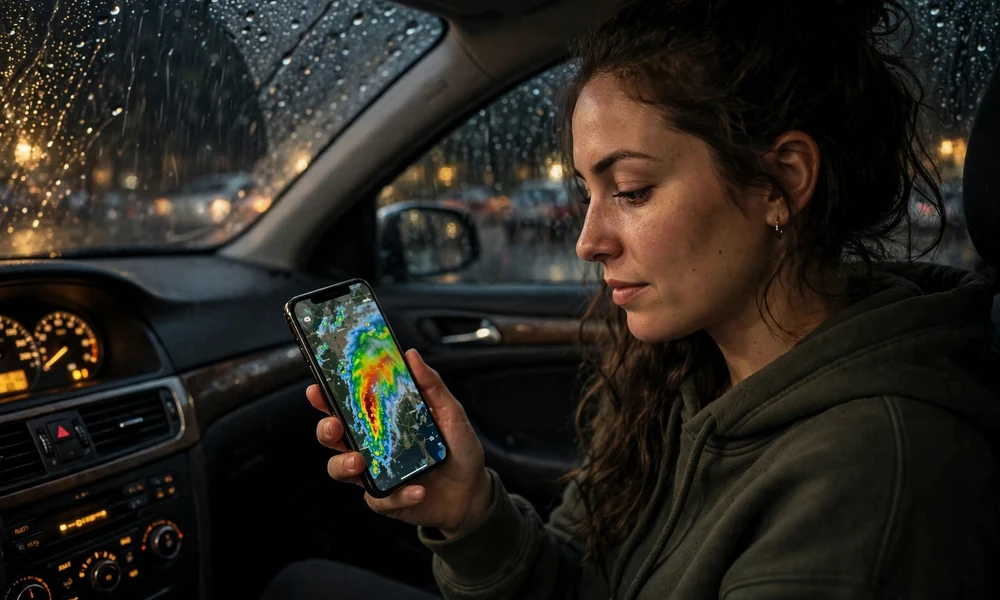
Radar is the third pillar. A good radar map is smooth, loads quickly, shows the last hour of movement so you can see which way a storm is travelling, and lets you look ahead an hour or two. The weakest apps show a static, blocky image that is already out of date when it appears. The best ones animate cleanly, distinguish light drizzle from heavy downpour, and overlay warnings and lightning strikes without turning the map into confetti. Radar is also where paid versions often earn their money, because high-resolution radar costs more to serve. For anyone who drives, cycles, or works outdoors, it is worth paying for.

The Best Weather Apps of 2026
Best Overall: The Accurate All-Rounder
The best overall weather app in 2026 is the one that gets the small things right most often. Its hourly forecast is usually within a degree or two, its rain timing is honest about uncertainty, and its interface never gets in the way. It blends several forecast models, updates frequently, and shows a clear hourly graph so you can see the temperature curve and the rain chance rising and falling through the day. Its ten-day outlook is clearly labelled as less certain the further out it goes, which is a small detail that shows the makers respect the user. The widget is excellent too, showing the next few hours without opening the app at all.
Best for Accuracy: The Forecast Purist
If you care above all about getting the forecast right, there is a class of apps built around a single obsession: the numbers. These apps show the raw output of the best weather models side by side, so you can see where they agree and where they disagree. When two models say rain at 4 p.m. and one says sunshine, you know the honest answer is uncertain, and you can plan accordingly. That transparency is refreshing after years of apps that present a single confident number and quietly change it later.
Best Radar and Storm Tracking
Some people do not just want to know whether it will rain. They want to watch the storm. The best radar apps give you a fast, detailed map with smooth animation, lightning strike markers, storm cell tracking, and warnings drawn clearly over the map. You can see a line of thunderstorms approaching, estimate when it will reach you, and decide whether to bring the washing in or get off the road. During severe weather, that kind of clarity is genuinely useful, not just entertaining.
Best for Hiking and Outdoor Adventures
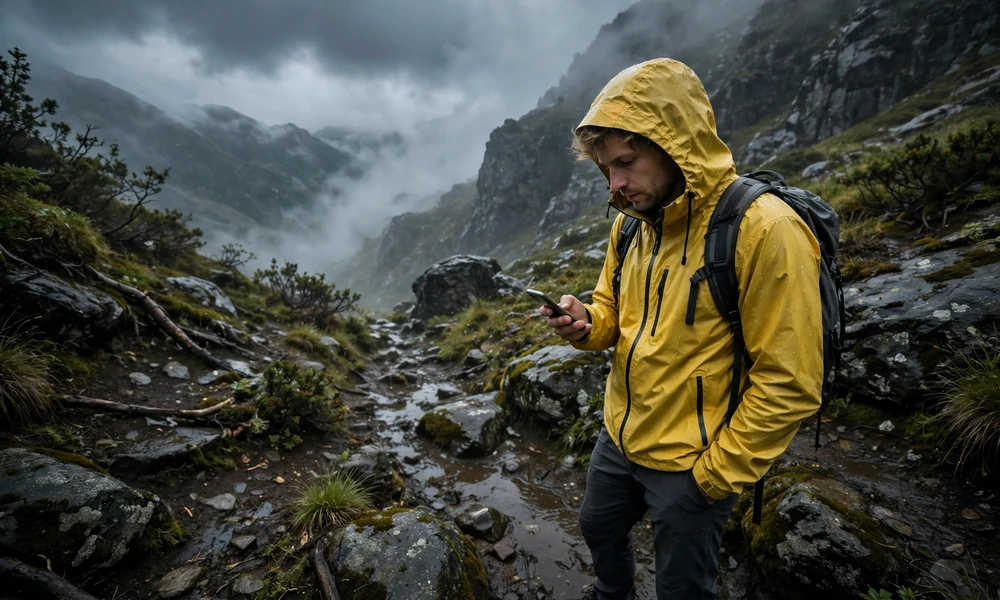
Outdoor users need weather data that city apps never provide. Temperature at the trailhead is not the same as temperature at the summit, and a valley forecast tells you nothing about wind on an exposed ridge. The best outdoor weather apps handle elevation, show wind and precipitation at different altitudes, and work offline with downloaded forecasts when there is no signal. They also show daylight hours, sunrise and sunset, and the chance of thunderstorms during the exact hours you plan to be out.
Best Free App
Not everyone wants to pay for weather, and the good news is that the best free weather app in 2026 is genuinely usable without a subscription. Its forecast is solid, its hourly view is clear, and its widget is one of the best available. The ads are present but not aggressive, and they never cover the radar or interrupt an alert. That restraint is rarer than it should be, and it is the main reason this app beats other free options that technically forecast just as well but feel like a billboard with a thermometer attached.
Best for Severe Weather Alerts
When a tornado, flash flood, or blizzard is possible, the app on your phone becomes a safety tool, not a convenience. The best app for severe weather is judged on one thing above all: does it warn you fast, clearly, and without false alarms? The winner here relays official warnings within minutes, explains them in plain language, and shows exactly which areas are affected on a map. It also offers follow-me alerts that track your location, so a warning follows you on a road trip instead of only covering your home address.
How to Judge Forecast Accuracy Yourself
You do not need a meteorology degree to tell whether your app is accurate. Pick one thing to check for two weeks: the temperature at noon, or whether it rained between 4 p.m. and 6 p.m. Write down what the app predicted in the morning and what actually happened. Most people are surprised by the result. The app they trusted is often right about temperature and wrong about rain timing, or vice versa. Rain timing is the hardest part of forecasting, so judge an app on that, not on whether it guessed the high temperature correctly. A good app will also show its uncertainty, for example a rain chance of 40 percent rather than a false promise of sunshine.
Ads, Privacy, and the Price of Free Weather
Weather apps have a business model problem. Forecasting data costs money, but users expect the app to be free. The gap is filled by advertising and, in some cases, by selling location data. That is why it is worth reading the privacy settings of any weather app you install. The best apps explain what location data they collect, let you choose approximate location instead of precise GPS, and do not sell your movements to data brokers. The worst bury the details and track you constantly, even when the app is closed.
Paid versions solve most of this. A small yearly subscription usually removes ads, stops most tracking, and unlocks the best radar and alerts. It is one of the better-value subscriptions on a phone, because you use the app every day and the cost is less than a single takeaway coffee per month. If you would rather stay free, choose an app whose ads are quiet and whose privacy policy is short and readable. Check the location permission too: set it to only while using the app, not always, unless you need follow-me severe weather alerts. A weather app has no reason to know where you are at 2 a.m. unless you have asked it to warn you.
There is also a hardware angle worth knowing. A phone app is only as good as its data, and some enthusiasts pair their apps with a home weather station for hyperlocal readings. If that appeals to you, our guide to the best weather radios covers the hardware side, from emergency radios to home stations, and explains which ones feed data back into the apps you already use.
Weather Apps and Your Other Apps
A weather app does not live alone on your phone. It shapes your morning run, your commute, and your weekend plans, so it should sit comfortably alongside the other apps you rely on. Runners and cyclists, for example, get the most from pairing a forecast app with a training app: the forecast tells you when the rain will stop, and the training app tells you what to do with that window. Our roundup of the best fitness apps covers the training side, including apps that adjust your workout when the weather turns.
The phone itself matters too. A weather app with a beautiful radar map is useless on a phone whose screen you cannot read in sunlight, and an app that drains the battery will be deleted no matter how accurate it is. If you are choosing a new phone partly for outdoor use, our comparison of the best vs worst smartphones looks at screens, battery life, and durability, which are the features that decide whether a weather app is actually usable in the rain. The best weather app is the one that works on the phone you already own, in the conditions you actually face.
The Verdict
The best weather app for most people in 2026 is the accurate all-rounder: reliable forecasts, a clear hourly view, honest rain timing, and a widget that answers the question before you open the app. Add a dedicated radar app if you drive a lot or live where storms build fast, and add a severe weather alert app if you live somewhere with tornadoes, flash floods, or blizzards. Outdoor enthusiasts should pick the mountain-ready option, and anyone who just wants a quick answer should try the minimal app.