Dish Brushes That Scrub Without Scratching in 2026
Dish brushes that scrub without scratching are the quiet heroes of a tidy kitchen. The right one lifts burnt cheese from a baking tray, sweeps crumbs from a plate and rinses clean in seconds, all without leaving a single mark on glass, ceramic or non-stick. The wrong one does the opposite: stiff bristles that score a favourite pan, a handle that slips when wet, and a head that starts to smell within a week. This guide compares the dish brushes worth buying in 2026 and explains which bristle and handle suits each kind of washing up.
A good dish brush earns its place beside the sink because it does two jobs at once. It scrubs harder than a sponge, so dried food comes off faster, and it keeps your hands out of hot, greasy water. Most scratched pans are not damaged by cooking, they are damaged by the tool used to clean them. A brush with the right bristle stiffness cleans the food and spares the surface, which is why choosing one is worth five minutes of thought. For the soap that goes with it, our guide to the top dish soaps that cut grease without drying your hands covers the best partners for any brush.
Key Takeaways
- Soft to medium bristles are the safe default: they clean everyday plates and glasses without scratching non-stick, ceramic or glazed surfaces.
- Silicone bristles rinse cleanest and dry fastest, making them the best choice for anyone whose last brush started to smell.
- Natural bristles scrub dried food well but need to dry fully between uses, so hang them bristle-down or they will hold moisture.
- A long handle keeps hands out of hot water and gives leverage on roasting trays, while a short palm brush gives better control on delicate glasses.
- Replace a dish brush every one to three months, or sooner if the bristles splay, bend permanently or smell after rinsing.
Why the Right Dish Brush Matters
Washing up is a daily job, and the tool you reach for decides how long it takes and how long your cookware lasts. A sponge holds food and grease in its pores, which is why it starts to smell and smears as much as it cleans. A dish brush holds far less: the bristles stand apart, water runs between them, and a quick rinse leaves the head nearly clean. That open structure also dries faster, so the brush does not breed the bacteria that cause the smell.
The scratch question is the one that matters most. Non-stick coatings, enamel, glazed ceramic and polished stainless steel all look tough, but each has a surface that a hard bristle can mark. Once a non-stick pan is scored, food starts to stick in the grooves and the coating wears away faster. A brush that is too stiff for the job is therefore a false economy: it saves a minute of scrubbing and costs a pan.
There is also the question of reach. A dish brush is not a bottle brush, and the two should not be swapped. Our guide to bottle brushes that reach every corner covers the long, narrow tools made for the inside of bottles, where a dish brush cannot fit. A dish brush, by contrast, is built for open surfaces: flat plates, wide pans, baking trays and bowls.
The Main Types of Dish Brush
Most dish brushes fall into four families, and each one suits a different kind of washing up.
Natural bristle brushes
Natural bristle brushes, usually made from tampico, coconut fibre or horsehair on a wooden handle, are the traditional choice. The bristles are firm enough to lift dried food yet flexible enough to glide over glaze without scoring it. Their weakness is drying: natural fibres hold water, so the brush must hang where air can reach it. Left sitting in a damp holder, a natural brush will smell within days. Buy one with a hanging hole and use it.
Silicone brushes
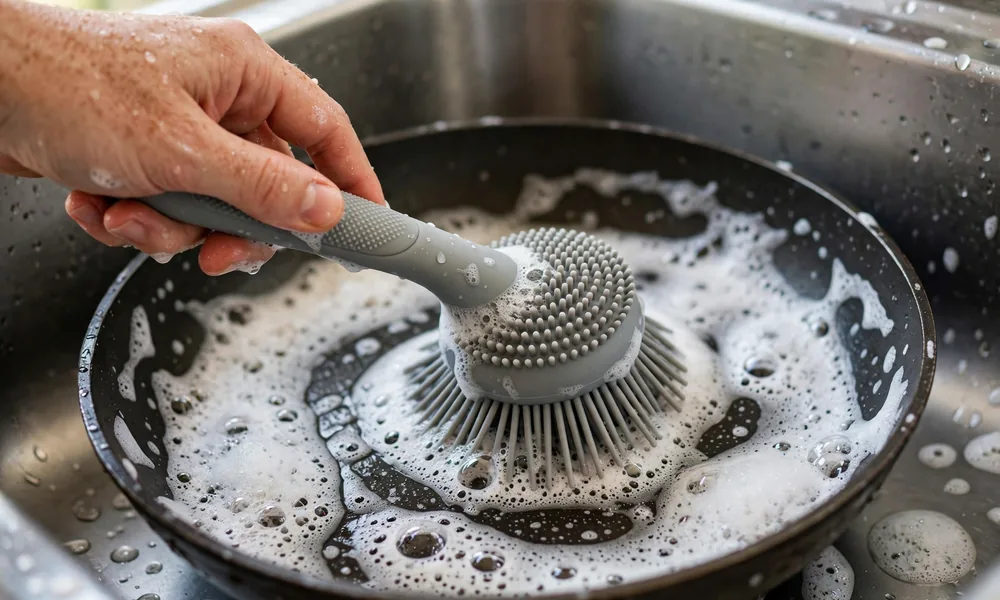
Silicone brushes use short, soft nubs instead of bristles. They cannot scratch anything, they rinse completely clean, and they dry in minutes because nothing soaks in. They are the best choice for non-stick pans and anyone who has ever thrown a brush away because of the smell. Their limit is scrubbing power: silicone nubs glide over burnt-on food rather than digging into it, so a pan with a baked-on crust will need a soak first.
Nylon bristle brushes
Nylon bristle brushes are the workhorses. The bristles are stiffer than silicone and tougher than natural fibre, so they shift dried rice, baked cheese and grease from roasting trays without much effort. Modern nylon brushes come in soft, medium and stiff grades, and the medium grade is the sweet spot for most kitchens: strong enough for a tray, gentle enough for a plate.
Brushes with a built-in soap dispenser
Dispensing brushes hold liquid soap in the handle and release it through the head at the push of a button. They suit a quick wash of a few plates. The catch is the seal: if it leaks, soap dribbles into the sink, and if the head is fixed, you cannot replace the bristles when they wear out. They are best as a second brush for light jobs, not as the only brush in the kitchen.
Dish Brush Comparison
| Brush type | Best for | Scratch risk | Drying speed | Scrubbing power |
|---|---|---|---|---|
| Natural bristle | Everyday plates and bowls | Low | Slow | Good |
| Silicone | Non-stick pans and glassware | None | Fast | Moderate |
| Nylon, medium | Roasting trays and baked-on food | Low | Medium | Strong |
| Nylon, stiff | Grills and oven racks | Medium | Medium | Very strong |
| Soap dispenser | Quick washes of a few items | Low | Medium | Moderate |
Most well-run kitchens keep two: a soft brush for plates and pans, and a stiffer one for trays and racks.
How to Choose the Right Dish Brush
Start with the surfaces you wash most. If your kitchen is full of non-stick pans and delicate glassware, choose silicone or soft nylon and never buy a stiff brush for them. If you roast often and scrub trays every night, a medium nylon brush with a long handle will save your wrists.
Handle shape matters more than most people expect. A long handle, around twenty-five centimetres, keeps your hands out of hot water and gives leverage on a large tray. A short palm brush gives finer control on a wine glass, where a long handle would knock the rim against the tap.
Check the head before you buy. Bristles should be evenly spaced, firmly anchored and springy when pressed: press the head against your palm and it should bounce back without splaying. Loose bristles shed into the washing-up water and end up on plates.

How to Use a Dish Brush Without Scratching
Technique matters as much as the brush. The most common mistake is pressing hard and scrubbing in circles on a dry surface, which grinds grit into the coating. The right way is slower but gentler: soak the pan for a few minutes in hot water with a drop of soap, then brush with light, even strokes, letting the bristles do the work. If food still clings, soak again rather than pressing harder.
Keep the brush clean while you work. Rinse it under the tap every minute or so during a big wash, so grit and food do not build up in the bristles and turn the brush into sandpaper. That is the hidden cause of most scratches: not the bristle, but the grit trapped inside it.
Separate your brushes by job if you can. A brush used on the barbecue grill or the oven rack picks up carbon and grease that no rinse fully removes, and using it next on a wine glass will leave a film. Keep the heavy-duty brush for heavy-duty jobs and the soft brush for everything else.
Keeping a Dish Brush Fresh
A dish brush lasts longer when it dries between uses, and the way to make that happen is to store it properly. Hang it bristle-down from a hook, or stand it in a holder with drainage holes so water runs away from the head. Never leave a brush lying flat in the bottom of the sink, where it sits in dirty water and never dries.
Clean the brush itself once a week. Rinse it under hot running water, work a drop of soap through the bristles with your fingers, and rinse again. Once a month, soak it for ten minutes in hot water with a spoonful of white vinegar, which dissolves grease and limescale. Silicone brushes can go in the dishwasher, top rack; wooden handles should stay out, since the heat and long soak can crack the wood and loosen the head.
Know when to let go. A brush is finished when the bristles splay outward and will not spring back, when bristles start to fall out, or when it smells after a proper clean. A worn brush cleans badly and scratches more, because splayed bristles drag sideways across a surface instead of pressing evenly. Once the dishes are clean and dry, they need somewhere to go, and our guide to dish drying mats that keep the sink tidy covers the best way to dry them without a rack taking over the counter.

Dish Brush Buying Checklist
- Match the bristle to your most delicate surface: silicone or soft nylon for non-stick and glass, medium nylon for trays.
- Pick a handle length that keeps your hands out of hot water without knocking glasses against the tap.
- Check that the bristles spring back when pressed and show no loose or uneven tufts.
- Make sure the brush has a hanging hole or a draining holder so it can dry bristle-down.
- Look for a replaceable head if you want the handle to last through several refills.
- Plan to replace the brush every one to three months, and sooner if it splays or smells.
Frequently Asked Questions
Can a dish brush scratch a non-stick pan?
Yes, if the bristles are too stiff or grit is trapped in them. Use a silicone brush or a soft nylon brush on non-stick, soak burnt food first, and rinse the brush often so grit does not build up.
Are silicone dish brushes as good as bristle brushes?
For everyday plates, glasses and non-stick pans, yes, and they stay fresher for longer. For burnt-on food on a roasting tray, a nylon or natural bristle brush scrubs harder. Many kitchens keep one of each.
How often should I replace my dish brush?
Every one to three months for a brush used daily. Replace it sooner if the bristles splay, shed or smell after cleaning. A brush that has lost its shape cleans badly and is more likely to scratch.
How do I stop my dish brush from smelling?
Store it bristle-down where air can reach it, rinse it well after every use, and clean it weekly with hot water and soap. Silicone brushes dry fastest and smell least.
Can I put a dish brush in the dishwasher?
Silicone and nylon brushes can usually go on the top rack, but wooden-handled brushes should not, since the heat and long soak can crack the wood and loosen the head.
Do I still need a sponge if I have a dish brush?
Not for most washing up. A brush handles plates, pans and trays better and stays fresher than a sponge. A sponge is still useful for wiping down worktops, but it is no longer the best tool for the sink itself.
The Bottom Line
The best dish brush for most kitchens in 2026 is a medium nylon or natural bristle brush with a comfortable long handle, kept beside a silicone brush for non-stick pans and glassware. Match the bristle to the surface, soak before you scrub, rinse the brush often, and store it where it can dry. The right brush is a small purchase, but it is one you will reach for three times a day.