The odor eliminators that actually remove smells in 2026 do something most home fragrance products never attempt: they take the smell away instead of covering it up. A bad smell is made of real molecules floating in the air or trapped in fabric, and until those molecules are broken down, trapped, or neutralised, the smell is still there, however much perfume you spray over it.
That distinction is the whole point of this guide. An air freshener adds a pleasant scent to a room; an odor eliminator removes the unpleasant one. Both have their place, but when the problem is a stubborn smell — pet odour in a sofa, cooking smells in curtains, smoke in a spare room, damp in a basement — only an eliminator finishes the job. The best odor eliminators of 2026 work in different ways, and matching the method to the smell is what separates a room that smells clean from one that smells like a florist’s shop with a secret.
Key Takeaways
- Eliminators remove odour molecules; fresheners only mask them with perfume, so a smell that keeps returning needs an eliminator, not a stronger scent.
- Match the method to the smell: enzymes for pet and food odours, activated charcoal for damp and musty rooms, oxidisers for smoke.
- Treat the source, not the air: smells live in fabrics, carpets, and soft furnishings long after the air clears.
- Ventilation comes first: no eliminator can fix a room that is never aired, and ten minutes with a window open often does more than a whole bottle of spray.
- Check running costs: a cheap spray that needs half a bottle per room is no bargain, while a charcoal pouch works for months.
Eliminators vs Fresheners: The Difference That Matters
An air freshener works by adding scent. It releases perfume into the air, and your nose notices the perfume instead of the smell underneath. That can be enough for a bathroom before guests arrive or a hallway that needs a quick lift, and there is nothing wrong with it. Our guide to the best air freshener for a fresh-smelling home in 2026 compares the main types, from sprays and plug-ins to gels and misters, and explains which scents last.
An odor eliminator works by subtraction. Instead of adding a smell, it removes the molecules that cause the bad one. Cyclodextrin sprays trap odour molecules inside ring-shaped structures so your nose cannot detect them. Activated charcoal absorbs them into millions of tiny pores. Enzymes break them into odourless pieces, and oxidising formulas convert them into harmless compounds. The result is a room that smells of nothing, which is what a genuinely clean room smells like.
The difference shows up the next morning. A room treated with a freshener smells of perfume for an hour and then drifts back to the original smell as the perfume fades. A room treated with a good eliminator still smells neutral the next day, because the cause is gone rather than hidden. If you want the full comparison, our guide to the best vs worst air fresheners of 2026 puts both sides head to head.
How the Main Types of Odor Eliminator Work
Odor eliminators fall into a few clear types, and each one suits a different kind of smell. Buying the wrong type is the most common reason people conclude that eliminators do not work, when the real problem is a mismatch between method and smell.
Enzyme Sprays
Enzyme sprays are the best choice for organic smells: pet urine, vomit, food spills, and anything that once lived. Protease, lipase, and amylase enzymes break the smelly compounds into small, odourless pieces that can be blotted away. They need ten to fifteen minutes of dwell time, and they need to reach the smell, so spray generously on fabrics and carpets rather than misting the air above them.
Cyclodextrin and Trapping Sprays
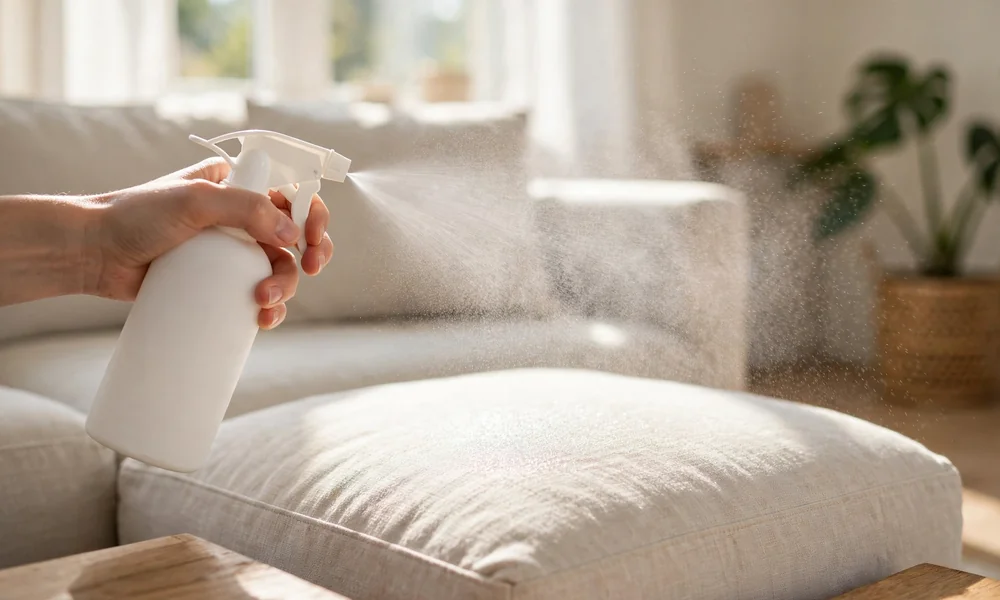
Cyclodextrin sprays are the everyday option for fabrics and soft furnishings. The cyclodextrin molecule is shaped like a tiny cup, and odour molecules slip inside it and get trapped there, so they can no longer reach your nose. These sprays suit curtains, sofas, rugs, and car seats, and they work fast, in minutes rather than hours. They are less effective on a deep source, such as urine soaked into carpet padding, where an enzyme formula is the better tool.
Activated Charcoal Pouches and Gels
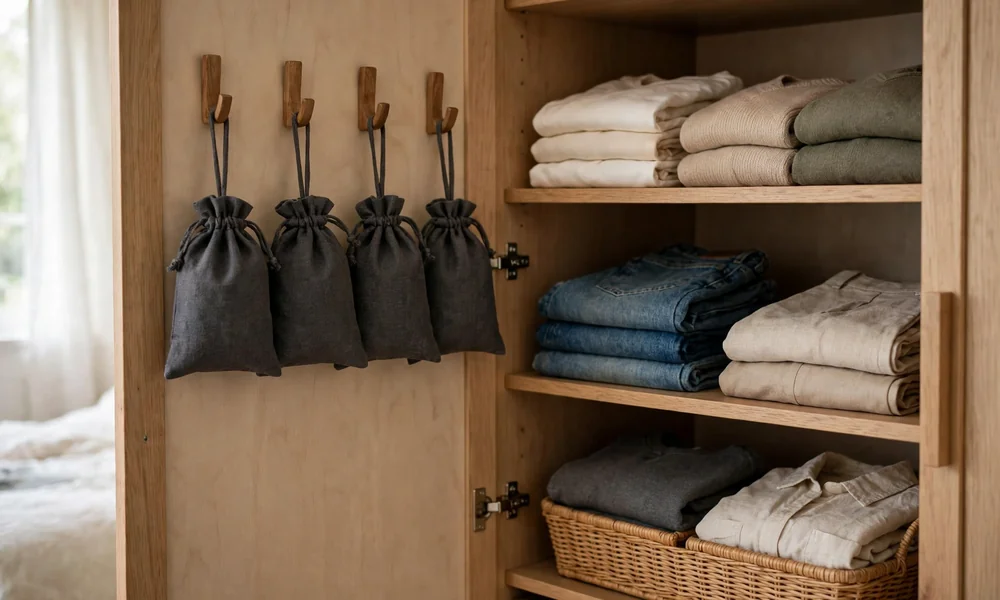
Activated charcoal works slowly and steadily, which makes it ideal for enclosed spaces. A pouch hung in a wardrobe, placed in a shoe cupboard, or tucked into a car absorbs odours day after day for months, with no power, no spray, and no scent of its own. Gels work the same way in small rooms. Neither will clear a strong smell quickly, but both are excellent at keeping a space neutral over time.
Oxidising Sprays and Ozone-Free Treatments
Oxidising formulas are the heavy artillery, and they suit smoke, damp, and long-standing smells that nothing else has shifted. They work by chemically changing the odour molecules into odourless compounds. They are stronger than other types, so follow the label carefully, ventilate the room, and keep pets and children out until the area is dry. Avoid ozone generators for home use: they can irritate lungs and damage rubber and fabrics, and ventilation plus a good oxidising spray usually does the same job more safely.
Odor Eliminators Compared
| Type | Best For | How Fast | Watch Out For |
|---|---|---|---|
| Enzyme spray | Pet and food odours in fabric | 10–15 minutes | Needs dwell time and direct contact |
| Cyclodextrin spray | Curtains, sofas, rugs, car seats | Minutes | Weak on deep, soaked-in smells |
| Charcoal pouch | Wardrobes, cupboards, cars | Days, then months | Too slow for a strong fresh smell |
| Odour gel | Small rooms, bathrooms, bins | Hours, then weeks | Will not clear a large living room |
| Oxidising spray | Smoke, damp, long-standing smells | 30–60 minutes | Stronger chemistry; ventilate well |
Where Smells Actually Live
Most people spray the air and wonder why the smell returns. The air is rarely the problem. Smells live in soft surfaces: the sofa where the dog sleeps, the curtains that absorbed a winter of cooking, the rug by the back door, the car seats, the mattress. Fabric holds odour molecules for weeks, and every time the room warms up or the fabric is disturbed, the smell comes back.
That is why the first step is to find where the smell lives. Press your nose to the sofa cushions, the curtains, and the rug, one at a time, and the culprit is usually obvious. Treat that surface directly, generously enough to reach as deep as the smell goes, and let the product dry fully before judging the result. A smell that seems gone while a fabric is wet can return as it dries, and that is the moment for a second treatment, not a different product.
Hard surfaces matter too, but differently. A bin, a fridge seal, or a bathroom drain can hold a smell in a thin film of residue, and the fix is a thorough clean with hot water and a suitable cleaner before any eliminator is used. No spray can compensate for a dirty surface. The same applies to pet areas: the strongest smell in a home with cats is often the litter area, and our guide to the best cat litter boxes of 2026 covers boxes and litters that keep odour under control at the source.
Room by Room: What Works Where
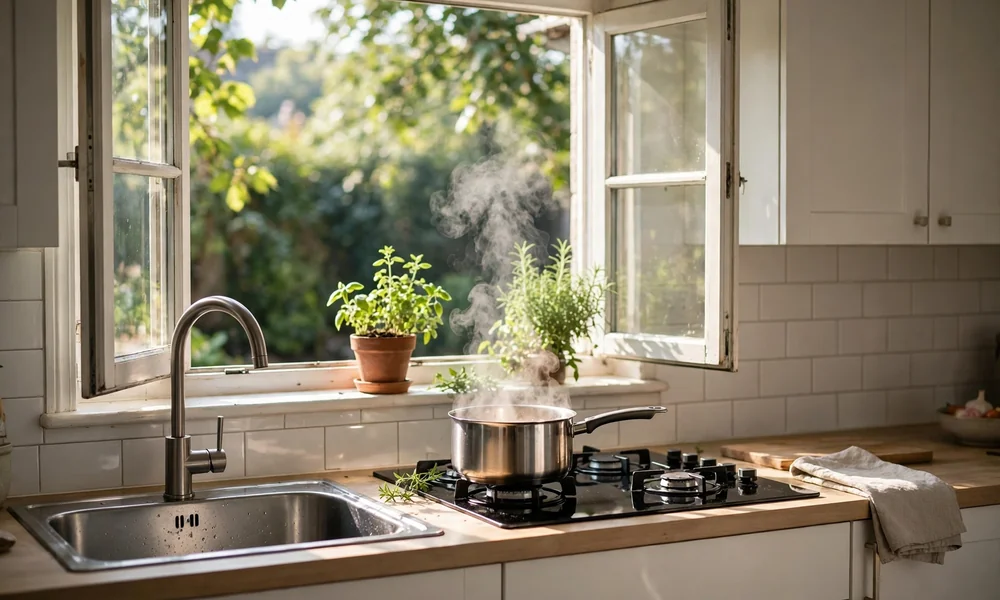
Different rooms have different smells, and the best eliminator for one room is often the wrong one for another. A kitchen needs a spray that handles cooking fat and food odours, used after cooking rather than during it, so the eliminator works on the smell instead of competing with the steam. Curtains and tea towels are the usual hiding places for cooking smells, and a light spray over them after dinner does more than any amount of spraying into the air.
Bathrooms suit a gel or a charcoal pouch, because the smell there comes and goes and nobody wants to remember to spray. A gel on a high shelf keeps working for weeks, and a small charcoal pouch behind the door absorbs damp smells steadily. Bedrooms suit a cyclodextrin spray on bedding and soft furnishings, used in the morning so everything is dry by bedtime. Living rooms need the full approach: treat the sofa and rug directly, ventilate daily, and use a pouch or gel for background control.
Cars deserve a special mention, because they are small, enclosed, and full of fabric. A cyclodextrin spray on the seats and headliner, plus a charcoal pouch under a seat, clears most car smells within a day. For smoke, an oxidising spray on the headliner and carpets, followed by a long airing with the doors open, is the most reliable fix short of a professional valet.
Odor Eliminator Checklist
- Find the source first: press your nose to sofas, curtains, rugs, and mattresses before spraying anything.
- Match the method to the smell: enzymes for pet and food odours, charcoal for damp and enclosed spaces, oxidisers for smoke.
- Treat the fabric, not the air, and spray generously enough to reach as deep as the smell goes.
- Ventilate first: open a window for ten minutes before and after treatment, because fresh air does half the job.
- Wait for full drying before judging the result, and treat a second time rather than switching products.
- Keep pets and children out of the room until a treated area is fully dry, especially with oxidising formulas.
Frequently Asked Questions
Do odor eliminators really remove smells, or just cover them?
A genuine eliminator really removes them. Enzyme, cyclodextrin, charcoal, and oxidising formulas break down, trap, or absorb odour molecules so they can no longer be smelled. A product that only adds perfume is a freshener, not an eliminator, and the smell returns once the perfume fades.
How long does an odor eliminator take to work?
It depends on the type. Cyclodextrin sprays work in minutes, enzyme sprays need ten to fifteen minutes, oxidising sprays need thirty to sixty minutes, and charcoal pouches work over days. A deep smell in carpet padding may need two treatments.
Are odor eliminators safe around pets and children?
Most sprays and pouches labelled pet-safe are safe once the treated area is fully dry, but cats are sensitive to more chemicals than dogs, so check the label for cats specifically. Keep pets and children out of the room during treatment, and ventilate well with oxidising formulas.
Why does the smell come back after I spray?
Either the spray never reached the source, or the source is deeper than you treated. Smells live in fabric and padding, not in the air, so a light mist over the surface rarely finishes the job. Treat the fabric generously, let it dry fully, and treat a second time if needed.
Can I use an odor eliminator on a mattress?
Yes, if the label says it is safe for fabric and bedding. Spray lightly and evenly, let it dry completely before remaking the bed, and use a mattress protector afterwards to stop the smell from soaking back in. Enzyme sprays suit pet accidents on a mattress; cyclodextrin suits general mustiness.
Is baking soda an effective odor eliminator?
For mild smells, yes. Baking soda absorbs odours, so sprinkling it on a rug or mattress, leaving it for a few hours, and vacuuming it up can freshen a room cheaply. For strong smells such as pet urine or smoke, a purpose-made eliminator works far better and far faster.
The Bottom Line
The odor eliminators that actually remove smells in 2026 are the ones that attack the smell itself instead of hiding it. Find where the smell lives, match the method to it — enzymes for pet and food odours, charcoal for damp and enclosed spaces, oxidisers for smoke — treat the fabric rather than the air, and ventilate. Do that, and the room will smell of nothing at all.