
The best air freshener for a fresh-smelling home in 2026 is the one that matches the room, the smell you are fighting, and how much effort you are willing to put in. A hallway that smells of damp shoes needs something different from a bathroom that needs a quick lift before guests arrive. Get the type right and the scent follows.
Most homes do not need the strongest product on the shelf. They need a freshener that works steadily, smells clean rather than sweet, and does not overwhelm a small room. This guide compares the main types, from quick sprays and plug-in warmers to automatic misters and simple gels, and explains which scents last.
Key Takeaways
- Match the freshener to the job: sprays for instant freshness, plug-ins and automatic misters for steady background scent, gels for small closed spaces.
- Odour eliminators that neutralise smells beat heavy perfumes that only cover them up, especially in kitchens and bathrooms.
- Light, clean scents such as citrus and linen suit most rooms; strong florals can overwhelm a small space.
- Place plug-ins and gels near airflow, never hidden behind furniture where the scent cannot circulate.
- Ventilation comes first: no freshener can fix a room that is never aired, and opening a window for ten minutes often does more than a whole can of spray.
How We Judged Air Fresheners
An air freshener earns its place by making a room smell genuinely fresh without announcing itself the moment you walk in. First, scent quality: does it smell like a clean room, or like a perfume counter? Second, longevity: how long the scent lasts after a spray, and how many weeks a plug-in refill or gel keeps working.
We also weighed ease of use, because a freshener that needs constant attention will be abandoned within a week, and running cost, because a cheap spray that needs half a can per room is no bargain.
The Main Types of Air Freshener
Air fresheners come in more shapes than most people realise, and the right one depends on the room and whether you want a quick fix or a constant background scent.
Aerosol and trigger sprays
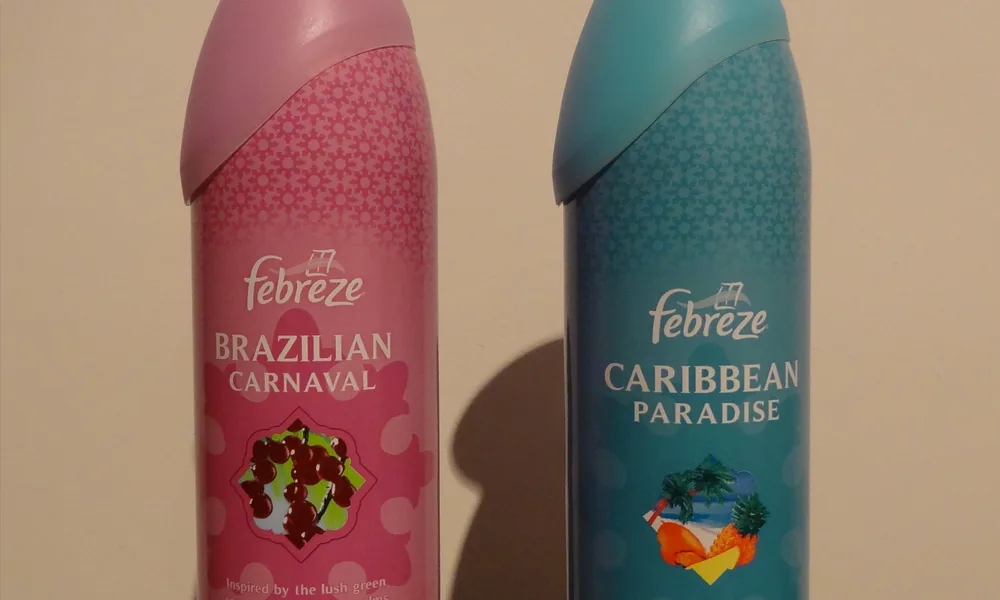
Sprays are the fastest option when you need a room to smell fresh right now, before guests arrive or after cooking. One or two short bursts in the centre of the room is enough. The scent settles after a few minutes and usually lasts one to three hours. Sprays are cheap, but a poor choice for all-day freshness because the effect fades quickly.
Plug-in warmers
Plug-in warmers heat a small bottle of scented oil and release it slowly, giving a steady, low-level scent all day. They suit living rooms, hallways, and bedrooms. Most have adjustable strength: the lowest setting is usually enough in a small room, and the highest can be overpowering under fifteen square metres. A refill typically lasts three to six weeks.
Automatic spray misters
Automatic misters sit on a shelf or wall and release a short burst of scented mist every fifteen to forty-five minutes. They suit bathrooms and hallways, where the smell comes and goes and nobody wants to remember to spray. The device costs more than a can of spray, but the scent is consistent and the timing is adjustable. Place one at chest height or higher.
Gels, beads, and solid fresheners
Gels and beads release scent passively as the gel slowly shrinks, with no power, no flame, and nothing to switch on. They suit small closed spaces: wardrobes, cupboards, and the smallest bathrooms. A gel usually lasts three to six weeks, and the scent is gentle. They will not freshen a large living room. Keep them out of reach of small children and pets.
Odour eliminators
Odour eliminators work differently: instead of adding a strong perfume, they trap or neutralise the molecules that cause bad smells. They are the best choice for kitchens after frying, for homes with pets, and for any room where the smell has a clear source. Many come as sprays for fabrics and soft furnishings, where smells actually live: curtains, sofas, and rugs hold odours long after the air has cleared. Spray lightly and let it dry.
The Best Air Fresheners in 2026
The strongest options share the same qualities: a clean scent that does not shout, a format that suits the room, and a low cost over a month of use.
Best Overall: A Clean Citrus Aerosol Spray
A light citrus aerosol is the easiest starting point and the best all-round option for 2026. Citrus reads as clean to almost everyone, suits kitchens, bathrooms, and living rooms alike, and fades gracefully instead of lingering as a sweet cloud. Look for a fine mist rather than a wet jet. Two short bursts are enough; spraying more only makes the first five minutes stronger.
Best Plug-in: An Adjustable Oil Warmer with a Linen Scent
A plug-in warmer with an adjustable dial and a linen refill is the best choice for steady, all-day freshness. Linen smells like clean laundry rather than perfume, which is why it works in bedrooms and living rooms where stronger scents would become tiring. One warmer covers a medium room; a large open-plan space needs two, at opposite ends. If you like a scent that drifts through the house without a flame or a spray, a diffuser for your home is the closest alternative, and it suits bedrooms particularly well.
Best Automatic: A Timed Mister for Bathrooms and Hallways
A timed automatic mister is the best option for rooms that need freshness on a schedule rather than on demand. Set the interval to around thirty minutes for a bathroom and forty-five for a hallway, and choose a clean, light scent rather than a heavy floral one. Change the refill when the scent weakens, as a mister in a warm room runs through refills faster.
Best for Kitchens: An Odour Eliminator Spray for Fabrics and Air
Kitchens need an eliminator, not a perfume, because cooking smells cling to curtains, tea towels, and soft furnishings. A fabric-safe odour eliminator sprayed lightly over curtains and chair cushions after cooking removes the smell at its source. Ventilate first: open a window or run the extractor for ten minutes, then spray.
Best Natural Option: A Simple Essential Oil Room Spray
If you prefer fewer synthetic ingredients, a simple room spray made with water and a few drops of essential oil is the best natural option. Lemon and eucalyptus freshen a stale room quickly, lavender suits bedrooms, and peppermint works well in a home office. Essential oils are concentrated, so a little goes a long way, and they are not suitable for use around very young children or some pets, so check before spraying them in a shared room.
Air Freshener Comparison
| Type | Best for | Scent lasts | Effort | Running cost |
|---|---|---|---|---|
| Aerosol spray | Quick freshness before guests | 1 to 3 hours | Spray when needed | Low |
| Plug-in warmer | Living rooms and bedrooms | All day, steady | Change refill monthly | Low to medium |
| Automatic mister | Bathrooms and hallways | All day, timed bursts | Change refill monthly | Medium |
| Gel or beads | Wardrobes and small bathrooms | 3 to 6 weeks | None | Low |
| Odour eliminator | Kitchens and pet smells | Hours on fabrics | Spray after cooking | Low |
| Essential oil spray | Natural, light freshness | 1 to 2 hours | Make and spray | Low |
Room by Room: Where Each Type Works Best
Every room has its own smell, size, and traffic, so a single freshener rarely suits the whole house. The living room is the easiest: a plug-in on the lowest setting gives a steady background scent, and a spray handles the days when the room has been closed up.

The bathroom needs the most help and the least perfume. An automatic mister on a gentle interval, or a gel on a high shelf, keeps the room fresh without a heavy scent on towels. Ventilation matters more here than anywhere else: a bathroom with no airflow will smell damp no matter what you spray, so run the extractor after every shower. The kitchen is different, because the smell changes every day: an odour eliminator and an open window beat any plug-in.
Bedrooms reward restraint. A light scent at bedtime is pleasant; a strong one all night can disturb sleep. A plug-in on the lowest setting is enough. If you enjoy scent as part of an evening wind-down, candles give a softer, warmer scent than any plug-in, provided they are never left burning unattended. Hallways and cloakrooms suit gels and automatic misters, since guests notice them first.
Safety and Sensitive Noses
Air fresheners are safe when used as directed. Never spray directly at people or pets, or near food. Keep plug-ins and gels away from small children, and store refills out of reach. In homes with asthma, strong fragrance can be a trigger, so choose unscented odour eliminators or very light scents and ventilate well after spraying. Birds are particularly sensitive to airborne chemicals, and some essential oils are unsafe for cats and dogs.
If anyone complains of headaches or a tight chest when a freshener is running, turn it off and air the room. The answer is usually a lower setting or a lighter scent, not a stronger product.

Checklist: Before You Buy an Air Freshener
- Find the source of the smell first: bins, damp towels, pet beds, and drains cause more bad smells than stale air.
- Choose the type by room: sprays for quick fixes, plug-ins for living rooms, automatic misters for bathrooms, gels for wardrobes.
- Pick a light, clean scent family first, such as citrus or linen, and test the smallest size for a week.
- Check the running cost, not just the shelf price: refills add up over a month.
- Place the freshener where air moves, at waist height or above, never hidden behind furniture.
- Keep sprays and refills away from children and pets, and ventilate the room after every spray.
Frequently Asked Questions
What is the best air freshener for a home that smells stale?
Start with ventilation, then use a plug-in warmer with a linen or citrus refill, and keep an odour eliminator spray for fabrics and soft furnishings, where stale smells live.
Do air fresheners remove smells or just cover them up?
Most fresheners cover smells with perfume, but odour eliminators neutralise the molecules that cause the smell. For kitchens and pet smells, an eliminator works far better than a perfumed spray.
How long does a plug-in air freshener refill last?
Most refills last three to six weeks. A refill on the lowest setting in a cool room lasts longest, while the highest setting in a warm room can run through in under three weeks.
Are air fresheners safe around children and pets?
Used as directed, most are safe, but keep devices and refills out of reach, never spray near people or pets, and avoid strong fragrance and some essential oils around babies, birds, cats, and dogs.
Why does my air freshener stop smelling after a few days?
Your nose adapts to a constant scent within days, a process called nose blindness, so the freshener is usually still working even when you can no longer smell it. Changing the scent every few weeks helps.
Is it better to use a spray or a plug-in?
Sprays are better for instant freshness before guests arrive, while plug-ins are better for steady, all-day scent. Most homes work best with both: a plug-in in the living room and a spray in the bathroom and kitchen.
Bottom Line
The best air freshener for a fresh-smelling home in 2026 is not the strongest or the most expensive one. It is the right type for the room, in a light, clean scent, used at the lowest strength that works. A citrus spray for quick fixes, a linen plug-in for the living room, an automatic mister for the bathroom, and a gel for the wardrobe cover almost every home. Find the source of any bad smell first, air the room, and let the freshener do the easy part.


