
Choosing the right diffuser for your home in 2026 comes down to three questions: how big is the room, how strong do you want the scent, and how much upkeep are you willing to do. Get those three answers right and a diffuser becomes the easiest way to keep a home smelling good all day.
A diffuser releases scented oil into the air slowly and steadily, without a flame and without you having to remember it. The differences between models matter: the type that suits a small bedroom will struggle in an open-plan living room. This guide covers the types, room sizes, running costs and maintenance, so you can pick once and get it right.
Key Takeaways
- Match the diffuser to the room: reed diffusers suit small rooms and hallways, ultrasonic diffusers suit bedrooms and living rooms.
- Ultrasonic diffusers give the most control, but they need water, power and regular cleaning.
- A 100ml ultrasonic diffuser covers a bedroom; a 300ml or larger model is needed for an open living room.
- Use 5 to 8 drops of essential oil per 100ml of water, and never use wax-burner fragrance oils in an ultrasonic diffuser.
- Clean the tank weekly: a dirty diffuser grows mould and weakens the scent.
How Diffusers Work: The Four Types
Every diffuser releases scent by moving oil into the air, but the mechanism changes how it performs. Ultrasonic diffusers use a vibrating disc to turn water and a few drops of oil into a fine cool mist. Reed diffusers use thin rattan sticks that draw oil up from a bottle and release it slowly, with no power or noise. Nebulizing diffusers use pressurised air to break pure oil into tiny particles, giving the strongest scent. Heat diffusers warm oil gently for a soft scent in small spaces.
For most homes, the choice is between ultrasonic and reed. An ultrasonic diffuser is the best all-rounder: it covers a whole room and lets you set a timer. A reed diffuser is the best set-and-forget option, working silently for four to eight weeks with no socket. Nebulizing suits large spaces, heat a desk or small bathroom.

Ultrasonic vs Reed vs Nebulizing vs Heat
Ultrasonic diffusers are the most popular type: quiet, affordable, and easy to control. Most hold 100 to 500ml of water, run for 4 to 10 hours, and offer a timer and mist settings. Their weakness is maintenance: the tank needs weekly cleaning. Reed diffusers are the opposite: no maintenance beyond flipping the reeds every few days, but no control, and they struggle in large or draughty rooms.
Nebulizing diffusers give the strongest scent, because they use undiluted oil, but a 10ml bottle can last as little as a week, making them the most expensive to run. Heat diffusers are the gentlest and cheapest, but their scent throw is weak, so keep them to small spaces. First-time buyers should start with ultrasonic for living rooms and bedrooms, and reed for hallways.
Diffuser Types Compared
Running cost and maintenance decide whether a diffuser stays in daily use or ends up in a cupboard.
| Diffuser Type | Scent Strength | Best Room | Running Cost |
|---|---|---|---|
| Ultrasonic | Medium, adjustable | Bedroom, living room | Low, water + a few drops of oil |
| Reed | Gentle, constant | Hallway, bathroom | Low, one bottle lasts 4–8 weeks |
| Nebulizing | Strong, pure | Large living room | High, undiluted oil |
| Heat | Soft, subtle | Desk, small bathroom | Low, little oil used |
Capacity is the number most buyers overlook. A 100ml ultrasonic diffuser runs for three to four hours on continuous mist, enough for an evening in a bedroom. A 300ml model runs for seven to ten hours, and a 500ml model can run all day. Bigger tanks mean fewer refills but a larger device, so measure the shelf first.
Matching a Diffuser to Your Room
Room size is the single biggest factor in whether a diffuser works. A bedroom of around 12 square metres needs only a 100 to 200ml ultrasonic diffuser or a single reed diffuser. A living room of 20 to 30 square metres needs a 300ml ultrasonic model or two reed diffusers at opposite ends. An open-plan space over 40 square metres needs a 500ml ultrasonic diffuser or a nebulizing model.
Ceiling height matters too: a high ceiling holds far more air than the floor area suggests, so a diffuser can seem weak there. Draughts matter just as much: a diffuser next to an open window or air vent loses its scent to the airflow, while the same diffuser in a still corner scents the whole room. Put it at breathing height, not on the floor, and away from direct sunlight.
Diffusers in Bedrooms
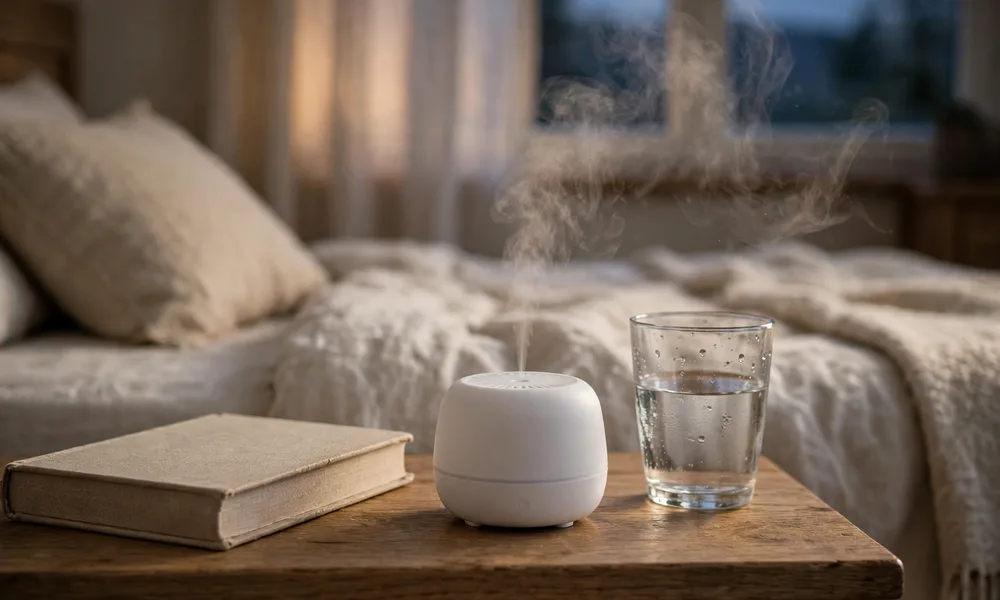
Bedrooms are the most popular room for a diffuser, because a gentle evening scent helps a room feel calm and ready for sleep. A 100 to 200ml ultrasonic diffuser with a timer is the best choice here: set it for one or two hours before bed, use a calming oil such as lavender or cedarwood, and let it switch itself off. Keep the mist on the lowest setting, because a bedroom is small and the scent builds quickly. Our guide to the best scented candles for bedrooms of 2026 covers the options that pair well with a diffuser routine.
Essential Oils and Scents: What to Use
The oil is half the diffuser, and its quality decides the quality of the scent. Pure essential oils are distilled from plants, and a good one smells like the plant it came from: lavender herbal, eucalyptus sharp, sweet orange bright. Fragrance oils are synthetic blends, cheaper but often flat and chemical, and some can damage the plastic tank of an ultrasonic diffuser. Pure essential oil is safe for a diffuser; fragrance oil must be listed as diffuser-safe.
Start with five to eight drops of oil per 100ml of water in an ultrasonic diffuser, and add more only if the scent is too faint after half an hour. More oil does not mean a better scent; too much makes the mist oily, leaves residue on nearby surfaces, and can irritate sensitive noses. Reed diffuser oil comes ready-mixed; refresh the scent by flipping the reeds every few days. Our guide to the best essential oils of 2026 covers which oils suit each room.
Blending is where a diffuser becomes personal. A simple evening blend is three drops of lavender, two of cedarwood and one of sweet orange, while a fresh morning blend is three drops of lemon, two of eucalyptus and one of peppermint. Store oils in a cool, dark place with the caps on, away from children and pets, because essential oils are concentrated and a few are unsafe for cats and dogs.

Running Costs and Maintenance
A diffuser is cheap to run, but costs add up if you choose the wrong type. An ultrasonic diffuser costs only water and a few drops of oil: a few dollars a month. A reed diffuser costs one bottle every four to eight weeks, typically eight to twenty dollars. A nebulizing diffuser is the outlier: a 10ml bottle can last as little as a week, which can mean forty dollars or more a month.
Cleaning is the chore that decides whether a diffuser survives. Empty the tank after each use, and once a week clean it with white vinegar and water, then rinse and dry it. Never use harsh cleaners or scouring pads, because they scratch the tank and the disc, and never leave water sitting in the tank for days, because it grows mould that you then breathe in as mist. Replace reed sticks every month or two.
Where to Place a Diffuser
Placement is a small decision with a big effect. The best spot is a stable, flat surface at waist or chest height, where you spend the most time, away from windows, doors and air vents. A diffuser on a high shelf scents the ceiling more than the room, and one on the floor scents your ankles. Keep it a metre from electronics and paper, and out of reach of small children.
In a hallway, a reed diffuser on a console table gives a gentle welcome scent without a socket. In a bathroom, a reed diffuser also wins, as humidity carries the scent and sockets are scarce. In a living room, an ultrasonic diffuser on a side table near the sofa is the best choice. Keep candles a metre from the diffuser so mist does not dampen the wick; our guide to the best candles of 2026 covers the types that sit well alongside one.
Common Mistakes When Choosing a Diffuser
The first mistake is buying for looks instead of room size, and ending up with a tiny diffuser in a large living room you can barely smell from the sofa. The second is using too much oil, which makes the scent harsh, leaves residue on furniture, and wastes money. The third is skipping the cleaning, so the diffuser smells musty and the mist weakens, and the owner blames the oil instead of the dirty tank. Many people also place it next to a window, where the scent blows straight outside.
Diffuser Buying Checklist
- Measure the room first: 100–200ml for a bedroom, 300ml or more for a living room.
- Pick ultrasonic for control and coverage, reed for silent scent in small rooms and hallways.
- Check the timer and mist settings, and that it switches off when the water runs out.
- Buy pure essential oils, not fragrance oils, and start with 5 to 8 drops per 100ml of water.
- Place it at waist height on a stable surface, away from windows, vents and electronics.
- Plan for weekly cleaning, and replace reed sticks monthly.
Frequently Asked Questions
How long should I run a diffuser each day?
Thirty to sixty minutes at a time is enough for most rooms, and two to three sessions a day covers a living room. Running it all day wastes oil and can irritate sensitive noses, so use the timer to run it in bursts.
Can I use tap water in an ultrasonic diffuser?
Yes, tap water works in most ultrasonic diffusers, but distilled water is better if your tap water is hard, because mineral deposits build up on the disc and weaken the mist. If you use tap water, wipe the tank dry after each use and descale weekly with white vinegar.
Are diffusers safe around pets?
Diffusers can be used around pets if you choose the oils carefully and ventilate the room. Some essential oils, including tea tree and peppermint, are unsafe for cats and dogs. Always leave a door open so a pet can leave, and never run a diffuser in a small closed room with an animal inside.
Why does my diffuser smell weak?
A weak scent usually means the room is too big for the diffuser, the oil is old or poor quality, or the tank needs cleaning. Check the room size first, then try a fresh bottle of pure essential oil, and clean the tank with vinegar and water.
How often should I replace reed diffuser sticks?
Replace reed sticks every four to eight weeks, or sooner if the scent fades even after flipping them. Old reeds clog with oil residue and stop drawing scent up. Use fresh reeds, and flip them every three or four days.
Can I leave a diffuser running overnight?
You can, if it has an auto shut-off and a timer, but it is better to run it for one or two hours before bed and let it switch itself off. Running it all night uses a lot of oil and makes the scent too strong by morning.
The Bottom Line
The right diffuser matches your room, your tolerance for upkeep, and the scent strength you enjoy. An ultrasonic diffuser with a timer is the best choice for bedrooms and living rooms, and a reed diffuser is the best choice for hallways and bathrooms. Measure the room, start with a little oil, and clean the tank weekly.


