
Best Dish Drying Mats for a Cleaner Counter in 2026
The best dish drying mats for a cleaner counter in 2026 do one simple job brilliantly: they soak up the water that runs off washed dishes before it can pool and stain your worktop. You rinse a stack of plates, set them down, and within minutes a puddle is creeping toward the edge of the counter. A good mat stops that water where it lands and keeps the counter dry.
The trouble is that drying mats vary far more than their humble appearance suggests. Some absorb a whole sink-load and dry out overnight. Others stay soggy for a day and smell faintly of damp within a week. This guide compares the main types and explains what actually keeps a counter clean.
Key Takeaways
- Microfiber mats absorb the most water, but they need regular washing or they start to smell.
- Silicone mats dry fastest and never smell, yet they hold less water, so they suit small loads best.
- Size matters most: a mat should fit a full sink-load without dishes hanging over the edge.
- A waterproof backing protects the counter, while an unbacked mat can trap damp against wood or laminate.
- The best mats roll or fold away when not in use, so they never become a permanent fixture.

Why a Drying Mat Beats a Puddle on the Counter
A wet counter is more than an annoyance. Standing water seeps into the seams of laminate, swells the edges of wooden worktops, and leaves white mineral rings that take real effort to remove. It also turns the area beside the sink into a breeding ground for the bacteria that cause stale, musty smells. A drying mat deals with the water at the source, catching it as it drips off the dishes.
There is a drying argument too. Dishes set on a hard counter sit in their own runoff, so the rims stay wet and the bases leave rings. A mat lifts dishes slightly off the surface and lets air move around them, so they dry faster and with fewer water spots. If you already own a good dish rack, a mat underneath it catches whatever the rack misses, and the two together keep the whole sink area dry.
The Main Types of Dish Drying Mat
Microfiber Mats
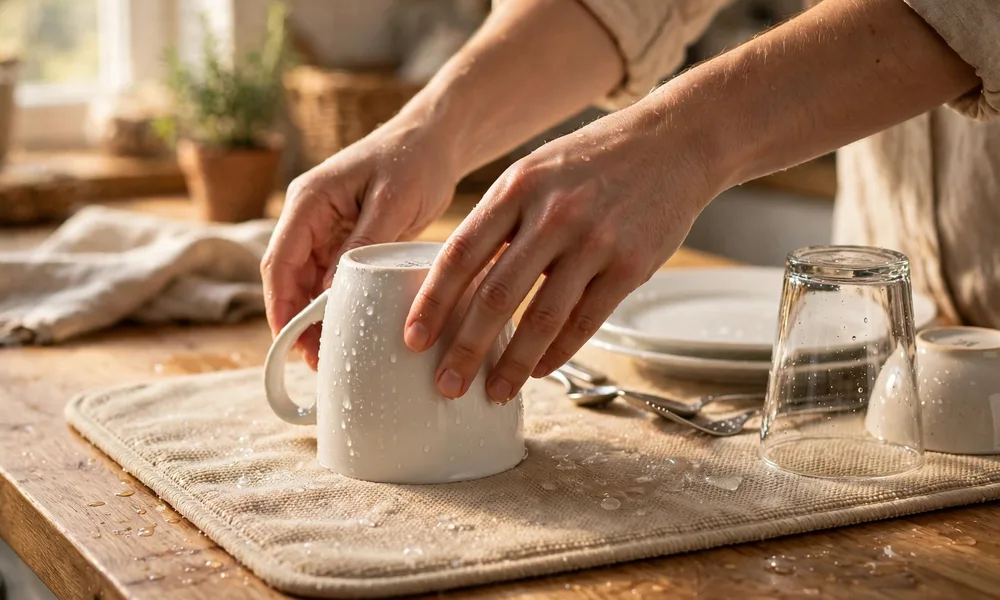
Microfiber is the most popular drying mat material, and for good reason. The fine fibres hold many times their own weight in water, and the plush surface cushions delicate glassware. A good microfiber mat can absorb a full load without a single drop reaching the counter.
The weakness is hygiene. A microfiber mat that stays damp becomes a home for odour-causing bacteria, and once the smell sets in it is hard to remove. Hang the mat over a tap or chair back after every use so air reaches both sides, and machine-wash it at least once a week. Look for a waterproof layer between the absorbent top and the counter, so water never soaks through to the surface below.
Silicone Mats
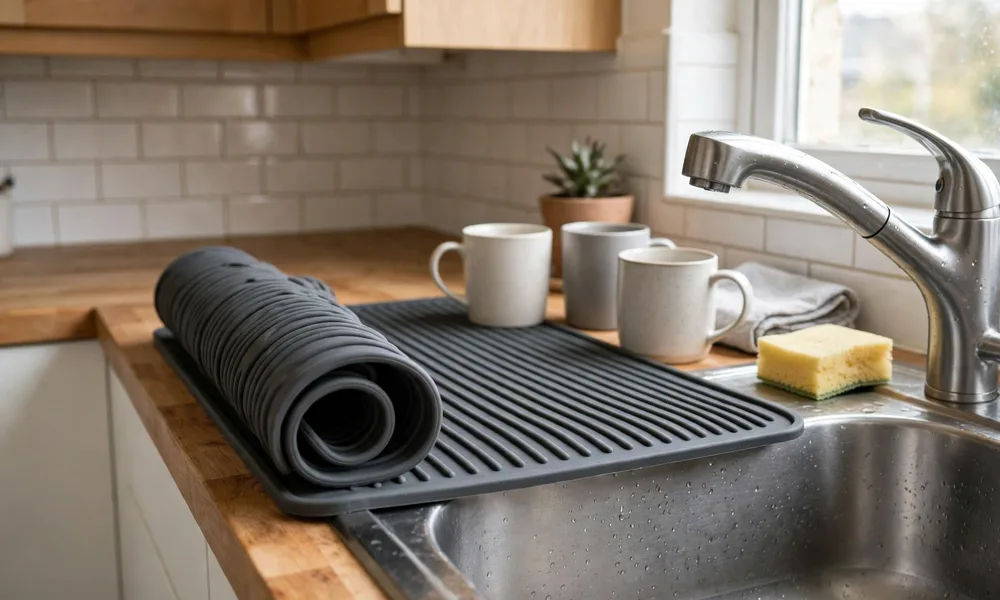
Silicone mats work differently. Instead of absorbing water, they hold it in raised ridges and channels, keeping dishes up out of the puddle while the water evaporates. They never smell, because nothing soaks in, and they rinse clean in seconds. Most are heat-resistant enough to double as a trivet, and many roll up neatly for storage.
The trade-off is capacity. A silicone mat holds far less water than a microfiber one, so a big load will overwhelm it and water will spill off the edges. Silicone suits small households, people who wash as they go, and anyone who mostly dries glasses and mugs. For a family-sized load, pair a silicone mat with a rack, or choose a larger microfiber mat instead.
Stone and Diatomaceous Earth Mats
Stone mats, usually made from diatomaceous earth, are the newest arrival in the drying world. They feel like a smooth slab, absorb water almost instantly through tiny pores, and dry out completely within an hour or two, so they never develop a damp smell. They never need washing, and they resist mould naturally.
They have real limits, though. A stone mat is heavy, rigid, and fragile, it will not fit in a drawer, and it saturates after a limited amount of water. Stone mats suit a single person or a couple who dry a few glasses and plates at a time.
Bamboo and Wooden Mats
Bamboo and wooden mats bring warmth to a kitchen and let air circulate freely under the dishes, which helps them dry quickly. Slatted designs drain water straight through, so they need a tray underneath, while solid bamboo mats with a raised edge contain the water better. They are sturdy and long-lasting, and they do not trap odours the way fabric can.
The catch is maintenance. Wood must be dried properly after use or it warps and grows mould in the joints, and bamboo still needs regular oiling. Wooden mats suit people who like natural materials and are willing to care for them.
Roll-Up and Over-Sink Mats
Roll-up mats are usually made from silicone-coated steel rods or rubber, and they unroll across the sink itself rather than sitting on the counter. Dishes drain directly into the sink, so the counter stays completely dry, and the mat rolls up into a tube small enough for a drawer. They are the best choice for very small kitchens, where counter space is scarcest.
The compromise is that they hold fewer dishes than a flat mat, and heavy pans can bend the rods over time. As a second drying spot, though, they are hard to beat: the main mat handles the plates, and the roll-up mat takes the glasses over the sink.
Dish Drying Mats Compared
| Type | Absorbency | Drying speed | Smell risk | Best for |
|---|---|---|---|---|
| Microfiber | Excellent | Slow | High if neglected | Family loads |
| Silicone | Low | Very fast | None | Glasses and small loads |
| Stone | Moderate | Fast | Very low | Singles and couples |
| Bamboo and wood | Low | Moderate | Moderate | Natural kitchens |
| Roll-up over-sink | Low | Fast | None | Tiny kitchens |
The table makes the trade-off plain: no single mat wins on every measure. Microfiber absorbs the most but demands the most care. Silicone and stone stay fresh with almost no effort but hold less water. Most households end up happiest with a large microfiber mat for the main load and a small silicone one for glasses.
How to Choose the Right Size
Measure before you buy. A mat should be at least as wide as your sink and deep enough to hold a dinner plate with room to spare, which usually means around 45 by 60 centimetres for a family kitchen and 40 by 50 for a smaller one. A mat that is too small forces dishes to hang over the edge, where they drip onto the counter anyway.
Thickness matters too. A thick mat cushions fragile glassware and absorbs more water, while a thin mat dries faster and stores more easily. If you wash heavy pans, choose a dense, non-slip base, and insist on a waterproof backing for wood and laminate counters.
Keeping a Drying Mat Clean and Fresh
A drying mat is only as clean as its care routine. The most important habit is airing it out after every use: drape a microfiber mat over the tap so both sides get air, and stand a silicone mat on its edge to drain. Never leave a mat flat on the counter overnight, because the underside stays wet and the smell follows within days.
Wash fabric mats weekly in the machine on a warm cycle, without fabric softener, which coats the fibres and reduces absorbency. Silicone and stone mats need only a rinse and a wipe. Replace any mat that stays smelly after washing. The right dish soap helps too: a soap that rinses clean leaves less residue on dishes, which means less film on the mat.
The Worst Drying Mats to Avoid
The worst drying mats look generous in the shop and fail within a month at home. Thin single-layer mats with no backing soak through in minutes and bunch up under the dishes. Mats with a foam core are worse, because the foam holds water deep inside where it never fully dries, so the mat smells even with regular washing.
Avoid mats with a printed or coated top surface that repels water instead of absorbing it; the water beads and runs straight off the edge onto the counter. Avoid very small mats sold as space-savers, because they are too small for a real load. If you run a dishwasher most days and only hand-wash a few items, a small silicone mat is a better buy than a large fabric one that sits damp and unused.
Checklist: Buying a Dish Drying Mat
- Measure your sink and counter first, and choose a mat that fits a full load without dishes hanging over the edge.
- Pick microfiber for maximum absorbency, silicone or stone for the fastest drying and the least smell.
- Check for a waterproof, non-slip backing, especially on wood or laminate.
- Make sure the mat can be machine washed or rinsed clean easily, and that it dries out fully between uses.
- Choose a size you can roll or fold away, so the mat does not live permanently on the counter.
- Match the mat to your load: a big family needs a large absorbent mat, while a small household can use silicone or stone.
Frequently Asked Questions
How often should I wash a dish drying mat?
Wash a microfiber mat at least once a week, and more often if it smells damp or feels heavy. Silicone and stone mats only need a rinse and a wipe after each use. The rule is simple: if the mat smells, it is overdue.
Do dish drying mats keep counters cleaner?
Yes, provided the mat is big enough and absorbent enough for your load. A good mat catches drips before they spread, protects the counter from scratches, and gives wet dishes a defined place to dry. A mat that is too small or too thin will not help, because water escapes around the edges.
Can I put a dish drying mat in the washing machine?
Most microfiber and fabric mats are machine washable on a warm cycle, but always check the label first. Skip fabric softener, which reduces absorbency, and air-dry the mat rather than tumble-drying it.
Are silicone drying mats better than microfiber?
Neither is better overall. Silicone dries faster, never smells, and rinses clean, but it holds far less water. Microfiber absorbs a whole sink-load but needs regular washing. Small households often prefer silicone, while families usually need microfiber.
Why does my drying mat smell?
The smell comes from bacteria growing in a mat that stays damp. It usually means the mat is left flat on the counter overnight, washed too rarely, or made with a foam core that never fully dries. Air it out after every use, wash it weekly, and replace it if the smell survives a wash.
Can I use a drying mat instead of a dish rack?
Yes, for most everyday loads. A mat is gentler on glassware, takes up less space, and folds away when not in use. A rack still wins for large loads, because it holds plates upright and lets air circulate. Many kitchens use both: a rack for the plates and a mat underneath to catch the drips.
The Bottom Line
The best dish drying mats for a cleaner counter in 2026 are the ones that match your kitchen, not the ones with the longest list of features. A large microfiber mat is the safest choice for a busy family kitchen, because it absorbs a full load and protects the counter underneath. A silicone or stone mat is the better pick for a small household that values fast drying and zero smell. Buy the right size, check the backing, and air it out after every wash, and the puddle by the sink becomes a thing of the past.


