
A dishwasher is the one appliance you notice only when it fails you. When it works, dinner disappears into the rack and comes back spotless, dry and warm, and you never think about it at all. When it does not work, every meal ends with gritty glasses, wet plates, a damp smell when the door opens, and a second round of hand-washing that defeats the whole point of owning the machine. The best and worst dishwashers in 2026 look almost identical in a showroom. The difference is hidden inside: in the pump, the spray arms, the drying system and the quality of the racks. This guide puts the two sides head to head, so you can tell a machine that will quietly serve your kitchen for a decade from one that will annoy you every single day.
Key takeaways
- The best dishwashers clean baked-on food without pre-rinsing, dry plastics properly and run so quietly you can hold a conversation over them.
- The worst leave grit on glasses, pool water on plates and mugs, and rattle loudly enough to be heard from the next room.
- Rack design matters more than most buyers expect: flexible tines, a third rack and adjustable height decide whether tall glasses and big pans fit.
- A cheap dishwasher that needs repairs in year two and replacing in year five costs more than a solid mid-priced model bought once.
- Noise rating, drying technology and filter design are the three specifications worth checking before any other feature on the box.

What separates the best from the worst
The gap between a great dishwasher and a poor one comes down to engineering that is easy to miss on a spec sheet. A good machine pushes water through its spray arms at high pressure and in a pattern that reaches every corner of the tub, including the top rack and the far edges where glasses sit. It heats the water properly and uses a drying system that actually removes moisture instead of just blowing warm air around. A poor machine does the opposite: weak spray arms, pressure that drops when the rack is full, and a drying cycle that is little more than hope and a fan. You open the door to find food still stuck to plates, a film on your glasses, and puddles sitting on every upturned mug. The best machines also filter food debris properly, so dirty water is not sprayed back onto clean dishes. The worst let particles circulate, which is why plates can come out dirtier than they went in. Solid racks glide smoothly and door seals stay tight for years, while cheap racks wobble, tines bend and doors sag. None of this shows in a photograph, which is why so many people buy the wrong machine and discover the truth only after the return window has closed.
The best side
The best dishwashers of 2026 share a set of qualities that have nothing to do with brand names or price tags. They clean thoroughly, dry completely, run quietly, and are built to last. Each quality is worth understanding on its own, because it tells you exactly what to test and what to ask about before you buy.
Cleaning power that handles real food
A great dishwasher does not need you to rinse every plate before loading it. It handles dried pasta sauce, egg yolk, porridge and baked-on cheese with a normal cycle, because its spray arms deliver strong, even pressure and its wash system keeps the water hot from start to finish. Sensors adjust the cycle to the soil level, and a dedicated top-rack spray gives glasses the same attention as plates below. If you cook most nights, this is the single most important quality. A machine that cleans properly saves you the ten minutes of pre-rinsing a weak machine demands, and over a year that adds up to hours of your life back.
Drying that actually works
Drying is where good dishwashers quietly earn their keep. The best use a heated drying system, often with a fan or a condensation method that pulls moisture off dishes and out of the tub, so plates, glasses and even plastics come out dry enough to put straight in the cupboard. Poor machines leave everything damp, and plastics worst of all, because they rely on residual heat alone and give up before the cycle ends. The best machines also vent steam properly, so the tub does not stay humid and develop smells between cycles.
Quiet running you forget is on
Noise is the quality buyers underestimate most. The best dishwashers run at around 44 decibels or lower, which is quieter than a normal conversation and easy to ignore even in an open-plan kitchen. The worst run at 55 decibels or more, with a rattling, sloshing hum that fills the room and makes you plan your washing around the television schedule. Quiet running is not a luxury feature. It is the difference between a machine that fits into your home and one that dictates when you can use it. Insulation, a balanced pump and solid seals make a machine quiet, and those are the same things that make it last, so a low noise rating is also a useful proxy for build quality.
Racks that fit real kitchens
The best racks are the ones you never have to fight. Tines fold down to make room for large pots, the top rack adjusts in height to fit tall glasses or deep bowls, and a third rack at the top holds cutlery flat so the lower basket has room for everything else. The worst racks are rigid and cramped. Tines are fixed, so a roasting pan blocks half the rack. The cutlery basket eats space in the bottom. Wheels stick and the rack tilts when you pull it out with a full load. If your kitchen runs on big pans and tall glasses, rack flexibility matters more than any wash programme, because a machine that cannot hold your dishes cannot clean them.

The worst side
The worst dishwashers fail in the same few ways: weak washing, poor drying, loud running and fragile parts, which usually arrive together because they all come from the same cost-cutting.
Weak wash performance
A bad dishwasher leaves food on plates. Anything with dried sauce, grease or starch comes back with residue you can see and feel. The spray arms are underpowered, so the top rack gets a fraction of the water the bottom rack gets, and glasses up there come out cloudy. Filters clog quickly, and because the machine cannot clear debris properly, dirty water gets sprayed back onto dishes that were already clean. Owners of these machines end up pre-rinsing everything, which means the dishwasher is no longer saving them any work at all. If a machine needs you to wash the dishes before it washes them, it has failed at its one job.
Drying failures
Poor drying is the most common complaint about cheap dishwashers, and the most annoying day to day. Plates come out with water spots, glasses are cloudy, and plastics are soaking wet, sometimes holding enough water to spill across the cupboard shelf when you lift them out. The tub stays damp after the cycle, which leads to smells and, over time, to mould around the door seal. A machine that cannot dry is a machine that adds work to every meal, because every item has to be towelled before it can be put away.
Noise and vibration
Loud dishwashers make themselves known. The pump hums, the spray arms clatter, and the whole machine vibrates against the cabinet when it changes cycle. In an open-plan home this is not a minor irritation. It means you cannot run the machine while you eat, while you watch television, or while children sleep. Noise also tends to get worse with age on cheap machines, as insulation compresses and the pump wears, so a machine that is merely loud when new can become unbearable by year three.
Fragile racks and cheap parts
The parts that break first on a bad dishwasher are the ones you touch every day. Rack tines bend and snap, wheels crack and fall off, the cutlery basket warps, and the door latch loosens until the door no longer closes with a satisfying click. Replacement parts are often expensive relative to the price of the machine, and by the time the second or third part fails, most owners decide to replace the whole thing. A dishwasher that lasts only four or five years is not a bargain. The best machines run smoothly at ten years, and that longevity is worth more than any discount.
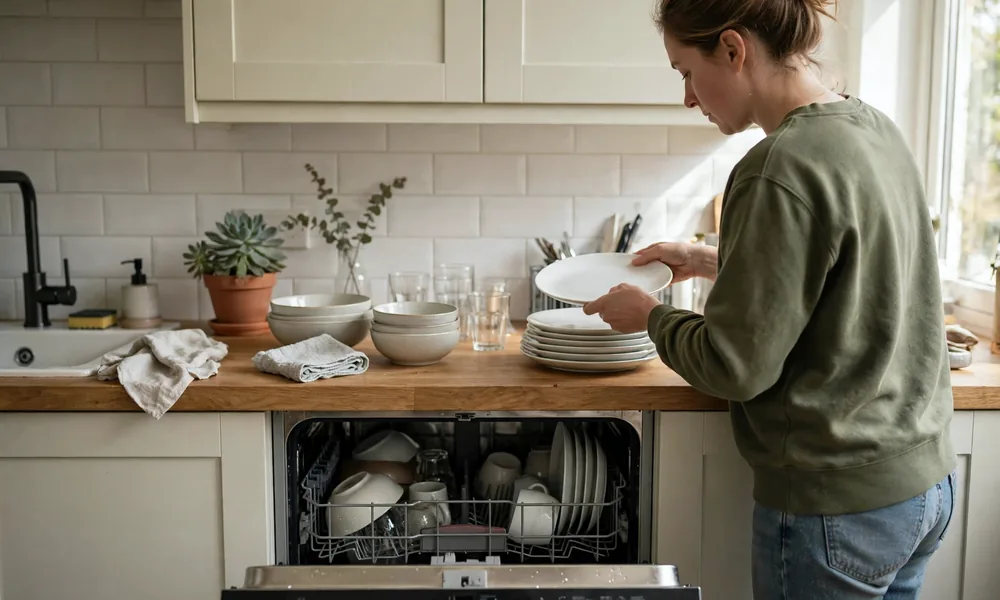
Best vs worst at a glance
Put side by side, the difference is stark. The best dishwashers clean without pre-rinsing, dry plastics and glassware properly, run quietly enough to forget, and hold their racks steady for a decade. The worst need pre-rinsing, leave dishes wet and spotted, rattle through every cycle, and start shedding parts within a few years. The best cost more upfront but less per year, because they last longer and use water and energy more efficiently. The worst look like a saving and turn into a recurring expense of repair bills and replacements. The same pattern shows up across other kitchen appliances, and our guide to the best vs worst air fryers 2026 makes the same point about cooking machines. If you want a machine that simply works, the specification sheet matters less than the fundamentals: wash pressure, drying system, noise rating and rack quality.
What to look for before you buy
Start with the noise rating and look for 44 decibels or lower. Then check the drying system and favour machines with a heated or fan-assisted dry rather than residual heat alone. Look at the racks in person if you can: pull them out, fold the tines, adjust the top rack, and see whether a large pan fits without blocking everything else. Ask about the filter and how easy it is to clean, and check the warranty, because a long warranty on the tub and a short one on the electronics tells you what the manufacturer expects to fail. The same careful approach pays off with other appliances, as our comparison of the Ninja vs Vitamix blenders 2026 shows. A little research before buying saves years of irritation.
Who each is for
The best dishwashers are for anyone who cooks most nights, runs the machine daily, and wants the job done properly without thinking about it. They suit families, keen cooks, open-plan homes and anyone who values quiet and reliability. The worst dishwashers, if they suit anyone, suit a household that uses the machine rarely, washes mostly light loads, and does not mind pre-rinsing and towel-drying. Even then, the saving is usually false economy. A mid-priced machine with a strong wash, proper drying and a low noise rating is the sweet spot for most kitchens, and it is where the best value lives. If your budget is tight, buy a simpler model from a reliable maker rather than a feature-packed cheap machine, because programmes and touchscreens do not compensate for a weak pump. Our guide to the best vs worst stand mixers 2026 follows the same logic: build quality first, features second.
The verdict
The best dishwashers win this comparison by a wide margin, and the reason is simple. A dishwasher has one job, and the best machines do it completely: they clean, dry and do it quietly, day after day, for years. The worst machines do it partially, and the part they leave undone becomes your job, every single day. The price gap between the two is real, but the cost gap is not, because a cheap machine that needs replacing in five years and wastes water and time in the meantime is the expensive choice. Buy the best machine your budget allows, check the noise rating, the drying system and the racks, and choose reliability over features.


