
A stand mixer is the most expensive small appliance most home bakers will ever buy, and it is also the one most likely to disappoint. The best stand mixers turn heavy bread dough, stiff cookie batter, and whipped cream into effortless work. They hold their speed under load, stay planted on the counter, and last for decades. The worst look almost identical in the product photo, then stall halfway through a batch of dough, throw flour across the worktop, and wobble toward the edge of the counter. This guide puts the best and the worst stand mixers of 2026 head to head, so you can tell them apart before you spend your money.
Key takeaways: The best stand mixers have strong motors, all-metal gears, heavy bases, and beaters that reach every part of the bowl. The worst have weak motors, plastic gears, light bodies, and beaters that leave batter unmixed at the bottom. Tilt-head models suit everyday baking; bowl-lift models suit heavy dough and large batches. A 4.5 to 5.5 quart bowl suits most households. Test any mixer with stiff dough inside the return window, and buy for the baking you do every week.
What Makes a Great Stand Mixer
A great stand mixer starts with power that holds up under load. Whipping cream is easy for any mixer; kneading a double batch of bread dough for ten minutes is the real test. The best mixers keep their speed steady as the dough stiffens, because their motors are strong and their gears are made of metal. A weak motor slows, strains, and overheats, and a plastic gear set can strip without warning, leaving you with a dead machine and a bowl of half-kneaded dough. Wattage alone does not tell the story: a modest motor with metal gears will outperform a high-wattage motor with plastic ones every time.
Stability is the second thing that separates the best from the rest. A stand mixer works by pushing a beater through thick, resistant mixtures, and physics pushes back. A heavy base and a low centre of gravity keep the machine planted, while a light body walks across the counter, rattles, and in the worst cases tips over. The best mixers weigh enough that you notice it when you lift them, and that weight is a feature, not a flaw. Suction feet or a rubberised base help, but nothing replaces sheer mass when the dough gets stiff.
The beater and the bowl decide whether your mixtures actually get mixed. On the best stand mixers, the beater sweeps close to the sides and the bottom of the bowl, so every part of the mixture is worked evenly. On the worst, the beater stops short, leaving a ring of unmixed flour at the bottom and a smear of butter on the sides, which means stopping to scrape by hand every few minutes. Bowl size matters too: a 4.5 to 5.5 quart bowl suits most households and handles a double batch of cookies or a single loaf with ease. Go bigger only if you regularly bake for a crowd, because an oversized bowl on a weak motor kneads nothing at all.
The Best Stand Mixers of 2026
The best stand mixers of 2026 come in two main designs, and choosing between them is the first decision you will make. Tilt-head mixers open by tipping the head back, which gives you clear access to the bowl for adding ingredients and scraping down the sides. They are usually lighter, shorter, and easier to store under kitchen cabinets, and they suit everyday baking such as cakes, cookies, and whipped cream. For most home bakers, a good tilt-head mixer is the sweet spot: easy to use, easy to live with, and strong enough for everything except the heaviest doughs.
Bowl-lift mixers keep the head fixed and raise the bowl into place with a lever, locking it firmly for heavy work. They are usually more powerful, more stable, and better suited to bread dough, large batches, and stiff mixtures. They are also taller and heavier, and they need more counter space and more muscle to move. If you bake bread every week, make double batches for a large family, or regularly work with stiff doughs, a bowl-lift mixer is the right tool. If you bake a cake at the weekend, it is more machine than you need.
Beyond the two designs, the best mixers share the same quality markers. They have all-metal gearing and a motor rated for sustained work, not just short bursts. They come with a flat beater, a dough hook, and a wire whisk that are all built to last, and they offer extra attachments, from pasta rollers to meat grinders, that turn the mixer into a whole kitchen system. They are made by companies with long warranties and real spare-parts support, so a worn beater can be replaced instead of the whole machine. The best mixers are expensive, but they are the kind of purchase you make once and use for twenty years.
Quiet running is an underrated quality of the best stand mixers. A well-built machine hums steadily even under load, while a cheap one whines, rattles, and shakes. That matters if you bake early in the morning or late at night, and it is also a sign of the build quality inside: a mixer that runs quietly has gears that mesh properly and a motor that is not straining. When you test a mixer, listen as much as you watch.
What the Best Mixers Have in Common
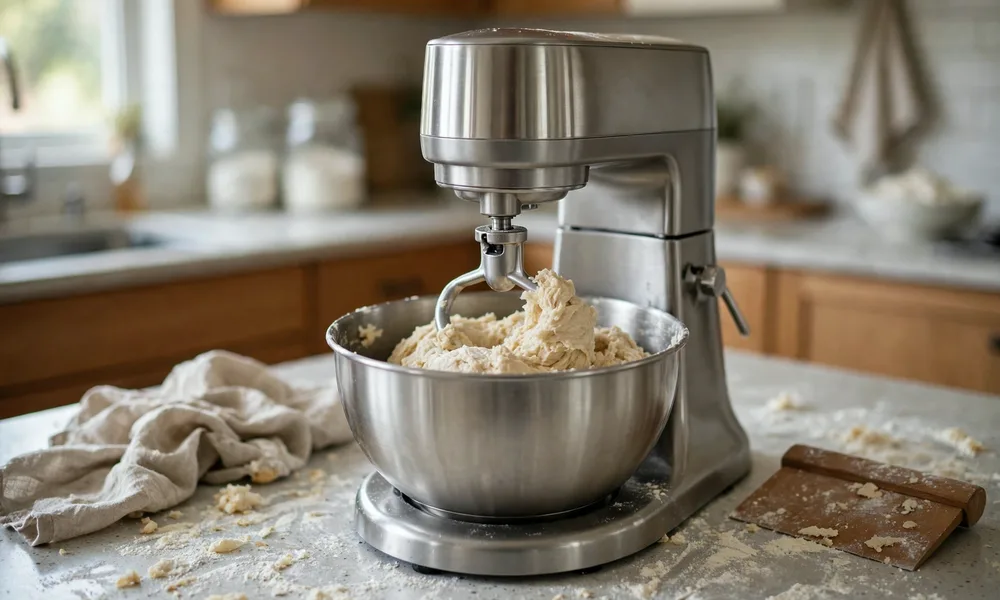
Across every design and price, the best stand mixers share the same foundations. They hold their speed under a heavy load, stay planted on the counter, and their beaters reach every part of the bowl. They come with useful attachments included, not sold as expensive extras, and are backed by warranties measured in years, not months. Most importantly, they make baking easier every single time you use them.
The Worst Stand Mixers of 2026
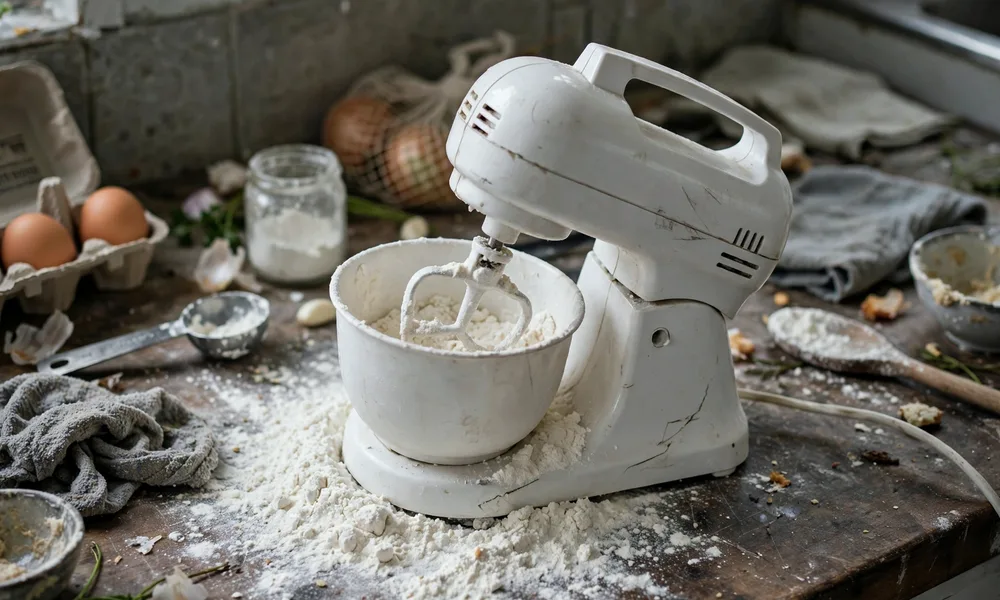
The worst stand mixers of 2026 fail in ways that only show up once real baking begins. The most common failure is the underpowered bargain mixer: a machine that costs half the price of a good one and looks the part in the photo, but stalls the moment it meets stiff cookie dough. Its motor overheats, its plastic gears strip, and its light body walks across the counter while the dough sits unmixed. These mixers are designed to pass a thirty-second demonstration with soft cake batter, and they fail in their first real month of use.
Beater reach is the second great failure. On the worst mixers, the beater hovers above the bottom of the bowl, so a layer of flour and butter sits untouched no matter how long you mix. Owners learn to stop the machine, scrape the bowl, and restart, over and over, which defeats the entire purpose of a stand mixer. Some bad mixers also have bowls that do not lock properly, so the bowl spins with the beater, or lids and splash guards that fit so badly they are useless. These are not minor annoyances; they are signs that the machine was never properly tested with real recipes.
Spare parts are the hidden trap of the worst stand mixers. A good mixer is a machine you can keep for decades, replacing a beater or a bowl when it wears out. A bad mixer is a sealed box: no replacement bowls, no spare beaters, no service network. The first time something breaks, the whole machine becomes landfill. A stand mixer is a long-term purchase, and a company that will not be there in five years cannot support it.
Noise, heat, and smell are the final warning signs. The worst mixers get hot to the touch after a few minutes of kneading, smell faintly of burning plastic, and shake so hard that you have to hold them steady. Some leak grease from the gear housing into the bowl, which is as unpleasant as it sounds. If a mixer does any of these things inside its return window, send it back immediately. These are not quirks to live with.
The Seven Warning Signs to Spot Before You Buy
Before you pay, run through this checklist. One, the motor is under 300 watts or the wattage is not stated. Two, the gears are plastic, or the maker will not say. Three, the machine is suspiciously light. Four, the beater does not reach the bottom of the bowl. Five, the bowl does not lock firmly. Six, no spare parts or attachments are sold. Seven, the warranty is one year or less from an unknown brand. One warning sign is not a deal-breaker, but three or more mean you are looking at one of the worst mixers of the year.
Best vs Worst: The Head-to-Head Comparison
Put the best and worst stand mixers side by side and the differences are impossible to miss. A top mixer holds its speed through ten minutes of bread dough; a bad one stalls in two. A top mixer stays planted while it works; a bad one walks across the counter. A top mixer leaves the bowl clean and evenly mixed; a bad one leaves flour at the bottom and butter on the sides. A top mixer runs quietly and cool; a bad one rattles, heats up, and smells of burning. These are measurable differences in power, stability, and build, and they decide whether baking feels like a pleasure or a chore.
Price is where the comparison gets interesting, because the gap between the best and the worst is deceptive. A bad mixer costs half as much as a good one, but it will need replacing within a year or two, while a good mixer lasts twenty years or more. Over a decade, the cheap mixer costs more and delivers a worse result every single time you use it. The expensive mistake is not buying the best mixer; it is buying the worst one twice. The sweet spot is a well-made mid-range mixer from a brand with a real warranty and a spare-parts network.

Who Each Mixer Is For
Weekend bakers who make cakes, cookies, and whipped cream should buy a good tilt-head mixer. It is easy to use, easy to store, and strong enough for everything except the heaviest bread doughs. Bread bakers who knead dough every week should buy a bowl-lift mixer with all-metal gears and a strong motor, because nothing else will survive the workload. Large families and keen entertainers should look at larger bowls and higher power, since batch size is what will limit them most. If you chop and slice more than you bake, a food processor may suit you better.
Students, renters, and anyone on a tight budget should still avoid the very cheapest mixers. A modest hand mixer will do a better job than a bad stand mixer at a fraction of the price, and a good stand mixer can wait until the budget allows. If you already own a bad mixer, use it only for light recipes and small batches, and let a hand mixer do the heavy jobs. And if your kitchen is small, remember that a stand mixer lives on the counter: measure your space before you buy. For smoothies and soups, see our best and worst blenders comparison.
The Verdict
The verdict is clear: the best stand mixers of 2026 are worth every penny, and the worst are a false economy. A good mixer holds its speed, stays planted, mixes evenly, and lasts for decades, turning baking from hard work into a pleasure. The worst mixers stall, wobble, leave your mixtures half-mixed, and end up as landfill within a year or two. Buy the best mixer you can afford from a brand that stands behind it, test it with stiff dough inside the return window, and it will reward you every weekend for years to come.


