The best food processors in 2026 are the quiet workhorses of the modern kitchen. They chop, slice, shred, grate, knead and puree in seconds, turning the slow, repetitive parts of cooking into the press of a button.
The best food processors share a few qualities: a motor that does not strain under a full bowl, a bowl that is big enough for a family meal, blades that stay sharp, and a design that is easy to take apart and clean. The right one earns its place on the counter and gets used several times a week.
This guide compares the best food processors of 2026 by size, power and price, with honest advice on what to buy, what to skip, and how to choose the right machine for the way you actually cook.
Key Takeaways
- Match the bowl size to your household: 7 to 9 cups suits a couple, 11 to 14 cups suits a family.
- Look for at least 500 watts if you plan to knead dough or process large batches regularly.
- A wide feed tube saves more time than any other single feature, because it means less pre-cutting.
- All parts that touch food should be dishwasher-safe, or cleaning will put you off using it.
- Buy the processor for the cooking you do now, not the cooking you imagine doing one day.
How to Choose the Right Food Processor
Choosing a food processor starts with an honest look at your cooking. Do you make big batches of soup, or single servings of pesto? Do you bake bread every weekend, or slice vegetables once a month? The answers decide the size, the power and the price you should pay. A machine that is too small will frustrate you; a machine that is too big will waste counter space and money.
Bowl Size Matters Most
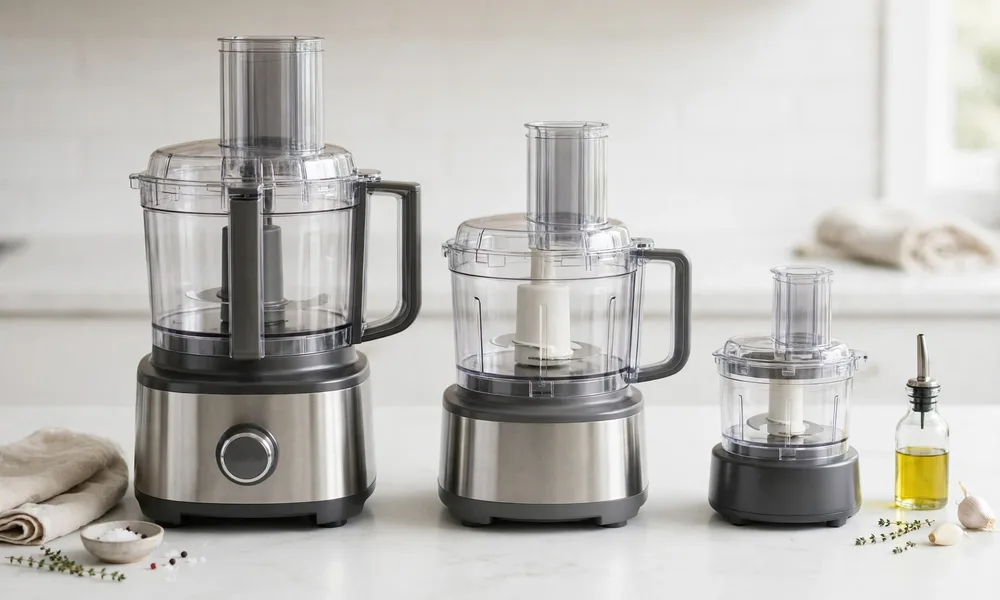
Bowl size is the first decision, and it is the one people get wrong most often. A bowl that is too small means processing in batches, which defeats the purpose of the machine. A bowl that is too big means small amounts of food sit below the blades and never get processed properly. For one or two people, a 7 to 9 cup bowl is the sweet spot. For a family of four, look at 11 to 14 cups.
Power and Motor Quality
Wattage is a useful guide, but it is not the whole story. A well-built 500-watt motor with metal gearing will outperform a cheap 1,000-watt motor with plastic gears, because it delivers steady torque without overheating. Look for a motor that runs quietly and steadily under load, and check whether the manufacturer offers a long warranty on the motor itself.
Feed Tube, Blades and Attachments
The feed tube is the part you will notice every time you cook. A wide tube takes whole carrots, potatoes and blocks of cheese, so you spend less time pre-cutting and more time cooking. Check the blades and discs included in the box: a good set covers slicing, shredding, grating and chopping, plus a dough blade if you bake.
Best Full-Size Food Processors 2026
Full-size food processors are the most versatile machines in the kitchen, and they are the right choice for anyone who cooks for a family or batch-cooks for the week. The best models in 2026 combine strong motors with large bowls, wide feed tubes and a set of discs that handle almost every prep job.
Power and Capacity Compared
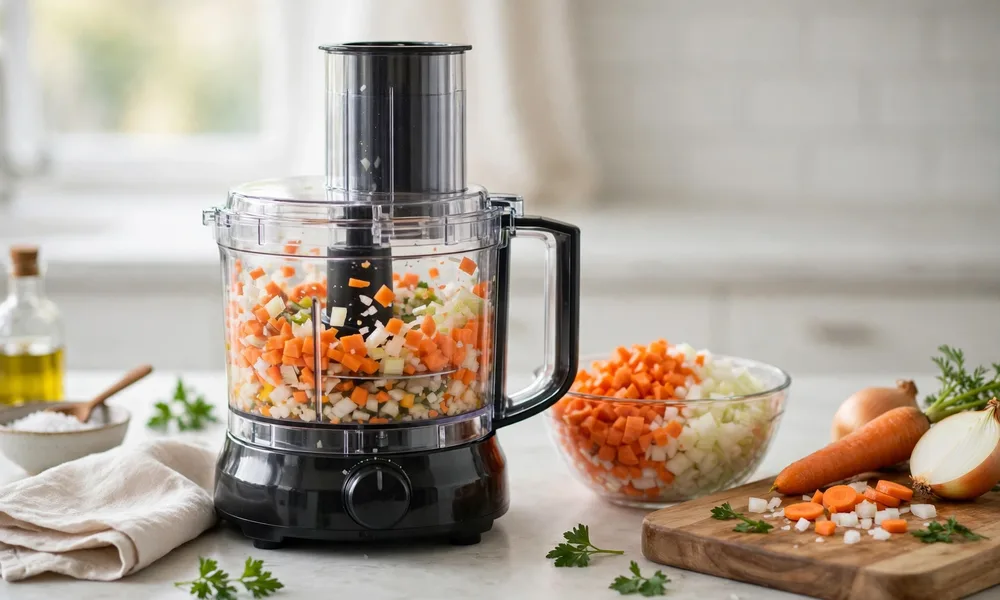
The strongest full-size processors in 2026 pair a 600 to 720 watt motor with a 12 to 14 cup bowl, and that combination handles everything from kneading two pounds of bread dough to shredding a whole block of cheddar. If you cook in bulk, spend the extra money on power; it is the difference between a machine that lasts ten years and one that lasts two.
What Full-Size Machines Do Best
Full-size processors shine at volume work: grating cheese for a lasagne, slicing a bag of potatoes for a gratin, chopping onions for a stew, or kneading dough for a weekend bake. They are also the best choice for sauces and dips made in quantity, from hummus to pesto to salsa.
Best Compact and Mini Food Processors 2026
Compact food processors suit small kitchens, single cooks and anyone who wants a machine that lives on the counter rather than in a cupboard. The best mini choppers in 2026 handle herbs, nuts, garlic, small batches of salsa and single servings of pesto with ease, and they cost a fraction of a full-size machine. They are not a replacement for a large processor, but they are a better choice than a large processor that never leaves the cupboard.
When Small Is Better
A mini chopper earns its place when you cook for one or two and your prep jobs are small: a handful of herbs, a clove or two of garlic, a small bowl of nuts for a salad. Mini choppers are also far easier to clean than full-size machines, which means you will actually use them on a busy weeknight instead of reaching for a knife.
What Compact Machines Cannot Do
Be realistic about the limits. A compact processor cannot knead bread dough, cannot slice a whole potato evenly, and cannot handle a large batch of soup vegetables in one go. If you already own a good blender, check our guide to the best smoothie blenders for home in 2026 to see which jobs belong to the blender and which belong to the processor.
Best Food Processors for Baking 2026
Bakers ask more of a food processor than almost anyone else. Pastry dough needs short, sharp pulses that cut butter into flour without warming it. Bread dough needs several minutes of steady kneading under a heavy load. A processor that handles both is worth its weight in flour, and the best baking processors in 2026 are built for exactly that work.
Dough, Pastry and Batters
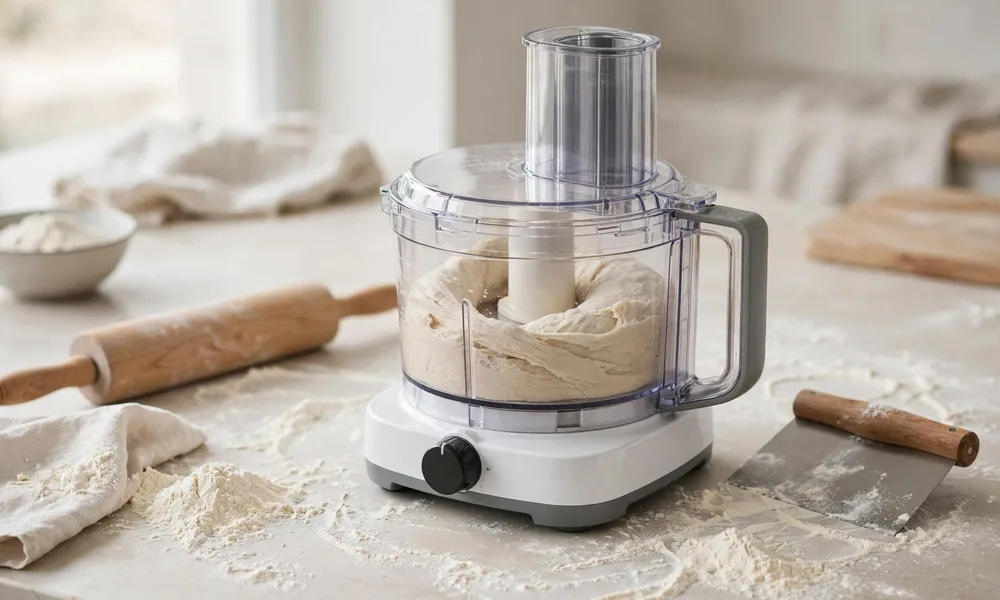
For pastry, the processor is unmatched: cold butter, flour and a few pulses produce a crumbly mixture in under a minute, far faster and more consistent than doing it by hand. For bread dough, look for a machine with a dedicated dough blade, a motor of at least 600 watts, and a bowl of 11 cups or more. For more on the tools that pair with a processor in the baking cupboard, our guide to the best hand mixers for baking in 2026 covers the lighter jobs a processor is too heavy for.
Best Food Processors by Budget 2026
Food processors span a wide price range, and the right budget depends on how often you will use the machine. A cook who processes food three times a week should spend more than a cook who uses one once a month, because the cost per use is what matters. The table below shows what each price band buys in 2026.
Under $100: Capable Basics
Under $100, you can buy a solid compact processor or a basic full-size model with a 9 to 11 cup bowl. Expect a smaller motor, fewer discs, and a shorter warranty, but the best budget models still chop, slice and shred reliably. Check that the bowl and lid are dishwasher-safe, because budget machines are often the hardest to clean.
$100 to $250: The Sweet Spot
The $100 to $250 band is where most cooks should shop. Processors in this range offer strong motors, 11 to 14 cup bowls, wide feed tubes, a full set of discs and a proper dough blade. Build quality jumps noticeably, warranties stretch to five years or more, and the machines are quieter and more stable.
Over $250: Premium Machines
Premium processors over $250 offer the strongest motors, the largest bowls, the widest feed tubes and the longest warranties, often ten years or more on the motor. They also tend to include the widest range of discs and attachments, and they are built to survive daily use for a decade.
Food Processors Compared
| Size | Bowl Capacity | Typical Power | Best For | Typical Price |
|---|---|---|---|---|
| Mini chopper | 3–4 cups | 250–350 watts | Herbs, garlic, small batches | $30–$70 |
| Compact | 7–9 cups | 400–500 watts | Couples, small kitchens | $70–$150 |
| Full-size | 11–12 cups | 500–650 watts | Families, everyday cooking | $150–$250 |
| Large / premium | 13–14 cups | 650–720 watts | Batch cooking, bread dough | $250–$400 |
Food Processor Buying Checklist
- Measure your counter and cupboard space before you buy, and check the height with the lid on.
- Choose the bowl size for your household, not for the biggest meal you might ever cook.
- Check that the bowl, lid and blades are dishwasher-safe, or cleaning will put you off using it.
- Make sure the feed tube is wide enough to take whole carrots and blocks of cheese.
- Read the warranty: five years on the motor is a good sign, one year is a warning.
- Buy from a shop with a straightforward returns policy, in case the size does not suit your kitchen.
Frequently Asked Questions
What is the best food processor for most people?
For most households, the best food processor is a full-size model with an 11 to 12 cup bowl, a motor of around 600 watts, a wide feed tube and a full set of discs.
Can a food processor replace a blender?
Not entirely. A food processor is better at chopping, slicing, shredding and kneading, while a blender is better at liquids such as smoothies, soups and sauces. Many kitchens benefit from owning both, and each one does jobs the other cannot do well. If you only have room for one, choose the processor if you cook solid food most often.
Is a food processor worth it for one person?
Yes, but buy a compact model rather than a full-size one. A mini chopper or a 7 cup processor handles the small batches a single cook actually makes, costs far less, and is much easier to clean. A large processor is wasted on single servings, because small amounts sit below the blades.
How do I clean a food processor properly?
Take the bowl, lid and blades apart and wash them in warm soapy water or in the dishwasher if the manufacturer allows it. Dry the blades immediately to keep them sharp, and store them safely in the bowl with the lid on.
Can I knead bread dough in a food processor?
Yes, if the machine is powerful enough. Use the dough blade, a motor of at least 600 watts, and a bowl of 11 cups or more, and knead for no longer than the manufacturer recommends, usually 30 to 60 seconds. For heavy bread baking, a dedicated mixer may still be the better tool, and our guide to the best stand mixers for bread in 2026 compares the machines built for that job.
How long should a food processor last?
A well-built food processor should last ten years or more with regular home use. Buying a machine with a long motor warranty and available spare parts is the best way to make sure it lasts. Keep the receipt and the manual, so a warranty claim is easy if you ever need one.
The Bottom Line
The best food processors in 2026 are the ones that match the way you cook: a compact chopper for small kitchens and single cooks, a full-size machine for families and everyday cooking, and a premium model for bakers and batch cooks. Spend the money on bowl size, motor quality and a wide feed tube, and buy from a brand that stands behind its motor with a long warranty.