Bread baking asks more of a stand mixer than almost any other kitchen job. Cake batter comes together in minutes, but bread dough needs ten minutes of steady, powerful kneading, and that sustained load is where weak motors overheat and bowls walk. The best stand mixers for bread in 2026 are built for that work: strong motors, all-metal gearing, dough hooks that reach the dough, and bowls big enough for a double batch.
This guide compares the stand mixers that handle bread dough best, from heavy-duty bowl-lift machines to capable tilt-head models. Every pick was judged on what matters for bread: kneading power, dough capacity, hook design, stability under load, and durability.
Whether you bake one sourdough loaf on weekends or sandwich bread for the family every few days, the right mixer makes kneading the easiest part of baking. Here is what to buy and how to get the most from it.
Key takeaways
- Choose at least 500 watts and all-metal gears, because kneading dough loads the motor far more than cake batter or whipped cream.
- Bowl-lift mixers suit frequent bread bakers best: the locked bowl stays stable under heavy dough and handles larger batches.
- A 5 to 6 quart bowl suits most home bakers and kneads dough for two loaves at once.
- The dough hook matters as much as the motor: a well-shaped hook kneads evenly without pushing dough up around it.
- Never knead bread dough above speed 2, or you risk overheating the motor.
Why Bread Is the Hardest Job for a Stand Mixer
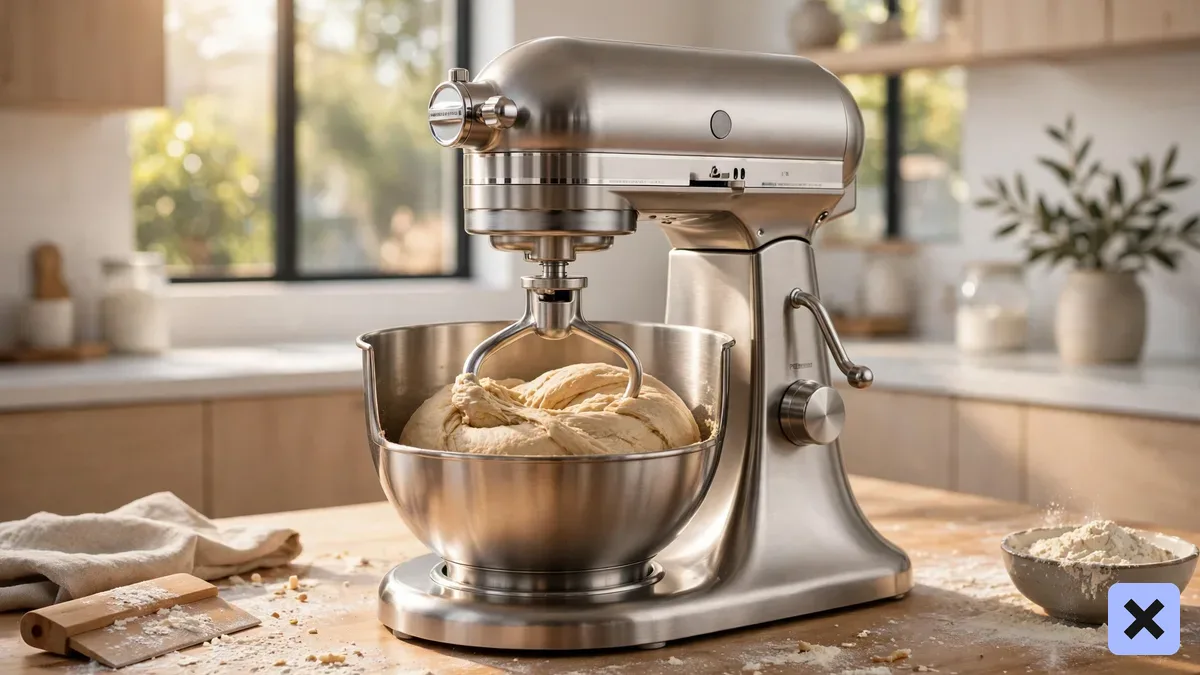
Kneading is a long, slow, heavy task. Dough starts as a shaggy, sticky mass and gradually becomes smooth and elastic, resisting the hook the whole time. A mixer that whips cream beautifully can still struggle here, because the load is continuous rather than brief. Bread bakers should shop differently: gearing, low-speed torque, and motor cooling matter more than headline wattage.
Heat is the enemy: when a motor works hard for ten minutes it warms up, and with plastic gears or poor ventilation that heat builds fast. Overheated motors cut out mid-knead or burn out entirely. The best stand mixers for bread use metal gear transmissions that shed heat efficiently, so they can knead batch after batch without complaint.
Stability matters just as much. A mixer kneading two pounds of dough can rock or creep across the counter if it is too light or its base too narrow. Heavy machines with a low centre of gravity and a locked bowl stay planted, keeping the hook on the dough.
Best Stand Mixers for Bread 2026: Comparison
| Mixer | Power | Bowl size | Design | Best for |
|---|---|---|---|---|
| Heavy-Duty Bowl-Lift Pro | 590 watts | 6 quart | Bowl-lift | Weekly bakers |
| Classic Tilt-Head 5-Quart | 500 watts | 5 quart | Tilt-head | Everyday baking |
| Artisan Sourdough Specialist | 550 watts | 5.5 quart | Bowl-lift | Sourdough |
| Professional Bakery-Grade Mixer | 650 watts | 7 quart | Bowl-lift | Serious bakers |
The Best Stand Mixers for Bread in 2026
The mixers below earned their places by handling real bread dough well: stiff whole wheat, wet sourdough, and rich brioche loaded with butter and eggs. The best pick depends on how often you bake and how much bread you make.
1. Heavy-Duty Bowl-Lift Pro: The Best Overall
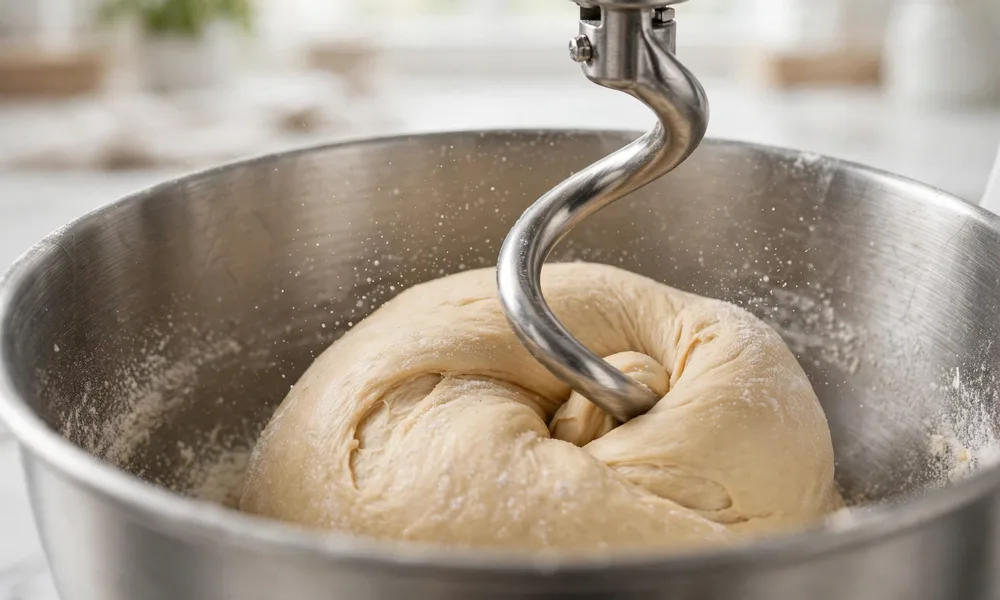
The Heavy-Duty Bowl-Lift Pro is the mixer to buy if bread is part of your weekly routine. Its 590-watt motor and all-metal gearing knead a double batch of sandwich bread dough without straining, and the bowl-lift design locks the six-quart bowl firmly in place. The spiral dough hook pulls the dough down and folds it evenly, developing gluten more consistently than a basic C-shaped hook.
What sets this model apart is how calm it stays under load: the motor hums rather than whines, the head never bounces, and the machine stays cool through a full ten-minute knead. The large bowl holds dough for two loaves at once, and the pouring shield keeps flour off the counter. It is heavy, but that weight is exactly what keeps it steady.
2. Classic Tilt-Head 5-Quart: The Best for Everyday Bakers
The Classic Tilt-Head 5-Quart is the most versatile mixer here and the easiest to live with day to day. Its 500-watt motor handles a single loaf of bread dough comfortably, and the tilt-head design makes adding ingredients and scraping the bowl simple. For bakers who make bread once or twice a week alongside cakes and cookies, this is the sweet spot between power and convenience.
The five-quart bowl holds a standard loaf plus a little extra, and the mixer is light enough to move in and out of a cupboard easily. It is not the right choice for very stiff whole wheat doughs in large batches, where it can labour and warm up, but for white, sandwich, and enriched doughs it performs well. If you want one mixer that does everything well, start here. For a broader look at general-purpose machines, see our guide to the best stand mixers for baking.
3. Artisan Sourdough Specialist: The Best for Sourdough
Sourdough is a particular challenge: the dough is often wet, sticky, and kneaded gently over a longer time. The Artisan Sourdough Specialist is built for exactly that, with a 550-watt motor tuned for strong low-speed torque and a spiral hook that folds wet dough without tearing. Its 5.5-quart bowl gives high-hydration dough room to move, and the slow, steady action develops gluten without overheating the dough.
This mixer also shines with enriched doughs like brioche and cinnamon rolls, where butter and eggs make the dough heavy and slippery. The bowl-lift mechanism keeps everything stable, and the machine runs quietly, so weekly sourdough bakers will get the most from it.
4. Professional Bakery-Grade Mixer: The Best for Serious Bakers
The Professional Bakery-Grade Mixer is the most powerful machine on this list, with a 650-watt motor, a seven-quart bowl, and gearing built to run all day. It kneads stiff whole wheat dough, large batches of pizza dough, and double batches of sourdough without breaking a sweat — ideal for households that bake in bulk, sell at a farmers market, or never want to worry about capacity again.
The size and price are the obvious trade-offs: it is heavy, tall, and expensive, and it deserves a permanent spot on the counter. But if you bake bread several times a week and regularly make more than two loaves at a time, no other mixer here matches its confidence.
How to Choose a Stand Mixer for Bread
Choosing well comes down to matching the mixer to your baking habits: a machine perfect for a weekend sourdough baker may be overkill for someone who bakes a loaf a month, while a compact mixer will frustrate a daily baker. Work through the checklist below before you buy.
Buying Checklist
- Motor power: at least 500 watts and metal gearing, so the mixer can knead stiff dough for ten minutes without overheating.
- Bowl size: 5 to 6 quarts, which handles dough for two standard loaves in one batch.
- Bowl-lift or tilt-head: bowl-lift if you bake bread often, since the locked bowl is steadier under heavy dough; tilt-head suits lighter, occasional use.
- Dough hook design: a spiral or J-shaped hook that folds dough down into the bowl rather than a C-hook that pushes dough upward.
- Weight and stability: a heavy machine with a wide, non-slip base, so it stays planted while kneading.
- Speed control: a true slow speed and a stir setting, because bread dough should be kneaded on speed 2 or below.
One more thing worth weighing is the rest of your baking: a mixer that only kneads bread is a poor investment if you also bake cakes and whip cream. The best stand mixers for bread are also good general bakers, and that versatility is part of their value. If you are still deciding between mixer types, our guide to hand mixers for baking explains where a lighter machine makes sense and where it falls short on dough.
Common Mistakes When Kneading Bread in a Stand Mixer
The most common mistake is kneading too fast. Bread dough should be kneaded on speed 2 at most, starting on speed 1 while the dough comes together. Higher speeds throw dough around the bowl, heat the motor, and can overdevelop the gluten, giving a tough, dense loaf.
The second mistake is adding too much flour to fix sticky dough. Wet doughs produce lighter, more open bread, so let the mixer work the dough for a few minutes before judging its texture, and resist dusting in extra flour.
Finally, do not overload the bowl. Every mixer has a flour capacity, usually listed in the manual, and exceeding it strains the motor and gives uneven kneading. Split oversized recipes into two batches.
Caring for Your Stand Mixer
A stand mixer that kneads bread regularly deserves some care. Wipe the head and base after each use, wash the bowl and hook promptly, and dry the hook fully before storing to prevent rust. Check the bowl-lock and head hinge every few months, and tighten anything loose.
Give the motor a rest between batches: after a ten-minute knead, let it cool for a few minutes before the next one, especially with stiff doughs. A cover keeps flour and dust out of the vents if the mixer lives on the counter.
Accurate measuring matters as much as the machine itself: bread is sensitive to the flour-to-water ratio, and a small error can turn a great dough into a sticky mess or a dry brick. Weighing flour and water with kitchen scales takes the guesswork out of baking and makes every batch more consistent.
Frequently Asked Questions
What size stand mixer is best for bread?
A 5 to 6 quart mixer suits most home bakers: it kneads dough for two standard loaves at once without overloading the motor, and is still easy to store. Larger 7 quart models suit bulk bakers, while 4.5 quart models are fine for single loaves.
Can any stand mixer knead bread dough?
Most stand mixers can knead a small batch of soft dough, but not all do it well. Mixers under 400 watts, with plastic gears, or very small bowls often overheat on stiff dough. For regular bread baking, choose at least 500 watts and metal gearing.
What speed should I knead bread dough at?
Always knead bread dough on speed 2 or lower, starting on stir or speed 1 while it comes together. Higher speeds overheat the motor and can overwork the gluten, making the bread tough.
How long should a stand mixer knead bread dough?
Most doughs need 8 to 10 minutes in a stand mixer, roughly equivalent to 12 to 15 minutes by hand. Whole wheat and enriched doughs may need longer, while soft white doughs are ready in 7 to 8 minutes. Judge by the dough: smooth, elastic, and passing the windowpane test.
Is a bowl-lift mixer better than a tilt-head mixer for bread?
For frequent bread baking, yes: bowl-lift mixers lock the bowl in place, handle larger batches, and usually have stronger motors, making them steadier under heavy dough. Tilt-head mixers are fine for occasional loaves, but they can wobble with stiff, heavy dough.
How much bread dough can my stand mixer handle?
Check the manual for the flour capacity, the most reliable guide. As a rule of thumb, a 5 quart mixer handles 500 to 600 grams of flour per batch, a 6 quart mixer 700 to 800 grams, and a 7 quart mixer around a kilogram. Staying within them protects the motor and gives evenly kneaded dough.
The Bottom Line
The best stand mixer for bread is the one that matches how you actually bake. Weekly bakers should choose the Heavy-Duty Bowl-Lift Pro for its power and capacity, while everyday bakers will be happiest with the Classic Tilt-Head 5-Quart. Sourdough lovers should look at the Artisan Sourdough Specialist, and bulk bakers will love the Professional Bakery-Grade Mixer. Whichever you choose, knead on speed 2, respect the flour capacity, and let the mixer do the work.