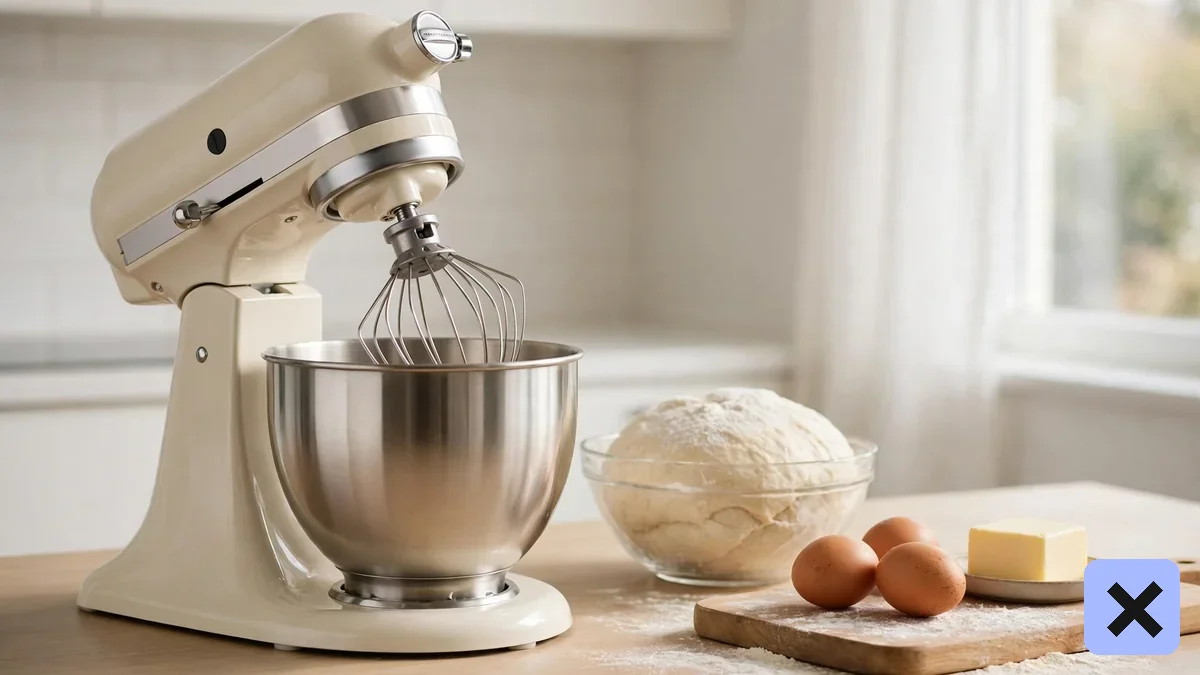
The best stand mixers for baking in 2026 do far more than stir a bowl. They knead stiff bread dough without straining, whip egg whites into glossy peaks in minutes, and cream butter and sugar into a light, even base for cakes and biscuits. A good mixer turns baking from a workout into a pleasure, and the right one will earn its place on your counter for a decade or more.
Choosing between the best stand mixers for baking is not simply a matter of picking the biggest motor or the prettiest colour. Bowl size, planetary action, speed control and stability all matter differently depending on whether you bake a loaf a week or a dozen cakes a month.
This guide compares the stand mixers that genuinely perform in 2026, from dependable everyday workhorses to powerful machines built for serious home bakers. Every pick below has been judged on kneading power, mixing consistency, build quality, ease of cleaning and value for money, so you can find the one that fits your baking, your kitchen and your budget.
Key takeaways
- Choose a mixer with a metal gear system if you bake bread regularly, and at least 300 watts of power.
- A 4.5 to 5.5 litre bowl suits most home bakers, while larger bowls are better for double batches.
- Planetary mixing action reaches the whole bowl, so you scrape less and get more even results.
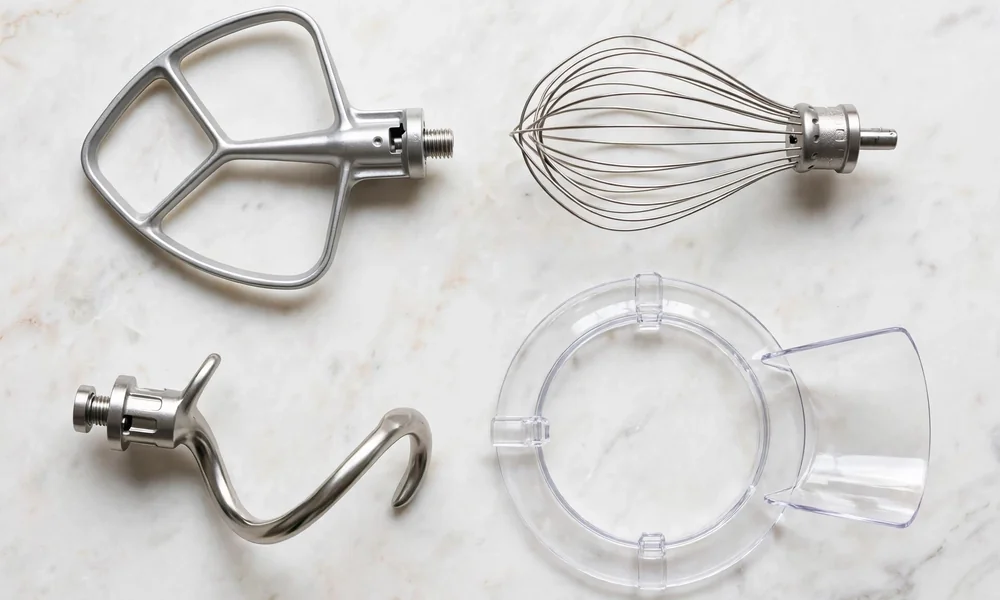
- Look for a flat beater, dough hook and wire whisk included as standard, with a pouring shield.
- Weight and suction feet matter: a stable mixer stays put when kneading stiff dough.

What Makes a Great Stand Mixer for Baking
A stand mixer earns its keep through consistency. When you cream butter by hand, the result depends on your energy and your patience. A good mixer delivers the same smooth, aerated mixture every time, and that consistency shows up in lighter cakes, better-risen bread and silkier buttercream. The difference is most obvious in recipes where texture is everything, such as meringues, chiffon cakes and enriched doughs.
Motor power is the headline figure, but it is not the whole story. A well-built 300-watt mixer with metal gears can outperform a cheap 1,000-watt machine with plastic internals, because the power actually reaches the bowl. Bowl design matters too: stainless steel is durable, a handle makes lifting a heavy bowl easier, and a bowl-lift design holds the bowl more securely than a tilt-head for stiff doughs.
The Best Stand Mixers for Baking 2026 at a Glance
The table below summarises our top picks, so you can compare the essentials in one place before reading the detailed reviews.
| Stand mixer | Bowl size | Power | Best for |
|---|---|---|---|
| KitchenAid Artisan 5KSM175 | 4.8 litres | 300 watts | All-round home baking |
| Kenwood Chef XL Titanium | 6.7 litres | 1,400 watts | Large batches and bread |
| Bosch MUM5 Series | 3.9 litres | 1,000 watts | Compact kitchens |
| Smeg SMF02 | 4.8 litres | 800 watts | Style-led kitchens |
| KitchenAid Professional 5KSM70 | 6.9 litres | 325 watts | Serious bread bakers |
| Kenwood kMix | 5 litres | 1,000 watts | Value and everyday use |
KitchenAid Artisan 5KSM175: The All-Round Classic
The KitchenAid Artisan remains the default choice for home bakers for good reason. Its 4.8-litre stainless steel bowl handles a standard cake, a batch of cookies or a single loaf with ease, and the 300-watt motor, paired with all-metal gears, copes with bread dough far better than its modest wattage suggests. The ten-speed control gives you a gentle stir for folding in flour and a fast whip for cream and egg whites.
What sets the Artisan apart is its attachment range: beyond the beater, dough hook and whisk in the box, you can add a pasta roller, meat grinder or grain mill. The tilt-head design makes it simple to add ingredients and scrape the bowl. The main compromise is capacity, as a double batch of bread dough will push the bowl to its limit. For most home bakers, though, the Artisan is the sweet spot.
Kenwood Chef XL Titanium: The Large-Batch Workhorse
If you bake in bulk, the Kenwood Chef XL Titanium is hard to beat. Its 6.7-litre bowl swallows double batches of cake batter and large bread doughs, and the 1,400-watt motor has the torque to knead stiff dough for ten minutes without overheating. The electronic speed control holds its pace under load, so the mixer does not slow down as the dough stiffens.
The Chef XL comes with a K-beater, dough hook, whisk and creaming beater, plus a splash guard and a spatula tool that scrapes the bowl as it mixes. The trade-off is size and weight: this is a large, heavy machine that needs a dedicated spot on the counter. For big families and keen bread bakers, it is one of the best stand mixers for baking in 2026.
Bosch MUM5 Series: The Compact Performer
The Bosch MUM5 is the quiet achiever of this list. Its 3.9-litre bowl is smaller than the others here, but its 1,000-watt motor and clever planetary gearing give it surprising power for its size. It kneads bread dough confidently, whips cream quickly and handles cake batter with ease, all while taking up noticeably less counter space than its rivals.
The bowl sits low and the tools reach the bottom and sides, so small quantities mix properly. The machine is also lighter than most full-size mixers, so it is easier to lift out of a cupboard. The smaller bowl is the limitation: a large bread dough will need to be split. If your kitchen is small, the MUM5 delivers the performance of a much bigger machine in a friendlier footprint.
Smeg SMF02: The Style-Led Choice That Still Bakes
Smeg mixers are bought for their looks, but the SMF02 is a serious baker too. Its 4.8-litre stainless steel bowl, 800-watt motor and ten speeds cover the full range of home baking, from gentle folding to fast whipping. The planetary action is smooth and thorough, and the machine feels solid and stable in use, with a reassuring weight that keeps it planted during kneading.
The SMF02 includes a flat beater, dough hook, wire whisk and pouring shield, beautifully finished in Smeg’s signature colours. It is not the cheapest mixer here, and its attachment range is smaller than KitchenAid’s. You are paying partly for design, and that is a fair trade if the mixer will live on display. If pure performance per pound is your priority, the Kenwood kMix below offers similar power for less money.
KitchenAid Professional 5KSM70: The Serious Bread Baker
For bakers who make bread every week, the KitchenAid Professional 5KSM70 is the strongest choice in the KitchenAid range. Its 6.9-litre bowl-lift design holds the bowl firmly in place, and the 325-watt motor with metal gears is tuned for torque rather than headline wattage, so it kneads stiff dough for long periods without strain. The larger bowl handles double batches easily, and the machine’s weight and suction feet keep it still on the counter.
The Professional includes a flat beater, dough hook, wire whisk and pouring shield, and accepts the full KitchenAid attachment range. The bowl-lift design is less convenient for adding ingredients mid-mix, and the machine is heavy to move. But if bread is your main reason for buying, this is the machine that will cope with your heaviest doughs year after year. Before you buy, it is worth checking the kitchen tools beginners should skip so you spend your budget on the tools that actually earn their keep.
Kenwood kMix: The Best Value Pick
The Kenwood kMix offers most of the performance of the premium machines at a friendlier price. Its 5-litre bowl, 1,000-watt motor and smooth speed control handle cakes, cookies, meringues and bread dough with confidence. The fold function, which turns the bowl slowly while the tool moves, is genuinely useful for delicate mixtures that need gentle handling.
The kMix looks smart and comes with the essential tools in the box, and the glass bowl version includes measurement markings. The motor is a little noisier under heavy load than the premium picks, but for everyday baking those are minor compromises, and the kMix is the best-value stand mixer in this guide. Pairing it with good habits matters too: the bakery trends that miss on flavour are a useful reminder that technique and ingredients matter just as much as the machine.
How to Choose the Right Stand Mixer
Start with how much you bake. If you bake once a week or less, a 4.5 to 5 litre bowl and a tilt-head machine are plenty. If you bake bread several times a week or cook for a large family, look for a bowl of 6 litres or more and a bowl-lift design. Enriched doughs such as brioche need a motor with strong torque and metal gears, while cake batter and meringues benefit from precise speed control.
Finally, consider your kitchen. Measure the space under your wall cabinets, and check the weight if you plan to store the mixer in a cupboard. Avoid mixers with plastic gears if you bake bread regularly, since they wear out quickly under heavy dough. Many of the kitchen gadgets that waste counter space fail exactly this test: they look clever in the shop and gather dust at home.
Stand Mixer Care and Maintenance
Wipe the body after each use, wash the bowl and tools promptly, and dry the wire whisk so it does not rust. Do not overload the bowl: exceeding the maximum flour capacity in the manual strains the motor and gears. With those habits, a good mixer should last a decade or more.
Stand Mixer Buying Checklist
- Measure your counter space and the height under your wall cabinets before you buy.
- Choose a bowl size that fits your usual batch, not your biggest-ever bake.
- Check that the flat beater, dough hook and wire whisk are included in the box.
- Look for metal gears and a motor with strong torque, not just a high wattage number.
- Test the speed control: it should start slowly and increase smoothly without jumping.
- Read the maximum flour capacity in the manual and make sure it covers your bread recipes.
Frequently Asked Questions
What size stand mixer do I need for baking?
Most home bakers need a 4.5 to 5.5 litre bowl. Choose 6 litres or more if you regularly bake double batches or make bread for a large family.
Are stand mixers good for bread dough?
Yes, with metal gears and enough torque. A dough hook kneads more consistently than hand kneading, and a bowl-lift machine is the most stable choice for stiff doughs.
Is a tilt-head or bowl-lift mixer better?
Tilt-head mixers are easier to load and scrape, and they suit cakes and everyday baking. Bowl-lift mixers hold the bowl more securely and are better for heavy bread dough and large batches.
How many watts does a good stand mixer need?
Wattage alone is misleading. A well-built 300-watt mixer with metal gears can outperform a cheap 1,000-watt machine, so look for metal gears, good torque and a motor that does not labour under load.
Can a stand mixer replace a hand mixer?
For most baking, yes, plus bread dough and large batches. A hand mixer is still useful for very small quantities.
How long should a stand mixer last?
A good stand mixer should last ten years or more. KitchenAid and Kenwood machines are known for lasting twenty years, and spare parts are widely available.
The Bottom Line
The best stand mixer for baking in 2026 is the one that matches how you actually bake. For most home bakers, the KitchenAid Artisan is the safest all-round choice, while the Kenwood Chef XL Titanium is best for large batches and the KitchenAid Professional is strongest for serious bread bakers. The Bosch MUM5 suits small kitchens, the Smeg SMF02 suits style-led kitchens, and the Kenwood kMix is the best value. Choose the right size, insist on metal gears, and buy the best build quality you can afford, and your mixer will reward you with better baking for years to come.