The worst kitchen gadgets that waste counter space all make the same promise. They will save you time, make cooking easier, and earn their place on the worktop. Then they sit there while you chop vegetables in the few inches of free space left beside them.
Counter space is the most valuable surface in a home kitchen: where meals are prepared, lunches are packed, and ingredients are sorted. Every bulky appliance that lives on it permanently takes that space away from the work itself.
This guide names the worst offenders by space taken, frequency of use, and what each replaces. Some are good tools that belong in a cupboard. Others are novelties never worth the footprint. Either way, if a gadget does not earn its square footage, it should not live on the counter.
Key takeaways
- The worst kitchen gadgets are bulky, single-use, and used less than once a month.
- A gadget should earn its counter space with weekly use, or it belongs in a cupboard.
- Stand mixers, juicers, and bread makers are the biggest space thieves.
- Multi-use tools such as a blender, a sharp knife, and a large chopping board replace several single-use machines.
- Before buying a new gadget, measure its footprint and count how often you will realistically use it.
Why Counter Space Disappears So Fast
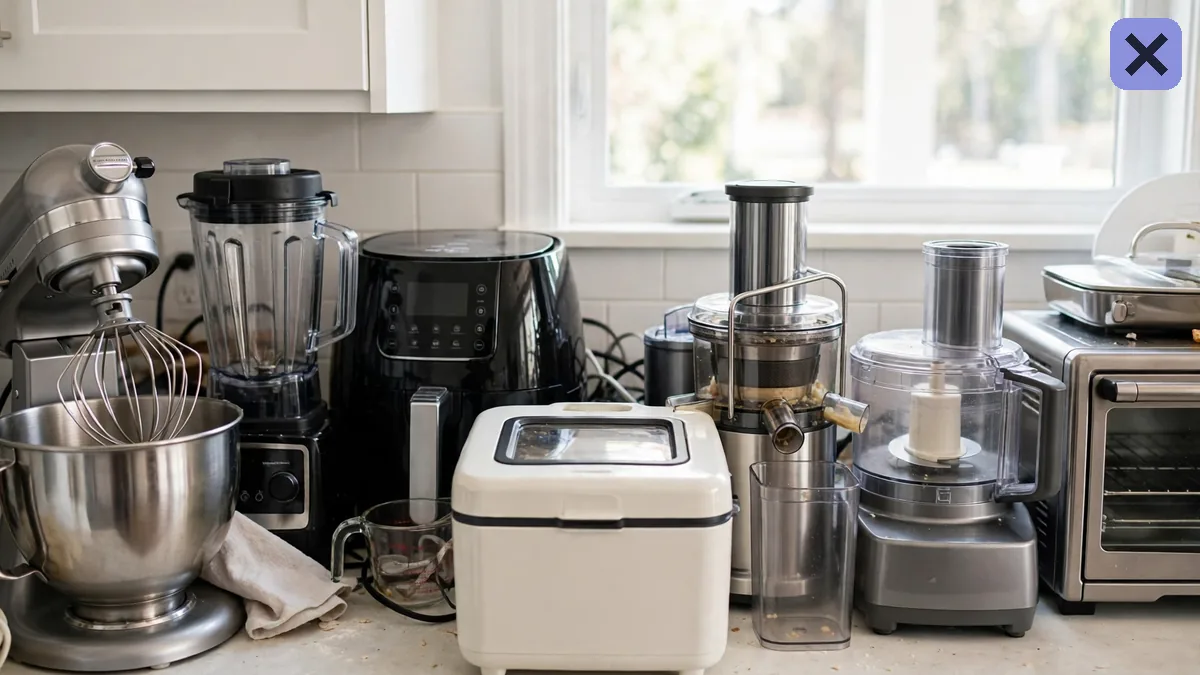
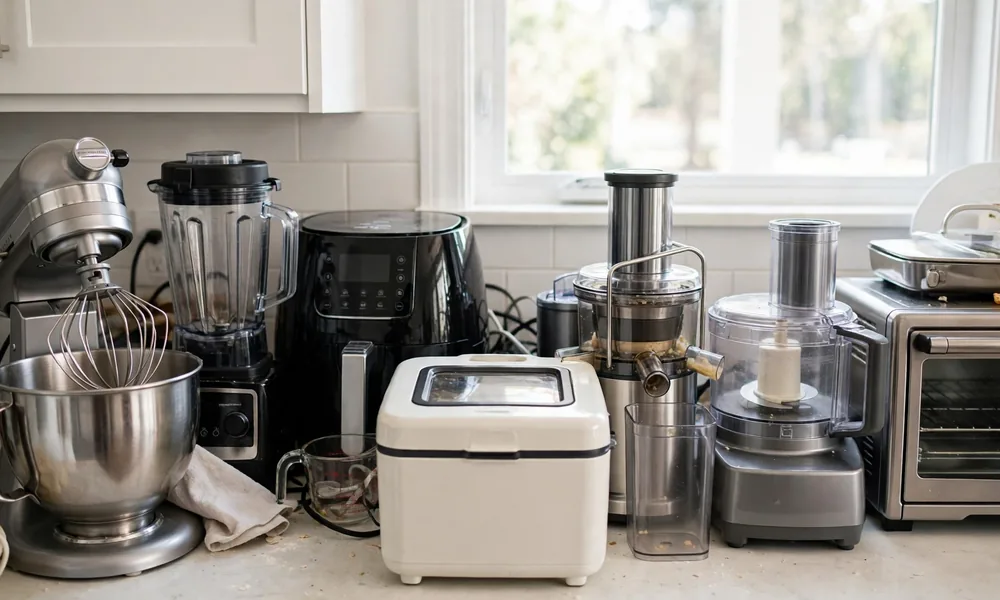
Most kitchens lose their worktop gradually, one purchase at a time. A coffee machine arrives first, then a toaster, then a blender. Each one seems small on its own. Together, they form a wall of appliances, and the usable space in front shrinks to a narrow strip.
The problem is that almost nothing ever leaves the counter. Once a gadget has a permanent spot, it stays there by default, even when it is used twice a year. Moving it feels like extra work, so the appliance wins and the cook loses the space.
Appliances are sold displayed on counters in shops, so a full worktop starts to look normal. But a showroom is not a working kitchen: an empty stretch of counter is the space where dinner actually happens. A quieter home often starts with fewer objects competing for attention, and the kitchen is the best place to begin.
The Worst Offenders, Ranked by Wasted Space
Not every large appliance is a bad one. A coffee machine used every morning earns its place. The gadgets below fail a simple test: they take a lot of space, do one narrow job, and are rarely used. The bigger the gap between footprint and frequency of use, the worse the gadget.
Stand Mixers That Never Move
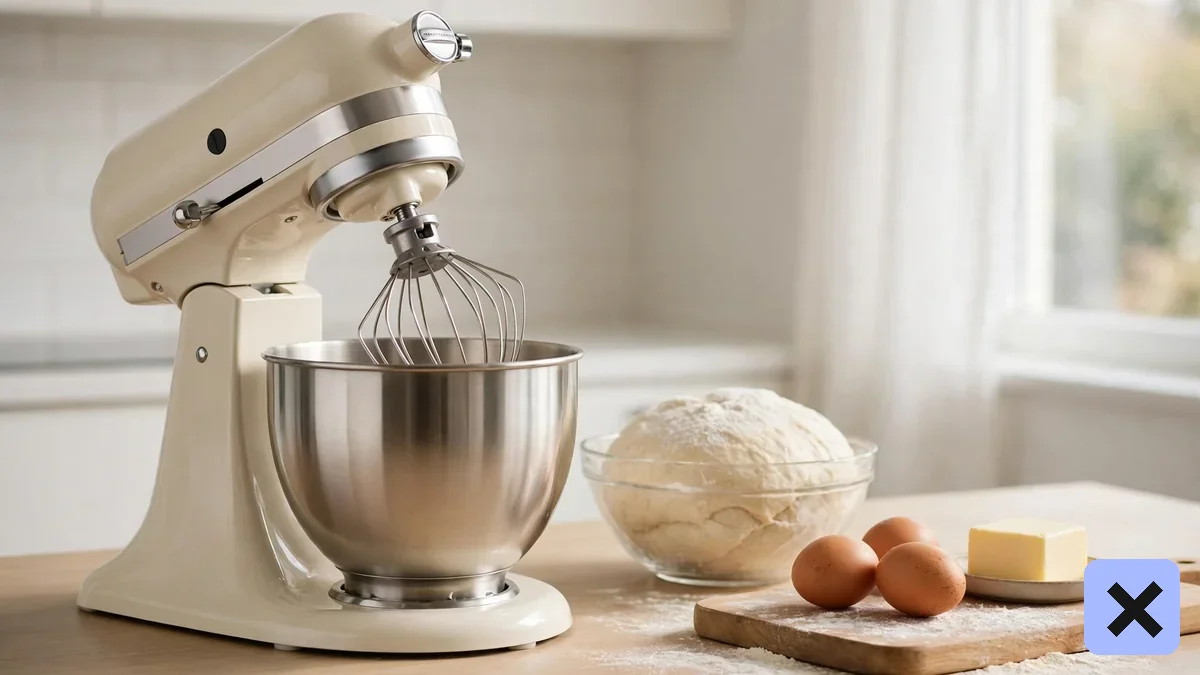
A stand mixer is a beautiful machine, genuinely useful for someone who bakes every week. For everyone else, it is the largest object on the counter, and it barely moves. It weighs too much to lift in and out of a cupboard comfortably, so it stays put, taking roughly the space of a large chopping board and a mixing bowl combined.
Ask how many times a month you bake something that needs a stand mixer rather than a hand mixer, a whisk, or a wooden spoon. For most households, the answer is once or twice, often less. A hand mixer does the same job for everyday baking, fits in a drawer, and costs less. Bake weekly and keep it; bake at Christmas and on birthdays and it belongs on a shelf.
Juicers
Juicers promise fresh juice every morning, but in practice they deliver a short burst of enthusiasm followed by months of neglect. The machine is tall, wide, and awkwardly shaped, with a feed tube, pulp container, and jug all needing space around them.
Cleaning is the real reason juicers fall out of use. A juicer has several parts that must be taken apart, scrubbed, and dried after every use, and the pulp sticks to every surface. Ten minutes of juicing creates twenty minutes of washing up, so the habit quietly dies. A blender makes smoothies with far less cleaning and can do far more besides.
Bread Makers
A bread maker is a large box that does one thing: it bakes a loaf of bread. Roughly the size of a small microwave, it sits on the counter like a piece of furniture. For a household baking bread daily, that might be reasonable. For most, the machine is used for a few enthusiastic weeks and then abandoned, and the loaf is rarely better than bread from a bakery.
Bread makers also fail the versatility test completely. They cannot make anything except bread, limited to one shape and a small range of recipes. An oven and a baking tray produce better bread with equipment the kitchen already owns. The bread maker trades a huge amount of permanent space for a small, occasional benefit.
Oversized Air Fryers
Air fryers are genuinely popular, and the small ones can be useful. The problem is the oversized models, the twin-drawer and family-size versions as wide as a microwave and nearly as tall. They dominate the counter, and being heavy with a large footprint, they rarely move. In a small kitchen, one large air fryer can consume a third of the available worktop.
The irony is that an air fryer is, for most meals, a small oven. A conventional oven does the same job for larger quantities, and a small air fryer does it for one or two. The oversized model sits in the middle, too big for the counter and too small to replace the oven. Gadget overload follows the same pattern everywhere: like the worst smart home devices, oversized kitchen machines promise convenience and deliver clutter instead.
Single-Use Novelty Machines
The worst category of all is the single-use novelty machine: the egg cooker, the yoghurt maker, the popcorn maker, and the sandwich toaster that makes one shape of sandwich. Each one solves a small problem worse than tools the kitchen already has. An egg cooker does what a saucepan does. A yoghurt maker does what an oven with a light on does.
These machines are cheap enough to buy on impulse and small enough to seem harmless, but they accumulate. Three or four fill a cupboard, and when it is full, they migrate to the counter. The total footprint of several small novelties can exceed that of one large appliance, and none of them is used more than a few times a year. If a tool does only one thing that a tool you already own does adequately, the new tool is clutter.
The Real Cost of a Crowded Counter
The cost of wasted counter space is not just aesthetic. It changes how a kitchen is used. Without room to prepare food comfortably, people cook less at home. They choose simpler meals or buy ready-made food, and the kitchen becomes a place for reheating rather than cooking. The gadgets bought to make cooking easier end up making it harder: they took the space cooking needs.
There is also a cleaning cost. Every appliance on a counter creates edges and corners that collect crumbs, grease, and dust. Wiping the worktop means moving each machine, wiping underneath, and putting it back. With a clear counter, cleaning takes a minute. Professional kitchens keep worktops clear for the same reason: the surface is a tool, and a tool covered in other tools cannot do its job. Some of the most common hotel design traps follow the same pattern: choices made for appearance that make a space harder to use.
Counter Space at a Glance
The table compares the worst offenders by footprint and how often a typical household uses them. A large footprint with rare use is the worst combination.
| Gadget | Typical footprint | Typical use | Verdict |
|---|---|---|---|
| Stand mixer | Very large | Monthly or less | Store it |
| Juicer | Large | Rarely after month one | Remove it |
| Bread maker | Very large | Rarely after month one | Remove it |
| Oversized air fryer | Very large | Weekly | Downsize it |
| Single-use novelty machines | Small each, large together | A few times a year | Remove them |
How to Decide What Earns a Spot
The decision does not need to be emotional. A gadget either earns its counter space or it does not, and the test is based on use, not on price or appearance. Start by counting how often you used each appliance last month. A gadget used twice a month does not need a permanent home on the counter, however much it cost. Weekly use is the threshold for a permanent spot.
Next, measure the footprint and ask whether a tool you already own does the same job. A blender makes soups, smoothies, and sauces; a good knife and board handle most chopping; a saucepan cooks eggs. When one tool does several jobs, the single-use machines around it are redundant. Then try the cupboard test: move a suspect gadget away for two weeks. If you reach for it, bring it back. If you forget it, you have your answer.
Checklist: Reclaim Your Counter Space
Work through this checklist one item at a time. It takes an afternoon, and the result is a kitchen that is easier to cook in and easier to clean.
- Count how often each countertop gadget was used last month, and note the number on each machine.
- Move every gadget used less than once a week into a cupboard for two weeks.
- Measure each remaining gadget’s footprint and compare it with your chopping board.
- Remove single-use novelty machines first: a tool you already own usually does the same job.
- Keep only one of any duplicate appliance, and give away the spare.
- After two weeks, bring back only the gadgets you missed, and find a cupboard home for the rest.
Frequently Asked Questions
Which kitchen gadget wastes the most counter space?
The stand mixer, because it is very large, very heavy, and used less than once a month by most households. The bread maker is a close second, with a similar footprint and even narrower use.
Should I keep my stand mixer on the counter?
Keep it on the counter only if you bake with it at least once a week. Weekly use justifies a permanent spot, because moving a heavy mixer that often is impractical. If you bake less often, store it on a low shelf and bring it out as needed.
Are air fryers a waste of counter space?
Small air fryers are not a waste of space when used several times a week: they cook quickly and suit small portions. Oversized air fryers are a different matter: they take as much space as a microwave, and they rarely replace the main oven.
What should I do with gadgets I rarely use?
Store them in a cupboard, on a pantry shelf, or in a box in another room. Use the cupboard test: put it away for two weeks, and if you do not reach for it, you do not need it on the counter. Gadgets in good condition can be given away or sold.
How much free counter space should a kitchen have?
A working kitchen needs at least one clear stretch of counter, roughly the size of a large chopping board plus room for a bowl, beside the hob or the sink. That is the minimum for preparing a meal comfortably. If no clear stretch exists, the counter is too full.
Can a small kitchen have any countertop appliances?
Yes, but the number should be small, and each one should be used daily or weekly. Two or three well-chosen appliances are the limit: typically a kettle or coffee machine and one cooking appliance. The rest should be stored away and brought out only when needed.
The Bottom Line
The worst kitchen gadgets that waste counter space are not bad machines. They are good machines in the wrong place, used too rarely to justify the space. For most households, the best kitchen is not the one with the most gadgets. It is the one with a clear counter, a few tools that do many jobs, and room to cook.