Choosing between gas vs electric hobs for cooking looks simple in a showroom and turns complicated the moment you cook dinner every night. Both will boil water and simmer a sauce, yet they do it in very different ways.
Gas hobs have been the default in many homes for decades because a visible flame feels intuitive: turn the knob, see the heat rise, turn it down and watch it fall. Electric hobs, especially modern induction models, have closed much of that gap and overtaken gas in some areas.
This guide puts gas vs electric hobs for cooking side by side across the things that genuinely affect daily life: how each one heats, what it costs to run, how safe it is, how easy it is to clean, and which kitchens each type suits best.
Key takeaways
- Gas hobs give instant, visible heat control and work with any pan, but they heat the room as well as the food and need more cleaning.
- Electric induction hobs boil water fastest and hold low temperatures most steadily, but they need magnetic pans.
- Ceramic electric hobs are the cheapest electric option to buy, yet they are the slowest to respond to temperature changes.
- Running costs depend heavily on local gas and electricity prices, so the cheaper hob in one home can be the dearer one in another.
- The best choice follows your cooking style: gas rewards hands-on cooks, while induction rewards speed, safety and easy cleaning.
How Gas Hobs Actually Cook
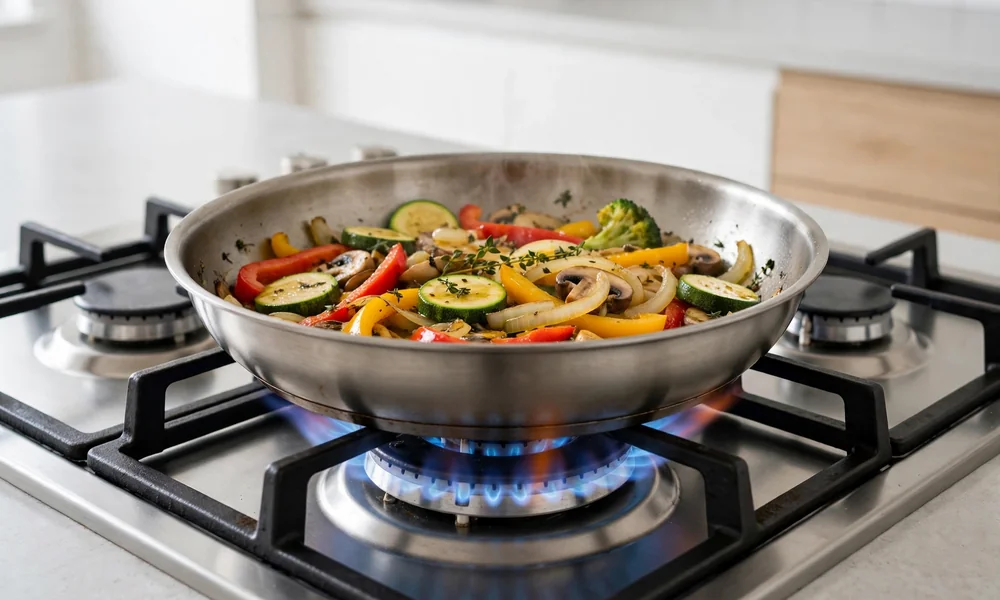
A gas hob burns natural gas or LPG at the burner and transfers heat to the pan through a naked flame. You can see the size of the flame, judge the heat at a glance and adjust it in a fraction of a second.
Gas also works with every type of pan you already own: cast iron, stainless steel, copper, aluminium, woks with a rounded base and battered old saucepans. The trade-off is efficiency: a meaningful share of the heat escapes around the sides of the pan and warms the kitchen air instead of the food, so good ventilation matters more with gas.
The Flame Advantage in Everyday Cooking
Where gas truly shines is in the small, fast adjustments that define everyday cooking. Turning a fierce boil down to the gentlest simmer takes one twist of a knob, and the change is immediate. Gas also keeps working during a power cut.
How Electric Hobs Actually Cook
Electric hobs cover two quite different technologies, and confusing them is the most common mistake in this debate. Ceramic hobs use heating elements under a smooth glass surface, while induction hobs use magnetic fields to heat the pan itself.
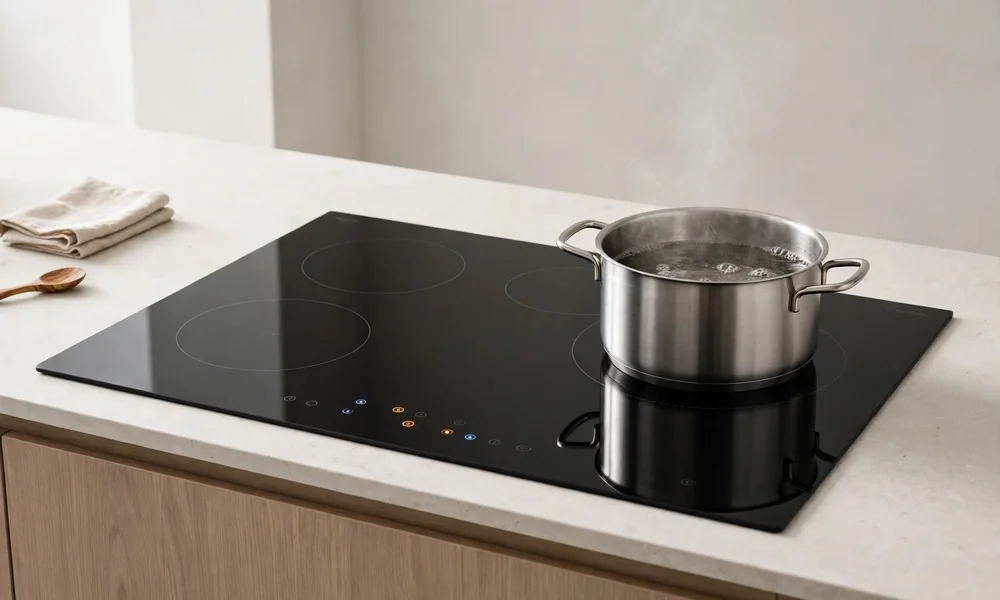
A ceramic hob heats its element, which heats the glass, which heats the pan. That chain takes time to warm up and to cool down. An induction hob skips the middleman: a magnetic field makes the base of the pan itself generate heat, so the glass stays comparatively cool. Water boils noticeably faster on induction, a low simmer holds steady without constant fiddling, and the surface cools quickly once the pan is lifted.
Ceramic Versus Induction in Practice
If you are choosing electric, the ceramic versus induction decision matters almost as much as gas versus electric. Induction costs more to buy and demands magnetic pans: cast iron and most stainless steel work, while aluminium and copper do not unless they have a magnetic base. Ceramic asks for no such check and costs less upfront, but it gives back slower cooking and a hot surface that stays hot long after dinner is served.
Gas vs Electric Hobs: The Head-to-Head Table
The table below compares the three hob types across the factors that matter most in a real kitchen.
| Factor | Gas Hob | Ceramic Electric Hob | Induction Electric Hob |
|---|---|---|---|
| Speed to boil water | Good | Slowest | Fastest |
| Heat control | Instant and visible | Slow to respond | Precise and fast |
| Low simmer control | Very good | Fair | Excellent |
| Pan compatibility | Any pan | Any flat-bottomed pan | Magnetic pans only |
| Cleaning effort | Most effort | Easy, flat surface | Easiest, cool surface |
| Safety | Open flame, hot parts | Hot surface stays hot | Surface cools quickly |
| Works in a power cut | Yes, with a match | No | No |
| Kitchen heat | Heats the room most | Moderate | Least |
| Upfront cost | Moderate | Lowest | Highest |
| Installation needs | Gas supply, ventilation | Electric supply | Electric supply, often higher power |
Heat Control and Cooking Performance
Heat control is where most cooks form their loyalty. Gas wins on immediacy: the flame changes the moment you turn the knob, and you can see exactly how much heat you are applying.
Induction wins on precision and consistency. Set an induction hob to a low simmer and it will hold that temperature with far less drift than a gas flame, which can flicker or be affected by draughts. Ceramic is the weakest of the three on control, because its elements retain heat.
Running Costs and Energy Use
Running costs are the part of this comparison where a universal answer is impossible, because the answer depends on the price of gas and electricity where you live. In many regions gas costs less per unit of energy than electricity, which can make a gas hob cheaper to run even though it wastes more heat. In other regions induction can be cheaper because so little of its energy is wasted.
Efficiency tells the other half of the story. Induction transfers roughly 85 to 90 percent of its energy into the pan, gas transfers roughly 40 to 55 percent, and ceramic sits in between at around 65 to 75 percent. Other costs matter too: gas needs professional installation and an extractor fan, induction may need a higher-capacity circuit, and replacing non-magnetic pans adds a one-off cost. The lessons in a quiet home that feels calm rather than empty show how small design choices change how a room feels to live in.
Safety in a Real Kitchen
Safety is not an abstract concern when a hob is used several times a day by a whole household. Gas hobs carry an open flame, which brings obvious risks: loose sleeves, tea towels left too close and curious children reaching toward a flame. Modern gas hobs include flame failure devices that cut the gas if the flame goes out, but the flame itself remains a hazard that demands attention.
Electric hobs remove the flame and the combustion by-products, which is a clear safety advantage. Induction goes further: the glass surface does not get as hot as a ceramic hob, and it cools quickly once the pan is removed, so the risk of a burn is much lower. In a home with young children, induction is the safest of the three options by a clear margin.
Cleaning and Everyday Care
Cleaning is the chore that separates the three hob types most clearly in daily life. A gas hob has burners, burner caps, pan supports and a surface underneath them, all of which collect spills, grease and burnt-on food. A boiled-over pot means lifting off the pan supports, removing the burner caps, wiping the surface and cleaning each part separately. It is not difficult, but it takes time and it happens often.
Ceramic and induction hobs share a flat glass surface that wipes clean with a damp cloth in seconds, provided spills are dealt with before they bake on. Induction has the edge here too: because the surface stays cooler, spilt food is less likely to burn onto the glass. Clutter makes every chore harder, as the guide to the worst kitchen gadgets that waste counter space shows.
Which Hob Suits Which Kitchen
There is no single best hob, only a best hob for a particular household. A keen cook who stir-fries, sears and adjusts heat by feel will probably be happiest with gas, provided the kitchen has good ventilation and the household is comfortable with an open flame. The flexibility with pans and the independence from the electricity supply are genuine benefits for that kind of cook.
A busy household that values speed, safety and easy cleaning will probably be happiest with induction. It is the fastest, safest and easiest to clean. A household on a tight budget, or a rental where the hob is a landlord’s choice, will often find ceramic the practical answer: it costs the least, works with ordinary pans and is far easier to clean than gas.
Questions to Ask Before You Decide
Before you commit, check the practical constraints of your home. Does your kitchen have a gas supply, and if not, how much would connecting one cost? Does your electrical supply support an induction hob? How many of your pans are magnetic, and what would replacing the rest cost?
Checklist: Choosing Between Gas and Electric Hobs
- List how you cook most often: fast weeknight meals, slow weekend cooking, stir-fries or simple reheating.
- Test your pans with a fridge magnet to see which ones work on induction before you commit to it.
- Check whether your kitchen has a gas supply and good ventilation, or a circuit that supports induction.
- Compare your local gas and electricity prices rather than relying on national averages.
- Weigh safety needs honestly, especially if children or elderly relatives use the kitchen.
- Add up the full cost: hob, installation, extractor or circuit work, and any replacement pans.
Frequently Asked Questions
Is gas or electric better for cooking?
Neither is better for everyone. Gas offers instant, visible heat control and works with any pan, while induction electric offers faster boiling, steadier low temperatures and easier cleaning. The better choice depends on your cooking style and your local energy prices.
Do induction hobs need special pans?
Yes, induction hobs need pans with a magnetic base. Cast iron and most stainless steel pans work, while aluminium, copper and glass do not unless they have a magnetic layer built in. A fridge magnet stuck to the base of a pan is a quick test.
Are gas hobs more expensive to run than electric?
It depends on local prices. Gas is often cheaper per unit of energy, but gas hobs waste more heat, while induction is far more efficient. In some homes gas is cheaper to run, in others induction is cheaper.
Is cooking with gas safe?
Gas hobs are safe when installed correctly, used with good ventilation and fitted with a flame failure device, but they carry an open flame and produce combustion by-products. Induction is the safest hob type, with a cooler surface and automatic switch-off features.
Can I replace a gas hob with an electric hob?
Yes, in most kitchens, but the gas supply must be safely capped by a qualified engineer and the electrical circuit may need upgrading for induction. Check the power requirements of the model you want before you buy.
Which hob is easiest to clean?
Induction is easiest to clean because its flat glass surface stays relatively cool, so spills rarely burn on. Ceramic is next, with the same flat surface but a hotter one, while gas takes the most effort because of its burners, caps and pan supports.
The Bottom Line
Gas vs electric hobs for cooking comes down to a trade between feel and convenience. Gas gives you a flame you can see and adjust instantly, works with every pan you own and keeps cooking through a power cut, but it heats the room, needs more cleaning and demands good ventilation. Induction gives you the fastest boiling, the steadiest simmer, the safest surface and the easiest wipe-down, but it costs more upfront and needs magnetic pans. If you cook by feel and love the flame, choose gas. If you want speed, safety and a clean kitchen with the least effort, choose induction, and remember that even small details change how a room feels, as the guide to the worst lighting mistakes that spoil a room shows.