The worst hotel check-in experiences share one thing: they turn the moment a trip should begin into the moment it starts to fall apart. You arrive tired, carrying bags, ready for a shower and a bed, and instead you meet a queue that does not move, a room that is not ready, or a reservation the hotel cannot find.
These failures are rarely dramatic. Usually they are small, preventable breakdowns: a system that is down, a room housekeeping has not finished, a booking that never reached the front desk. What makes them memorable is the timing: you are at your most tired, and there is nowhere else to go.
This guide covers the worst hotel check-in experiences travellers report again and again, why each one happens, and what to do in the moment — and what to check before you book.
Key Takeaways
- Arrive with your confirmation number, ID, and the card you booked with.
- A room that is not ready by check-in time is the hotel’s problem: ask for a firm time, luggage storage, and a voucher.
- Overbooking is legal in many places, but a walked guest is owed a comparable room nearby plus transport.
- Never accept a surprise fee at the desk without asking what it covers and whether it was disclosed at booking.
- Photograph your key card envelope and room number.

What Counts as a Bad Check-In?
A bad check-in is not one small delay. It is any arrival where the hotel fails to deliver what you booked, when you booked it, at the price you agreed. A five-minute wait is normal; a forty-five-minute queue, a missing reservation, or a room still being cleaned an hour after check-in time is not. These failures sting because they hit at the worst moment, when you have just finished travelling and the hotel is supposed to be the safe part of the trip.
The Endless Queue
The most common of all the worst hotel check-in experiences is the simplest: a queue that barely moves. You join a line of ten people, each taking ten minutes, and your evening disappears one guest at a time.
Why the Queue Forms
Queues usually form for boring operational reasons. Several large groups arrive at once, often after a flight or a conference, and the hotel has one receptionist on duty. Or the booking system is slow, and every guest needs their details typed in by hand. A long queue is a sign the hotel has not planned for its own arrivals.

What a Reasonable Wait Looks Like
Check-in should take five to ten minutes per guest, and you should rarely be more than two or three people back. If you have stood for more than twenty minutes with no movement, ask the desk for an honest estimate. If the hotel offers online check-in or a mobile key, use it next time.
The Room Is Not Ready
Few sentences ruin an arrival like “your room isn’t ready yet.” You booked a 3 p.m. check-in, you arrived at 3 p.m., and the room is still being cleaned. It is the same sinking feeling travellers describe in the worst roadside motels, where the room you paid for is nowhere near ready and nobody can say when it will be.
The 3 p.m. Promise
Check-in times exist so housekeeping can work in order. When a hotel misses its own time, it usually means the previous guest checked out late or housekeeping is short-staffed. None of that is your problem: the hotel sold you a room from 3 p.m., and from 3 p.m. it should be yours.
What to Ask For Instead
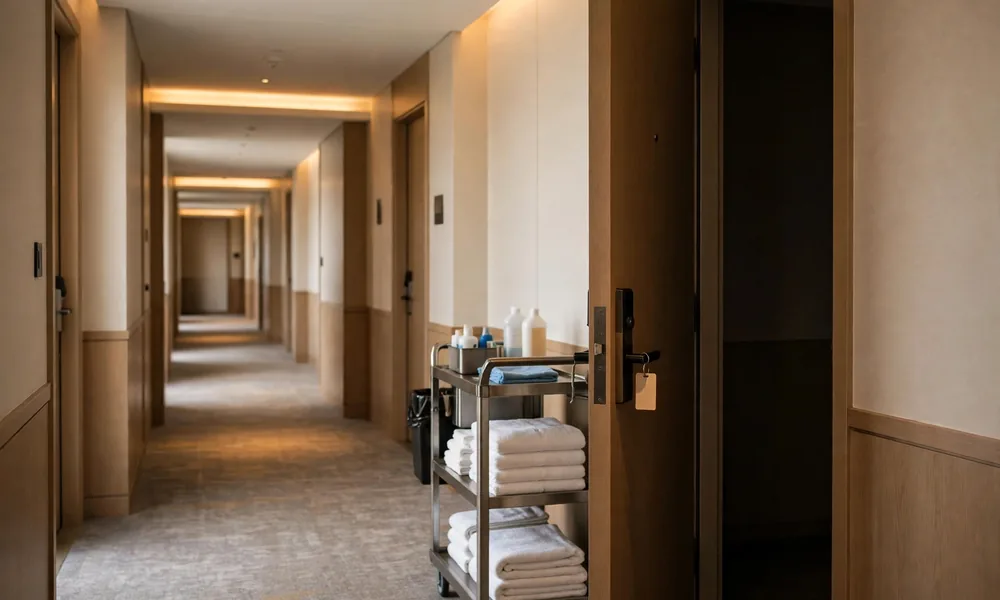
Do not just accept “half an hour” and sit down. Ask for a firm time, in minutes, and the name of the person who gave it. Ask the hotel to store your luggage and offer a drink or a meal voucher. If the wait passes an hour, ask for an upgrade or a discount.
Overbooked and Walked
Being “walked” is the check-in nightmare travellers fear most: you arrive with a confirmed booking and the hotel has no room for you at all. The receptionist apologises, explains the hotel is full, and offers to send you to another property.
How Overbooking Works
Hotels overbook on purpose. They know some guests cancel or never arrive, so they sell slightly more rooms than they have. Most nights the numbers balance. When they do not, someone is walked — usually the guest who booked through a third-party site, arrived latest, or paid the lowest rate.
What You Are Owed
If you are walked, do not accept the first offer and leave quietly. A reputable hotel should pay for a comparable room at a nearby hotel, cover your transport there, and offer compensation such as a free future night. Get all of this in writing before you leave the desk.
Key Card Chaos and Room Mix-Ups
Key cards look simple, and that is exactly why they cause so much trouble. A card that has not been programmed properly will not open your door, and you discover this at midnight, in a dark corridor, with your bags in your hands. Worse, some cards open the wrong room, so you walk in on a stranger — or a stranger walks in on you.
Mix-ups happen when the desk is rushed: the wrong envelope, the wrong room number, a reissued card with the old one never cancelled. Even when the room itself is fine, the stay can still disappoint — as the worst hotel room views show, a room that looks good online can face a brick wall in real life. Test your key as soon as you reach the door, and use the security latch once inside.
Hidden Fees at the Desk
You booked a room for one price, and at the desk a different price appears. A resort fee, a service charge, a city tax, a parking fee you never agreed to — each one is small, but together they can add a third to the cost of the night.
Resort Fees and Service Charges
Resort fees are the most complained-about charge in the industry. Hotels add them for the pool, the gym, or the Wi-Fi — facilities most guests expect to be included. They are often buried in the small print and only spelled out at check-in. Search every listing for “resort fee” before you compare prices.
Deposits and Card Holds
A deposit hold is different from a fee, but it surprises just as many guests. Hotels routinely hold one night’s rate plus a fixed amount on your card at check-in, and it can take days to release after checkout. Ask how much the hold will be and when it will be released. On a debit card, it comes straight out of your balance.
Rude Staff and the Attitude Problem
Sometimes everything about the booking is fine and the problem is the person behind the desk. A receptionist who sighs at your questions or treats a reasonable request as an inconvenience can poison a stay in two minutes flat. It is not the most expensive check-in failure, but travellers remember it longest. If a staff member is rude, stay calm, ask for the duty manager, and note the name on the badge and the time.
Late-Night Arrivals Gone Wrong
Arriving after midnight is when every other check-in problem gets worse. The desk may be unstaffed, the night porter may not have access to the booking system, or the hotel may have given your room away because you did not warn them you were arriving late.
This is a familiar story at the worst airport hotels, where delayed flights push arrivals into the small hours and the front desk runs on a skeleton crew. If your arrival time changes, tell the hotel: a short message saying you will arrive at 1 a.m. can be the difference between a room held for you and a room given away.

Confirm the practical details before you travel: is there a night entrance, a door code, or a lockbox? Is the front desk staffed around the clock? If the hotel cannot confirm a late check-in in writing, book somewhere that can.
The Worst Check-In Fails, Compared
| Check-In Fail | What Happens | How Bad Is It? | Best Response |
|---|---|---|---|
| The endless queue | You wait 45 minutes or more to reach the desk | Annoying | Ask for a time estimate; use mobile check-in next time |
| Room not ready | Your room is still being cleaned past check-in time | Frustrating | Ask for a firm time, luggage storage, and a voucher |
| Overbooked and walked | The hotel has no room despite your booking | Serious | Demand a comparable room nearby, transport, and compensation |
| Key card failure | Your card does not open the door, or opens the wrong one | Worrying | Have the card reprogrammed and test it at once |
| Hidden fees | Surprise charges appear at the desk | Costly | Ask what each fee covers and whether it was disclosed |
| Late-night lockout | No staff, no code, and no room after midnight | Serious | Confirm late check-in in writing before you travel |
Your Check-In Survival Checklist
- Save your confirmation number, the hotel’s phone number, and a screenshot of the agreed price.
- Tell the hotel if you will arrive late, and get confirmation of a late check-in in writing.
- Bring the card you booked with and matching ID.
- Ask for a firm time if your room is not ready, plus luggage storage and a voucher.
- Test your key card before you settle in, and use the security latch once inside.
- Read the bill at check-in, question any fee you did not agree to, and keep receipts.
Frequently Asked Questions
What should I do if my hotel room is not ready at check-in time?
Ask for a firm time in minutes and the name of the person who gave it. Ask the hotel to store your luggage and give you access to the facilities while you wait. If the delay passes an hour, ask for an upgrade or a discount.
Can a hotel give my room to someone else if I arrive late?
Yes, if the hotel thinks you are a no-show. Most hotels hold a guaranteed booking — paid in advance or secured with a card — for the whole night, but a non-guaranteed booking can be released after a set hour, often 6 p.m.
What does it mean to be walked by a hotel?
Being walked means the hotel is full and cannot honour your confirmed booking, so it moves you to another hotel. A reputable hotel pays for the other room, covers your transport, and offers compensation.
Are resort fees legal?
In most places, yes, as long as they are disclosed somewhere before you pay. The problem is that the disclosure is often buried in small print. Check the total price including fees before comparing hotels.
How long should hotel check-in take?
Five to ten minutes is normal, and you should rarely be more than two or three people back in the queue. If you have waited more than twenty minutes with no movement, ask for an honest estimate.
What if the front desk staff are rude to me?
Stay calm and ask for the duty manager in the moment. Explain what happened, simply and specifically, and note the time and the name on the badge. Problems raised at the time are far more likely to be fixed.
The Bottom Line
The worst hotel check-in experiences are almost always preventable — by the hotel, with better staffing and honest systems, and by you, with a confirmation in hand, a warning about late arrival, and a clear idea of what you are owed. Book carefully, arrive prepared, and never accept a bad check-in in silence.