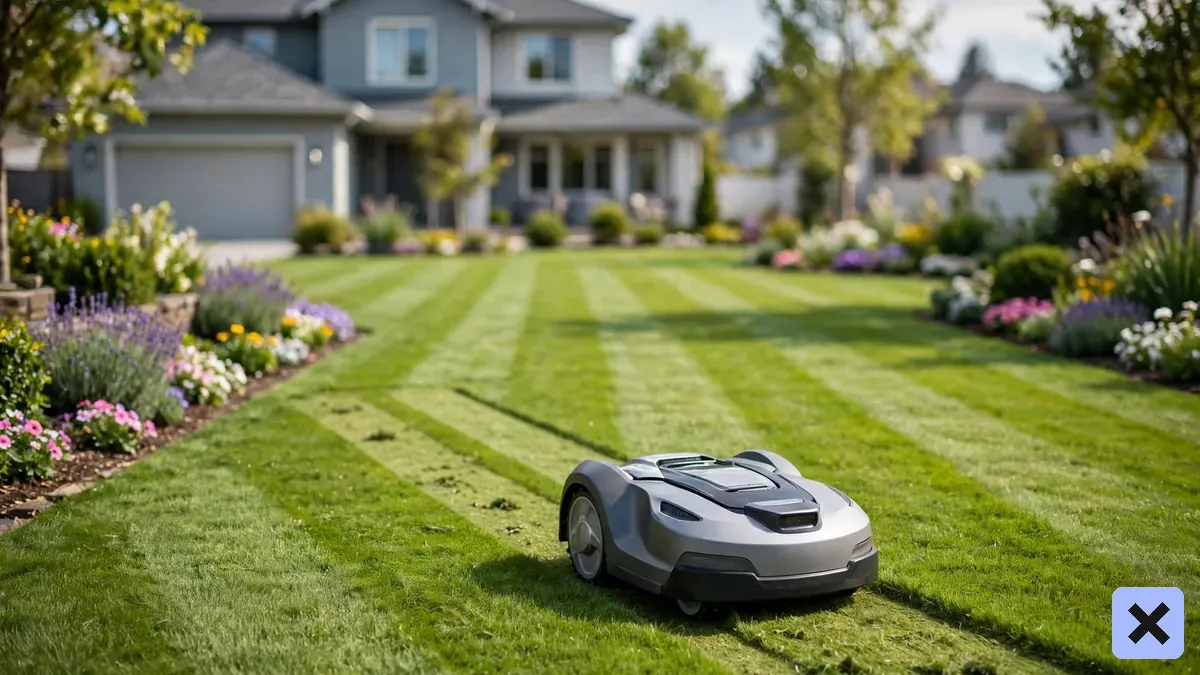
The best robot lawn mowers in 2026 cut your grass while you do something better with your weekend. The strongest models map the garden, mow in neat parallel lines, dodge trees and flower beds, and return to their dock to recharge. They run quietly, cope with slopes and damp grass, and keep the lawn tidy all season.
That progress matters because a weak robot mower still creates work. A poor model gets stuck on a tree root, misses strips along the edges, cannot climb a gentle slope, or needs its boundary wire repaired every few weeks. The difference is the combination of navigation, cutting width, battery life, slope handling, and an app that makes scheduling simple.
This guide compares the types worth buying in 2026 and helps you match one to your garden, whether it is a small flat lawn, a large sloping plot, or a garden full of beds and trees.
Key takeaways
- Navigation matters more than cutting width alone, because a mower that cannot find its way around the garden cannot cut it evenly.
- Measure your lawn and slopes before you choose, since area and gradient decide which models can cope.
- Wire-free models with cameras or satellite positioning are easier to install, but they need a clear view of the sky and cost more.
- Rain and lift sensors are worth having, because they protect the blades, the lawn, and anything the mower meets.
- Small and frequent cuts keep the lawn healthier than one long weekly mow, and most robot mowers are built for that pattern.
How We Judged the Best Robot Lawn Mowers
We judged cutting quality first: how even the finish was, how much grass was left uncut along edges and around obstacles, and whether the mower left stripes or missed patches. A good robot mower should leave the lawn tidy after every run.
Navigation came next. The best models build an accurate map and cut in straight, overlapping lines, while models that wander take far longer and leave uneven patches. We also weighed slope handling, battery life, noise, and ease of setup, because a mower that needs constant attention has not saved you any time.
The Best Robot Lawn Mowers at a Glance
The table compares the five types we recommend most in 2026. The best overall pick is the safest starting point, while the specialist picks solve a specific problem better.
| Pick | Best for | Lawn size | Navigation | Slopes |
|---|---|---|---|---|
| Best overall | Most gardens | Up to 1,000 square metres | Wire-free mapping | Up to 30 percent |
| Best for large lawns | Big plots | Up to 3,000 square metres | Wire-free mapping | Up to 35 percent |
| Best wire-free | Easy setup | Up to 1,500 square metres | Camera and satellite | Up to 25 percent |
| Best for slopes | Hilly gardens | Up to 2,000 square metres | Boundary wire | Up to 45 percent |
| Best value | Smaller lawns | Up to 500 square metres | Boundary wire | Up to 20 percent |
The Best Robot Lawn Mowers in 2026
Best Overall: The All-Rounder for Most Gardens
The best overall robot lawn mower suits the widest range of gardens. It covers up to about 1,000 square metres, handles gentle slopes, and navigates without a boundary wire, so setup takes an afternoon rather than a weekend. It mows in straight lines, recharges itself, and resumes where it left off.
Its cutting width finishes a medium lawn in reasonable time, and its app lets you set zones, keep-out areas, and a weekly schedule. Rain detection sends it home when the weather turns. For most homes, this pick gets the balance right.
Best for Large Lawns: The Big Plot Specialist
Large lawns need a mower with a bigger battery, a wider cut, and the stamina to work for hours. The best large-lawn models cover up to 3,000 square metres by cutting efficiently in parallel lines rather than wandering.
These models have stronger motors and larger wheels, so they cope with longer grass and uneven ground better, and their apps let you split a big garden into zones. The trade-off is price and size, but if your lawn takes more than an hour with a push mower, the time saved each week justifies the cost.
Best Wire-Free: The Easiest to Set Up
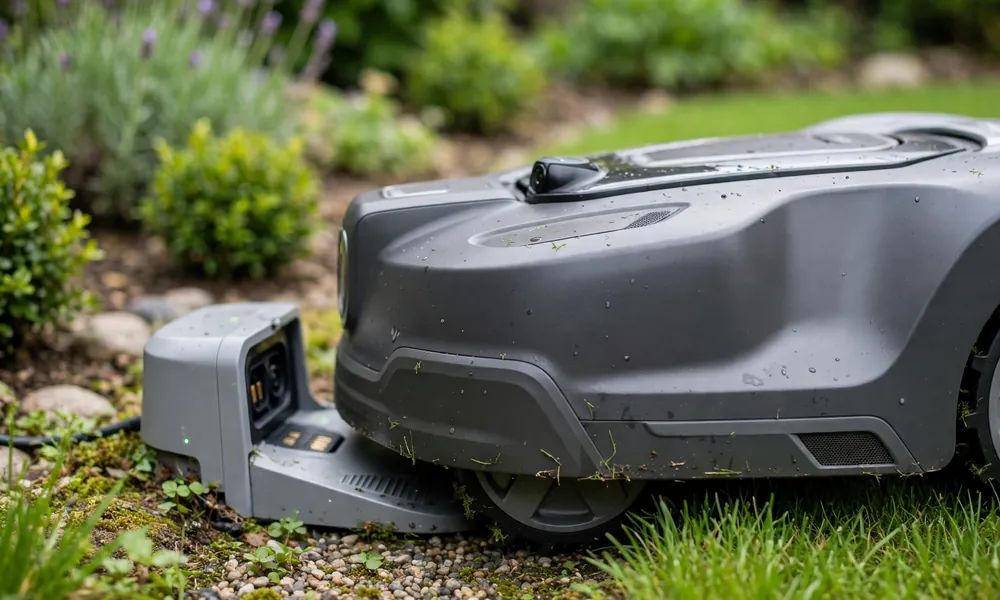
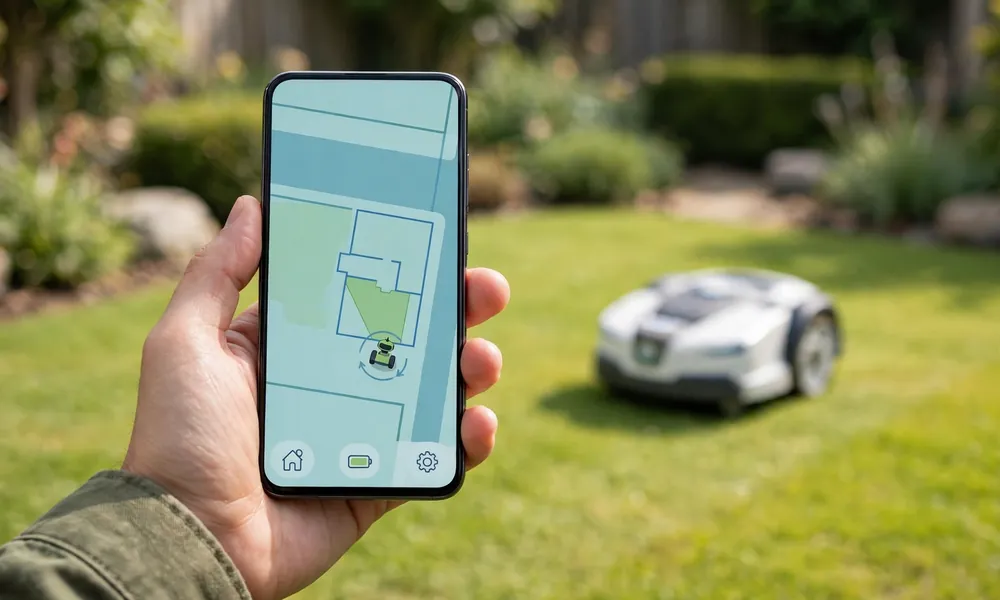
Wire-free robot lawn mowers are the biggest change in the category in recent years. Instead of burying a boundary wire, they use cameras, satellite positioning, or both to map the garden. Setup means walking the mower around the boundary once, or drawing it on a map in the app.
Boundary wire can break, get cut by a spade, or shift as the ground settles, and finding the break takes patience. A wire-free model avoids all of that. The catch is that camera and satellite navigation need a clear view of the sky and good light, so dense tree cover can confuse the positioning.
Best for Slopes: The Hill Climber
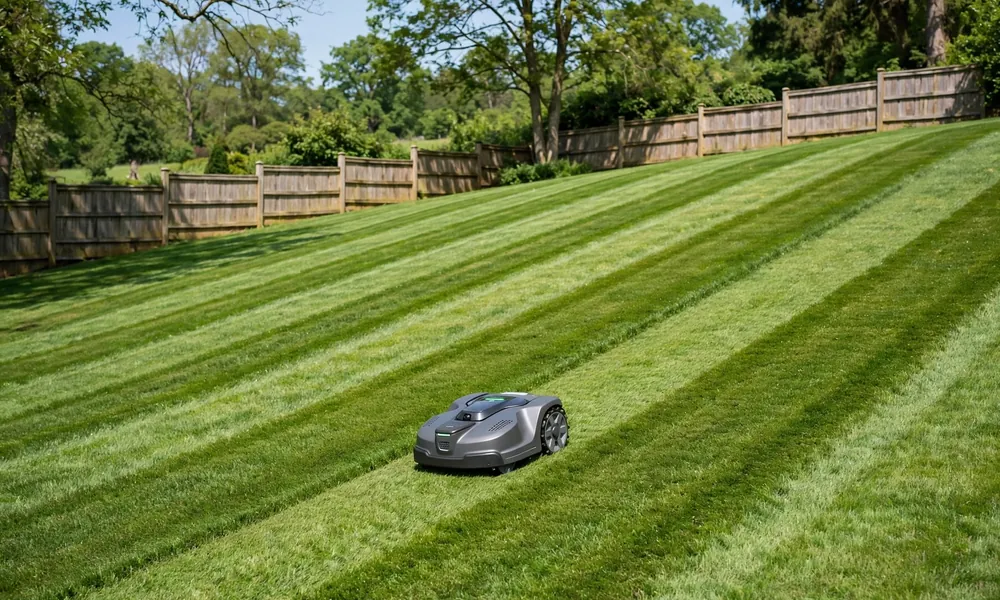
Slopes are where many robot mowers fail. A model that is fine on flat grass can slip or stall on a bank, leaving the steepest part uncut. The best slope models are built for this, with strong grip, low centres of gravity, and motors that keep cutting evenly as the gradient rises.
Look for a slope rating of at least 35 percent if your garden has real banks, and higher if the slope is long or the grass gets slippery when wet. All-wheel drive helps, as do larger rear wheels that bite into the turf. These models often use a boundary wire, because it gives a reliable edge even where satellite signals are patchy under trees.
Best Value: The Small Lawn Starter
If your lawn is small, you do not need to spend the most to get a good result. The best value robot lawn mowers cover up to about 500 square metres, use a simple boundary wire, and do the core job well: they cut little and often and recharge themselves.
What you give up is mostly convenience. The cutting width is narrower, so a run takes longer, and the app may be simpler. This is the right pick for a first robot mower or a small town garden.
Wire or Wire-Free: Which Navigation Suits Your Garden?
The biggest choice in 2026 is between boundary wire and wire-free navigation, and the right answer depends on your garden rather than on which technology is newer. Boundary wire is the older, proven system: a thin wire is pegged or buried around the edge of the lawn, and the mower senses it and turns back. It works in shade, under trees, and in any weather. Its weakness is installation, since laying the wire takes time and a damaged wire needs finding.
Wire-free navigation uses cameras, satellite positioning, or a mix of the two to map the garden. Installation is far quicker, and changing the mowing area is easy. Its weakness is dependence on a clear sky view and good light, so it suits open gardens better than shaded ones. Like the robot vacuums that clean indoors, the best wire-free mowers rely on mapping to cover the whole area without missing patches.
Choose wire if your garden is shady, complex, or steep, and you are happy to spend a day installing it properly. Choose wire-free if your garden is open and you want a quick setup. Either way, walk the boundary yourself before the first run and clear anything the mower could catch on.
What to Check Before You Buy
A robot lawn mower is a long-term purchase, and the wrong size or navigation will annoy you every week. Run through this checklist before you spend anything, and measure the garden rather than guessing.
- Measure the lawn area in square metres, including every patch the mower must reach, and buy a model rated for at least that area.
- Check the steepest slope in the garden and compare it with the mower’s stated slope rating, not the average gradient.
- Look at the narrowest passage the mower must pass through, such as a gate or a path between beds, and confirm the mower fits.
- Find a spot for the charging dock that is flat, near a power outlet, and easy for the mower to reach.
- Check for obstacles the mower must avoid, such as low branches, rocks, garden toys, and hose pipes left on the grass.
- Confirm the app works with your phone, offers the scheduling and zones you need, and lets you set keep-out areas.
Also check how often the blades need replacing and how much spares cost. Robot mowers use small razor-style blades that are cheap and easy to swap, but expensive blades add up over the mower’s lifetime.
Robot Lawn Mower Care and Maintenance
Robot mowers need little care, but the small amount they need makes a real difference. Clean the underside and wheels every few weeks, because dried grass builds up around the blades and makes the mower work harder than it should. A stiff brush and a hose are usually enough, and you should always switch the mower off first.
Check the blades regularly. Blunt blades tear the grass, leaving brown tips and a ragged lawn. Most owners change blades every one to two months during the growing season, and it is a five-minute job.
Before winter, clean the mower, charge the battery, and store it indoors in a dry place. In spring, check the boundary wire for damage if you have one and let the mower do a gentle first cut at a higher height. Many owners pair a robot mower with other automated devices, and smart plugs that automate the rest of the home can run garden lights and water features on a timer.
Frequently Asked Questions
Do robot lawn mowers work in the rain?
Most robot mowers are weatherproof and can mow in light rain, but many have rain sensors that send them back to the dock in heavy rain. Wet grass is harder to cut cleanly and can clog the blades, so waiting out a downpour gives a better finish.
Can a robot lawn mower handle a large garden?
Yes, if you buy a model rated for the area. Large-lawn models cover up to 3,000 square metres by mowing in zones and recharging between sessions. Match the rating to your real lawn size, including patches joined by narrow paths.
Are robot lawn mowers safe around children and pets?
Robot mowers have lift and tilt sensors that stop the blades within a second if the mower is picked up or tipped. Even so, it is sensible to schedule mowing when children and pets are indoors.
How often should a robot lawn mower cut the grass?
Most owners run their mower three to five times weekly in the growing season, cutting only a few millimetres each time. This little-and-often pattern beats a single long weekly cut, because the short clippings fall back into the turf and feed it.
Do I still need to trim the edges?
Usually, yes, but far less often. Most robot mowers leave a small strip of uncut grass along walls, fences, and bed edges, because their blades do not reach the edge of the body. A quick strimmer pass every couple of weeks keeps the borders neat.
How long do robot lawn mowers last?
A well-looked-after robot mower typically lasts eight to ten years. The battery is usually the first part to weaken, after three to five years, and it can be replaced. Regular blade changes, cleaning, and winter storage matter most for lifespan.
The Bottom Line
The best robot lawn mowers in 2026 are genuinely useful machines rather than gadgets. Buy the best overall wire-free model for an open, medium-sized garden, the large-lawn specialist for a big plot, and the slope model for real banks. Measure the lawn, check the slopes, and let the mower cut little and often for a tidy lawn every week without spending weekends pushing a mower. The same hands-off habit works indoors too, and a robot mop that handles hard floors pairs naturally with a robot that looks after the grass.