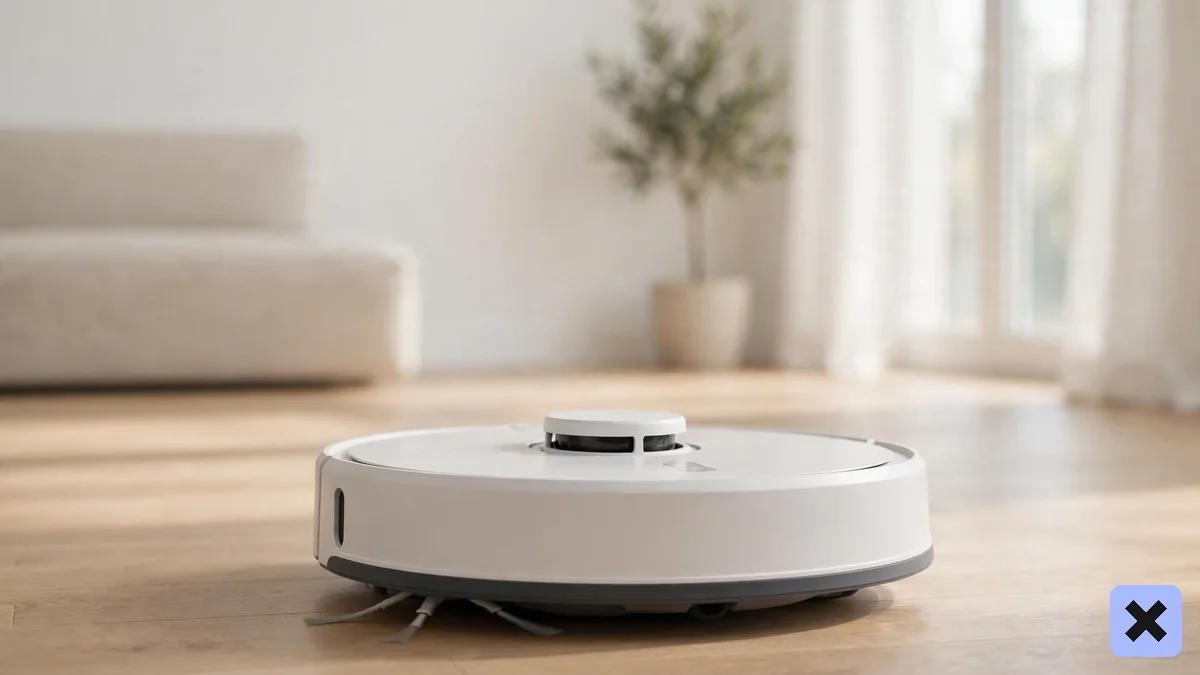
The best robot vacuums in 2026 do far more than wander around a room and hope for the best. The strongest models map your home, avoid cables and pet bowls, clean close to edges, and return to a dock that empties the dustbin for you. They run quietly, handle rugs and hard floors in one run, and take minutes to set up.
That progress matters because the wrong robot vacuum still wastes time. A weak model gets stuck under the sofa, misses dust along skirting boards, tangles itself in a charging cable, or needs its small bin emptied halfway through a clean. The difference is rarely one feature. It is the combination of suction, navigation, brush design, battery life, and a dock that reduces your work.
This guide compares the types worth buying in 2026 and helps you match one to your home, whether you live in a small flat, a family home with pets, or a larger house with mixed surfaces.
Key takeaways
- Navigation matters more than raw suction alone, because a robot that misses rooms cannot clean them well.
- Pet homes need strong suction, tangle-resistant brushes, and a larger dustbin or a self-emptying dock.
- Low-profile models reach further under sofas and beds, where dust gathers out of sight.
- Vacuum-and-mop models suit hard floors, but they are not a replacement for a deep mop.
- Check your thresholds, rug thickness, and cable clutter before you choose, not after.
How We Judged the Best Robot Vacuums
We judged cleaning on hard floors and rugs, navigation in a normal home, how often each model needed attention, and how easy it was to live with. A model that gets stuck twice a week is not a good buy.
Suction is only the starting point: the brush, airflow, and edge cleaning matter too, and a robot that leaves dust along the skirting board has not finished the job. Navigation is the other key test: the best models build an accurate map and clean in straight lines. A good robot vacuum fits naturally into a calm, uncluttered home rather than adding another noisy chore to the day.
The Best Robot Vacuums at a Glance
The table below compares the five types we recommend most in 2026. The best overall pick is the safest starting point, while the specialist picks solve a specific problem better.
| Pick | Best for | Navigation | Self-emptying dock | Mopping |
|---|---|---|---|---|
| Best overall | Most homes | Laser mapping | Yes | Yes |
| Best for pet hair | Pets and rugs | Laser mapping | Yes | No |
| Best slim model | Low furniture | Laser mapping | Optional | Yes |
| Best value | Smaller homes | Smart mapping | No | Yes |
| Best vacuum and mop | Hard floors | Laser mapping | Yes | Yes |
Best Overall Robot Vacuum
The best overall robot vacuum in 2026 is a laser-mapping model with strong suction, a self-emptying dock, and a mop that lifts clear of carpet. It is the easiest type to recommend because it handles the widest range of homes without demanding much from its owner. It maps quickly, cleans in neat rows, avoids most obstacles, and empties its own bin after each run.
On hard floors it picks up dust, crumbs, and fine grit in a single pass, and on low and medium rugs it leaves carpet looking refreshed. The mop handles light marks, although it will not scrub a dried stain. The self-emptying dock changes daily use: you replace a larger bag every few weeks instead of emptying a small bin after every run. The dock is larger than a simple charger, so allow space for it against a wall.
Who Should Choose It
Choose the best overall type if you want one robot to do most of the work in a mixed home. It suits flats and houses with hard floors and rugs, owners who want a schedule they can set and forget, and anyone who would rather pay a little more once than empty a bin every day.
Best Robot Vacuum for Pet Hair
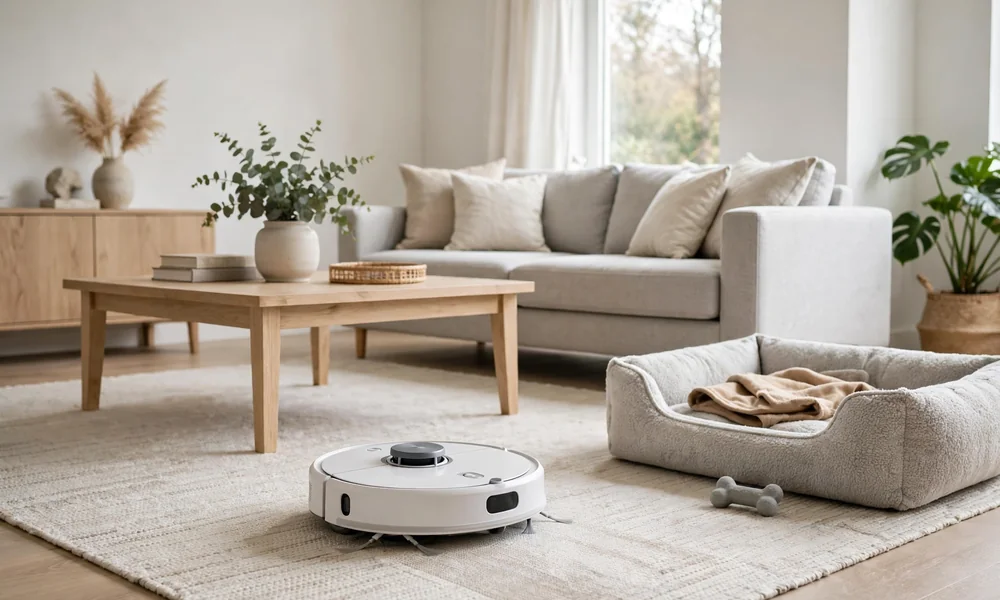
Pet hair is one of the hardest tests for a robot vacuum. Hair wraps around brushes, fills a small bin quickly, and collects in corners and along rug edges. The best robot vacuums for pet hair use strong suction, a brush designed to resist tangles, and a dustbin or dock that can cope with a full clean without stopping. Without those features, a pet home can overwhelm a basic model in a single run.
The strongest pet models also pick up tracked-in dirt, crumbs, and fine dust, and a good filter traps particles instead of blowing them back into the room. Owners should also check obstacle avoidance, since a robot that cannot recognise a pet bowl or toy can make a mess worse.
What to Check Before You Buy
Check the brush first. Rubber or silicone rollers tend to shed hair more easily than bristle brushes, and they are simpler to clean. Check the bin size next, and be honest about how much hair your home produces. A self-emptying dock is worth the extra cost in a home with two or more pets, because it keeps the robot running without you having to empty it halfway through a clean.
Best Slim Robot Vacuum
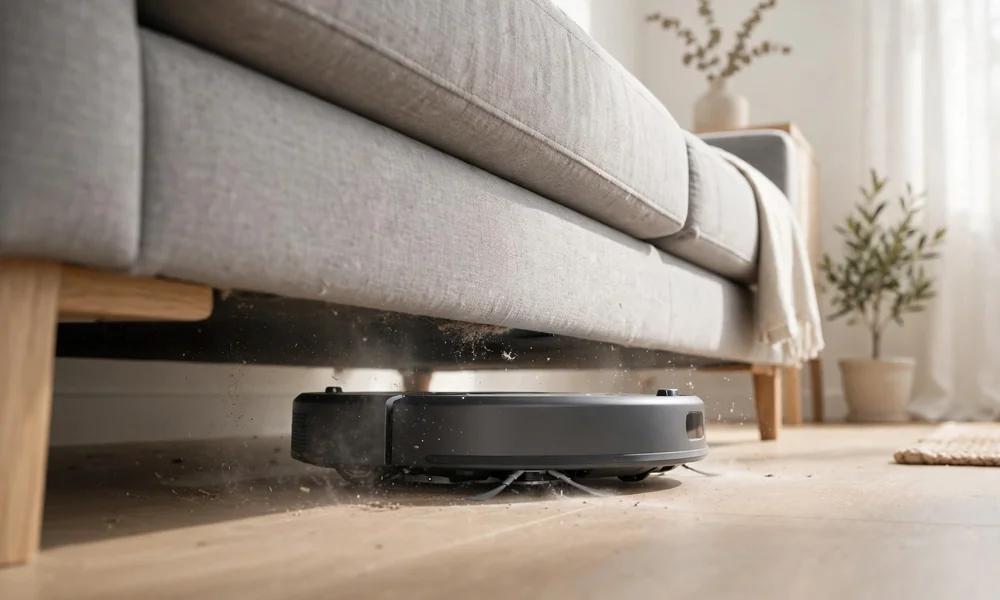
Most robot vacuums are too tall to fit under low sofas, beds, and cabinets. Dust gathers in those places for months, and a standard upright vacuum cannot always reach it either. A slim robot vacuum solves that problem by trading a little battery or bin capacity for a lower body that slides under furniture other models cannot reach.
The best slim models still map properly and clean in straight lines, so check that yours keeps laser navigation and measure the gap under your lowest furniture before you buy. Slim models can be weaker on thick carpet, but that is a fair trade if dust under furniture is your main problem.
Before you settle on a slim model, walk through your home with a tape measure and a note of every threshold, rug edge, and low clearance. A robot that climbs a 20-millimetre threshold easily may still struggle with a thick rug fringe, and a model that fits under the sofa may not fit under a low bed frame. These small measurements decide whether the robot cleans your whole home or only the easy rooms, so they are worth five minutes before you spend anything.
Best Value Robot Vacuum
The best value robot vacuum in 2026 is a smart-mapping model without a self-emptying dock. It costs far less than the flagship types, yet it still maps your home, cleans in straight lines, and handles hard floors and low rugs well. For a smaller home, that is often all you need, and the money saved can go towards a better filter or a spare set of brushes.
Value models usually have a smaller dustbin, so you will empty it more often, which is manageable in a one or two-bedroom home. Beware the cheapest random-navigation models: they take longer and miss patches. A value model with proper mapping is a much better buy. Some connected home gadgets promise far more than they deliver, and the same caution applies here: read the real navigation and battery details before you trust a low price, because smart home devices that cause problems usually fail on the basics first.
Best Vacuum and Mop Robot
A vacuum-and-mop robot is the best choice for a home that is mostly hard floor. It vacuums dust and crumbs, then follows with a damp mop that lifts light marks and keeps tiles, wood, and laminate looking fresh. The best models lift the mop pad when they cross a rug, so they do not drag a wet pad across carpet. That one detail makes a large difference in a mixed home.
Look for a mop that applies steady pressure and uses clean water; some docks wash the pads automatically. It is not a replacement for a proper mop, but it keeps hard floors clean day to day, so a weekly deep mop is quicker.

Navigation, Mapping, and Obstacle Avoidance
Laser mapping builds a fast, accurate map, works in the dark, and lets you set room-by-room schedules and no-go zones. Camera-based navigation can recognise objects well, but it can struggle in low light.
Once the map exists, you can send the robot to one room or set a no-go zone around a pet bed or cables. Better models also steer around cables, shoes, and pet bowls, although no model is perfect, so combine a capable robot with a tidy floor.
Noise is another everyday detail worth checking. A robot on full power can interrupt a call or a film, so look for a model that cleans well on a medium setting and lets you schedule the loudest clean while you are out. Most good models run for 90 to 180 minutes on a charge, which is enough for a typical home, while larger homes need one that can recharge and resume where it left off.
Before You Buy: A Quick Checklist
Use this checklist before you order. It takes five minutes and prevents the most common buying mistakes, from a robot that cannot fit under your sofa to a dock that has nowhere to live. The same care helps with supplies: avoid cleaning products that waste money and keep the routine simple.
- Measure the gap under your lowest sofa, bed, and cabinet, and check the robot’s height against it.
- Count your rooms, note the floor types, and check whether the robot can recharge and resume.
- Check your thresholds and rug thickness, because a robot that cannot climb them will leave rooms uncleaned.
- Decide whether you need a self-emptying dock, especially if you have pets or a larger home.
- Check the app for room maps, schedules, and no-go zones before you buy, not after.
- Make sure there is a clear spot for the dock, with space on both sides and in front of it.
Frequently Asked Questions
Are robot vacuums worth it in 2026?
Yes, for most homes. A good robot vacuum keeps floors clean every day with very little effort, and the best models navigate well, empty themselves, and handle mixed floors. They do not replace a deep clean.
Can a robot vacuum replace a normal vacuum?
Not completely. A robot vacuum is excellent for regular cleaning on hard floors and low rugs, but a full-size vacuum is still better for deep carpet cleaning, stairs, upholstery, and tight corners. Most owners use the robot daily and a normal vacuum weekly.
Do robot vacuums work on carpet?
Yes, on low and medium pile carpet they work well, especially models with strong suction and a good brush. On thick carpet, performance drops.
How often should a robot vacuum run?
Two or three times a week is enough for a smaller home, while a home with pets or children benefits from a daily run. A short daily clean keeps dust and hair from building up.
Do I need a self-emptying dock?
It is not essential, but it is the most useful upgrade for pet owners and larger homes. It means you empty a bag every few weeks instead of a bin after every run.
Will a robot vacuum fall down the stairs?
No, a properly working robot vacuum has cliff sensors that detect a drop and stop it from falling. Keep the sensors clean.
The Bottom Line
The best robot vacuums in 2026 are the ones that clean your whole home without needing constant help. For most homes, a laser-mapping model with strong suction and a self-emptying dock is the best buy, with a slim model for low furniture, a pet model for heavy hair, and a value model for smaller homes. Match the robot to your floors, your furniture, and your routine, and it will quietly keep your home cleaner every day.