
A kids sandal is not a small adult sandal. It is a different shoe with a different job: it has to stay on a foot that is still growing, survive puddles and sandpits and playground tarmac, dry out before the next outing, and be easy enough that a four-year-old can put it on without a grown-up kneeling down to help. The best kids sandals of 2026 do all of that without looking like a clumsy compromise, and the worst ones fail on the basics long before the colour or the pattern ever matters.
What Makes a Kids Sandal Different
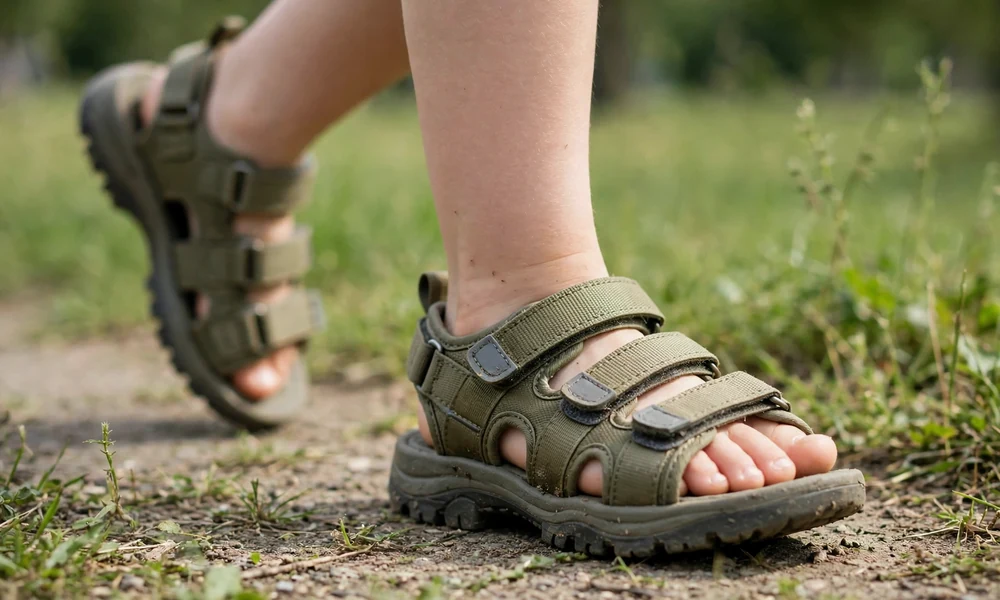
A general sandal is designed for an adult who will look after it. A kids sandal assumes the opposite. It assumes the shoe will be kicked off in the garden, dragged through mud, soaked in a paddling pool, left in the sun and then put back on still damp. The straps are therefore not decoration. They are the whole point. The best kids sandals use wide, soft straps that spread pressure across the foot instead of digging in, with hook-and-loop fastenings a child can manage alone and a heel strap that stops the foot sliding forward with every step.
The sole matters just as much, and it is where cheap sandals give themselves away. A good sole is flexible enough to bend where a child’s foot bends, thick enough to protect against hot pavement and sharp stones, and grippy enough for wet tiles and grass. Pick a sandal up and twist it gently: it should flex at the ball of the foot but not fold in half, and it should spring back instead of staying creased. If the sole is stiff as a board, a small child will trip in it. If it is floppy as a slipper, it will offer no support on a long walk.
Weight is the third difference, and it is the one most parents underestimate. A heavy sandal tires a small child quickly and changes the way they walk, which is how blisters and sore ankles start. The best kids sandals feel light in the hand: a soft foam or rubber midsole, no unnecessary metal hardware, and nothing dangling that can catch on a climbing frame. Hold the pair in one hand before you buy. If it feels heavy to you, it will feel heavier to a child who weighs a quarter of what you do.
The Main Types, and When Each One Works
Active sport sandals are the workhorses. They have a closed or protected toe, a heel strap, a rugged tread and straps that adjust at two or three points. They are the right choice for holidays with uneven ground, woodland walks, camping trips and children who treat every outing as an obstacle course. They are not the prettiest sandals on the shelf, and they do not need to be: their job is to protect toes and stay put, and the best of them do both without rubbing.
Water sandals are built for rivers, splash pads, beaches and boat trips. They use quick-drying mesh and synthetic uppers, drainage holes or channels in the footbed, and soles that grip on wet rock. A good water sandal dries in a couple of hours rather than staying soggy until the next day, which matters because a damp sandal is where blisters and smells begin. If your summer involves more water than pavement, this is the type to buy first, and the best beach tents of 2026 will keep the rest of the family shaded while the children are in the water.
Slides and flip-flops have their place, and that place is short and supervised: the pool edge, the hotel room, the garden. They are easy to slip on and off, which children love, but they offer no ankle support and no toe protection, and a child who runs in them will either lose them or twist an ankle. Treat them as a spare for wet changing rooms rather than a daily shoe, and never as the shoe for a day of walking.
How to Choose: The Five Things That Matter Most
Start with fit. A kids sandal should fit like a shoe, not like a loose slipper. The heel should sit at the back of the footbed with no overhang, the toes should stop a finger’s width short of the front edge, and the straps should hold the foot without leaving red marks after ten minutes. Check the fit at the end of the day, when feet are slightly swollen, and check it again after your child has walked around the house in them. A sandal that looks right on the shelf and slips on the stairs is the wrong size.
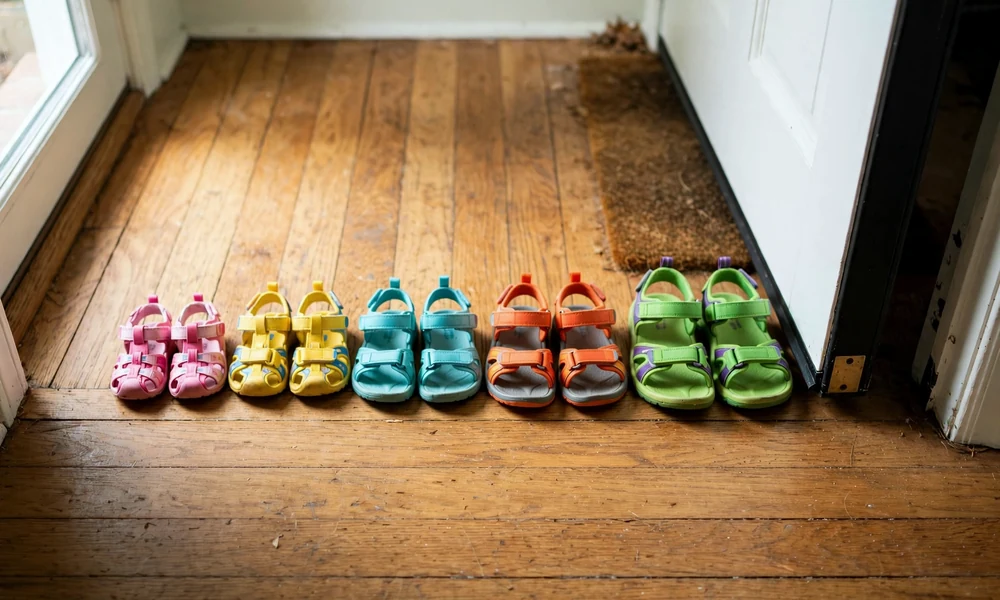
Next, look at the fastenings. Two or three adjustable straps beat a single strap every time, because feet are rarely the same width at the ankle and across the toes. Hook-and-loop straps are the most practical for young children: they can be tightened or loosened in seconds, they work with wet hands, and they let a child fix a loose sandal without asking for help. Buckles look smarter but are fiddly for small fingers and add weight. Elastic slip-on styles are fine for a quick trip to the garden, but they cannot be adjusted, so they are either right or wrong with no middle ground.
Then check the toe. A closed or bumper toe is worth more than almost any other feature for children under seven, because that is the age when every kerb, rock and chair leg gets met head-on. Open-toe sandals are cooler and lighter, and they suit older children who walk carefully, but for a toddler or a young child who runs everywhere, the extra protection pays for itself the first week. If you choose open toes, make sure the front strap sits behind the toes rather than across them, so it cannot catch and trip the child.
Materials decide how the sandal behaves in real life. Synthetic uppers dry fast and wipe clean, which is why they dominate the sport and water categories. Leather moulds to the foot and breathes well, but it needs to be kept out of deep water and it takes longer to dry. Cork and leather footbeds feel comfortable once broken in, while moulded foam footbeds are lighter and washable. Avoid sandals lined with rough, unpadded edges or stiff plastic, because those are the ones that rub the ankle raw by lunchtime.
Finally, test the grip. Turn the sandal over and look at the tread: it should have a clear pattern with deep grooves, not a smooth surface that will skate across wet tiles. Press your thumb into the sole: it should give a little and then recover. Walk your child across a smooth floor in the shop if you can. If the sandals squeak, slip or make them walk on tiptoe, move on. A good kids sandal should disappear on the foot, and a bad one announces itself within minutes.
Sizing, Growth Room and Hand-Me-Downs
Children’s feet grow in bursts, and a sandal bought in May can be too small by August. Buy for the foot your child has now, with about a centimetre of growing room at the front, and no more. More room than that turns into tripping, because the foot slides forward and the heel lifts out of the back. Measure both feet standing up, because one foot is almost always longer, and always size to the longer foot. If the two feet differ by a full size, buy for the larger one and tighten the straps on the smaller foot.
Hand-me-downs are tempting with sandals, because they often look barely worn, but be careful. A sandal moulds to the first child’s foot, and the footbed wear, strap stretch and sole pattern all carry that shape forward. A lightly worn pair from a sibling with a similar foot shape is usually fine. A pair that is flattened on one side, with straps that no longer hold or a heel cup that has collapsed, will make the second child walk differently, and that is a false economy. Check the sole for uneven wear before you pass anything on.
What to Avoid
Avoid sandals that need breaking in. Adult leather shoes soften with wear, but a child should never have to suffer through a breaking-in period: if a sandal hurts on the first walk, it will hurt on the tenth. Avoid anything with a raised heel or a wedge, which throws a growing foot forward and makes running awkward. Avoid thin, flat soles with no arch support for all-day wear, and avoid sandals where the straps are fixed in place and cannot be adjusted, because feet change shape through the day and through the summer.
Be wary of fashion sandals sold as outdoor sandals. Glitter, beads, charms and dangling decorations look delightful on a shelf and become a problem on a climbing frame, where they snag, fall off and get lost. The same goes for sandals with long ties or loose laces: anything that can trail on the ground is a trip hazard. The best kids sandals are simple by design, and the simplicity is the point. If you want a smarter shoe for special occasions, our guide to the best toddler shoes of 2026 covers the dressier end of the range for younger children.
Care, Cleaning and When to Replace
Sandals are easy to care for, and a little care makes them last a whole season. Rinse off sand and salt water the same day, because both grind away at straps and footbeds if they are left to dry in place. Wash synthetic sandals with warm soapy water and a soft brush, then leave them to dry in the shade rather than on a hot radiator or in direct sun, which warps soles and cracks leather. Stuffing them with newspaper overnight helps them keep their shape and pulls out moisture.
Replace a sandal when the tread is worn smooth, when the straps no longer hold their adjustment, when the footbed is flattened or cracked, or when the toes reach the front edge. Those are the signs that the shoe has stopped protecting the foot, and no amount of cleaning will bring the grip back. A child who suddenly complains that sandals hurt, or who starts walking differently, is also telling you something: check the fit before you blame the child. For the wider picture of summer footwear, the best sandals of 2026 covers adult styles and the features that carry across to children’s designs.

Our Verdict
The best kids sandals of 2026 are the ones your child forgets they are wearing. They are light, they stay on, they dry fast, they protect the toes that need protecting, and they can be put on and taken off without a negotiation. Buy the type that matches your summer, not the prettiest pair on the shelf, size them to the longer foot with a centimetre to grow, and check the straps and tread every few weeks. Get those few things right and the sandals will quietly do their job all summer, which is exactly what a good kids sandal should do.


