
Rug Pads That Stop Rugs Slipping in 2026
The best rug pads in 2026 stop rugs slipping because they sit between the rug and the floor and do the quiet job that the rug itself cannot do: they grip both surfaces at once, cushion every footstep, and keep the rug flat where it belongs. A rug without a pad creeps across a hard floor a little at a time, bunching at the edges, curling at the corners, and turning into a trip hazard in a hallway or beside a bed. The problem is worst on smooth wood, tile, and laminate, and worse again in a busy home, where children, pets, and a vacuum cleaner all tug at the rug every day. This guide explains the three main types of rug pad, how to size and fit one, and how to choose the right pad for hard floors and carpet.
Key Takeaways
- A rug pad is the grip and cushion layer under a rug, not a cleaning product: it stops slipping, while a cleaner washes the fibres.
- Rubber grip pads hold best on hard floors, felt pads add the most cushioning, and felt-and-rubber pads do both jobs at once.
- Cut the pad slightly smaller than the rug, about two to five centimetres in from each edge, so it stays hidden and the rug lies flat.
- A pad protects the floor as well as the rug, stopping grit from grinding into wood and preventing dyes from staining the surface below.
- Replace a pad when it goes flat, crumbly, or slippery, because a worn pad grips no better than no pad at all.
What a Rug Pad Actually Does
A rug pad is a flat layer, usually made from rubber, felt, or a combination of the two, that goes underneath a rug and stays there. It has two jobs. The first is grip: the underside clings to the floor and the top surface grips the back of the rug, so the rug cannot slide, bunch, or creep. The second is cushioning: the pad absorbs the impact of footsteps, which makes the rug feel softer underfoot, protects the rug’s backing from wear, and reduces the noise of feet on a hard floor. A thick felt pad can make a thin flat-weave rug feel far more expensive, and it takes strain off the fibres, so the rug lasts longer.
It helps to be clear about what a rug pad is not. It is not a cleaner: it does not wash or revive a rug. Cleaning is a separate job, done with water and solution, and our guide to rug cleaners that revive high-traffic carpets covers the machines that do it. A clean rug on a bare floor will still slip, so the two products work together: the cleaner keeps the rug looking good, and the pad keeps it in place. The same distinction applies to the rug itself. Choosing a good rug matters, and our guide to the best vs worst rugs explains what separates a rug that lies flat and lasts from one that curls and sheds. But even the best rug needs a pad underneath it on a hard floor, because a rug’s backing is not designed to grip a polished surface.
A pad also protects the floor: grit trapped under a rug grinds into wood every time someone walks across it, and rug dyes can transfer onto a pale floor, so the pad acts as a barrier between the two.
The Three Main Types of Rug Pad
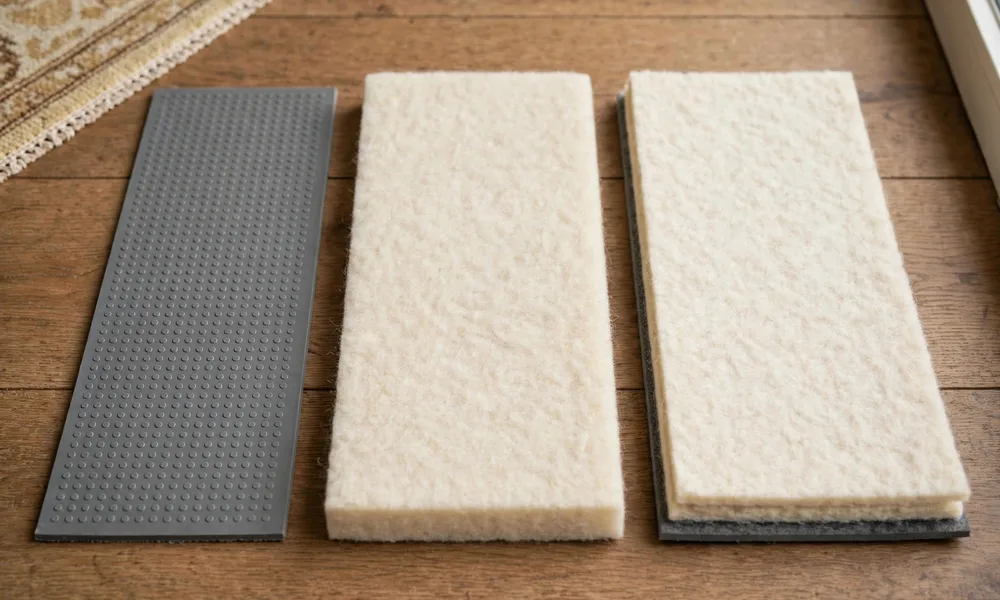
Most rug pads fall into three groups, and the right choice depends on the floor and the rug. A rubber grip pad, often made from natural rubber or a rubber mesh, is thin, flexible, and very grippy. It is the best choice for a hard floor, because it clings to wood, tile, and laminate and stops even a light rug from moving. It adds almost no cushioning, so a thin rug on a rubber pad still feels thin. A felt pad is the opposite: thick, soft, and comfortable, made from pressed fibres, often recycled, that cushion every step and add warmth. It grips less well on its own, so a felt pad on a hard floor can still slip without a rubber backing. The third type, felt-and-rubber, combines the two: a felt layer for cushioning bonded to a rubber layer for grip. It is the most versatile choice, and for most living rooms it is the one to buy.
Pads for use on carpet are thinner and designed to stop a rug bunching on fitted carpet without making it wobble.
Rug Pads at a Glance
| Best for | Type | Grip | Standout strength |
|---|---|---|---|
| Hard floors | Rubber grip | Excellent | Stops even light rugs from sliding |
| Comfort | Felt | Moderate | Thick cushioning under thin rugs |
| Most rooms | Felt and rubber | Excellent | Grip and cushioning in one pad |
| Rug on carpet | Carpet-to-carpet | Good | Stops bunching on fitted carpet |
| Thin rugs | Felt and rubber | Excellent | Adds body without adding slip |
How to Choose a Rug Pad
Choosing a rug pad starts with the floor. On a hard floor, grip is the priority, so a rubber or felt-and-rubber pad is the right buy. On fitted carpet, a thin carpet-to-carpet pad stops bunching without lifting the rug too high. On a heated floor, a thin pad lets the heat through, while a thick felt pad insulates.
Thickness and How It Feels Underfoot
Rug pads come in thicknesses from about three millimetres to over a centimetre, and the difference is easy to feel. A thin pad, around three to five millimetres, adds grip with almost no change in height, which suits a rug under a door that must still swing clear, or a rug in a room where the furniture sits low. A medium pad, around six to eight millimetres, is the best all-round choice: it adds noticeable cushioning without making the rug feel spongy. A thick pad, ten millimetres or more, turns a thin rug into a soft surface, but it can make a rug feel unstable under a chair and can stop a door opening. Measure the gap under the door before buying one, and remember a pad compresses over time.
Size, Cutting, and Fitting
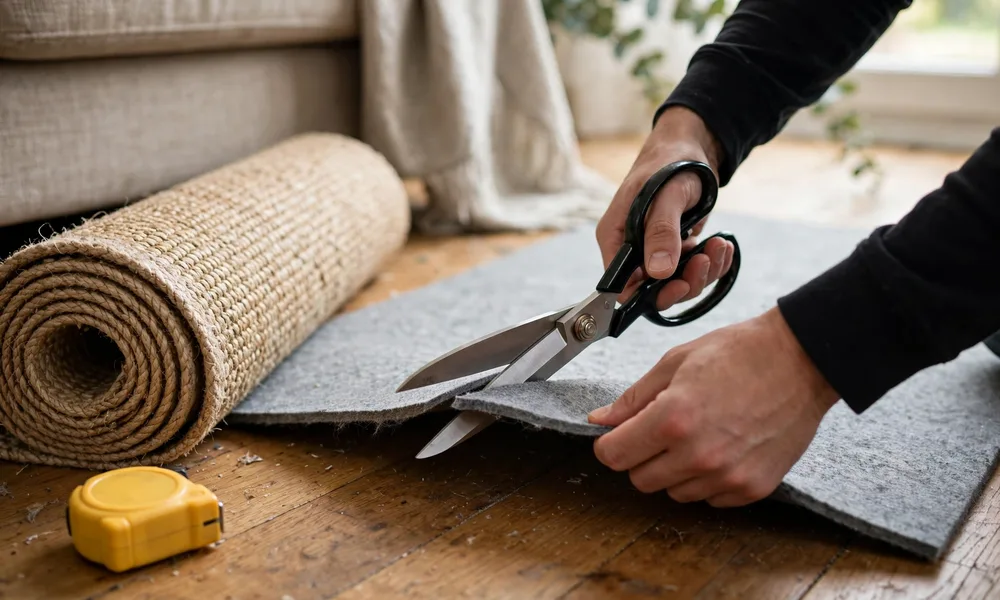
A rug pad should be slightly smaller than the rug it sits under, by about two to five centimetres on each side. If the pad is the same size as the rug, its edge can poke out and show, and if it is larger, it will look untidy and catch on feet. If it is much smaller, the edges of the rug will have no grip and will curl. Most pads are sold in standard rug sizes, and many can be cut to fit with ordinary household scissors. Cut on a flat surface, mark the line with a pencil, and cut slowly so the edge stays straight.
How to Fit a Rug Pad
Start by cleaning the floor underneath, because dust and grit stop the pad gripping and grind into the floor. Lay the pad flat, rubber side down if it has one, then lay the rug on top from one end, smoothing out air as you go. For a large rug, roll it up halfway, lay the pad under the exposed half, then unroll and repeat from the other side. Walk across the rug to check it does not move, and lift a corner to check the pad sits just inside the rug’s edge all round.
Under a rug on carpet, use a thinner pad so the rug does not wobble, and in a bathroom choose a rubber mesh pad that dries quickly rather than felt, which holds moisture. Our guide to how to pick a bathroom rug that stays put covers the damp-room details. Lift the rug every few months and clean the floor underneath, because dust builds up under a rug even when it looks clean from above.
Mistakes That Make a Rug Slip Anyway
The most common mistake is buying a pad that is too small. A pad that covers only the middle of the rug leaves the edges unsupported, and the edges are exactly where curling and tripping happen. The pad should reach almost to the rug’s edge, stopping just a couple of centimetres short. The second mistake is putting the pad the wrong way up: the rubber side goes down, against the floor, and the felt side goes up, against the rug. Reversed, it grips the rug and slides on the floor. The third mistake is leaving a pad in place for years without checking it: rubber dries out and goes hard, felt compresses and goes flat, and both lose their grip.
Rug Pad Checklist
- Match the pad to the floor: rubber or felt-and-rubber for hard floors, carpet-to-carpet for fitted carpet.
- Cut the pad two to five centimetres smaller than the rug on every side so it stays hidden.
- Put the rubber side down and the felt side up, and smooth out any air trapped underneath.
- Clean the floor before fitting, and lift the rug to clean underneath every few months.
- Check the gap under doors before buying a thick pad, and expect a new pad to compress slightly over time.
- Replace a pad that has gone flat, hard, crumbly, or slippery, because a worn pad grips no better than no pad at all.
Frequently Asked Questions
What is a rug pad?
A rug pad is a flat layer of rubber, felt, or both that sits under a rug. It grips the floor and the rug to stop the rug slipping, adds cushioning underfoot, and protects both the rug and the floor from wear and stains.
Do I need a rug pad on carpet?
Yes, if the rug moves or bunches on top of the carpet, especially in a hallway or under a chair that is pulled in and out. A thin carpet-to-carpet pad stops the bunching without making the rug wobble.
How much smaller should a rug pad be than the rug?
About two to five centimetres smaller on each side. That keeps the pad hidden under the rug while still supporting the edges, which are the parts most likely to curl and trip someone.
Will a rug pad damage a wood floor?
A good pad will not, and it protects the floor from grit and dye transfer. Cheap PVC pads can leave residue or react with some finishes, so choose natural rubber or felt and check the pad is labelled safe for hard floors.
How often should I replace a rug pad?
Every three to five years in a busy room, and sooner if it goes flat, hard, or crumbly. Check the pad whenever you lift the rug to clean underneath it, because a rug creeps slowly once the grip is gone.
Can I cut a rug pad to fit?
Yes. Most rug pads can be cut with ordinary household scissors. Mark the cutting line with a pencil, cut slowly on a flat surface, and trim the pad so it sits a little inside the rug’s edge all the way round.
The Bottom Line
The best rug pads in 2026 are the ones that match the floor, fit the rug, and keep working without being noticed. For most living rooms, that means a felt-and-rubber pad, medium thickness, cut a little smaller than the rug, with the rubber side down. A rubber pad is the right choice where grip matters most, a thick felt pad is the right choice where comfort matters most, and a thin carpet-to-carpet pad is the right choice on fitted carpet. Fit it on a clean floor, check it now and then, and replace it when it wears out. A rug that stays put, lies flat, and feels soft underfoot is a small luxury that costs very little, and it starts with the pad underneath.


