How to Pick a Bathroom Rug That Stays Put in 2026
A good bathroom rug should stay exactly where you put it. You step out of the shower with wet feet, you expect warm, dry fibres underfoot, and you expect the rug to be in the same place ten minutes later. A bathroom rug that stays put does all of that quietly, and you never have to think about it. A rug that slides, bunches, or curls at the corners turns an ordinary morning into a daily annoyance, and on a wet tiled floor it can turn into a genuine fall hazard. Picking the right rug in 2026 is less about colour and pattern than about backing, weight, size, and the floor underneath it.
The market has quietly improved: backings grip better, low-profile rugs clear doors, and quick-drying fibres mean a rug no longer stays damp until the next shower. But bath mats, runners, and full bathroom rugs are all sold under similar names, so this guide sorts out what matters, how to measure, which materials hold up, and the checks that separate a rug that stays put from one that wanders.
Key Takeaways
- A full rubber or latex backing across the whole underside is the most important feature; partial strips and smooth plastic undersides slide on wet tile.
- Heavier rugs stay put better than light ones, so a dense cotton or wool rug usually grips the floor better than a thin microfibre one.
- Measure the floor before you buy, leaving a few inches of clearance around the vanity, the toilet, and the door swing.
- A bathroom rug is not a bath mat: rugs are larger and cover more floor, while mats are small and placed right by the tub.
- Wash on a gentle warm cycle without fabric softener, and let the rug dry fully between showers, or the backing will crack and the grip will fail.
Why a Rug That Moves Is a Real Problem
A sliding rug is not just untidy. On polished tile, porcelain, or stone, a rug with no grip becomes fabric on a slippery surface, and wet feet make it worse. The usual accident is the step out of the shower: one foot lands on the rug, the rug shoots forward, and the other foot is still on wet tile. Older people and children are most at risk, but anyone can be caught out in socks on a damp floor. A rug that stays put removes that risk entirely, which is why grip should be the first thing you check, before colour, softness, or price.
Bathroom Rug or Bath Mat: Know the Difference
The terms get used interchangeably in shops, but a bathroom rug and a bath mat do different jobs. A bath mat is small, usually around 20 by 32 inches, and its purpose is to catch the water from one person stepping out of the shower or bath. It is thick, very absorbent, and easy to wash. A bathroom rug is bigger: it covers the floor in front of the vanity, runs along the bath as a runner, or fills the open floor of a larger bathroom, chosen for warmth underfoot and for how the room looks.
That difference matters when you shop. If your problem is a puddle by the tub, you want a mat, and our head-to-head guide to the best vs worst bath mats in 2026 compares the absorbent, quick-drying options in detail. If your problem is a cold floor or a rug that keeps sliding, you want a proper bathroom rug, sized to the space and built to stay put. Many homes need both: a mat by the tub and a rug by the vanity.
What Makes a Rug Stay Put
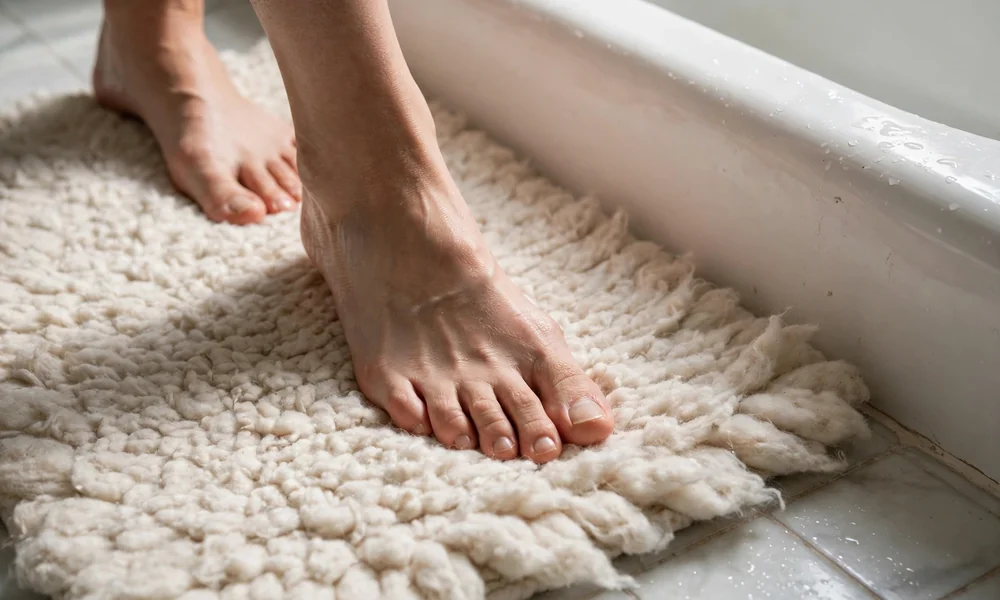
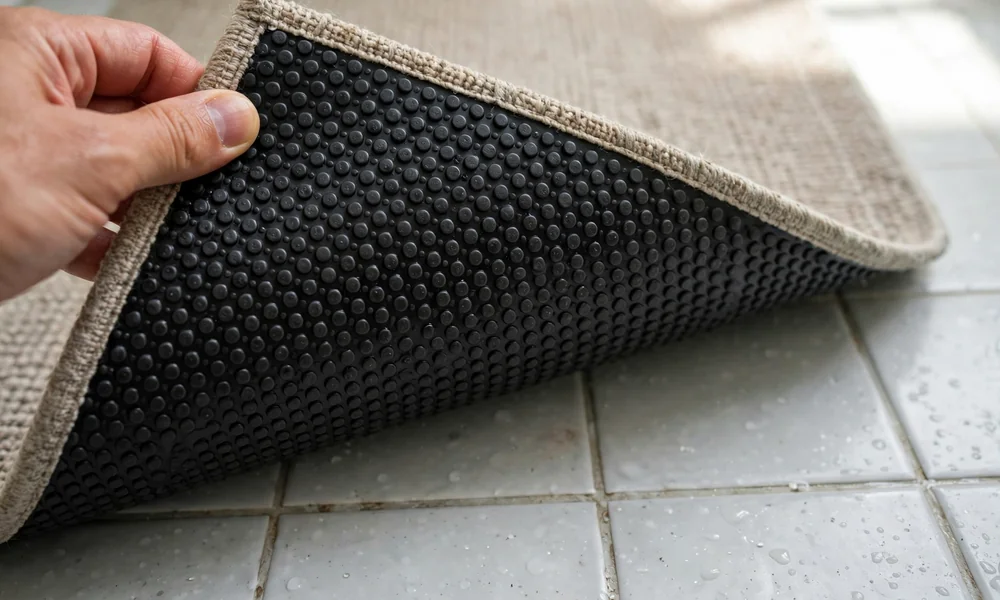
Four things decide whether a bathroom rug stays put, and every rug that fails gets at least one of them wrong. The first is the backing. The best rugs have a full rubber or latex backing bonded across the entire underside, with a textured, slightly tacky surface that grips smooth tile. The worst have a few strips of rubber, a smooth plastic underside, or no backing at all, and they skate across wet tiles the moment you step on them.
The second is weight. A heavy rug resists being pushed around by feet and by the door, while a light rug lifts, folds, and creeps. Dense cotton, wool, and thick chenille rugs have the weight to stay where they are put. Thin microfibre rugs are lighter and dry faster, but they need a better backing to compensate, and they are the first to bunch up in a busy family bathroom.
The fourth is fit. A rug that is too big for its space gets pushed against the vanity or the toilet, and the edges curl up where they are squeezed. A rug that is too small gets kicked around because nothing holds its edges down. Measure the clear floor, not the whole room, and leave a few inches of breathing room on every side.
The Main Materials, Compared
Material decides how a rug feels, how much water it holds, how fast it dries, and how well it survives the washing machine. Cotton is the classic choice: soft, very absorbent, and easy to wash, though it dries slowly in a bathroom with no window. Wool is warm, naturally springy, and excellent at staying flat, but it needs gentle washing and costs more. Microfibre is light and dries fast, but it is the least likely to stay put without a strong backing.
| Material | Best For | Staying Put | Drying Speed | Washing |
|---|---|---|---|---|
| Cotton | Everyday family bathrooms | Good, heavy and dense | Slow | Machine wash, warm |
| Wool | Cold floors, larger rugs | Excellent, heavy and flat | Moderate | Gentle cycle, air dry |
| Microfibre | Warm bathrooms, quick drying | Fair, needs strong backing | Fast | Machine wash, warm |
| Chenille | Softness and comfort | Good, thick pile | Slow | Machine wash, gentle |
| Memory foam | Cushioning underfoot | Good, heavy core | Slow | Often hand wash only |
For most homes, a dense cotton rug with a full rubber backing is the safest all-round buy: absorbent, washable, and heavy enough to stay put. If your bathroom is cold, a wool rug is worth the extra money for the warmth alone.
Sizes: Measure Before You Buy
The most useful sizes for a standard bathroom are 24 by 36 inches in front of a single vanity, and 24 by 60 inches as a runner along a bath or a double vanity. Larger bathrooms can take a 30 by 48 inch rug in the open floor. The classic mistake is buying a rug that matches the room on paper but not the clear floor in practice: the vanity, the toilet base, and the door swing all eat into the space.
Measure the clear floor with a tape, not by eye, and mark the corners with masking tape so you can see the footprint before you order. Leave at least two inches of clearance on every side, and check the door: most bathroom doors clear a rug up to about three-quarters of an inch thick. If you step from the rug straight onto the scales each morning, the rug should sit flat enough that the scales sit level beside it. Our guide to why your bathroom scale might be lying to you in 2026 explains how an uneven floor can throw readings off.

The Best Bathroom Rugs of 2026 at a Glance
The best bathroom rugs of 2026 share the same traits: a full backing, enough weight to lie flat, a low profile that clears the door, and a fibre that survives regular washing. Thick cotton rugs lead for everyday family bathrooms, because they are absorbent, washable, and heavy enough to stay put without a pad. Wool rugs lead for cold bathrooms and larger spaces, because they are warm and flat. Microfibre rugs lead where drying speed matters most, such as a windowless bathroom used by several people in a row.
Care: Washing and Drying Without Ruining the Grip
A rug that is washed wrong loses its grip long before it wears out. Wash on a warm gentle cycle, shake the rug outside first to remove dust and hair, and never use fabric softener: it coats the fibres and the backing, kills absorbency, and makes the underside slick. Tumble dry on low if the label allows it, or hang the rug with good airflow, and never fold a damp rug and leave it in a pile.
Check the backing every few months. If it is flaking, cracking, or peeling away from the fabric, the rug has lost its grip and no amount of washing will bring it back. That is the moment to replace it. In a bathroom with a powerful shower, splash control matters too: a rug that sits in a puddle every morning will stay damp and wear out faster. If your shower soaks the floor beyond the tub, our guide to the best shower heads for small bathrooms in 2026 can help you find a head that keeps the spray where it belongs.
Your Bathroom Rug Checklist
- Full rubber or latex backing across the whole underside, textured and slightly tacky to the touch.
- Enough weight to lie flat and resist being pushed around by feet and doors.
- Measured to the clear floor, with at least two inches of clearance and a door that clears it.
- Material matched to your bathroom: cotton for most homes, wool for cold floors, microfibre for humid rooms.
- Machine washable on a gentle warm cycle, with no fabric softener and full drying between uses.
- Low profile, under three-quarters of an inch thick, so the door swings freely and nobody trips on the edge.
Frequently Asked Questions
What is the best backing for a bathroom rug that stays put?
A full rubber or latex backing that covers the entire underside, with a textured surface, is the best choice. Partial strips, smooth plastic, and no backing at all all slide on wet tile. If the backing is thin or patchy, add a rug pad cut slightly smaller than the rug.
Are bathroom rugs and bath mats the same thing?
A full rubber or latex backing that covers the entire underside, with a textured surface, is the best choice. Partial strips, smooth plastic, and no backing at all all slide on wet tile. If the backing is thin or patchy, add a rug pad cut slightly smaller than the rug.
What size bathroom rug should I buy?
No. A bath mat is small and placed right by the tub to catch water from one person, while a bathroom rug is larger, covers the floor by the vanity or runs along the bath, and is chosen for warmth and coverage. Many homes use both.
Why does my bathroom rug keep bunching up?
For a single vanity, 24 by 36 inches is the most useful size; for a bath or double vanity, a 24 by 60 inch runner works well. Measure the clear floor first and leave at least two inches of clearance.
Can I machine wash a bathroom rug?
It is usually too big for the clear floor, too light, or missing a proper backing. A rug that overlaps the vanity or the door gets pushed and folded every day, so measure the space, choose a heavier rug with a full backing, and add a pad if the floor is very smooth.
Do I need a rug pad under a bathroom rug?
Most cotton, microfibre, and chenille rugs can be machine washed on a warm gentle cycle, but always check the label first. Skip fabric softener, shake the rug out before washing, and dry it fully before putting it back.
The Bottom Line
Not always, but a pad is worth it on smooth polished tile, with a light rug, or in a bathroom used by children or older people. Cut the pad slightly smaller than the rug so it stays hidden.