
Which Freezer Bag Keeps Food Freshest in 2026?
The best freezer bag in 2026 is the one that keeps air out, seals tight, and does not split, leak, or let freezer burn creep in. A freezer bag sounds like the simplest thing in the kitchen, yet the difference between a good one and a bad one shows up weeks later: one bag delivers berries that taste freshly picked, while the other gives you icy, grey-tinged vegetables and a puddle in the freezer drawer. This guide explains what separates the bags that protect food from the ones that merely hold it, and how to use them so your food stays at its best.
Freezer burn is the enemy, and it is caused by air. When cold, dry freezer air reaches the surface of food, moisture escapes and ice crystals form, leaving dry patches and stale flavours. A good freezer bag fights that in three ways: thick plastic that slows moisture loss, a seal that closes completely with no gaps, and a shape that lets you press the air out before sealing.
Key Takeaways
- Freezer burn is caused by air, so the best bags are the ones that seal tight and let you press air out.
- Thicker plastic (around 2.5 mil or more) protects food far longer than thin sandwich bags.
- Double-zipper and slider seals are the most reliable; single press-seals and fold-over tops leak air.
- Freezing flat in labelled, portion-sized bags saves space and thaws food faster and more evenly.
- Silicone reusable bags are the greenest long-term option, but heavy-duty disposable freezer bags still win on seal strength.
What Makes a Freezer Bag Keep Food Fresh
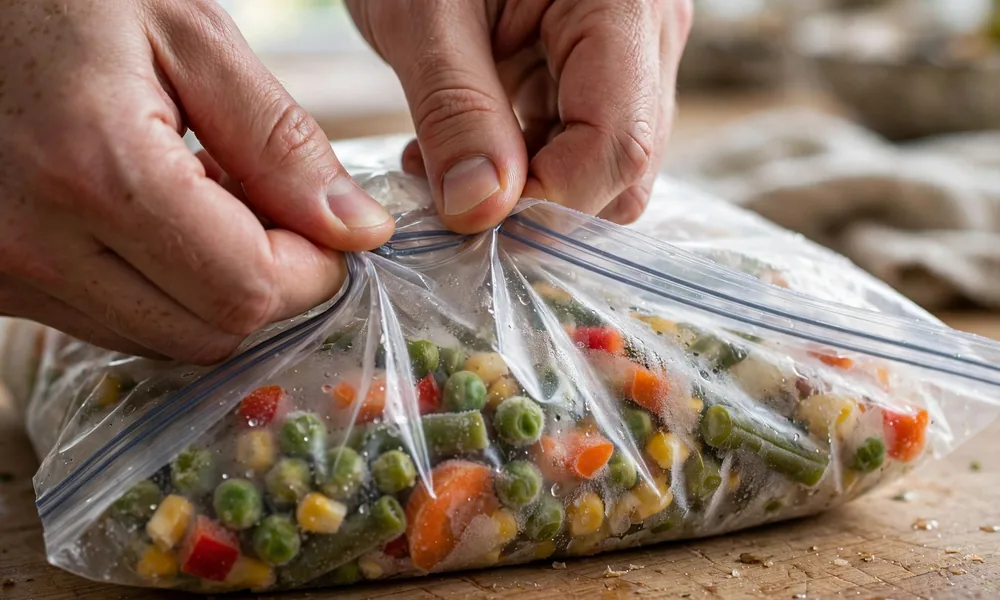
Thickness is the first thing to check. Freezer bags are measured in mils, thousandths of an inch, and most good ones sit between 2.5 and 4 mil. A bag at 2.5 mil feels noticeably sturdier than a sandwich bag at 1.5 mil, and it resists punctures from sharp bones, pasta edges, and frozen berries. Thicker bags also slow the migration of moisture through the plastic itself, which is what keeps food from drying out over months.
The seal is the second test. A double-zipper seal gives you two lines of defence and a satisfying click as it closes, which makes it easy to tell when the bag is properly shut. Slider seals are even easier to close with cold or wet hands, and they are a good choice if arthritis or weak grip is a concern. Single press-to-seal zips work, but they are easier to leave half-open by accident, and one small gap is enough to let air in for weeks. Fold-over bags with no seal at all should never be used for the freezer.
Material matters too. Most disposable freezer bags are made from low-density polyethylene, which stays flexible at freezer temperatures instead of turning brittle and cracking. Cheaper bags made from thinner or lower-grade plastic can split along the seams when frozen solid, especially if they are overfilled. Silicone bags are a different proposition: they are thick, flexible, washable, and reusable hundreds of times, and they seal with a pinch-lock bar.
Freezer Bag Types Compared
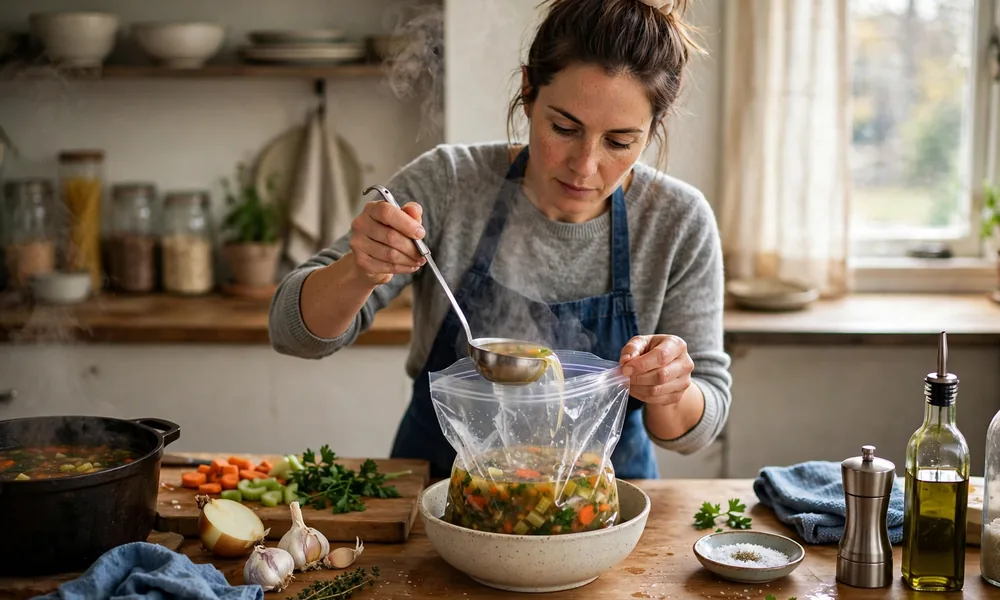
Zip-top freezer bags are the workhorse of most kitchens. They come in quart and gallon sizes, seal reliably, and are cheap enough to use every day. Their main weakness is that they are not ideal for liquids: fill them too full and they leak at the corners. The fix is simple — set the bag inside a bowl while you pour, leave an inch of headroom for expansion, and freeze it flat.
Vacuum-seal bags are the gold standard for long storage. By removing nearly all the air before sealing, they can keep food fresh for months longer than a zip-top bag, which is why hunters, bulk buyers, and meal preppers swear by them. The catch is that they need a vacuum sealer machine, and the bags cost more per use. If you already own a sealer, they are the obvious choice for meat and fish. For a closer look at the machines themselves, see the vacuum sealers that keep food fresh for weeks.
Silicone reusable bags are the sustainable pick. A good silicone bag seals with a bar that pinches the top shut, stands up on its own, and goes straight into the dishwasher. They are excellent for soups, stews, marinades, and snacks, and they do not pick up odours the way plastic can. Their downsides are price and weight, and they are harder to label — a strip of masking tape and a marker solves that.
Twist-tie and fold-over bags sit at the bottom of the pile for freezer use. They are cheap and fine for short-term storage of dry goods, but they let air in and offer no real seal, so food stored in them develops freezer burn within weeks. Heavy-duty freezer wrap and aluminium foil are better for odd-shaped items like a whole chicken, where a bag would leave too much trapped air around the food.
| Bag Type | Seal Strength | Best Storage Length | Reusable | Best For |
|---|---|---|---|---|
| Double-zip freezer bag | Very good | 3–6 months | No | Everyday freezing |
| Slider-seal freezer bag | Very good | 3–6 months | No | Easy closing, liquids |
| Vacuum-seal bag | Excellent | 6–12 months | No | Meat, fish, bulk buys |
| Silicone reusable bag | Good | 3–6 months | Yes | Soups, leftovers, snacks |
| Single press-seal bag | Fair | 1–2 months | No | Short-term storage |
| Fold-over bag | Poor | Days | No | Not for freezing |
How to Pack a Freezer Bag So Food Stays Fresh
Portion before you pack. Freeze food in the amounts you will actually use — one portion of soup, one meal’s worth of chicken, one smoothie bag of berries — so you never have to thaw a giant block just to use a little of it. Smaller portions freeze faster, which means smaller ice crystals and better texture, and they thaw faster too. Label every bag with the contents and the date.
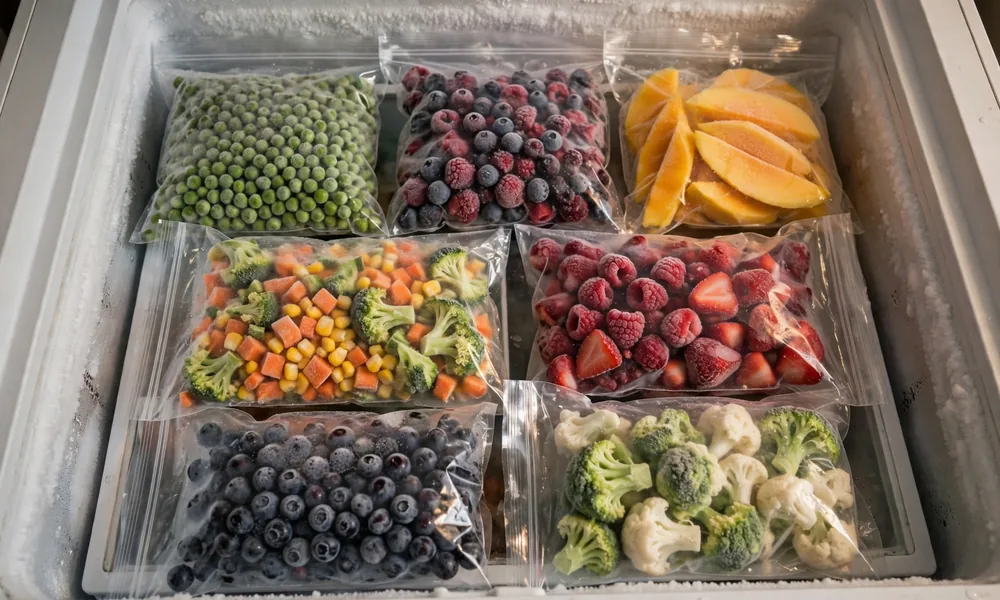
Press the air out before you seal. Lay the bag flat, smooth it gently from the bottom towards the opening, and close the seal while pressing the last of the air out. Then freeze the bag flat on a baking tray until solid. Flat bags stack like files in a drawer, take up far less space than lumpy ones, and thaw in a fraction of the time because the food is spread thin.
Do not overfill. Liquids expand as they freeze, so leave at least an inch of space at the top of every bag, and more for soups and sauces. An overfilled bag strains the seal, and a strained seal is a leaking seal. And never put hot food straight into a bag and into the freezer: cool it first, ideally in the fridge, so the bag does not warp.
Freezer Bags, Containers and Meal Prep
Bags and rigid containers each have their place. Bags win on space: they mould around the food, stack flat, and take up almost no room when empty. Containers win on protection: they stop delicate food from being crushed. A good freezer routine uses both. Use bags for soups, sauces, berries, and vegetables; use rigid containers for leftovers you will reheat in the same dish.
Meal prep is where freezer bags really earn their keep. Portion cooked grains, beans, and sauces into flat bags, label them, and stack them in the freezer like a filing cabinet — dinner becomes a matter of grabbing the right file. If you are building a full meal-prep routine, the containers matter as much as the bags, so see the best meal prep containers for the rigid side of the system. And if you are stocking up on frozen produce to fill those bags, our guide to the best frozen vegetables for quick, healthy meals will help you choose what is worth freezing.
Storage time is the last piece of the puzzle. Even in the best bag, frozen food does not last forever. Most vegetables keep well for eight to twelve months, fruit for six to eight, and cooked meals for two to three. A bag that keeps air out stretches every one of those windows, but no bag stops time entirely — rotate your stock and use the oldest bags first.
The 6-Point Checklist Before You Buy
- Check the thickness: the bag should feel sturdy, not flimsy, and be labelled for freezer use.
- Test the seal: close it empty and tug gently — a good double-zip or slider seal stays shut.
- Pick the right size: quart bags for portions, gallon bags for family meals and bulk buys.
- Look for a write-on label: dating your food is half the battle against waste.
- Freeze a test bag flat: it should lie flat, stack neatly, and not leak at the corners.
- Match the bag to the job: vacuum bags for meat, silicone for soups, zip-top for everyday use.
FAQs About Freezer Bags
Can I reuse a disposable freezer bag?
You can reuse a bag that held dry goods like bread or vegetables after washing it in warm soapy water and drying it fully. Do not reuse bags that held raw meat, fish, or eggs, because bacteria can linger in the seams even after washing. When in doubt, throw it out.
What is the difference between a freezer bag and a storage bag?
Freezer bags are made from thicker plastic and have stronger seals, so they protect food from freezer burn for months. Storage bags are thinner and designed for the fridge or pantry, where air exposure matters less. Using a storage bag in the freezer is the fastest way to ruin good food.
How long does food last in a freezer bag?
It depends on the food and the bag. In a good double-zip bag, vegetables last eight to twelve months, fruit six to eight months, and cooked meals two to three months. Vacuum-sealed meat can last six to twelve months. Always label with the date and use the oldest food first.
Can freezer bags go in the microwave?
Most disposable freezer bags are not microwave-safe, and heating them can warp the plastic or leach chemicals into food. Thaw food in the fridge or in cold water, then transfer it to a microwave-safe dish to heat. Silicone bags are the exception: most are microwave-safe, but check the label first.
Why do my freezer bags get ice crystals inside?
Ice crystals form when air and moisture get trapped inside the bag, or when food goes in warm and steams. Press the air out before sealing, cool food fully before freezing, and make sure the seal is completely closed. A bag that is only half-sealed will always collect frost.
Are silicone freezer bags worth the money?
Yes, if you freeze food regularly. A silicone bag costs far more than a disposable one, but it can be washed and reused hundreds of times, so it pays for itself within a year for most households. They are best for soups, sauces, and leftovers, and less practical for bulk meat storage, where a vacuum-seal bag still wins.
The Bottom Line
The freezer bag that keeps food freshest in 2026 is a thick, double-zip or slider-seal bag used properly: portioned, labelled, pressed flat to remove air, and frozen flat. Vacuum-seal bags win for meat and long storage, silicone bags win for reusable everyday use, and a good zip-top bag covers almost everything else — as long as you seal it properly and use the oldest food first.


