Vacuum Sealers That Keep Food Fresh for Weeks in 2026
A vacuum sealer is one of those kitchen tools that quietly pays for itself. By removing the air from a bag before sealing it shut, a vacuum sealer slows down the two things that spoil food fastest: oxygen and moisture loss. The result is meat that stays fresh in the fridge for a week instead of two days, vegetables that survive the freezer without a trace of freezer burn, and bulk buys that actually get eaten instead of thrown away. This guide covers the types worth buying in 2026, the features that matter, and how to use one well.
Key Takeaways
- The best vacuum sealers remove nearly all the air from a bag, which can extend fridge life three to five times and freezer life to a year or more.
- External suction sealers suit most households, chamber sealers suit heavy users and liquids, and handheld sealers suit small fridges and light use.
- Bag cost matters as much as machine cost, so check the price of rolls and pre-cut bags before you buy.
- Vacuum sealing does not replace refrigeration or safe handling, and it cannot make food that is already spoiling safe to eat.
- Portion food before sealing, label every bag with the date, and leave enough room at the top for a clean, strong seal.
Why Vacuum Sealing Works So Well
Most food spoilage is driven by air. Oxygen feeds the bacteria and moulds that turn fresh food slimy and sour, and it drives the oxidation that makes fats go rancid and colours fade. A vacuum sealer removes that air and locks the bag shut, so the food sits in a low-oxygen environment where spoilage slows dramatically. In the freezer the benefit is even clearer: without air in the bag there is almost no moisture for ice crystals to form from, which is what freezer burn really is.
The practical payoff shows up in the weekly shop. A family pack of chicken sealed into portions lasts the whole week in the fridge instead of two days. Cheese keeps its flavour instead of drying out at the edges. Coffee beans stay aromatic for months instead of weeks. And because sealed bags lie flat and stack neatly, a crowded freezer suddenly holds far more food in far less space. For anyone who buys in bulk, batch cooks, fishes, hunts or grows vegetables, the savings add up quickly.
The Main Types of Vacuum Sealers
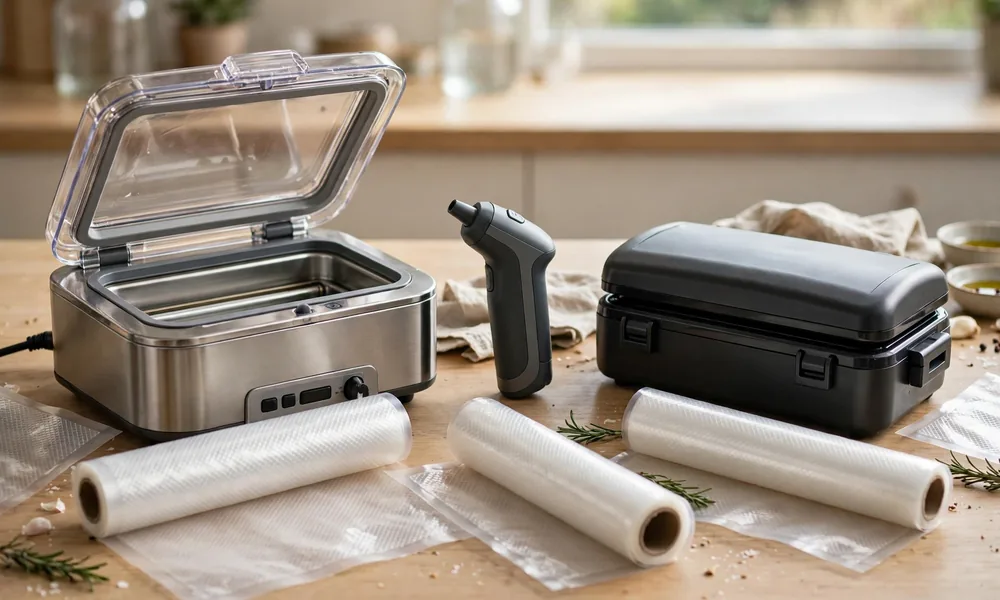
There are three main designs, and the right one depends on how much you seal, what you seal, and how much counter space you are willing to give up.
External Suction Sealers
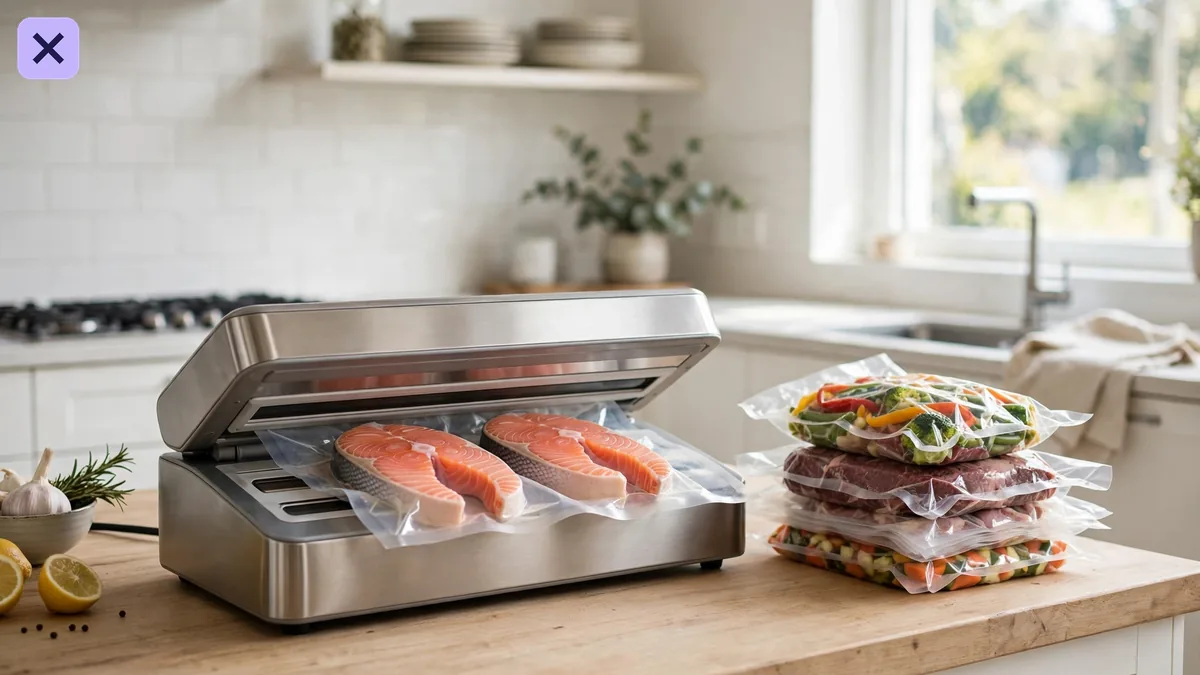
External suction sealers are the most common type in home kitchens. You place the open end of a special textured bag into the machine, it sucks the air out and then heat-seals the bag shut. They are compact, affordable and easy to store in a cupboard between uses. They handle dry foods brilliantly and most models manage moist foods with a gentle or pulse setting. Their main limit is liquids: soup or marinade can get sucked towards the seal, so you need to freeze liquids first or use the pulse control carefully.
Chamber Sealers
Chamber sealers work differently. The whole bag goes inside a chamber, the air is removed from the chamber itself, and the bag is sealed while the pressure is equal inside and out. That means liquids stay put, so soups, sauces and marinades seal perfectly, and the seal is stronger and more consistent. The trade-off is size, weight and price: chamber machines are bulky, heavy and several times the cost of an external sealer. They make sense for serious batch cookers, hunters and anyone sealing liquids every week.
Handheld Sealers
Handheld sealers are small, battery-powered devices that work with zip-style vacuum bags fitted with a valve. They are the cheapest and most portable option, and they suit small households, flats and caravans. The seal is weaker than a heat seal and the bags cost more per use, but for sealing leftovers, cheese and deli meats they are perfectly adequate. They are also the best choice if you simply do not have counter or cupboard space for a full-size machine.
Vacuum Sealers Compared
| Type | Best For | Handles Liquids | Seal Strength | Typical Cost |
|---|---|---|---|---|
| External suction | Everyday home use | With care | Strong | Low to medium |
| Chamber | Heavy use, liquids | Excellent | Very strong | High |
| Handheld | Small households, travel | Poor | Moderate | Low |
If you seal a few bags a week of mostly dry or solid food, an external sealer is the sensible buy. If liquids and large batches are your daily reality, a chamber machine earns its price. If space and budget are tight, a handheld sealer is a useful first step.
How to Choose the Right Sealer
Seal width is the first specification to check. Most home machines seal bags up to about thirty centimetres wide, which covers standard rolls and pre-cut bags. If you regularly seal large cuts of meat or whole fish, look for a wider model or a chamber machine. A wider seal bar also lets you double-seal a bag, which is worth doing for anything that will sit in the freezer for months.
Look for a pulse or manual mode. Automatic modes are convenient, but delicate foods like berries, bread and crisps crush under full suction. A pulse button lets you control the vacuum by hand and stop before the food is damaged. A moist-food setting is equally useful: it lengthens the sealing time so a damp bag edge still melts into a solid seal.
Bag compatibility deserves attention before you buy. Some machines only work with the manufacturer’s own bags, while others accept any textured vacuum bag. Rolls are cheaper than pre-cut bags and let you cut exactly the size you need, so a machine with a built-in roll cutter and storage is a genuine convenience. Check the running cost honestly: a cheap machine with expensive bags can cost more over a year than a pricier machine with cheap generic rolls. A meal prep container for freezing is a useful partner for the foods you will eat within a few days, while the sealer handles the longer-term stock.
What Seals Well and What Does Not
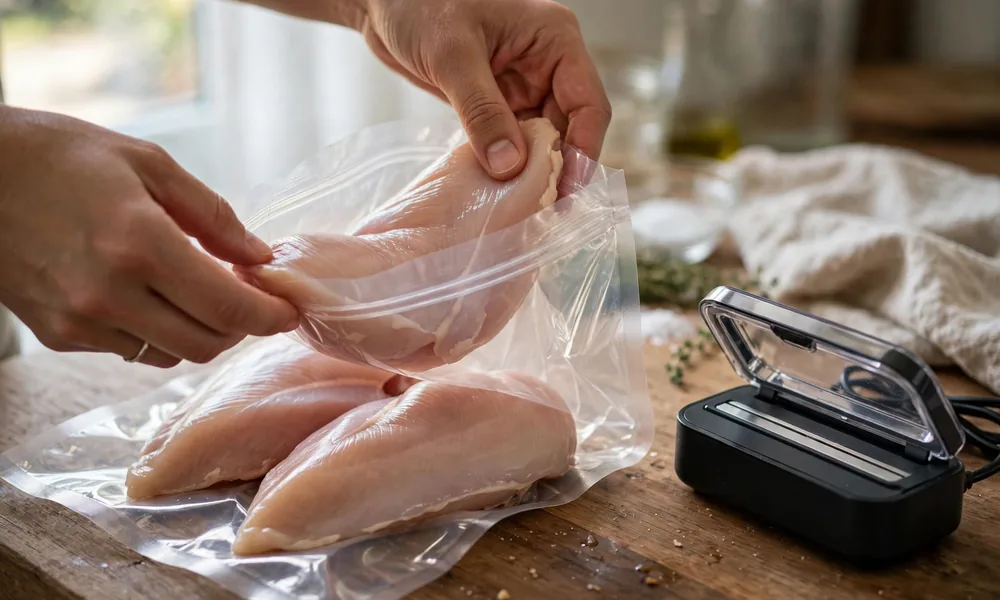
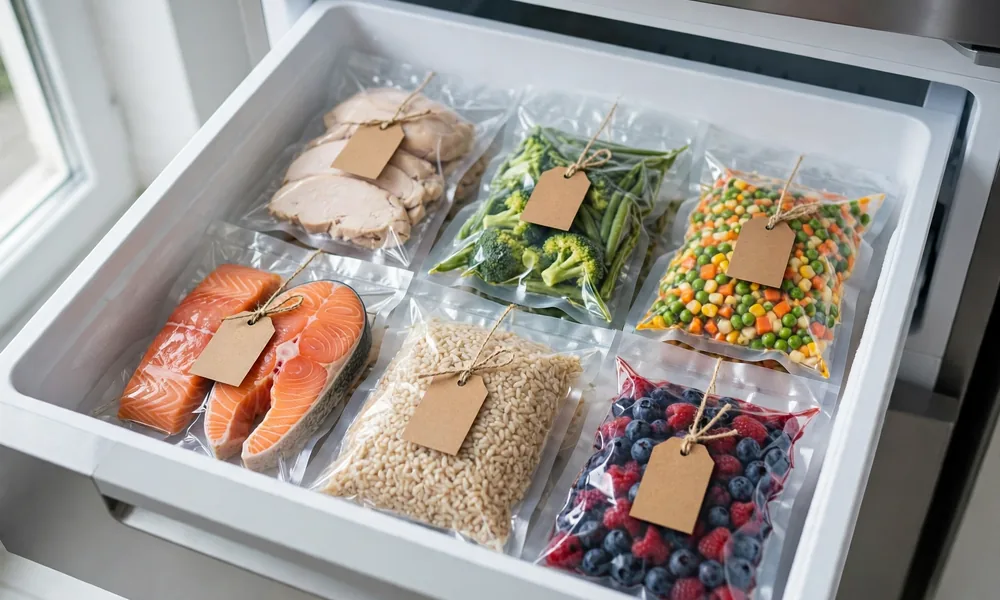
Meat, fish and poultry are the stars. A steak sealed and frozen keeps its colour and texture for a year, and a sealed joint defrosts faster because the bag sits flat in cold water. Cheese, coffee, nuts and dried goods also benefit hugely, because the airtight seal stops them drying out or picking up fridge smells. Vegetables should be blanched before sealing for the freezer, since sealing alone does not stop the enzymes that turn them mushy.
Some foods need special handling. Soft fruits crush easily, so freeze them on a tray first and then seal the frozen pieces. Bread and cakes seal best when partially frozen for the same reason. Soups, stews and sauces should be frozen in a container first and then sealed once solid, unless you own a chamber machine. Mushrooms, garlic and other foods that release gas should not be vacuum sealed raw, and neither should anything still warm: let food cool completely first or condensation will weaken the seal and encourage bacteria.
Using and Maintaining Your Sealer
Good technique starts before the machine is switched on. Portion food into meal-sized amounts, because a sealed bag should be opened once and used, not resealed again and again. Leave at least eight centimetres of empty bag above the food so the machine has room to grip and seal. Wipe the bag edge clean and dry, since even a smear of fat or moisture can stop the seal forming properly. Label every bag with the contents and the date, because a frosted bag of mystery meat is no use to anyone.
Maintenance is simple but worth doing. Wipe the seal bar and the drip tray after each session, and check the foam gaskets every few months: if they are flattened or cracked, suction drops and seals fail. Most gaskets are cheap to replace. Store rolls somewhere dry, and keep the machine upright in a cupboard rather than squeezed under a pile of pans. Keeping the rest of the kitchen organised helps too: a pantry organizer keeps the rolls, bags and accessories in one place instead of scattered across drawers.
Vacuum Sealing Beyond Food
Once you own a sealer, uses beyond the kitchen appear quickly. Out-of-season clothes compress to half their volume for storage, which frees a surprising amount of wardrobe space. Documents, passports and electronics stay dry in sealed bags on camping trips and boat days. Silver and jewellery tarnish far more slowly without air. A storage bin keeps spare rolls and pre-cut bags tidy between sessions.
Checklist: Buying a Vacuum Sealer
- Match the type to your use: external for everyday sealing, chamber for liquids and heavy batches, handheld for small spaces.
- Check the seal width and make sure it fits the bags and food sizes you actually use.
- Look for pulse or manual control and a moist-food setting for delicate and damp items.
- Compare bag costs honestly, and prefer a machine that accepts generic textured rolls.
- Plan your storage: measure the machine, allow space for rolls, and keep it somewhere you will actually reach for it.
- Remember the safety rules: cool food first, label and date every bag, and never seal food that is already spoiling.
Frequently Asked Questions
How long does vacuum-sealed food last?
In the fridge, vacuum-sealed meat typically lasts three to five times longer than wrapped meat, often a week or more. In the freezer, most foods keep well for one to three years without freezer burn. Dry goods like coffee and nuts stay fresh for months. Always follow food safety guidance and use your senses: if it smells off, do not eat it.
Can you vacuum seal liquids?
Yes, but the method depends on the machine. Chamber sealers handle liquids easily. With an external sealer, freeze soup or sauce solid first and then seal the frozen block, or use the pulse control and stop before liquid reaches the seal. Never seal hot liquids.
Do vacuum sealers work with any bags?
No. External sealers need textured or channelled bags that let air escape along the channels. Smooth bags will not evacuate properly. Chamber sealers use smooth bags, which are cheaper, but the two bag types are not interchangeable. Handheld sealers need their own valve bags.
Is vacuum sealing safe for all foods?
Most foods are fine, but vacuum sealing is not a substitute for refrigeration or cooking. It does not kill bacteria, and some foods like raw mushrooms and garlic release gas and should not be sealed raw. Always cool food completely, keep sealed food refrigerated or frozen, and follow standard food safety rules.
Can you reseal a bag after opening it?
Yes, if the bag is long enough. Cut it open, use what you need, then trim the open edge, wipe it clean and seal it again. Each reseal shortens the bag, so leave extra length when you first cut a bag if you expect to reseal it.
What is the difference between a chamber sealer and an external sealer?
An external sealer sucks air out of the bag from the outside and then heat-seals it, which works well for dry and solid foods. A chamber sealer removes air from the whole chamber so the pressure is equal inside and out, which seals liquids perfectly and gives a stronger, more consistent seal. Chamber machines are bigger and more expensive.
The Bottom Line
A vacuum sealer earns its place in the kitchen by making food last longer, taste better and waste less. For most households an external suction sealer with pulse control and a moist setting is the right buy, while heavy users and liquid lovers should look at a chamber machine. Choose for your real habits, mind the bag costs, and seal in portions with the date on every bag.