The best meal prep containers for freezing 2026 protect your food from freezer burn, survive repeated trips from freezer to microwave, and still seal tightly after months of daily use. A container that cracks in the cold or lets in air can turn a week of careful cooking into a disappointing, icy mess.
Freezing is the hardest test a food container faces. Temperatures plunge below zero, food expands as it freezes, and lids are opened while brittle with cold. The containers that pass share a few traits: thick, cold-resistant walls, airtight locking lids with silicone seals, and materials that stay safe from minus 20 degrees to the heat of the microwave.
This guide compares the nine best meal prep containers for freezing in 2026, from borosilicate glass sets to BPA-free plastic and stainless steel. Each pick was judged on seal quality, freezer durability, portion size, and how food tastes after a month in the freezer.
Key takeaways
- Borosilicate glass is the best all-round freezer material, resisting stains, odours, and thermal shock.
- Airtight locking lids with silicone seals are essential, because air is what causes freezer burn.
- Leave two centimetres of headspace in every container so expanding food does not crack the walls or pop the lid.
- Single-compartment containers freeze and reheat most evenly, while divided boxes suit meals you assemble after thawing.
- Cool food completely before freezing, label every container, and use frozen meals within three months for the best flavour.
What Makes a Container Freezer-Safe
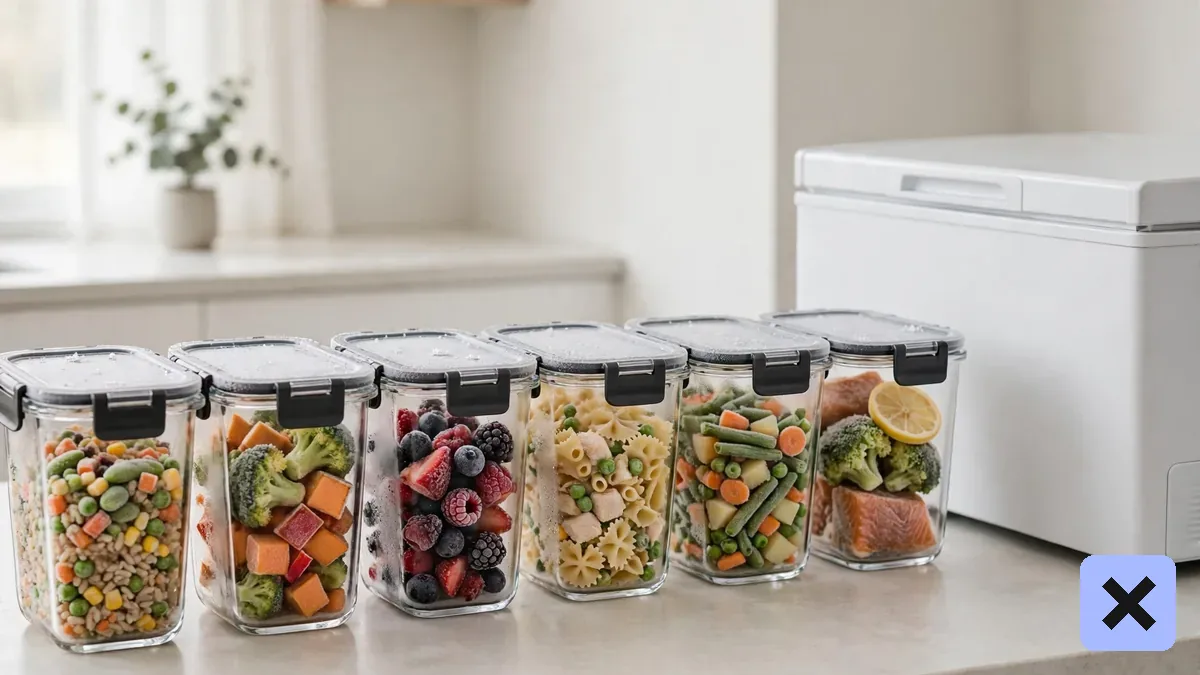
Not every food container can handle the freezer. Thin plastic becomes brittle and cracks, cheap lids shrink and let in air, and some glass shatters when food expands. A genuinely freezer-safe container is built for the cold from the start.
The material matters first. Borosilicate glass handles temperature swings better than ordinary glass, which is why the best glass containers can go from freezer to oven without cracking. BPA-free polypropylene stays flexible at low temperatures instead of turning brittle, while stainless steel is virtually unbreakable but cannot go in the microwave.
The seal matters just as much as the body. A locking lid with a silicone gasket presses evenly around the rim and keeps air out, which is the single most important defence against freezer burn. Rectangular containers stack far more efficiently than round ones, and 900 millilitres to one litre suits most adult portions.
The 9 Best Meal Prep Containers for Freezing 2026
These nine containers earned their places by keeping food fresh, sealing tightly, and surviving months of freezing, thawing, and washing. They cover every budget and every material.
1. Best Overall: Borosilicate Glass Locking Set
A borosilicate glass set with locking lids is the best pick for most households. The glass does not stain or absorb smells, moves safely from freezer to microwave to dishwasher, and the silicone gasket stays flexible in the cold.
2. Best Budget: BPA-Free Plastic Freezer Set
A BPA-free polypropylene set is the smart buy if you need a dozen containers on a budget. The plastic is rated freezer-safe to minus 20 degrees, the lids lock on four sides, and the containers are light and stack inside each other when empty.
3. Best for Soups and Stews: Round Glass Soup Containers
Soups, stews, and curries freeze best in round glass containers with wide mouths. The wide opening makes filling easy, and the round shape has no corners where food freezes unevenly. Choose a vented lid, and fill to three-quarters full, because liquids expand more than solids.
4. Best Divided: Three-Compartment Bento Freezer Box
A three-compartment bento keeps rice, vegetables, and protein separate, so nothing turns soggy during thawing. The shallow compartments freeze faster and reheat more evenly, making this the best choice for grain bowls and stir-fries.
5. Best Stainless Steel: Leakproof Steel Lunch Containers
Stainless steel is the toughest option, and the right pick if you drop things or pack lunches for children. The best steel containers use a silicone-sealed lid that locks firmly. The trade-off is reheating: steel cannot go in the microwave.
6. Best Large Family Size: Extra-Large Glass Freezer Set
An extra-large glass set with 1.5-litre containers holds a full family portion of lasagne, casserole, or chilli, and the glass goes straight into the oven for reheating. Measure your shelves first, because they take up more freezer space.
7. Best for Portion Control: Single-Serve Freezer Cups
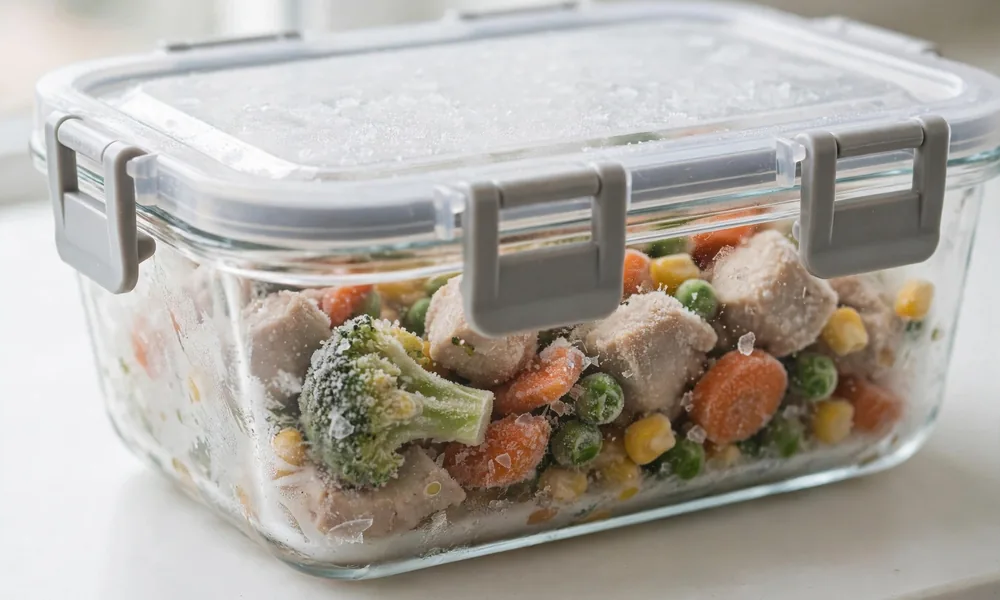
Single-serve cups in 350 to 500 millilitres are ideal for portion control, smoothies, overnight oats, and sauces. They freeze quickly and thaw in minutes, making them perfect for breakfasts and snacks. Choose a design with measurement markings.
8. Best Stackable: Nesting Plastic Freezer Containers
Nesting containers solve both storage problems: empty, they stack inside each other in one neat pile; full, their flat lids stack securely in the freezer. The best sets use one lid size across several container sizes, ending the usual lid hunt.
9. Best Premium: Oven-Safe Glass Containers with Wooden Lids
Oven-safe glass with a wooden lid is the premium pick for cooks who want containers that look as good as they perform. The glass handles freezer, oven, and microwave, while the wooden lid adds a smart finish for serving at the table.
Best Meal Prep Containers for Freezing Compared
The table below compares all nine picks on the details that matter most for freezing.
| Container | Material | Size | Microwave Safe | Best For |
|---|---|---|---|---|
| Borosilicate Glass Locking Set | Glass | 900 ml | Yes | Everyday freezing |
| BPA-Free Plastic Freezer Set | Plastic | 1 litre | Yes | Budget batch cooking |
| Round Glass Soup Containers | Glass | 700 ml | Yes | Soups and stews |
| Three-Compartment Bento Box | Plastic | 1 litre | Yes | Grain bowls |
| Leakproof Steel Lunch Containers | Steel | 800 ml | No | Durability |
| Extra-Large Glass Freezer Set | Glass | 1.5 litres | Yes | Family meals |
| Single-Serve Freezer Cups | Plastic | 500 ml | Yes | Portion control |
| Nesting Plastic Containers | Plastic | 750 ml | Yes | Small kitchens |
| Oven-Safe Glass with Wooden Lids | Glass | 1 litre | Yes | Serving and freezing |
Glass vs Plastic vs Stainless Steel for Freezing
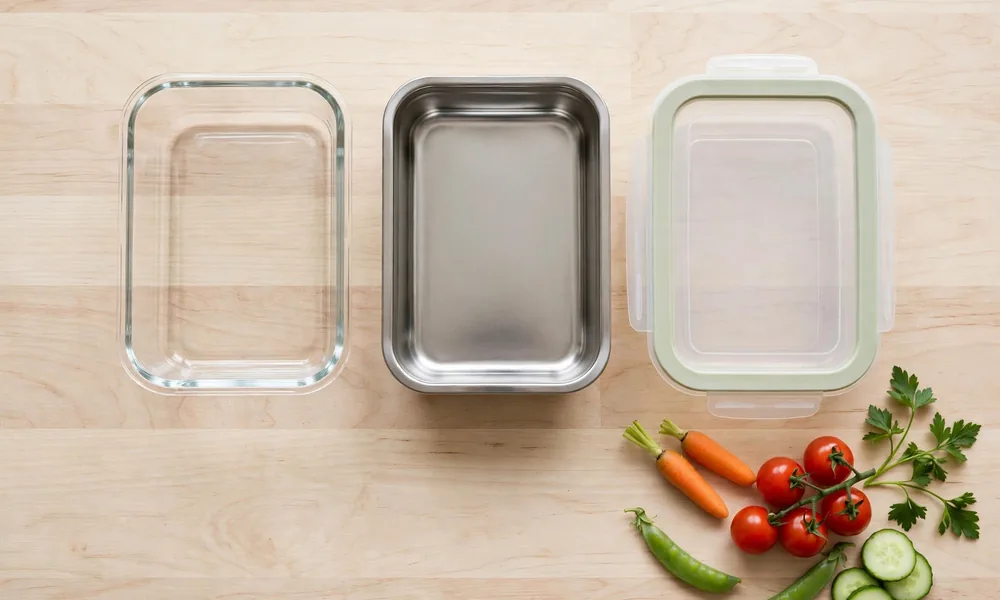
Glass is the best all-rounder: it does not stain, does not absorb odours, and reheats beautifully in the microwave or oven. Its only weakness is weight and breakability, so it is less ideal for children.
Plastic wins on price, weight, and convenience. A good BPA-free set costs a fraction of glass, weighs almost nothing, and survives being dropped. The trade-offs are staining and a shorter lifespan, so check the plastic is genuinely freezer-rated and choose polypropylene. Our guide to the best meal prep containers covers the wider range of everyday options beyond freezing.
Stainless steel is the toughest and longest-lasting choice, and it keeps food cold for hours, which makes it excellent for packed lunches. It cannot go in the microwave, and you cannot see through it, so labelling matters more. For many households, the best solution is a mix: glass at home, plastic for lunches, and steel for the containers that take the most punishment.
How to Freeze Meals Without Freezer Burn
Even the best container cannot save food that was frozen badly. Freezer burn happens when air reaches the surface of food and dries it out, leaving pale patches and a stale taste. It is almost entirely preventable with a few simple habits.
Cool Food Before You Freeze It
Never put hot food in the freezer. It raises the temperature inside, partially thaws nearby food, and creates condensation that turns into ice crystals. Let cooked food cool to room temperature, then chill it in the fridge for an hour or two before freezing.
Leave Headspace and Remove Air
Food expands as it freezes, so leave about two centimetres of space at the top of every container, and more for liquids. Press cling film directly onto the surface of soups and sauces before you close the lid, which blocks the air that causes freezer burn.
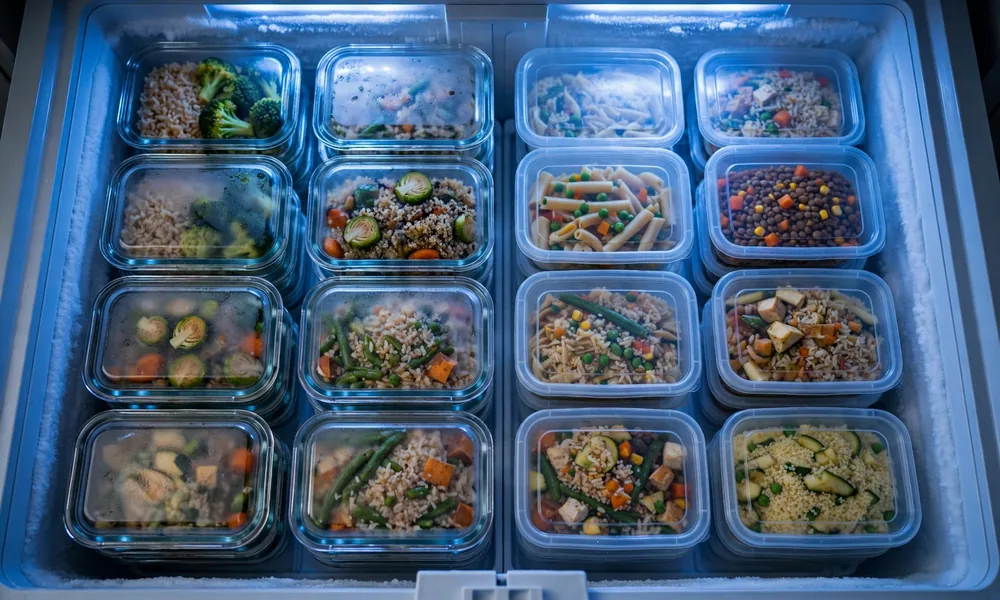
Label Everything and Rotate Your Stock
Every frozen meal looks the same after a month, so label each container with the dish name and the date it was frozen. Eat the oldest meals first, and aim to use frozen meals within three months, so nothing gets forgotten at the back of the freezer.
What Not to Freeze in Meal Prep Containers
Some foods simply do not freeze well, no matter how good the container is. Raw salads and anything delicate will turn limp and watery after thawing. Cream-based sauces can split, fried foods lose their crispness, and whole eggs in their shells can crack. Cooked rice, pasta, and potatoes freeze well, but add fresh herbs after reheating. Focus on stews, curries, soups, and casseroles, which thaw beautifully.
Freezer Meal Prep Checklist
Use this checklist before you start a batch cooking session.
- Choose containers rated freezer-safe, with locking lids and silicone seals.
- Cool food fully, then chill it in the fridge before freezing.
- Leave two centimetres of headspace in every container for expansion.
- Label each container with the dish name and the freezing date.
- Freeze flat where possible, and stack containers once they are solid.
- Use frozen meals within three months and reheat them thoroughly.
Frequently Asked Questions
Can glass meal prep containers go in the freezer?
Yes, provided the glass is borosilicate or tempered and rated freezer-safe. Ordinary thin glass can crack from thermal shock, so check the label. Leave headspace for expansion, cool food before freezing, and never move a frozen glass container straight into a hot oven.
How long does food last in freezer meal prep containers?
Most cooked meals keep their best quality for two to three months in a good airtight container. Flavour and texture decline after that, so eat dairy and fried dishes sooner and soups and stews last longest.
Do I need to thaw frozen meals before microwaving?
You can microwave most frozen meals from frozen, but thawing overnight in the fridge gives a more even result. If you microwave from frozen, use lower power, stir halfway through, and check the centre is piping hot.
Are plastic containers safe for freezing food?
Yes, as long as they are BPA-free and labelled freezer-safe. Polypropylene stays flexible at low temperatures. Avoid thin takeaway containers, which can crack and rarely seal well enough to prevent freezer burn.
What size container is best for freezing meal prep?
A capacity of 900 millilitres to one litre suits most adult portions, while 500-millilitre containers work for soups, sides, and snacks. Flat, rectangular containers freeze and thaw more evenly and stack more efficiently.
How do I stop my freezer containers from smelling?
Glass resists odours best, while plastic can absorb smells from garlic, curry, and tomato. Wash plastic promptly, soak stubborn ones in bicarbonate of soda and water, and leave lids off while they dry.
Good freezer containers change how you cook. When you know your meals will survive a month in the freezer and taste just as good reheated, batch cooking stops feeling like a chore. A solid set of glass containers, a few portion cups, and a labelling habit are all you need. If you want to round out your kitchen, our picks for the best cookware sets for small kitchens pair well with these containers, and for meals on the move, the best picnic baskets cover the portable side of eating well.
The Bottom Line
The best meal prep containers for freezing in 2026 are borosilicate glass sets with locking silicone-sealed lids, which keep food fresh for months, reheat safely, and last for years. Pair them with a few BPA-free plastic containers for lunches and portion cups, cool your food before freezing, leave headspace, and label everything.