City commuting has changed. The best electric bikes for city commuting in 2026 are no longer a novelty, but a serious alternative to the car, the bus and the crowded train. A good commuter e-bike turns a sweaty, stressful ride into a calm twenty minutes, flattens the hills that used to make cycling impractical, and lets you arrive at work fresh.
The market has matured fast. Motors are quieter, batteries are slimmer and longer lasting, and the best city bikes now arrive with the practical extras already fitted: mudguards, lights, a rack and puncture-resistant tyres.
This guide explains what actually matters for daily city riding, compares the main types of commuter e-bike, and lays out the numbers worth checking before you spend.
Key takeaways
- Pick a motor with at least 50 Nm of torque if your route has hills or you carry a load.
- A real-world range of 40 to 60 miles covers almost every city commute with charge to spare.
- Step-through frames, mudguards, integrated lights and a rack are the features daily riders use most.
- Hydraulic disc brakes and puncture-resistant tyres are worth paying for on wet city streets.
- Budget for a strong lock and insurance, since a good e-bike is a prime target for thieves.
What Makes a Great City Commuter E-Bike
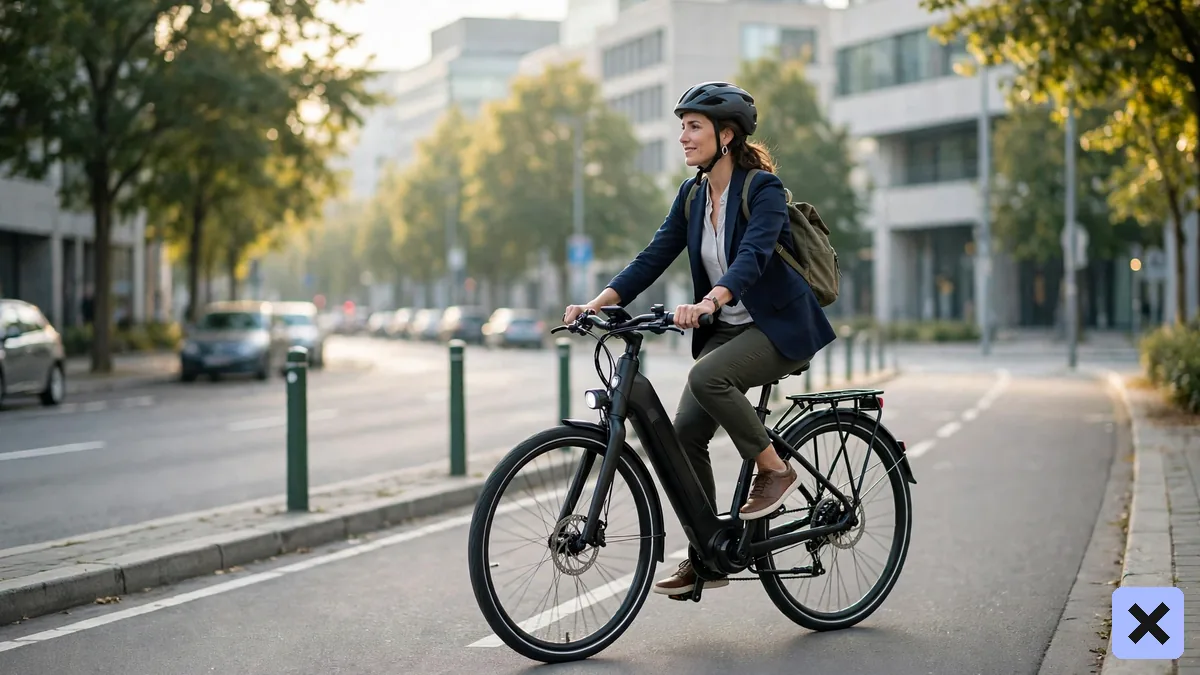
A commuter e-bike is a different machine from a mountain e-bike or a weekend road bike. It is built for short, repeated trips in traffic, in all weather, carrying a bag and stopping at lights every few hundred yards. The best city bikes are judged on reliability and ease, not top speed.
Comfort Comes First
You will ride this bike five days a week, so comfort is not a luxury. An upright position keeps your back straight and your head up, which matters in traffic where seeing and being seen is half the job. Wide tyres of 40 mm or more soak up potholes far better than narrow racing rubber, and a suspension fork or seatpost takes the edge off rough city roads.
Step-through frames make getting on and off easy in work clothes, and they are a genuine help if you stop and start constantly at junctions. For a bike you mount dozens of times a day, the low step is hard to beat.
The Practical Extras Matter
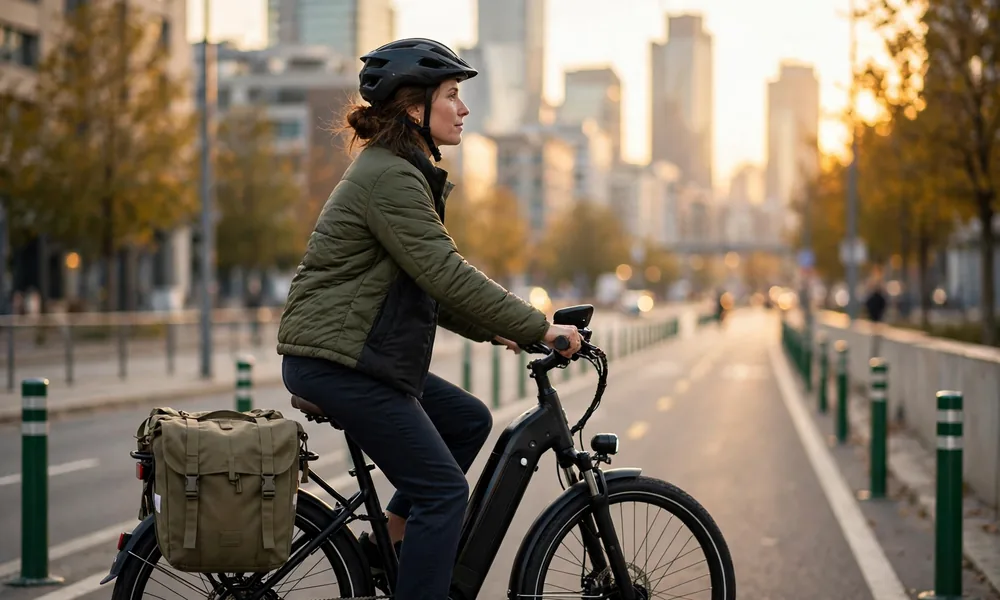
A commuter bike should arrive ready for the road. Full-length mudguards keep road spray off your clothes, integrated lights mean you are never caught out after dark, and a rear rack with pannier mounts carries your laptop and lunch without a sweaty backpack. A kickstand, a bell and a chainguard sound minor until you ride without them.
An adjustable stem, a sunlight-readable display and a walk-assist mode for ramps and lifts are the touches that separate a bike built for commuting from one merely adapted to it.

The Best Electric Bikes for City Commuting in 2026
The commuter market now splits into a few clear types, and the right one depends on your route, your storage and your budget. The best electric bikes for commuting share the same core strengths, but they package them very differently.
Step-Through Commuters
Step-through bikes are the default choice for most city riders, combining an upright position, a low frame and full practical equipment for riders of every height and build. Their mid-drive motors usually deliver 50 to 65 Nm of torque, enough for hills and headwinds, with batteries giving 50 to 80 miles on lower settings. If you want one bike that does everything a commute demands, start here.
Folding E-Bikes
Folding e-bikes suit riders who mix cycling with trains, or who have no space for a full-size bike at home or in the office. They fold in under a minute and fit under a desk or in a hallway cupboard. The trade-off is smaller wheels, which feel twitchier on rough roads, and smaller batteries, so range is usually 25 to 40 miles.
Cargo-Ready and Long-Tail Commuters
If your commute includes the school run, a weekly shop or heavy work gear, a cargo-ready commuter earns its keep. These bikes carry far more weight on a reinforced rack or long-tail frame, with stronger motors of 70 Nm or more. They are heavier and longer, so check your storage and lift first, but for riders replacing a car, nothing else comes close.
Fast and Lightweight Commuters
A newer class of lightweight e-bikes uses smaller hub motors and slim batteries to keep weight near 15 to 18 kg. They feel like normal bikes, are easy to carry upstairs, and give a gentle boost rather than a strong push. They suit fit riders on flatter routes who want help on hills without the weight of a full-power bike, though range is shorter at 30 to 50 miles and heavy loads are a struggle.
| Type | Typical weight | Motor torque | Real range | Best for |
|---|---|---|---|---|
| Step-through commuter | 22–26 kg | 50–65 Nm | 50–80 miles | Everyday all-round riding |
| Folding e-bike | 18–22 kg | 40–55 Nm | 25–40 miles | Trains and small flats |
| Cargo-ready commuter | 26–32 kg | 70–85 Nm | 40–70 miles | Heavy loads and family trips |
| Lightweight commuter | 15–18 kg | 30–45 Nm | 30–50 miles | Flat routes and carrying upstairs |
Motor, Battery and Range: What the Numbers Mean
Three numbers decide how an e-bike feels on the road: motor torque, battery capacity and the range you actually get. Manufacturers quote generous figures, so it helps to know what sits behind them.
Mid-Drive or Hub Motor
Mid-drive motors sit at the cranks and drive through the gears, which makes them efficient on hills and gives a natural, balanced feel. They are the standard on quality commuters. Hub motors sit in the wheel and are simpler and often cheaper; a rear hub motor gives a gentle push and works well on flat routes, while a front hub motor can feel odd in the wet. For a hilly city, a mid-drive is the safer choice.
Torque, measured in newton-metres, tells you how hard the motor pushes. Around 40 Nm feels polite, 50 to 65 Nm feels strong, and 70 Nm or more feels effortless with a load, most of all when pulling away at a light or climbing a steep street with full panniers.

Battery Size and Real Range
Battery capacity is measured in watt-hours. A 400 Wh battery is the entry point, 500 Wh is the sweet spot, and 625 Wh or more suits long rides and heavy loads. Real range depends on your weight, the hills, the wind and how much assistance you use, so expect roughly two thirds of the claimed maximum in everyday riding.
Removable batteries are a real advantage for city riders. You can charge at your desk or in your flat without carrying the whole bike inside, and taking the battery with you when the bike is locked outside also deters thieves.
Comfort, Gearing and Brakes for Daily Riding
City riding is stop and start. You need gears that shift easily at low speed, brakes that work in the rain, and a setup that stays reliable through winter.
Hub gears are popular on commuters because they shift while stationary, need little maintenance and are sealed against dirt. A three or five speed hub suits flat cities, while an eight speed hub handles hills. Derailleur gears give a wider range but need more cleaning. Belt drives, which replace the chain, are quieter, cleaner and last far longer, and are now common on premium city bikes.
Brakes deserve your attention. Hydraulic disc brakes stop strongly and predictably in wet weather and need less hand effort than mechanical brakes. They cost more, but on a heavy e-bike in city traffic they are worth every penny. Check that the bike has brake sensors that cut the motor when you brake.
Security and Storage in the City
A good e-bike is expensive, and thieves know it. Security should be part of your budget, not an afterthought. Buy the strongest lock you can carry, ideally a Sold Secure Gold rated D-lock, used through the frame and rear wheel to a fixed stand. A second cable lock for the front wheel adds protection for little money.
Where you keep the bike matters as much as how you lock it. A locked shed, a workplace bike store or a secure cycle hangar is far safer than a street rail. If you must park outside, choose a busy, well-lit spot and take the battery and display with you. Register the frame number with a national bike register and insure the bike, since many home policies do not cover e-bikes at full value.
Your Pre-Purchase Checklist
Use this checklist before you hand over any money. It covers the checks that matter most for a daily city bike.
- Test ride the bike on your actual route, including the steepest hill and the worst road surface.
- Check the real range at your weight and assistance level, not just the claimed maximum.
- Confirm the bike has mudguards, lights, a rack and a kickstand fitted as standard.
- Ride it in the rain if you can, or at least test the brakes on a wet surface.
- Check the warranty on the motor and battery, and find your nearest authorised service centre.
- Make sure the bike fits your storage, your lift and any train or bus rules on your route.
Frequently Asked Questions
How far can a commuter e-bike go on one charge?
Most quality commuters manage 40 to 60 miles of real-world riding per charge, depending on battery size, assistance level, rider weight and hills. Flat routes on low assistance can stretch further, while heavy loads and high assistance cut range sharply.
Do I need a licence or insurance to ride an e-bike?
In most places, a standard pedal-assist e-bike limited to 15.5 mph needs no licence, tax or registration, and you can ride it wherever ordinary bikes are allowed. Rules vary by country and state, so check local regulations first. Insurance is not usually compulsory, but it is strongly recommended given the value of the bike.
Are e-bikes hard to maintain?
Day-to-day maintenance is simple: keep the tyres pumped, the chain or belt clean, and the battery charged. The motor and electronics are sealed and need little attention. Expect a service once or twice a year, plus brake pads and tyres as they wear.
Can I ride an e-bike in the rain?
Yes. Commuter e-bikes are built for all weather, with sealed motors, batteries and displays. Full mudguards, good lights and hydraulic disc brakes make wet riding safe and comfortable. Dry the bike after a wet ride and keep the chain lightly oiled.
What is the difference between an e-bike and an electric scooter?
An e-bike is a bicycle with pedal assistance, so you still pedal and get exercise, and it is treated legally as a bicycle in most places. A scooter is a stand-on vehicle with a throttle, better for very short hops. The e-bike vs scooter for city commuting comparison comes down to your route: bikes are better for longer rides and exercise, while scooters win for very short hops and easy carrying.
How much should I spend on a commuter e-bike?
A reliable commuter e-bike starts at around £1,500 to £2,000, and the best value sits between £2,000 and £3,500. Above that you pay for lighter frames, belt drives, bigger batteries and premium components. The best electric bikes of 2026 show that spending more buys reliability and comfort, but a well-chosen mid-priced bike will serve most commuters well.
The Bottom Line
The best electric bikes for city commuting in 2026 are the ones that make riding easy every single day. Choose a comfortable frame that fits your route and storage, insist on a motor with enough torque for your hills, and make sure the practical extras are already fitted. Buy the strongest lock you can carry, keep the battery charged, and let the bike do the hard work. Once you ride to work on a good e-bike, going back to the car or the crowded train is the hardest part.