The best electric bikes for commuting in 2026 do more than flatten hills. They turn a sweaty, stressful ride into the easiest part of the day, replacing traffic jams and crowded trains with fresh air and a reliable arrival time.
Choosing one is not as simple as picking the most powerful motor or the longest claimed range. Commuting rewards a different set of qualities: a comfortable upright position, dependable brakes, integrated lights and mudguards, a rack that fits a pannier, and a battery you can charge at your desk.
This guide compares nine commuter e-bikes across a wide range of budgets, from affordable hub-motor city bikes to premium mid-drive machines. Every model is ready for daily use straight out of the box.
Key takeaways
- A 250W mid-drive motor with 65Nm or more of torque handles hills and heavy loads far better than a hub motor.
- For a daily commute, look for at least 40 miles of real-world range, which usually means a battery of 500Wh or more.
- Hydraulic disc brakes, integrated lights, mudguards and a rear rack are essentials, not extras.
- Comfort matters more than speed: an upright position and wide tyres save your back on rough roads.
- Removable batteries are worth paying for, because they let you charge at your desk.
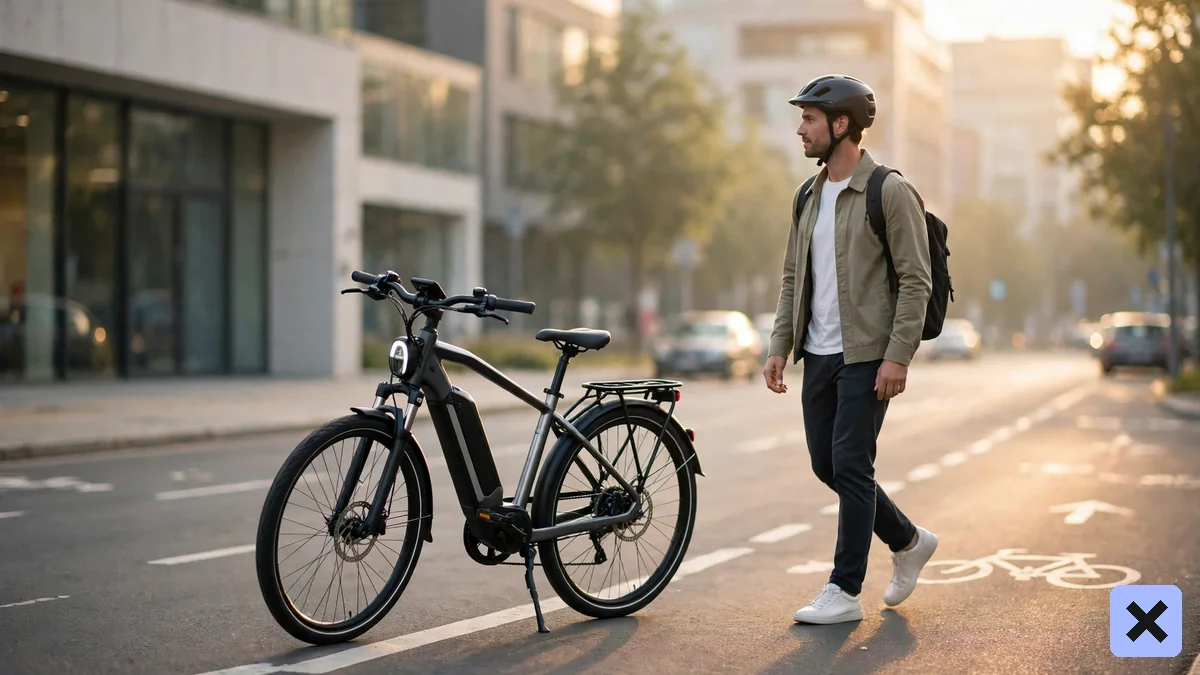
How We Chose the Best Electric Bikes for Commuting
Every bike here was assessed on what decides whether a commuter e-bike gets ridden daily or gathers dust. Motor performance came first: a commuter motor must pull away briskly from traffic lights and climb hills with a loaded pannier. We favoured mid-drive motors for their natural feel and torque, but strong hub motors earned their place at lower prices.
Battery range was measured against realistic commuting conditions, not optimistic spec-sheet figures. A claim of 80 miles usually means closer to 45 miles at a brisk pace with hills, wind and a heavy bag. Practical equipment counted heavily too: mudguards, lights, a rack and puncture-resistant tyres.
The Best Electric Bikes for Commuting in 2026
The nine bikes below cover every kind of commute, from a flat three-mile hop to a hilly fifteen-mile haul. If you are new to electric bikes, our roundup of the best electric bikes of 2026 is a useful starting point before you narrow the choice down to a commuter.
1. Trek Allant+ 7
The Trek Allant+ 7 is the benchmark for this list. Its Bosch Performance Line motor delivers 75Nm of smooth, natural assist, and the 625Wh battery returns a genuine 50 to 60 miles. Hydraulic disc brakes, integrated lights, full mudguards, a 25kg rack and a suspension fork all come as standard. At around $3,800 it is not cheap, but it is built to last.
2. Specialized Turbo Vado 4.0
The Specialized Turbo Vado 4.0 is the smoothest riding bike in this guide. Its custom 2.2 motor produces 90Nm of torque, and the assistance ramps up so gradually that you forget the motor is there. The 710Wh battery gives a real-world range of 60 to 70 miles. Prices start at around $4,000, but few commuters will find a more polished daily ride.
3. Gazelle Ultimate C380 HMB
Gazelle has been building Dutch city bikes for over a century, and the Ultimate C380 HMB shows it. The Gates carbon belt drive replaces a greasy chain, so there are no oily trouser legs and the drivetrain lasts for thousands of miles. The Enviolo stepless hub gear shifts smoothly at a standstill, ideal for stop-start traffic. The Bosch motor and 625Wh battery give around 50 miles of range. At around $4,000, it is the lowest-maintenance commute here.
4. Cube Kathmandu Hybrid Pro
The Cube Kathmandu Hybrid Pro is the value champion of this guide. For around $2,600 you get a Bosch Performance Line motor, a 625Wh battery, hydraulic disc brakes and a full set of commuter extras. Real-world range sits at 50 to 55 miles, and the bike feels planted on wet roads. It is heavy at around 26kg, but the motor more than compensates.
5. Riese & Muller Charger4
The Riese & Muller Charger4 is the luxury option. The Bosch Performance Line CX motor delivers 85Nm of torque, and the dual-battery option pushes capacity to 1,250Wh, giving a range of well over 100 miles. Build quality is exceptional, with the option of a Gates belt drive and a Rohloff hub gear. Prices start at around $4,000, but this is a bike designed to replace a car.
6. Cowboy Cruiser
The Cowboy Cruiser brings a modern, minimalist approach to commuting. There is no display on the handlebars; your phone mounts in the centre and the app handles navigation, ride tracking and theft alerts. The 250W rear hub motor is quiet, and at just 19.3kg it is one of the lightest e-bikes here. Range is around 50 miles from the removable 540Wh battery.
7. VanMoof S5
The VanMoof S5 is the most distinctive bike here, with its integrated frame design, automatic electronic shifting and built-in anti-theft system. The 250W front hub motor is paired with a torque sensor that matches assist to your pedalling, and the boost button gives a surge of power for pulling away from lights. The S5 weighs 23kg and offers around 40 miles of range.
8. Cannondale Tesoro Neo X 2
The Cannondale Tesoro Neo X 2 is a versatile all-rounder that handles commuting, gravel paths and weekend rides with equal ease. The Bosch Performance Line motor and 625Wh battery deliver around 55 miles of range, and the wide 2.25-inch tyres grip confidently on loose surfaces and wet tarmac.
9. Decathlon Riverside 540 E
The Decathlon Riverside 540 E proves that a good commuter e-bike does not have to cost a fortune. At around $1,400 it is by far the cheapest bike in this guide, yet it comes with a 250W rear hub motor, a 504Wh battery, hydraulic disc brakes, mudguards, lights and a rack. Range is around 40 miles in real-world use.
Best Commuter E-Bikes Compared
| Bike | Motor | Battery | Real Range | Weight | Price |
|---|---|---|---|---|---|
| Trek Allant+ 7 | Bosch mid-drive, 75Nm | 625Wh | 50-60 miles | 24kg | ~$3,800 |
| Specialized Turbo Vado 4.0 | Specialized 2.2, 90Nm | 710Wh | 60-70 miles | 24kg | ~$4,000 |
| Gazelle Ultimate C380 HMB | Bosch mid-drive, 75Nm | 625Wh | 50 miles | 25kg | ~$4,000 |
| Cube Kathmandu Hybrid Pro | Bosch mid-drive, 75Nm | 625Wh | 50-55 miles | 26kg | ~$2,600 |
| Riese & Muller Charger4 | Bosch CX, 85Nm | 625-1,250Wh | 60-100+ miles | 27kg | ~$4,000+ |
| Cowboy Cruiser | Rear hub, 250W | 540Wh | 50 miles | 19.3kg | ~$2,700 |
| VanMoof S5 | Front hub, 250W | 487Wh | 40 miles | 23kg | ~$3,000 |
| Cannondale Tesoro Neo X 2 | Bosch mid-drive, 75Nm | 625Wh | 55 miles | 25kg | ~$3,200 |
| Decathlon Riverside 540 E | Rear hub, 250W | 504Wh | 40 miles | 22kg | ~$1,400 |
Motor and Battery: What Actually Matters
The motor is the heart of any commuter e-bike, and the difference between motor types matters more than the headline wattage. Mid-drive motors sit at the bottom bracket and drive the chain, giving a natural feel and stronger hill climbing. Hub motors sit in the wheel and are simpler and cheaper, but they feel less refined on steep hills.
Torque is the number to watch. A motor rated at 65Nm or more will pull you up a hill with a loaded pannier, while a 40Nm motor will struggle on the same gradient. All of the mid-drive bikes here produce at least 75Nm.
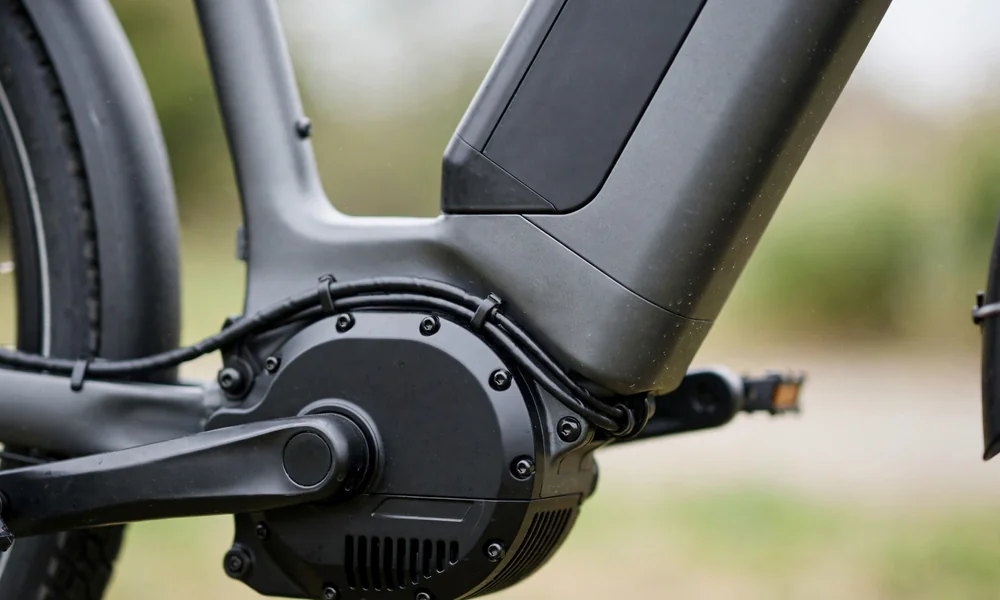
Battery size decides your range, and the honest rule is simple: take the manufacturer’s claimed range and expect about two-thirds of it in real commuting. A 500Wh battery gives roughly 40 miles of brisk riding, while 625Wh stretches to 50 or 55 miles. Removable batteries deserve special attention too: every bike here except the VanMoof S5 has one.
Riding in Traffic: Comfort, Safety and Gear
A commuter e-bike spends its life in traffic, so the way it handles at low speed matters as much as its top speed. Wide tyres, an upright position and responsive brakes give you control when a car pulls out. Hydraulic disc brakes are worth the money because they stop reliably in the rain.
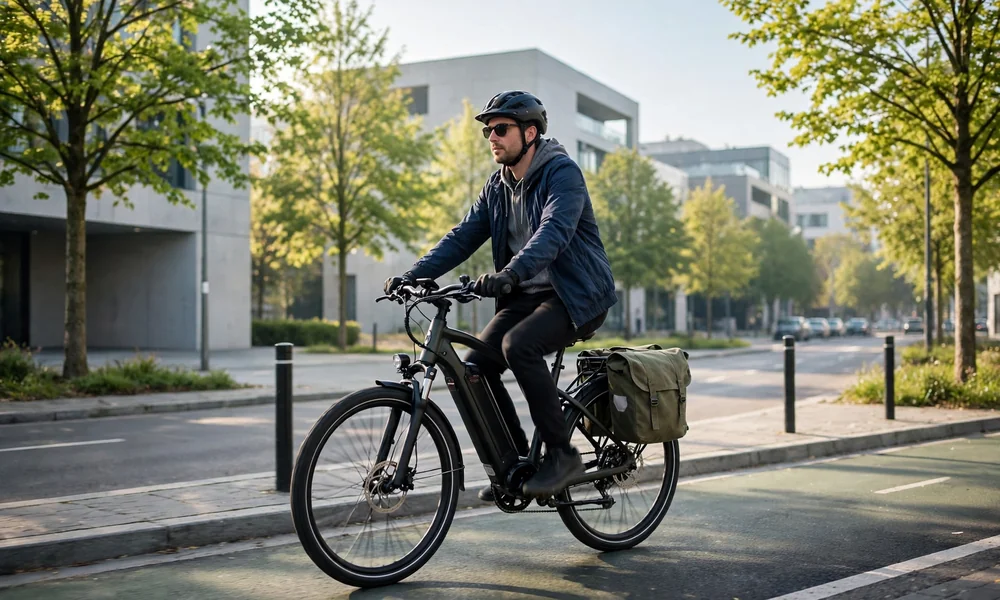
Integrated lights are another essential. Lights built into the bike run off the main battery, so they never run flat halfway home. Your helmet is the one piece of safety kit you should never compromise on. Our guide to the best cycling helmets of 2026 covers the models that balance protection, ventilation and comfort for daily riding.
Carrying your gear well makes a bigger difference than most new commuters expect. A rear rack with a waterproof pannier keeps your back dry and your laptop safe, and it beats a backpack on any ride longer than fifteen minutes. If you sometimes ride a scooter instead, our comparison of the e-bike versus scooter for city commuting weighs up the two options.
Charging, Storage and Everyday Running Costs
Charging an e-bike costs very little. A full charge of a 625Wh battery uses about 0.7kWh of electricity, roughly 20 cents at typical home rates. Most commuters spend less than $5 a month on charging.
Charging habits affect battery life. Lithium batteries last longest when kept between 20 and 80 percent charge, and when not left flat for weeks. Storage matters too: e-bikes are heavy, and carrying one up several flights of stairs gets old fast. The 19.3kg Cowboy Cruiser is the easiest here to lift. Always lock the frame and at least one wheel to something solid.

Running costs beyond charging are modest. Expect a service once or twice a year, new brake pads every few thousand miles, and a new chain or belt every couple of years. Belt drives cost more upfront but save money over time, because they need almost no maintenance. Budget around $150 to $250 a year for servicing and consumables.
Commuter E-Bike Buying Checklist
- Measure your round-trip distance and choose a battery that covers it with at least 30 percent spare.
- Ride the bike before you buy it, and check the riding position, the brakes and the motor feel.
- Confirm the bike has hydraulic disc brakes, integrated lights, full mudguards, a rear rack and a kickstand fitted.
- Check that the battery is removable, so you can charge it at your desk without carrying the bike indoors.
- Make sure the bike fits your storage: measure the lift, the doorway and the parking space before you commit.
- Ask about the warranty on the motor and battery, and find the nearest service centre.
Frequently Asked Questions
How far can a commuter e-bike go on one charge?
Most commuter e-bikes with a 500Wh to 625Wh battery cover 40 to 60 miles in real-world riding.
Do I need a licence or insurance to ride an e-bike to work?
In most countries, a standard pedal-assist e-bike with a 250W motor and assistance up to 15.5mph (25km/h) is legally treated as a bicycle, so no licence, registration or insurance is required.
Can I ride an electric bike in the rain?
Yes. Commuter e-bikes are designed to be ridden in rain, and their motors, batteries and displays are sealed against water. Avoid pressure washers and deep puddles.
How long does an e-bike battery last?
A good lithium battery lasts 500 to 1,000 full charge cycles, roughly three to five years of daily commuting. Replacement batteries typically cost $400 to $800.
Are e-bikes allowed on cycle paths and in bike lanes?
Standard pedal-assist e-bikes are allowed wherever ordinary bicycles are allowed, including cycle paths and bike lanes.
Is an e-bike actually good exercise?
Yes. The motor assists rather than replaces pedalling, and most commuters ride further and more often on an e-bike.
The Bottom Line
The best electric bike for commuting in 2026 fits your route, your budget and your daily routine. For most riders, the Cube Kathmandu Hybrid Pro is the sweet spot, offering a Bosch motor, 625Wh battery and full commuter extras for around $2,600. If your budget stretches further, the Trek Allant+ 7 and the Specialized Turbo Vado 4.0 are the most polished daily rides you can buy, while the Decathlon Riverside 540 E proves that a great commuter e-bike can cost as little as $1,400.