
The best cycling helmets in 2026 are lighter, cooler and safer than anything riders wore five years ago. Modern shells pair MIPS or similar rotational liners with deep ventilation channels, and the best models weigh under 300 grams while earning top marks in independent crash testing. Whether you ride a road bike, a mountain bike or an e-bike to work, the right helmet is the single most important piece of kit you will buy.
We compared ventilation, weight, fit, safety and comfort across the most popular helmets on sale this year, and checked how each feels after two hours in the saddle. The result is nine helmets that earn their place, from a budget commuter lid to a pro-level aero helmet.
Every helmet below meets the CPSC or EN 1078 standard, and all nine carry MIPS or an equivalent rotational protection system. Prices range from around $60 to just over $300. Use the comparison table to narrow the field, then read the reviews that match how you ride.
Key takeaways
- Every helmet here meets CPSC or EN 1078 standards, and all nine include MIPS or an equivalent liner.
- The best all-round road helmet balances weight, ventilation and price — you do not need to spend $300 for pro-level protection.
- Fit matters more than brand: a helmet should sit level, two fingers above your eyebrows, with straps in a clean V under each ear.
- Mountain bikers need extended rear coverage and a visor; commuters get the most value from integrated lights and reflective details.
- Replace any helmet after a crash or five years of regular use — the protective foam degrades with time and sun.
How We Picked the Best Cycling Helmets
We started with more than forty helmets and narrowed the list using four filters: safety (CPSC or EN 1078 certification, with MIPS or equivalent rotational protection preferred), ventilation (vent counts, channelling and performance on climbs), fit (adjustment system, size range and stability on rough roads), and value (a helmet only made the list if it beat its rivals at a similar price). Comfort on rides of two hours or more was a hard requirement for every pick below.
The 9 Best Cycling Helmets of 2026
1. Best Overall: Giro Aries Spherical
The Giro Aries Spherical is the helmet we would buy ourselves. At 265 grams it is one of the lightest helmets here, and its 24 Wind Tunnel vents move air so well that it feels cooler than helmets with far more holes. The Spherical liner — two foam layers that rotate independently — handles angled impacts without the extra slip-plane of older MIPS designs, and the helmet earned a five-star Virginia Tech rating. At around $300, it is the most complete road helmet on sale.
2. Best Value: Specialized Align II
The Specialized Align II proves a safe helmet does not have to cost a fortune. At around $60, it includes a MIPS liner, a full-coverage shell and a dial-adjust fit system that works as well as systems on helmets three times the price. It is the cheapest MIPS helmet from a major brand, and it earned a five-star Virginia Tech rating — the same top mark as helmets costing five times as much. For new riders and anyone buying a first helmet, the Align II is the smartest money in cycling safety.
3. Best Aero: HJC Furion 2.0
The HJC Furion 2.0 is the aero helmet for riders who want race-day speed without the price. Its wind-tunnel-shaped shell claims a real drag saving over a standard road helmet, and the Venturi Dynamics system keeps air moving at low speeds. The SELFIT PRO adjustment tightens evenly around the head, and the whole package weighs just 220 grams — lighter than many climbing helmets. At around $240 it undercuts most aero rivals.
4. Best for Mountain Biking: Troy Lee Designs A3
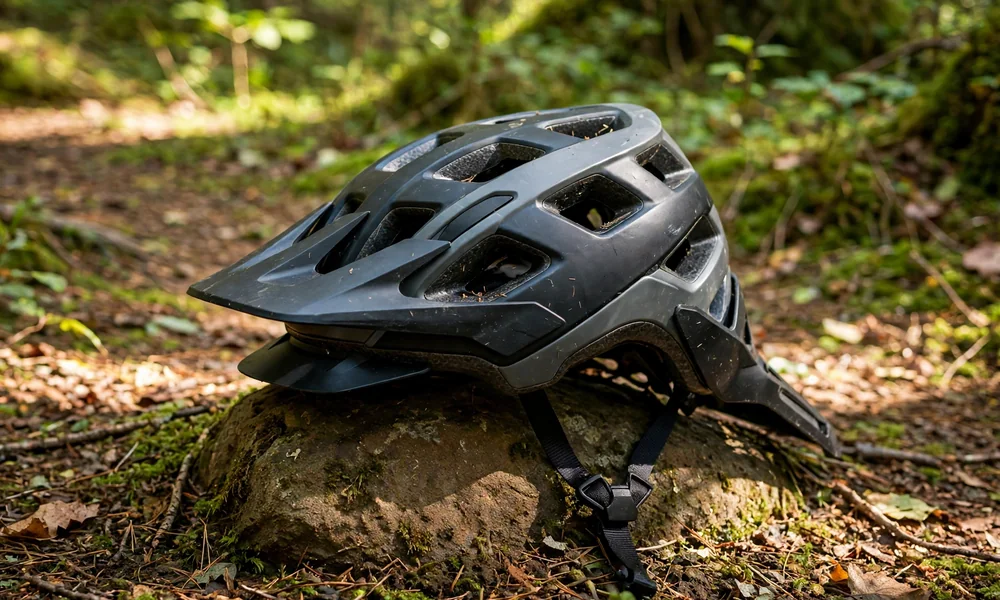
The Troy Lee Designs A3 is built for the trail. Its extended rear and side coverage protects more of your head than any road helmet, and the adjustable visor shields your eyes from sun and mud. The MIPS liner and dual-density EPP foam work together on the low-speed, high-angle falls of technical singletrack. Ventilation is excellent for a trail helmet, with 16 vents and deep internal channels, and the A3 weighs 380 grams. At around $200 it is a serious investment in trail safety.
5. Best for Commuters: Lumos Ultra E-Bike
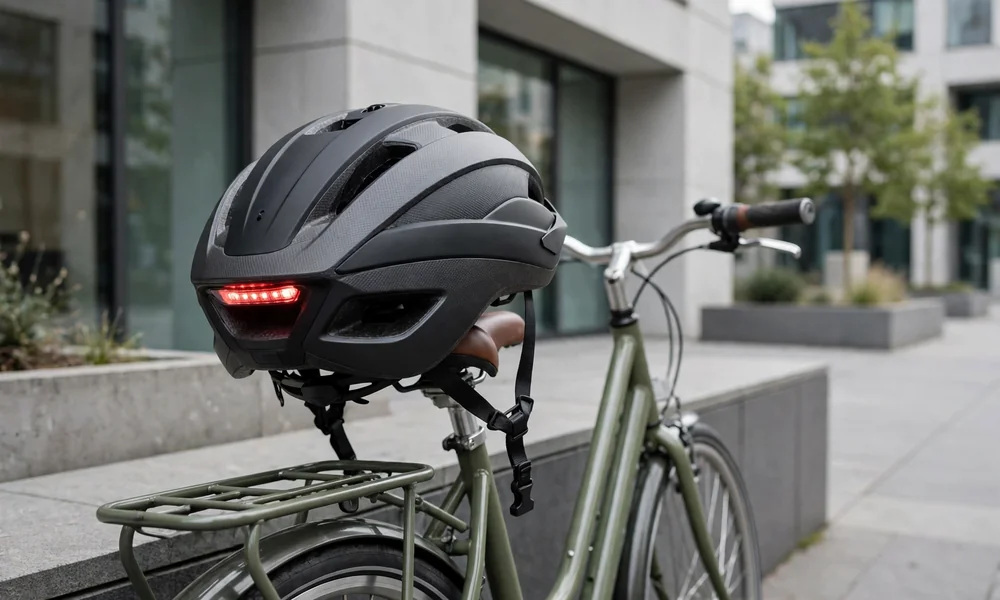
The Lumos Ultra E-Bike is the cleverest commuter helmet on the market. It packs integrated front and rear LED lights, brake lights and turn signals controlled from a handlebar remote. The lights run up to ten hours and charge over USB-C, and the helmet is certified to the tougher NTA 8776 e-bike standard, tested for the higher speeds e-bikes reach. Beyond the electronics it is a solid helmet: MIPS liner, 290 grams, comfortable dial fit. Riders who already own one of the best electric bikes will get the most from it. At around $180, the visibility alone is worth it.
6. Best Lightweight: POC Ventral Air MIPS
The POC Ventral Air MIPS weighs just 248 grams yet passes the same safety tests as helmets 100 grams heavier. Instead of chasing a huge vent count, POC uses a few precisely shaped vents and an airflow path that pulls air across the whole head. It stays cool on long climbs and is almost silent at speed, with no whistling from the vents. At around $260 it is premium, but for riders who count every gram, it is worth the stretch.
7. Best for Hot Weather: Kask Protone Icon
Kask built the Protone Icon around one idea: maximum airflow without giving up protection. Its 14 large vents pull air through the helmet at any speed, and the Octo Fit adjustment cradles the back of the head so the helmet barely moves on rough descents. The MITech liner and internal frame keep weight down to 230 grams. Its quick-dry padding does not soak through on long climbs, and the front pad sits high enough to keep sweat out of your eyes. At around $295 it is premium, but riders in warm climates will feel the difference.
8. Best Budget Aero: Lazer Genesis
The Lazer Genesis brings pro-level aerodynamics down to around $150 — the best budget aero helmet of 2026. Its Advanced Rollsys System adjusts the fit with a thumb wheel on top, so you can tighten or loosen it one-handed mid-ride, even with gloves on. At 275 grams it is not the lightest helmet here, but the aero gains are real on flat, fast rides.
9. Best for Kids and Beginners: Bell Sidetrack II
The Bell Sidetrack II is the helmet we recommend for younger riders and for adults buying their very first helmet. It is a youth-sized helmet with a MIPS liner, dial-adjust fit and built-in visor, all for around $70. Coverage is generous at the back of the head, and the 15 vents keep young riders cool. The fit range covers most riders aged five to twelve. For families getting into cycling together, it is the obvious companion to the adult helmets above.
Best Cycling Helmets Comparison Table
| Helmet | Best For | Weight | Protection | Price |
|---|---|---|---|---|
| Giro Aries Spherical | Overall road riding | 265 g | Spherical MIPS | ~$300 |
| Specialized Align II | Value | 305 g | MIPS | ~$60 |
| HJC Furion 2.0 | Aero speed | 220 g | MIPS | ~$240 |
| Troy Lee Designs A3 | Mountain biking | 380 g | MIPS | ~$200 |
| Lumos Ultra E-Bike | Commuting | 290 g | MIPS, NTA 8776 | ~$180 |
| POC Ventral Air MIPS | Lightweight | 248 g | MIPS | ~$260 |
| Kask Protone Icon | Hot weather | 230 g | MIPS | ~$295 |
| Lazer Genesis | Budget aero | 275 g | MIPS | ~$150 |
| Bell Sidetrack II | Kids and beginners | 285 g | MIPS | ~$70 |
How to Choose the Right Cycling Helmet
Start with how you ride. Road riders should prioritise weight and ventilation, because a helmet that cooks your head on a climb will ruin a ride. Mountain bikers need extended coverage and a visor, since falls tend to be sideways. Commuters should look for visibility features — lights, reflective panels and bright colours — because being seen matters more than saving 30 grams. E-bike riders should look for the NTA 8776 standard, tested for higher impact speeds.
Next, check the safety rating. The Virginia Tech helmet ratings are the most useful independent guide: they test helmets with real-world impact scenarios and rank them by star rating. Every helmet in this guide scores four or five stars. Finally, try before you buy whenever you can — head shapes vary, and the best helmet is the one that fits your head. If you are still weighing up your ride, our guide to the e-bike vs scooter for city commuting will help you pick the right machine to pair with it.
Cycling Helmet Fit Checklist
- Level on the head: the helmet should sit flat, not tilted back or tipped forward.
- Two fingers above the eyebrows: the front edge should sit two fingers’ width above your eyebrows.
- Snug, not tight: shake your head gently; the helmet should move your skin slightly, not slide around.
- V-shaped straps: the side straps should meet in a V just below each earlobe.
- One finger under the chin strap: buckle the strap and fit one finger underneath — snug, but comfortable enough to talk.
- Dial it in: tighten the rear dial until the helmet feels secure, then check again after five minutes.
Frequently Asked Questions
How often should you replace a cycling helmet?
Replace your helmet after any crash where your head hits the ground — the foam can crack without any sign on the outside. Without a crash, replace it after five years of regular use.
Do expensive cycling helmets protect better than cheap ones?
Not necessarily. Every helmet sold legally must pass the same CPSC or EN 1078 tests, and some $60 helmets outscore $300 models on protection alone. What you pay more for is weight, ventilation, aerodynamics and comfort — not basic safety.
What is MIPS and do you need it?
MIPS is a low-friction layer inside the helmet that lets the shell rotate slightly on angled impacts, reducing the rotational force reaching your brain. Every helmet in this guide includes it or an equivalent, and it adds very little cost or weight.
How should a cycling helmet fit?
It should sit level, two fingers above your eyebrows, and feel snug all round without pressure points. The straps should form a V under each ear, and the chin strap should fit one finger underneath. If it slides when you shake your head, it is too loose or the wrong size.
Are aero helmets worth it for casual riders?
For most casual riders, no. Aero helmets save a few watts at high speeds, but the difference is tiny below 25 km/h and they run warmer than standard helmets. They make sense for fast group rides and racing. If you ride for fitness and fun, a well-ventilated all-round helmet is the better buy.
Can you wear a cycling helmet with glasses or sunglasses?
Yes. Most helmets have front ports that hold your sunglasses securely, and the straps sit comfortably over glasses arms. If you wear prescription glasses, look for a helmet with a slightly roomier fit around the temples. The same thinking applies to the rest of your kit — just as the best motorcycle helmets pair lights and reflective details with their own safety systems.
The Bottom Line
The best cycling helmet of 2026 is the Giro Aries Spherical: light, cool, comfortable and top-rated for safety. But the best helmet is the one that fits your head, suits how you ride and gets worn every single time. The Specialized Align II protects just as well for a fifth of the price, the Lumos Ultra makes commuters more visible, and the Troy Lee Designs A3 is the right call for the trail. Pick the helmet that matches your riding, fit it properly, and replace it after a crash or five years. Your head is worth it.


