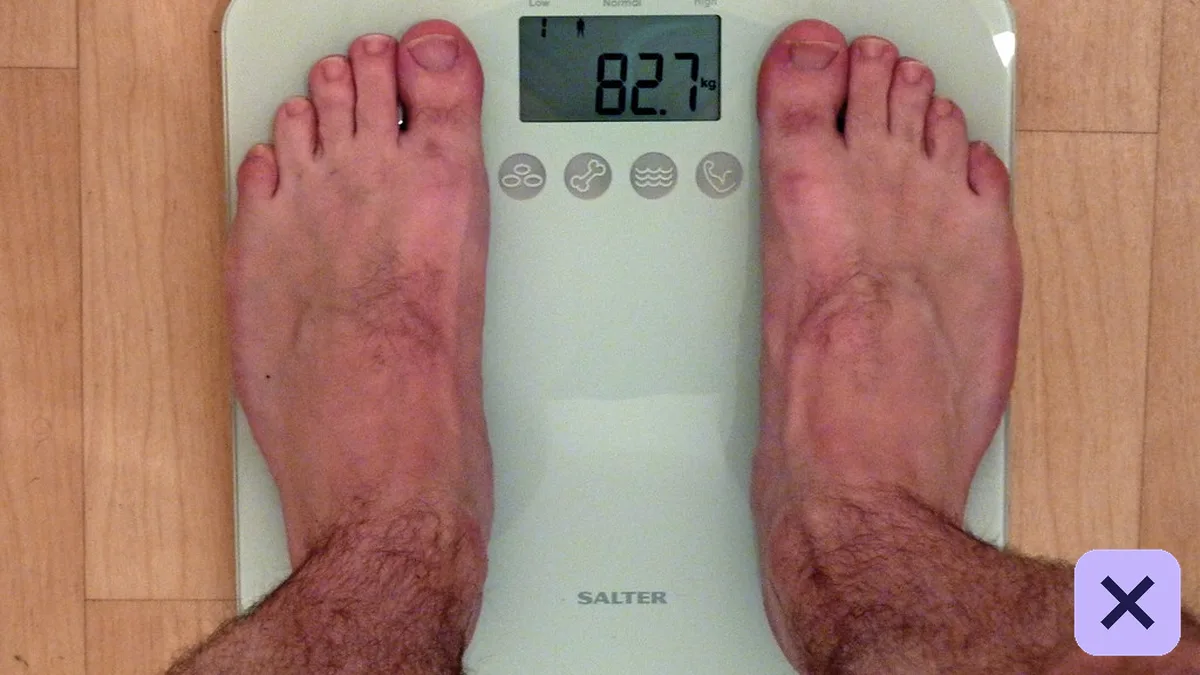
Your bathroom scale says you gained two kilos overnight, then says you lost one by lunchtime, and by the next morning it has changed its mind again. Nobody gains and loses that much body fat in a day, so one of those numbers is wrong — and often, all three are. A bathroom scale is a measuring instrument, and like any instrument it can be fooled by the floor it stands on, the way you stand on it, the battery inside it, and the clever-sounding extra numbers it invents. Here is why your bathroom scale might be lying to you in 2026, how to tell when a reading is real, and how to get numbers you can actually trust.
Key Takeaways
- A single weigh-in means very little: daily weight swings of one to two kilos are normal, driven by water, food, and glycogen, not fat.
- An uneven or soft floor is the most common cause of wrong readings — a scale on carpet or a sloping tile can be off by several kilos.
- Cheap smart scales estimate body fat with a weak electrical current, and that estimate can swing by five percentage points or more in a day.
- Weigh yourself the same way every time: first thing in the morning, after the bathroom, before eating, in similar clothing, on the same hard floor.
- Trust the weekly trend, not the daily number: if the seven-day average is falling, you are losing weight, whatever today’s reading says.
Why the Number Keeps Changing
Step on a bathroom scale five times in a row and you can get five different numbers. Some of that is your body, not the scale. An adult’s weight genuinely moves by one to two kilos across a single day. A large meal and the water that comes with it, a salty dinner, a hard workout, or a hot day all change how much water your body holds, and water has weight. Glycogen, the stored form of carbohydrate in your muscles and liver, binds roughly three grams of water per gram stored, so a pasta-heavy evening can add a kilo by morning that has nothing to do with fat.
The Floor Is Lying to Your Scale
The single biggest source of error is not the scale at all. It is the floor underneath it. Scales are calibrated for a hard, flat, level surface, and they measure weight by sensing how much their load cells are compressed. On carpet or a bath mat, the soft surface absorbs some of the force, so the reading comes out low — sometimes by two or three kilos. On a tile that slopes toward the drain, the load spreads unevenly across the sensors, which can push the reading either way.
The test takes thirty seconds. Weigh yourself where the scale normally lives, then move it to a different hard, flat spot — a kitchen tile or a hallway floor — and weigh yourself again. If the two numbers differ by more than a few hundred grams, one of the spots is wrong. Pick the hard, level one and leave the scale there permanently. Never store the scale leaning against a wall, and never slide it across the floor before weighing, because a knock can disturb the calibration of cheaper load cells.
Digital, Analogue, or Smart: Which Scale Tells the Truth?
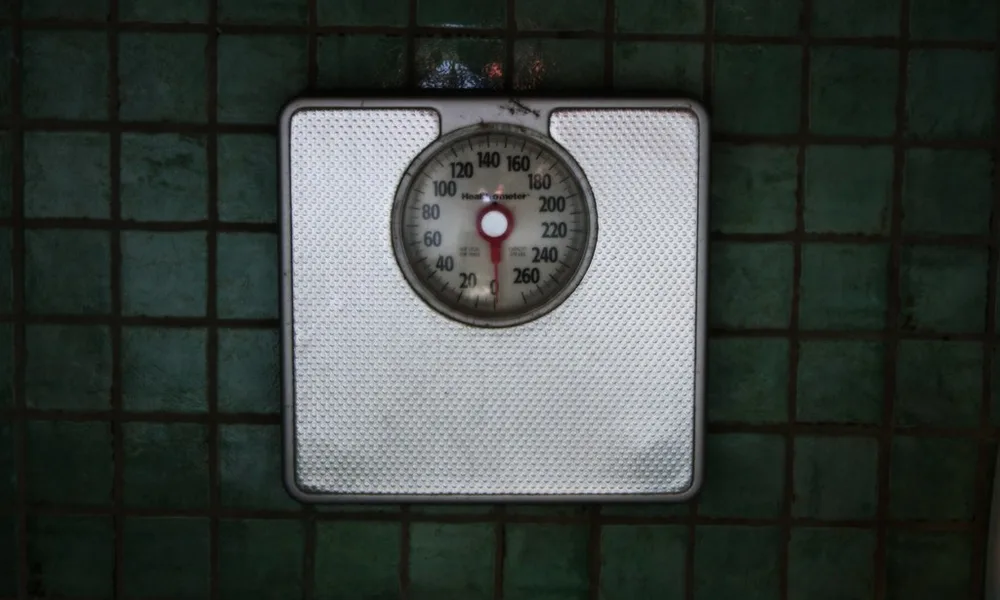
Not all bathroom scales measure weight the same way, and the differences matter more than the price tag suggests. An old analogue scale uses a spring and a dial. It is simple and needs no battery, but springs wear out, the needle sticks, and reading a dial to the nearest half kilo is guesswork. If the needle does not return exactly to zero when you step off, the scale is done.
A basic digital scale is usually the most accurate option for the money. It uses strain-gauge load cells that convert pressure into an electrical signal, and a decent one is accurate to within about a hundred grams when new and standing on a hard floor. The catch is that accuracy drifts: low batteries make readings erratic before the display ever warns you, and a hard knock can shift a load cell.
Smart scales add a second trick, and this is where the lying gets more sophisticated. Alongside your weight, they claim to measure body fat, muscle, water, and bone density, and they send it all to an app on your phone. The weight part is measured the same way as any digital scale and is usually just as accurate. The rest is estimated, not measured, and the gap between the two is where people get misled. If you already track your activity, our guide to the best vs worst fitness trackers 2026 shows which wearables are worth trusting with the same kind of health data.
The Body Fat Number Is Mostly a Guess
A smart scale estimates body fat by sending a tiny, painless electrical current up one leg and down the other and measuring the resistance it meets. Fat resists the current more than muscle does, because muscle holds more water, so the scale works backwards from the resistance to a body fat percentage. The catch is that the current only travels through your lower body, so the estimate is really a guess about your legs, stretched into a claim about your whole body.
In practice, a smart scale’s body fat reading can swing by three to five percentage points in a single day, which is far too noisy to be useful as a daily number. The same goes for the muscle, water, and bone figures, which are mostly calculated from the same resistance reading plus your age, height, and sex. None of this means a smart scale is useless: used the same way every morning, the long-term trend roughly tracks real change, because the daily noise averages out over weeks.
The Mistakes That Make Any Scale Lie
Beyond the floor and the technology, there is a list of small human habits that quietly corrupt readings. Weighing yourself with shoes on is the most obvious: a pair of trainers adds a kilo or more, and it changes how your weight is distributed across the platform. Holding onto something — the sink, a towel rail, the wall — takes weight off the scale, which is why a reading taken while steadying yourself after a shower can look suspiciously kind.

How to Get a Reading You Can Trust
Getting honest numbers is less about buying a better scale and more about removing the variables. Weigh yourself first thing in the morning, after using the bathroom and before eating or drinking, wearing the same light clothing or none at all. Use the same hard, flat spot every day, and keep the scale in that spot rather than moving it. Step on gently, stand still with your feet in the same position, and wait for the reading to settle before stepping off.
Recording matters more than remembering. Write the number down, or let the scale’s app do it, and judge the seven-day average rather than any single morning. If the average is moving the right way over three or four weeks, your plan is working, whatever one bad morning said. Keep the scale itself away from direct water and steam, which corrode the contacts and the battery compartment — and if the rest of the bathroom needs attention, our guide to the best shower heads 2026 covers the upgrade worth making.
Bathroom Scales Compared
| Scale Type | Weight Accuracy | Body Fat Reading | Typical Price | Best For |
|---|---|---|---|---|
| Analogue dial scale | Poor, drifts as the spring ages | None | Low | Anyone who wants a rough check with no batteries |
| Basic digital scale | Very good, within about 100 g when new | None | Low to medium | Most people: the most honest number for the money |
| Smart scale with app | Very good, same load cells as digital | Rough estimate, swings daily | Medium to high | People who want trends and app tracking |
| Smart scale with hand electrodes | Very good | Better, measures the whole body | High | People who want a less noisy body fat trend |
| Old or damaged scale | Unreliable in either direction | Meaningless | Already paid for | Replacement, not continued use |
When the Scale Is Right and You Still Do Not Like It
Sometimes the scale is not lying at all, and that is the harder problem. Weight goes up for honest reasons: a salty meal, a new exercise routine that leaves muscles holding water, or a week of short sleep and high stress. Muscle gain is the classic case. If you have started lifting weights, the scale can stay flat or even rise while your waist shrinks, because muscle is denser than fat. That is why the scale should never be the only measure you trust.
Scale Checklist
- Place the scale on a hard, flat, level floor, never on carpet, a bath mat, or a rug.
- Weigh first thing in the morning, after the bathroom, before food, in the same light clothing.
- Stand still with your feet in the same position and your weight evenly spread.
- Change the batteries as soon as readings start jumping, and check the scale returns to zero.
- Record the number and judge the seven-day average, never a single morning.
- Replace a scale that gives different readings twice in a row, or one whose needle never returns to zero.
Frequently Asked Questions
Why does my weight change by two kilos in one day?
Because your body is mostly water, and water weight moves fast. Food, salt, glycogen, exercise, heat, and hormones can each shift the reading by a kilo or more. Fat does not change that quickly, so a sudden jump is almost always water.
Is my scale wrong if it says something different at the gym?
Not necessarily. Different scales sit on different floors, have different calibrations, and are used at different times of day in different clothing. Compare readings only from the same scale, in the same spot, under the same conditions.
Can a bathroom scale really measure body fat?
Only roughly. Smart scales estimate body fat from electrical resistance through your legs, and the result swings with hydration. Treat it as a long-term trend, not a daily measurement, and never judge yourself by a single reading.
Why does my scale show the same number every day?
Many digital scales smooth or repeat the last reading when the new one is close. Test it by weighing yourself holding something heavy, then again without it. If the numbers barely move, the scale is hiding real change.
Should I weigh myself every day or once a week?
Daily weighing gives the best trend if you can ignore the noise and look at the weekly average. If daily numbers affect your mood, weigh once a week instead. The right frequency is the one you can stick to calmly.
When should I replace my bathroom scale?
Replace it if the needle never returns to zero, if two weigh-ins in a row disagree by more than a few hundred grams, or if the readings jump after a battery change. A ten-year-old spring scale is almost certainly lying by now.
The Bottom Line
Your bathroom scale is not a liar by design, but it is easy to fool and easy to misread. Put it on a hard, flat floor, weigh yourself the same way every morning, change the batteries, and judge the weekly average instead of the daily number. The weight is the only figure a home scale measures properly — the body fat, muscle, and water numbers are estimates dressed up as measurements. If you are renovating the room, our guide to the best vs worst bathroom faucets 2026 covers the fixtures worth the money.


