
Refrigerators are the one appliance in your home that never gets a day off. The best refrigerators of 2026 keep food fresher for longer, run so quietly you forget they are there, and still have room for the weekly shop and the leftovers. The worst ones do the opposite: salad wilts in two days, milk sours before its date, and the hum follows you into the living room. This guide explains how to tell the difference before you spend serious money on a box that will live in your kitchen for the next decade.
Choosing well is not about the most expensive model or the biggest screen on the door. It is about steady cooling, honest capacity, drawers that keep vegetables crisp, and a layout that matches the way you shop and cook.
Key Takeaways
- Buy for steady temperature first: a fridge that holds 3 to 5 degrees all day keeps food safe and fresh far longer than one that swings up and down.
- French-door models suit families who cook often, while top-freezer models are the best value and the cheapest to run.
- Measure the space, the doorways and the door swing before you order, and leave ventilation gaps at the back and sides.
- Humidity-controlled crispers, adjustable shelves and a full-width deli drawer matter more day to day than a door screen.
- An ice and water dispenser is worth it only if your water supply is easy to connect and you will change the filter on time.
Refrigerators at a Glance
Four layouts cover almost every full-size kitchen. The table is the short version; the detailed comparison follows it.
| Type | Best For | Typical Capacity | Standout Strength |
|---|---|---|---|
| French-door | Families who cook often | 450 to 700 litres | Wide shelves and easy access |
| Side-by-side | Narrow kitchens | 450 to 650 litres | Slim doors and big freezer |
| Top-freezer | Value and small kitchens | 300 to 500 litres | Lowest price and running cost |
| Bottom-freezer | Fresh-food-first cooks | 350 to 600 litres | Fridge at eye level |
What Separates the Best Refrigerators from the Rest
The best and worst refrigerators look almost identical in a showroom. The difference is hidden inside: in the compressor, the air circulation, the seals and the drawers. A great refrigerator keeps every shelf at the same safe temperature, while a poor one has warm corners where food spoils early and cold spots where lettuce freezes.
Steady, Even Cooling
Temperature is the single most important job a refrigerator does. Look for a model that holds between 3 and 5 degrees in the fresh-food section and around minus 18 degrees in the freezer, even when the kitchen is warm or the door has just been opened for the shopping. Dual cooling systems help, because cold dry freezer air is not blown into the fridge, so food stays moist instead of drying out. A good model also recovers quickly after loading: within an hour of a big shop, every shelf should be back to its set temperature.
Crispers That Actually Keep Food Fresh
Salad drawers decide whether your vegetables last four days or ten. The best crispers have humidity controls, so leafy greens stay crisp in high humidity while fruit stays firm in lower humidity, and they seal well enough that cold air does not dry everything out. A clear drawer front helps because you can see what needs using first. Some models add a deli drawer with its own temperature control, keeping meat and cheese a degree or two colder than the rest of the fridge.
Capacity and Layout That Fits Real Shopping
Capacity figures on the box are measured with every shelf in place and no food in the way, so treat them as a rough guide. Allow around 100 to 150 litres of fresh-food space per person, plus freezer space for the way you shop. Adjustable shelves matter more than raw litres: split shelves that fold back make room for a tall jug without wasting the whole shelf, and a full-width shelf fits a roasting tray flat. If you only need cold drinks beside a desk or a bed, a mini fridge for a bedroom or office is a better buy than a second full-size model.
Energy Use
A refrigerator runs all day, every day, for ten years or more, so energy use genuinely adds up. Modern inverter compressors are the biggest improvement in years: instead of switching fully on and off, they run gently at the speed the fridge needs, which uses less electricity and keeps the temperature steadier. A well-rated large model can cost less to run than an old small one, so check the energy label rather than assuming bigger always means dearer.
Noise
Noise is the quality buyers underestimate most. The best refrigerators hum at around 38 to 42 decibels, quieter than a normal conversation and easy to ignore even in an open-plan kitchen. The worst rattle loudly enough to be heard from the next room, usually because of a cheap compressor or thin insulation. A low noise rating is also a useful proxy for build quality, because insulation and a balanced compressor are the same things that make a fridge last.
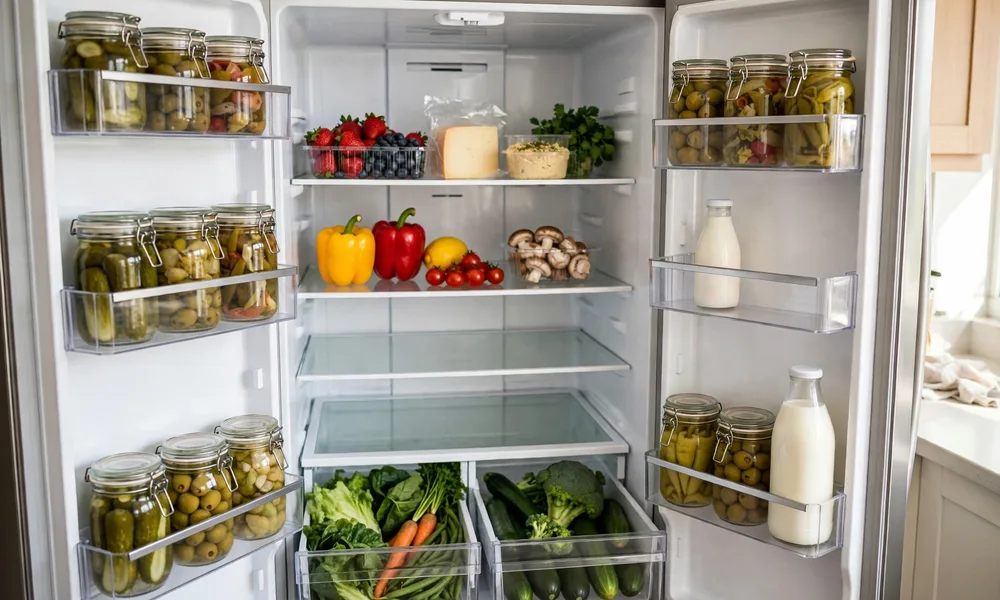
The Four Main Types of Refrigerator Compared
Every full-size refrigerator is one of four layouts, and the right one depends on your kitchen shape, your household and how you shop. If you freeze in bulk, a separate chest freezer in the garage can take the overflow and let you choose a smaller, cheaper main fridge.
French-Door
French-door models have two narrow doors on top and a pull-out freezer drawer below. They are the most popular choice for families: the wide fresh-food section fits platters, pizza boxes and roasting trays flat, and the food you use most sits at eye level. The narrow doors need less swing space, which helps in a galley kitchen. The trade-off is price, and a deep freezer drawer where things get buried, so look for one with dividers.
Side-by-Side
Side-by-side models split the cabinet vertically, with the fridge on one side and the freezer on the other. Their strength is the slim doors, which need little swing space in a narrow kitchen. They also suit homes that use the freezer heavily, since the freezer is a tall upright space with shelves. The weakness is width: neither side is very wide, so a large pizza box or a wide roasting tray may not fit flat.
Top-Freezer
Top-freezer models are the classic layout: freezer on top, fridge below, one door for each. They are the cheapest to buy, the cheapest to run and the most reliable over a long life. The compromises are obvious: you bend down for the fresh food you use most, and the single wide door needs more swing space. For a first home, a rental or a household that wants the lowest total cost, a top-freezer model is still the smartest buy in 2026.
Bottom-Freezer
Bottom-freezer models flip the classic layout, putting the fresh-food section at eye level and the freezer in a drawer below. That one change makes a daily difference, because the food you reach for ten times a day is exactly where your hands already are. They cost more than a top-freezer model and less than most French-door models, which makes them a good middle ground. The freezer drawer has the same burying problem as a French-door drawer, so dividers matter.
Ice, Water and Smart Features: Worth Paying For?
Through-the-door ice and water is the feature buyers love most in the shop and argue about most at home. On a good model it is genuinely useful: cold filtered water and ice on demand, without opening the door and letting cold air out. On a poor one it is the first thing to fail, the filter is expensive and easy to forget, and a slow drip can stain the door. It is worth paying for only if your water supply is easy to connect, you will change the filter every six months, and your household actually drinks iced water daily. Bottles that need a steady cool temperature, such as wine, belong in a dedicated wine fridge instead of the main refrigerator door. Smart features deserve the same hard question: a screen that shows a shopping list sounds useful, but it ties a ten-year appliance to a two-year technology cycle.

Measuring Before You Buy
More refrigerators are returned for not fitting than for any fault, and the mistake is almost always avoidable. Measure the width, height and depth of the space, then measure again, and remember the fridge needs ventilation gaps of a few centimetres at the back and sides or the compressor will work too hard and wear out early. Measure the doorways and hallways the fridge must travel through on delivery day, and check the door swing in the kitchen itself: the doors need to open past 90 degrees or you will not be able to pull the crispers out fully.
Your Refrigerator Buying Checklist
- Measure the space, the doorways and the door swing, and leave ventilation gaps at the back and sides.
- Choose the layout for your kitchen and shopping habits, not the one that looks biggest in the showroom.
- Check the fresh-food temperature holds between 3 and 5 degrees and the freezer holds around minus 18 degrees.
- Open every drawer and shelf in the shop: crispers should seal, shelves should adjust, and door bins should hold a two-litre bottle.
- Read the energy label and the noise rating, and favour an inverter compressor for both.
- Decide on ice and water before you buy, and check the water connection and filter cost first.
Frequently Asked Questions
What temperature should a refrigerator be?
Set the fresh-food section between 3 and 5 degrees and the freezer at around minus 18 degrees. Below 3 degrees food can freeze at the back, and above 5 degrees bacteria grow faster.
How long should a refrigerator last?
A good full-size refrigerator should last 10 to 15 years. Inverter compressors and simple layouts tend to last longest, because there are fewer parts to fail. A major repair before year five is usually a sign of a weak design rather than bad luck.
Is a French-door refrigerator better than a side-by-side?
Neither is better in general. French-door models suit families who cook often, because wide shelves fit platters flat. Side-by-side models suit narrow kitchens and heavy freezer users, because the slim doors need less swing space.
Do I need a water connection for an ice dispenser?
Yes, a through-the-door dispenser needs a plumbed water supply and a filter you change every six months. If there is no water point near the fridge, fitting one can cost more than the dispenser is worth, and a jug and ice tray are simpler.
Why is my refrigerator noisy?
A low hum is normal, especially just after loading or on a hot day. Rattling usually means the fridge is not level, something is vibrating against the back, or the compressor mounts have worn. Check the levelling feet first before calling an engineer.
How much refrigerator space do I need?
Allow around 100 to 150 litres of fresh-food space per person, plus freezer space for the way you shop. A household that buys fresh food twice a week needs more fridge space, while one that does a monthly bulk shop needs a bigger freezer.
The Bottom Line
The best refrigerator for your home is the one that holds a steady temperature, fits your kitchen and your shopping, and keeps vegetables crisp without demanding attention. For most families that is a French-door or bottom-freezer model with an inverter compressor, humidity-controlled crispers and adjustable shelves. For the lowest cost, a top-freezer model still does the job brilliantly. Measure twice, check the temperature and the noise rating, and skip the door screen.


