Best Mini Fridges for Bedrooms and Offices in 2026
The best mini fridge for a bedroom or office in 2026 is the one you stop noticing. It keeps drinks cold a few steps from your bed or desk, hums so quietly that it never disturbs sleep or a call, and fits a corner that would otherwise hold nothing. Choosing well comes down to four things: capacity, noise, energy use and placement.
A bedroom without a mini fridge means every late-night drink involves a walk to the kitchen. An office without one means lunch lives in a shared fridge that is never where you need it.
Key Takeaways
- For most bedrooms and offices, a 90 to 130 litre compressor mini fridge is the sweet spot: big enough for drinks and a few meals, small enough to tuck beside a desk.
- Noise decides whether you love a mini fridge or unplug it: look for under 40 decibels for a bedroom.
- Compressor models cool properly in warm rooms and keep food safe; thermoelectric models are silent but struggle above 25 degrees and suit drinks only.
- Measure the space first, including the door swing and 5 centimetres of ventilation gap at the back and sides.
- A mini fridge costs roughly £25 to £45 a year to run, so an efficient model usually pays for itself within two years.
Why a Mini Fridge Belongs in the Bedroom or Office
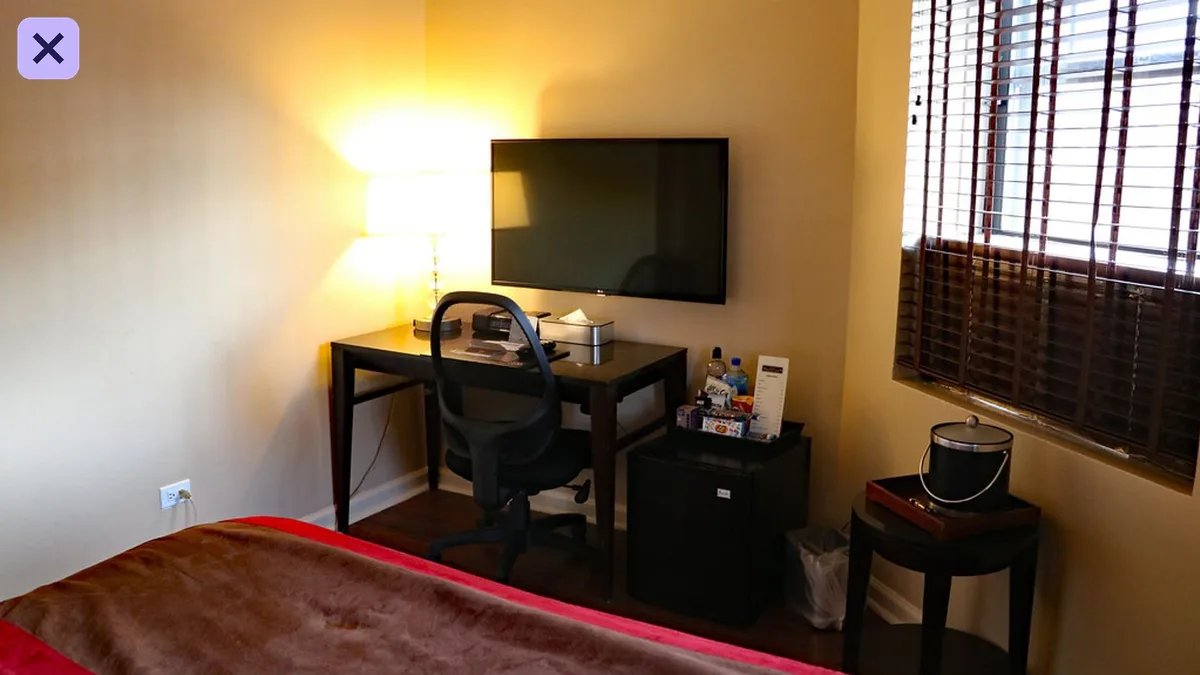
A bedroom mini fridge changes the rhythm of a day. Cold water beside the bed means you actually drink it. Breakfast yoghurt, fruit and milk for the morning coffee stay within reach. The same logic applies in an office, where a desk-side fridge holds lunch and cold drinks all day.
A mini fridge keeps food at a safe, steady temperature instead of leaving it on a desk, where milk spoils by lunchtime. Perishable food should stay below 5 degrees, and a good mini fridge holds 3 to 5 degrees all day. It is not a cooler: a cooler keeps things cold with ice for a weekend, while a mini fridge holds a steady temperature for months. If your main need is chilled wine, our guide to the best wine coolers for small spaces covers the cabinets built for bottles instead.
The Main Types of Mini Fridge Compared
Four types cover almost every bedroom and office, and they differ mainly in how they cool. Compressor mini fridges work like a full-size fridge, with a small compressor that cycles on and off. Thermoelectric models use a silent electronic module. Absorption fridges use heat to drive cooling and are almost silent.

| Type | Best For | Noise | Cools in Warm Rooms | Typical Price |
|---|---|---|---|---|
| Compressor | Most bedrooms and offices | Low, a soft hum | Yes, down to 3 degrees | £120 to £250 |
| Thermoelectric | Light sleepers, drinks only | Near silent | Weak above 25 degrees | £60 to £140 |
| Absorption | Silent rooms, caravans | Silent | Moderate | £150 to £300 |
| With freezer box | Ice, frozen meals | Low to medium | Yes | £150 to £280 |
Compressor mini fridges
Compressor models are the default choice for a reason. They cool food to a safe temperature in any normal room, recover quickly after the door is opened, and keep working through a hot afternoon. The compressor cycles on and off, so you hear a soft hum for a few minutes, then silence.
Thermoelectric mini fridges
Thermoelectric fridges have no compressor and no moving parts except a small fan, so they are almost completely silent. That makes them tempting for bedrooms, and for drinks, skincare and medicines they can be a good fit. Their weakness is cooling power: most only cool 15 to 20 degrees below room temperature, so in a 28-degree bedroom the inside sits at 10 degrees or more. Buy one for drinks only, never for perishable food.
Absorption mini fridges
They cool better than thermoelectric models but less powerfully than compressor ones, and they recover slowly after the door is opened. They suit a bedroom where absolute silence matters.
Mini fridges with a freezer compartment
Some mini fridges include a small freezer box inside the top of the cabinet. The cost is space: the box takes roughly a fifth of the cabinet, and it frosts up fast, so it needs defrosting every month or two. If you rarely freeze anything, a model without the box gives you more usable fridge space.
Our Picks: The Best Mini Fridges for Bedrooms and Offices
These are the picks that came out on top.
Best Overall: A 90 to 130 Litre Compressor Mini Fridge
For most bedrooms and offices, a mid-size compressor fridge is the best all-round buy. Look for a model about 85 centimetres tall and 50 wide, with one adjustable shelf, a door rack that fits two-litre bottles, and a temperature dial. That size holds a week of drinks, breakfast supplies and a few ready meals without dominating the room.
Best for Bedrooms: A Near-Silent Thermoelectric or Absorption Model
If the fridge sits within a metre of your pillow, noise matters more than raw cooling power. A thermoelectric model is effectively silent, and an absorption model is completely silent, so either one lets you sleep undisturbed. Match the contents to the cooling: keep drinks, fruit and skincare in a silent fridge, and keep milk and meat in the kitchen fridge.
Best for Offices: A Compact Under-Desk Compressor Fridge
An office fridge gets opened a dozen times a day and needs to look tidy. A compact compressor model of 50 to 90 litres fits under most desks, and it recovers its temperature quickly after repeated opening, which is exactly where thermoelectric models fail. Look for a flat top, adjustable feet so it sits level, and a lock if the office is shared. If your desk setup is the priority, our guide to the best desks covers the small desks that leave room for a fridge and a laptop.
Best Budget Pick: A Small 50 Litre Compressor Fridge
A small compressor fridge is the cheapest way into proper cold storage. It holds a few days of drinks and snacks, fits in a student room or a home office corner, and costs less than a month of takeaway coffees to run for a year. The trade-off is capacity: a 50-litre cabinet fits about twenty cans or six two-litre bottles, and tall bottles may need the shelf removed.
Capacity: What Fits in Each Size
Manufacturers quote capacity in litres, but litres do not tell you what actually fits. A 50-litre mini fridge holds roughly twenty cans, or a few days of drinks for one person. A 90-litre model holds about forty cans plus milk, yoghurt and a few ready meals, enough for a week for one person. Tall bottles need a shelf that adjusts or removes, so measure the tallest item you store before you buy.
Noise: How Quiet Is Quiet Enough
Noise decides whether a mini fridge stays plugged in or ends up switched off behind the bed. As a rough guide, under 40 decibels is whisper-quiet and suitable for a bedroom, 40 to 45 decibels is a quiet room with an appliance running, and above 48 decibels will intrude on sleep and concentration. The character of the noise matters too: a smooth hum fades into the background, while a clicking thermostat or rattling shelf will keep you aware of the fridge all night.
Energy Use and Running Costs
A mini fridge runs all day, every day, so energy use matters more than the purchase price over its lifetime. A typical 90-litre compressor model uses 100 to 150 kilowatt-hours a year, roughly £25 to £45. The energy label is the quickest guide: an A-rated model uses noticeably less than a C-rated one, and the difference usually pays for itself within two years. If the office has a small kitchen corner, our guide to the best microwaves covers the compact models that pair well with a desk-side fridge.
Placement: Where to Put a Mini Fridge
Placement decides whether a mini fridge feels like a quiet helper or a noisy obstacle. In a bedroom, put it beside the bed or wardrobe, on a hard level floor, with at least 5 centimetres of clear space at the back and sides so warm air can escape. In an office, the best spot is beside or under the desk, close to a socket, where the door opens without hitting a chair. Never push a fridge tight against a wall: with no ventilation it runs louder, uses more electricity and wears out faster.
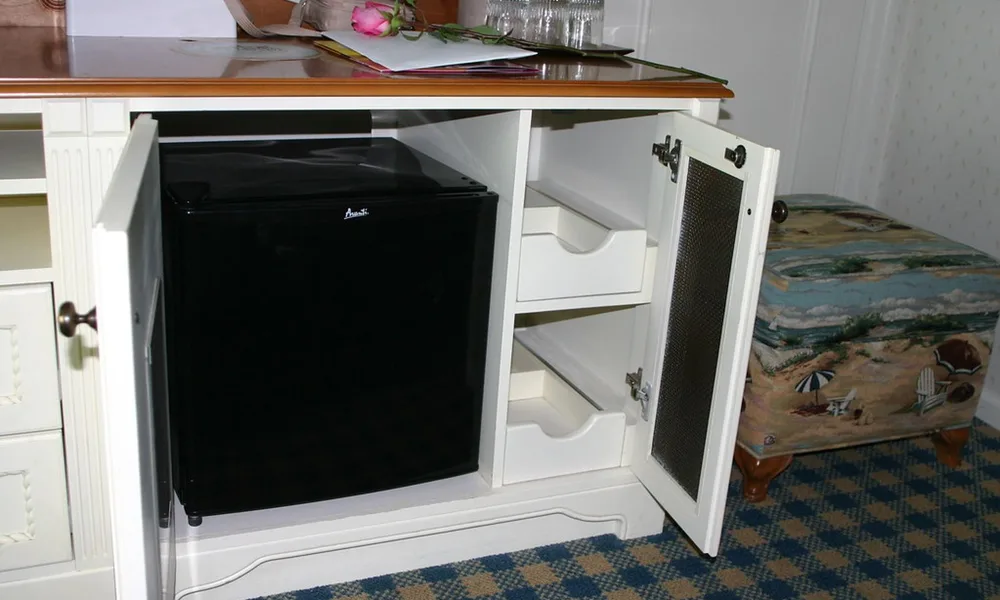
Leave a gap at the back, keep the top clear, and vacuum the rear grille every few months. Plug it directly into a wall socket, and check the door seal is clean and closes fully, since a leaking seal lets in damp air that causes frost.
Features Worth Paying For, and Ones to Skip
An adjustable thermostat with a clear dial beats a vague one-to-five setting, because you can set it to hold 4 degrees and leave it there. A reversible door doubles your placement options, an interior light helps in a dark bedroom, and adjustable feet matter: a level fridge runs quieter and seals better. Other features are decoration: a digital display adds nothing, Wi-Fi control is a novelty, and an ice maker is slow.
Common Mistakes to Avoid
The most common mistake is buying too small: a 50-litre fridge looks generous in a shop and cramped within a week, once drinks, milk and leftovers compete for the same shelf. The second is the opposite: a 130-litre model for a room with no space for it, where the door cannot open fully.
Mini Fridge Checklist
- Measure the space, the door swing and the ventilation gap before you buy.
- Choose a compressor model for food, and a silent model for drinks only.
- Check the noise rating: under 40 decibels for a bedroom, under 45 for an office.
- Pick a capacity that fits a week of your real shopping.
- Check the energy label and the yearly running cost.
- Plug it into a wall socket, level it, and leave 5 centimetres of air at the back.
Frequently Asked Questions
How big a mini fridge do I need for a bedroom?
For one person, a 90 to 130 litre mini fridge is the sweet spot: it holds drinks, breakfast supplies and a few ready meals for a week.
Are mini fridges noisy at night?
A good mini fridge is very quiet. Compressor models rated under 40 decibels hum softly for a few minutes and then fall silent, and thermoelectric and absorption models are near silent.
How much electricity does a mini fridge use?
A typical 90 litre compressor mini fridge uses 100 to 150 kilowatt-hours a year, roughly £25 to £45.
Can I put a mini fridge on carpet?
Yes, but put a thin board underneath it first. Carpet blocks airflow from below and traps heat, which makes the fridge work harder, run louder and use more electricity.
Do mini fridges keep food safe?
A compressor mini fridge keeps food safe, holding 3 to 5 degrees all day in a normal room. A thermoelectric model often cannot, because it only cools 15 to 20 degrees below room temperature, so it suits drinks only.
Can a mini fridge go in a garage or outbuilding?
Only if the room stays within the fridge’s rated climate range, usually 10 to 32 degrees for a compressor model.
The Bottom Line
The best mini fridge for a bedroom or office fits your space, stays quiet enough to forget, and keeps your food safely cold all day. For most people, that is a 90 to 130 litre compressor mini fridge: big enough for a week of drinks and meals, quiet enough for a bedroom, and cheap enough to run that it pays for itself in convenience within months. If silence matters more than food storage, a thermoelectric or absorption model for drinks only is the better buy.