Best Rain Chains 2026
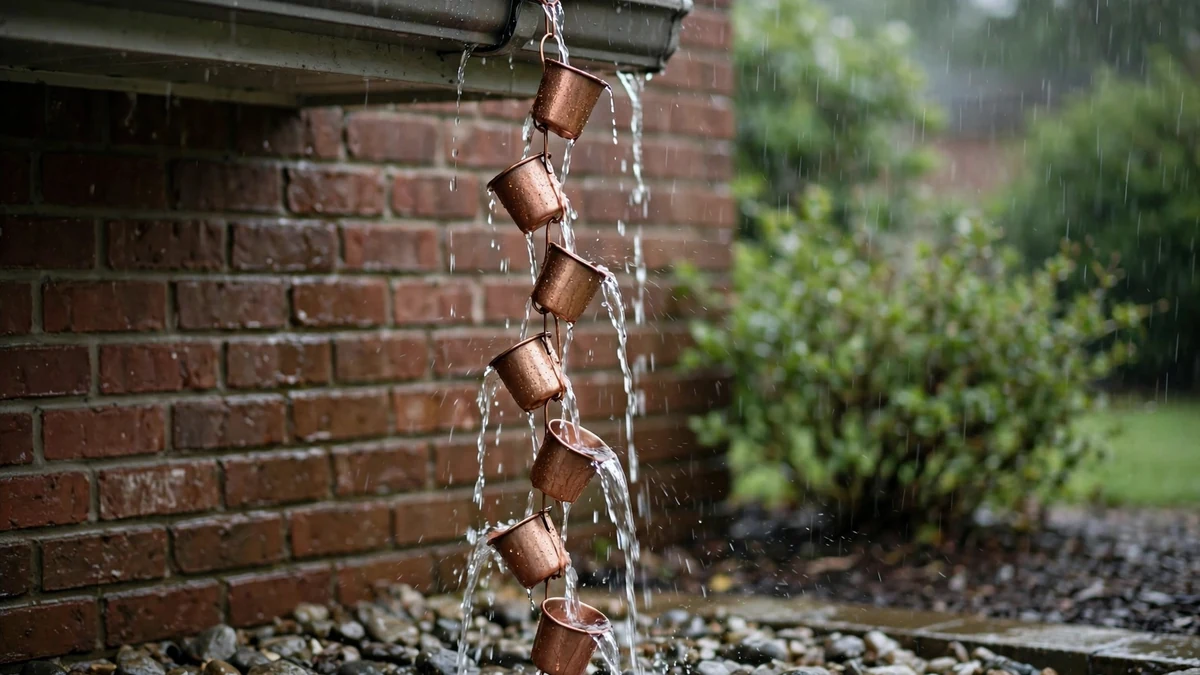
A downspout does its job quietly and without charm. It takes the water off the roof and drops it at the foot of the wall, usually in a single hard stream that digs a hole in the soil and splashes mud up the brickwork. A rain chain does the same job and turns it into something worth watching.
A rain chain is a length of linked cups or rings that hangs from the gutter where the downspout would go. Rain runs down it in a visible ribbon, cup to cup or link to link, slowing as it falls until it reaches the ground. These are the best rain chains of 2026, chosen for how well they carry water, how long they last, and how good they look doing it.
Key Takeaways
- Buy the chain for the height of your gutter, because a chain that stops a metre short of the ground will spray water across the wall in a storm.
- Cup chains carry more water calmly than link chains, while link chains suit light rain and smaller roofs better.
- Copper and brass age into a deep brown patina, while aluminium and powder-coated steel stay bright but need a closer eye for chips.
- Always give the water somewhere to go at the bottom, such as a gravel bed, a drain, or a barrel, or the chain will simply move the puddle.
- Check the gutter outlet and the fixing before you order, since a chain is only as good as the bracket holding it to the roof.
Rain Chains 2026 at a Glance
| Best for | Chain type | Material | Standout strength |
|---|---|---|---|
| Best overall | Cup chain | Copper | Calm, steady flow and a beautiful patina |
| Best for heavy rain | Large cup chain | Copper | Holds the most water without spilling |
| Best for small roofs | Link chain | Brass | Light, simple, and easy to fit |
| Best for modern homes | Link chain | Powder-coated steel | Clean dark lines that suit new brick |
| Best for gardens | Cup chain | Aluminium | Light enough to hang anywhere, rust-free |
| Best on a budget | Link chain | Aluminium | Does the job for the lowest price |
What a Rain Chain Is Really For
A rain chain replaces a downspout. Instead of hiding the water inside a pipe, it lets you see it, and that is not just decoration. Watching the water is how you know the gutter is clear, the flow is right, and nothing is backing up at the roof. A chain that runs dry in the middle of a storm is telling you something is blocked above it.
The chain works by surface tension and gravity. Water leaves the gutter through the outlet, catches on the top cup or link, and follows the metal down. Each cup slows the fall a little, so the water arrives at the ground as a stream rather than a hammering jet. On a small roof in light rain, that stream is gentle enough to feed a pot or a barrel directly.
Getting the Length and Drop Right
Length is the first thing to get right, and it is the thing most people get wrong. Measure from the gutter outlet straight down to the ground, then add at least fifteen centimetres. A chain that ends in mid-air will throw water sideways in a storm, and a chain that is too long will pool on the ground and kink. Most houses need a chain between two and a half and three and a half metres long.

The Main Types of Rain Chain
Rain chains fall into two families, and the choice between them decides how the chain behaves in rain. Cup chains are made of small open cups linked together, each one catching the water and passing it to the next. Link chains are made of simple rings or loops, and the water runs down the metal of the links themselves.
The cup chain is the safer choice for most homes. It carries more water, it spills less in a heavy downpour, and it looks deliberate rather than improvised. Large cups handle the heaviest rain best, while smaller cups suit porches and garden sheds where the roof is small and the flow is light.
The link chain is the simpler choice. It is lighter, cheaper, and easier to cut to length, and it suits houses where the rain is usually light. Its weakness is heavy rain: in a real downpour, water can overshoot the links and spray. If your area gets hard summer storms, choose cups over links.
Materials and Build Quality
Copper is the classic rain chain material, and it earns its reputation. It does not rust, it weathers to a warm brown and then a soft green, and it is heavy enough to hang straight in wind. A copper chain costs more than any other kind, but it is the one most likely to still be hanging in twenty years.
Aluminium is the practical choice. It is light, it never rusts, and it costs far less than copper. Its weakness is that it is soft, so thin aluminium cups can dent if they are knocked, and a light chain can swing in strong wind. Look for a good wall thickness and a solid fixing if you choose aluminium.
Water Flow, Splash, and Where the Water Goes
A rain chain only moves the water from the roof to the ground. What happens next is your decision, and it is the part most people forget. Without a plan at the bottom, the chain will dig a hole in the soil and splash mud up the wall, exactly like the downspout it replaced.
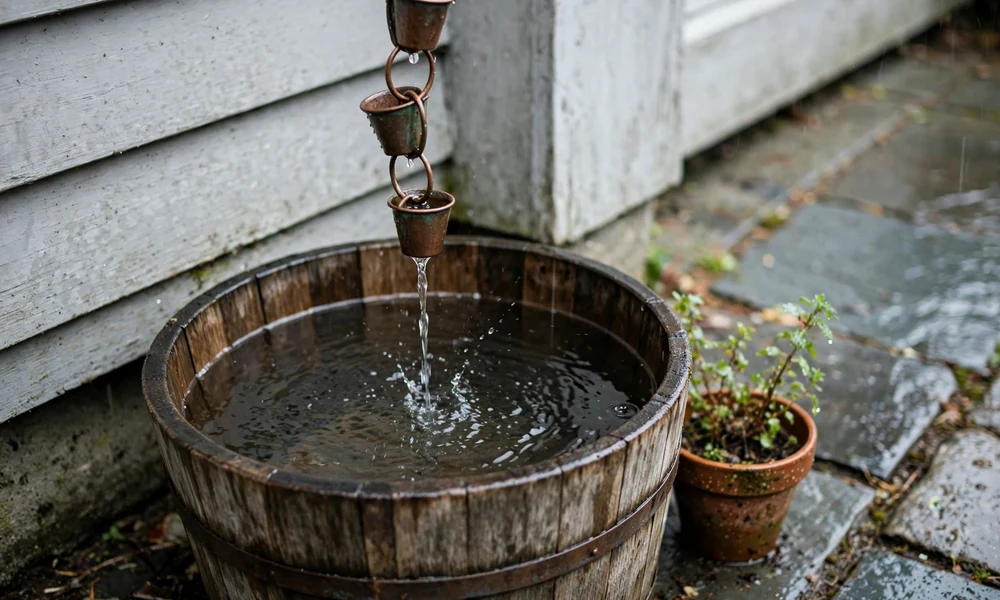
A rain barrel is the more useful answer. A chain that ends over a barrel fills it with soft, chlorine-free water that plants genuinely prefer, and a full barrel takes the edge off a dry spell. If you are weighing up barrels, our guide to the best rain barrels of 2026 covers sizes, materials, and taps in detail, so you can match the barrel to the chain.
For a garden that needs the water, run the chain into a shallow channel or a buried pipe that carries the water to a bed. The water that falls on your roof in a single storm is more than most gardeners realise, and sending it to the plants instead of the drain is the easiest kind of saving. If you water the garden from a hose as well, our guide to sprinklers that water evenly in 2026 explains how to spread water without waste, which pairs well with a chain-fed supply.
Installation and the Gutter Connection
Fitting a rain chain is a short job, but the fixing is everything. Most chains come with a small hook or a V-shaped bracket that sits in the gutter outlet. The bracket spreads the weight across the outlet so the chain does not pull the gutter out of shape, and it centres the chain under the flow.

Care Through the Seasons
A rain chain needs little care, but it does need some. In autumn, leaves will catch in the cups and links, so lift the chain and shake it clear every few weeks while the trees are shedding. A cup full of wet leaves will overflow in the next rain and send water where you do not want it.
Spring is the time for a proper look. Check the bracket at the top, look for wear where the chain meets the wall, and touch up any chips on a coated chain. It is also the time to think about how much rain you are getting: a gauge at the bottom of the garden tells you more than any forecast, and our guide to the best rain gauges of 2026 explains which kind suits a small garden and which suits a keen grower.
Common Mistakes to Avoid
The most common mistake is buying a chain that is too short. People measure the wall and forget the gutter outlet sits below the eaves, or they order a standard length without measuring at all. Measure first, and order the next length up if you are between sizes.
The third is forgetting the ground below the chain. A chain that ends on bare soil will dig a hollow within a season. Gravel, a barrel, or a drain must be in place before the first rain, not after.
The fourth is hanging the chain without a proper bracket. A hook through a drilled hole in the gutter will tear in a storm, and a chain tied with wire will twist and kink. Use the bracket made for the job, and check it every spring.
Before You Buy: A Short Checklist
- Measure from the gutter outlet to the ground, and add fifteen centimetres to the length.
- Check how much roof feeds that outlet, and choose cup size to match the flow.
- Decide between cup and link chains, with cups for heavy rain and links for light rain.
- Pick a material you are happy to watch age, since copper and brass change colour over time.
- Plan the ground below the chain: gravel bed, barrel, drain, or channel to a garden bed.
- Confirm the fixing suits your gutter, and buy the bracket if the chain does not include one.
- Check the weight of the chain against your gutter, especially on older houses.
- Plan for wind, and anchor the bottom of the chain if the spot is exposed.
Frequently Asked Questions
Does a rain chain work as well as a downspout? Yes, for most houses. A well-chosen chain carries the same water to the ground, and it does so more gently. It is less suited to very large roofs in very heavy rain, where a wide downspout moves water faster.
Can I fit a rain chain myself? Yes, in most cases. It is a short job with a ladder and a bracket, and no plumbing is involved. If the gutter is high or the roof is steep, hire someone rather than stretching from a ladder.
How long does a copper rain chain last? Decades, in most cases. Copper does not rust, and the patina that forms on it protects the metal underneath. The fixing at the top is more likely to need replacing than the chain itself.
The Bottom Line
The best rain chain of 2026 is the one that fits your gutter, your roof, and your ground, and then quietly turns a rainy day into a small pleasure. It is long enough to reach the ground, heavy enough to hang straight, made of a material you like watching age, and given somewhere sensible for the water to go.
Start with the tape measure, not the catalogue. Measure the drop, look at the roof above the outlet, and decide what the ground below should do with the water. Then choose the type that fits: a copper cup chain for most homes, a link chain for a small roof in light rain, or a coated steel chain for a modern house. Fit it well, give the water a gravel bed or a barrel to land in, and the chain will do its job for years while making the rain something to watch instead of something to hide.