Best Pastry Brushes for Even Glazes in 2026
The best pastry brushes in 2026 decide whether a bake looks bakery-made or home-made. A good brush lays egg wash, butter, and glaze down in a thin, even film, so croissants come out glossy and pies turn golden all over. A bad one sheds bristles, drags the wash into streaks, or holds so little liquid you are back at the bowl every ten seconds.
Pastry brushes look simple, and that is exactly why they are easy to buy badly. The differences hide in the bristles: how fine they are, how densely they are packed, how well they hold liquid, and whether they stay put. Get those right and a cheap brush will outperform a fancy one that gets them wrong.
Key takeaways
- Natural bristle spreads the thinnest, most even coat — best for egg wash and delicate glazes.
- Silicone never sheds and is easiest to clean, but its thicker bristles can streak light dough.
- A 4 to 5-centimetre brush covers a pie quickly without flooding small pastries.
- One-piece silicone is the most hygienic, with no ferrule where butter and egg can hide.
- Rinse a natural brush in warm water straight after use, or dried egg wash glues the bristles together.
Why the right pastry brush matters
A pastry brush does one job at the exact moment a bake is decided. Egg wash goes on just before the oven, glaze just after, butter over hot pastry while it steams. There is no second chance: once the wash is streaked or the glaze has pooled, the bake is finished looking that way.
The difference shows up in three places. First, the finish: an even coat browns evenly, while a streaky coat browns in stripes. Second, the dough: stiff bristles drag soft, proved dough and can tear a croissant or deflate a bun. Third, the food itself: a shedding brush leaves bristles in the glaze, and old butter trapped in the ferrule can turn rancid. None of this is obvious in the shop, which is why so many kitchens end up with a drawer full of brushes nobody trusts.
The main types of pastry brush
Every pastry brush falls into one of three families, defined by the bristles. Each has a clear strength, a clear weakness, and a job it does best. Most serious bakers own at least two: a natural bristle brush for fine work and a silicone one for messy, everyday jobs.
Natural bristle brushes
Natural bristle brushes, usually boar hair, are the traditional choice and still the best for a fine, even finish. The bristles are thin, slightly split at the tips, and packed tightly, so they release a little liquid slowly and evenly — a sheer, streak-free coat that browns into uniform gold, soft enough to glide over proved dough without tearing it.
The trade-offs are care and shedding. A cheap brush loses bristles when new, and the ferrule traps moisture and old egg wash if not cleaned properly. Wash in warm, soapy water straight after use and store it hanging so it dries fully. Never leave it soaking, and never put a wooden-handled brush in the dishwasher — the handle swells and cracks and the bristles splay.

Silicone brushes
Silicone brushes are the modern, low-maintenance option. Their bristles are thick, flexible fins rather than fine hairs, moulded in one piece with the handle on the best models. They never shed, survive the dishwasher, and can be used with hot liquids — fast and forgiving for basting meat, oiling a grill, or buttering rolls.
The weakness is finesse. Silicone bristles are too thick for the sheer coat natural bristles manage, so egg wash can stripe and glaze can pool between the fins, and they hold less liquid so you dip more often. Buy a one-piece model with no ferrule: easiest to clean, longest lasting.
Nylon and synthetic brushes
Nylon brushes sit between the other two: finer than silicone, sturdier than natural hair, holding their shape after washing. A good nylon brush spreads egg wash more evenly than silicone and cleans up far more easily than natural bristle — a sensible all-rounder, and the best choice for anyone avoiding animal hair.
The catch is heat. Nylon softens at high temperatures, so never use it on hot pastry or in very hot butter. It can stain with turmeric or dark glazes, though that is cosmetic. Check the rating before you buy: one rated to 200 degrees Celsius handles most jobs, while a cheap unrated one may wilt on a hot tray.
Comparison table
| Brush type | Even finish | Shedding | Cleaning | Heat tolerance | Best for |
|---|---|---|---|---|---|
| Natural bristle | Excellent | Possible if cheap | Hand wash only | Good | Egg wash, fine glazes |
| Silicone | Fair | Never | Dishwasher safe | Excellent | Basting, oil, everyday use |
| Nylon | Good | Rare | Easy hand wash | Moderate | All-round baking |
| One-piece silicone | Fair | Never | Easiest | Excellent | Hygiene, grilling, butter |
| Flat natural, wide | Excellent | Possible if cheap | Hand wash only | Good | Large pies, trays of buns |
| Round natural, narrow | Excellent | Possible if cheap | Hand wash only | Good | Small pastries, detail work |
How to choose the right size
Size decides how fast you work and how much liquid lands on the pastry. Too wide floods a small tart; too narrow takes forever on a family pie, leaving the first strokes drying before the last go on. The sweet spot is a head about 4 to 5 centimetres wide: broad enough to cover a pie in a dozen strokes, narrow enough for a tart.
For small things — madeleines, mini tarts, individual buns — add a narrow 2.5-centimetre brush for fluted edges. For a crowd, a wide 6 to 7-centimetre brush glazes a tray in seconds, though it is too clumsy for delicate work. A 15 to 20-centimetre handle keeps your hand clear of a hot tray.
What makes a brush spread evenly
An even coat comes down to four things: bristle density, softness, liquid load, and pressure. Dense bristles hold liquid in a thin film and release it gradually; sparse ones dump it in lines. Soft bristles bend over dough instead of ploughing through it. Dip only the tip, then tap the brush on the bowl to shake off the excess.
Pressure is what people get wrong most often. Press hard and the bristles splay, the liquid squeezes out at the edges, and the dough drags. Use a light, gliding stroke with the bristle tips. Two thin coats beat one thick one: the first seals the surface, the second builds the colour. If the wash streaks, whisk the egg with a splash of milk or water until smooth, and strain out strands of white.
Common mistakes that ruin a glaze
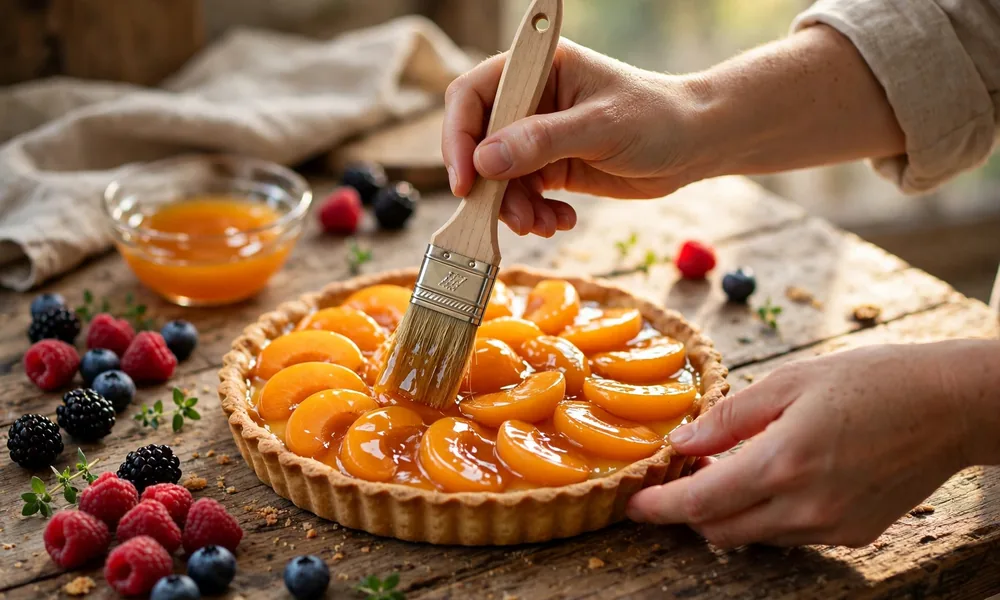
The most common mistake is brushing too late or too early. Egg wash on over-proved dough deflates it; wash applied too early dries out and cracks. Brush just before the tray enters the oven, and glaze only once the bake has cooled slightly, so it sets instead of sliding off.
The second mistake is using one brush for everything: garlic butter flavours a sweet glaze, and egg residue streaks the next job. Keep one brush for sweet work and one for savoury. The third is storing a damp brush bristle-down in a jar, which bends the bristles and traps moisture — store brushes hanging or flat.
Cleaning and care
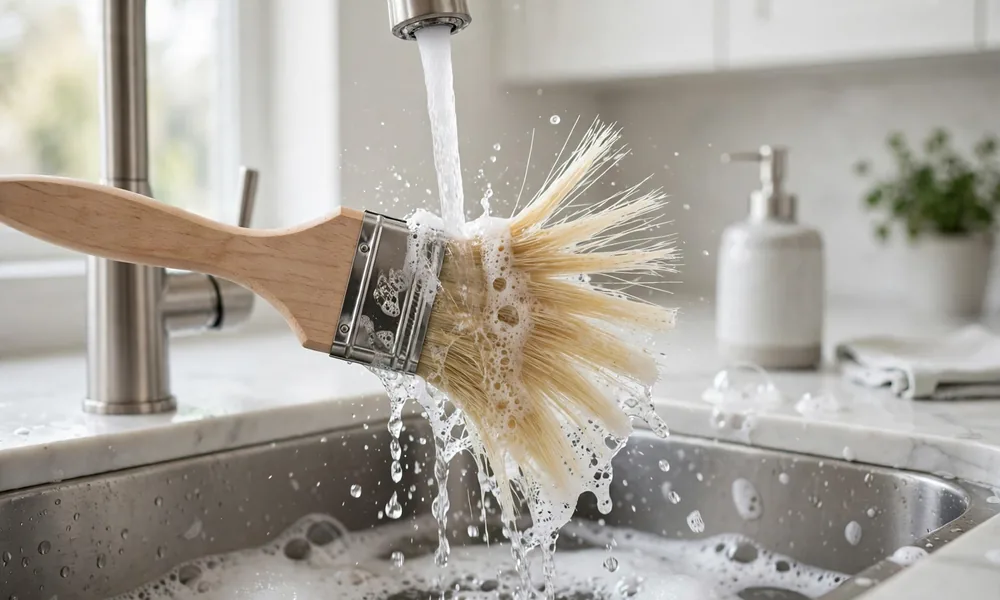
Cleaning is where a pastry brush lives or dies. Natural bristle brushes need warm water and a little washing-up liquid worked through the bristles, then a rinse until the water runs clear — paying attention to the base, where egg and butter collect, and the ferrule, where moisture hides. Shake out the water and leave the brush to dry bristles-down or hanging.
Silicone brushes are the easy case: rinse under hot water or put them in the dishwasher. Nylon needs hand washing but dries quickly. Never leave a brush sitting in a sink of water, and never store one wet. A brush that smells stale has food trapped somewhere unseen — replace it.
When to replace your pastry brush
Even the best brush wears out. Replace a natural brush when bristles shed, splay so widely they lose their edge, or wobble in a loose ferrule. Replace silicone when the fins tear, bend permanently, or hold a smell washing will not remove. Replace nylon when the bristles curl, split, or lose their spring.
A natural brush used weekly lasts one to two years, silicone three or more, nylon about two. Test yours by dipping it and drawing it across the back of your hand: an even film means it is still good; stripes, drips, or loose bristles mean it is time for a new one.
Pastry brushes and the rest of your baking kit
A pastry brush never works alone. A good egg wash on a quality pie dish browns more evenly than a poor wash on the finest tray, because the dish holds heat steady. The pan matters too: cakes baked in the right tin rise evenly, and a brush can only finish what the tin started — see our guide to the best cake pans. And a wash whisked in a wide bowl comes out smooth, while a narrow jug leaves strands, so our guide to the best mixing bowls is a useful companion read.
Checklist: buying a pastry brush
- Pick natural bristle for the finest finish on egg wash and glazes.
- Pick silicone for zero shedding, dishwasher cleaning, and basting.
- Choose a 4 to 5-centimetre head for everyday baking, plus a narrow one for detail work.
- Check the ferrule is tight and the bristles firmly set; reject any brush that sheds in the shop.
- Prefer one-piece silicone with no join, and wooden handles with no rough edges.
- Own two brushes: one for sweet work, one for savoury, so flavours never cross over.
Frequently asked questions
What is the best pastry brush for egg wash?
A natural bristle brush: its fine, dense bristles lay down a thin, even coat that browns uniformly, and it is soft enough not to damage proved dough. Keep silicone for basting, but reach for natural bristle when the finish matters.
Do silicone pastry brushes leave streaks?
They can: their bristles are thicker and spaced further apart than natural hair. The stripes are usually faint and vanish as the bake browns, but on pale dough they can show. Two thin coats instead of one thick coat reduces the effect.
How do I stop my pastry brush from shedding bristles?
Buy a well-made brush and condition it before first use: wash it, rinse it, and pull gently on the bristles to remove loose ones. Cheap brushes shed because the bristles are poorly set — if one keeps shedding after a few uses, replace it.
Can I put a pastry brush in the dishwasher?
Silicone brushes can go in the dishwasher safely. Natural bristle brushes with wooden handles should not: heat and water swell the wood, loosen the ferrule, and splay the bristles. Nylon brushes are best hand washed, though some are rated dishwasher safe.
What size pastry brush should I buy?
A head of 4 to 5 centimetres suits most home baking. Add a narrow 2.5-centimetre brush for tarts and detail work, and a wide 6 to 7-centimetre brush if you bake for a crowd.
How often should I replace a pastry brush?
A natural brush used weekly lasts one to two years, silicone three or more, nylon about two. Replace any brush that sheds, has splayed bristles, smells stale after washing, or leaves stripes.
The bottom line
The best pastry brush for even glazes in 2026 is a natural bristle brush for fine work, backed up by a one-piece silicone brush for everyday basting. Buy the right size, keep sweet and savoury brushes separate, wash natural bristles straight after use, and replace any brush that sheds or streaks. It is a small tool, but the last one to touch your bake — and a good one is the difference between home-made and bakery-made.