What Is the Best Pie Dish for a Golden Crust in 2026?
The best pie dish for a golden crust in 2026 is a 9-inch ceramic or glass dish with a wide, flat rim, low sloped sides and a base that browns the bottom as well as the top. A great pie dish is not a passive container: it decides whether the crust turns golden or stays pale, whether the bottom is crisp or soggy, and whether the first slice comes out clean. This guide explains how material, size and shape change the bake, and how to choose the dish your pies deserve.
Key takeaways
- Ceramic is the best all-round pie dish material: it browns evenly, holds heat well, releases clean slices and looks good on the table.
- A 9-inch dish suits most recipes; a deep-dish 9-inch suits fruit pies with generous fillings, and an 8-inch dish suits smaller households and richer pies.
- Glass lets you watch the bottom crust brown, which is the single best way to avoid a soggy base — and it is why many experienced bakers keep one.
- Low, sloped sides and a wide rim make crimping easier, give the crust somewhere to grip, and leave room for a decorative edge.
- A pale or light-coloured dish browns more gently than a dark one, so a dark metal pan needs a lower temperature or a shorter bake.
Why the dish decides the crust
A pie is two things at once: a filling that needs gentle, even heat, and a crust that needs fierce, direct heat to turn crisp and golden. The dish is the mediator between the two. A heavy ceramic dish heats slowly and evenly, which is kind to the filling and reliable for the crust, while a thin metal pan heats fast, browning quickly but punishing a moment of inattention.
Ceramic, glass, metal and stoneware: how the materials compare
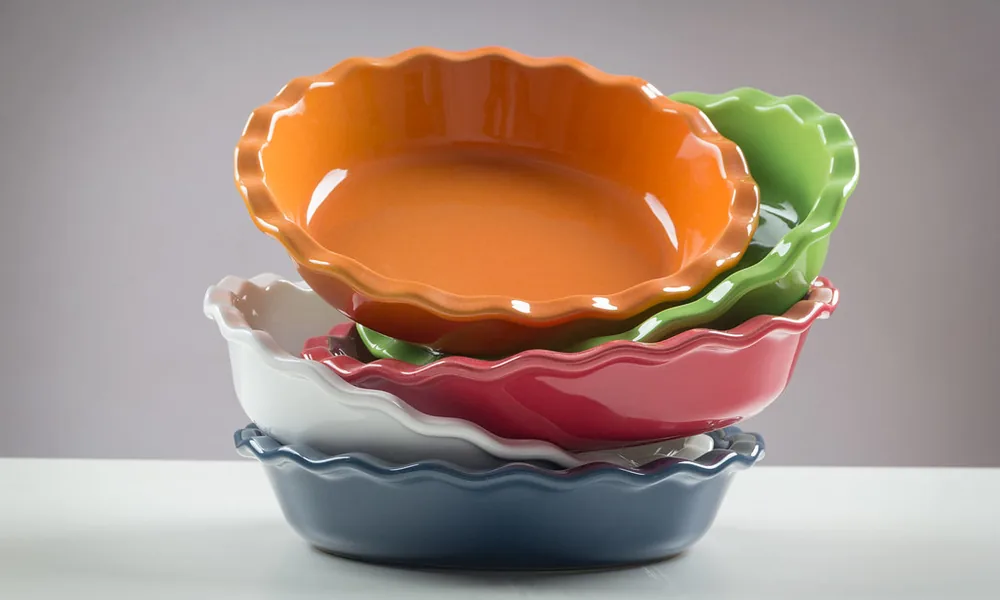
Ceramic is the classic pie dish and, for most kitchens, the best. It is heavy, which means it heats evenly and holds its temperature, and it is kind to pastry: the crust browns steadily rather than scorching at the edges. Ceramic releases cleanly when it is buttered or lined, it goes from oven to table without a second dish, and it comes in colours that make a pie look like an occasion. Its weaknesses are weight and fragility — a ceramic dish is heavy when full, and it will chip or crack if it is dropped or knocked hard. It is also opaque, so you cannot see the bottom crust while it bakes.
Glass, usually borosilicate, is the practical baker’s choice. Its one great advantage is visibility: you can lift the dish and see whether the bottom is golden or still pale, which takes the guesswork out of the hardest part of pie baking. Glass browns a little more slowly than ceramic, which is forgiving, and it is easy to clean — though it cools faster and looks plainer on the table.
Metal pans, usually aluminium or aluminised steel, are the professional choice for speed. They conduct heat fast, giving a crisp bottom and a deeply browned edge, and they are light and almost unbreakable. But that speed is also their weakness: a dark metal pan can over-brown the edges before the centre is done. Use metal when you want maximum browning, and lower the oven by about 10 degrees if the pan is dark.
Size and depth: the 9-inch standard and when to break it
Most pie recipes are written for a 9-inch dish, and that is the size to buy first. It holds a standard amount of filling, fits a standard circle of pastry, and matches the timing in most recipes. An 8-inch dish suits smaller households and richer pies, while a 10-inch dish suits a crowd but needs more filling and more pastry.
Depth matters as much as diameter. A standard dish is about an inch and a half deep, which suits most pies. A deep-dish pie plate, at two inches or more, is made for fruit pies with a generous filling — apple, cherry, peach — where a standard dish would overflow. Deep dishes need a longer bake, and the filling should be piled slightly above the rim because fruit shrinks as it cooks. If you bake a deep-dish pie, start it on a lower rack so the bottom gets enough heat, and be ready to cover the edges with foil if they brown too fast.
Comparing the main types
| Type | Best for | Browning | See the base? | Weakness |
|---|---|---|---|---|
| Ceramic, 9-inch | Everyday pies, serving | Even and steady | No | Heavy; can chip |
| Glass, 9-inch | Learning, custard pies | Steady, slightly slower | Yes | Cools fast; plain on the table |
| Metal, 9-inch | Maximum crispness | Fast, can over-brown | No | Utilitarian; needs care with timing |
| Deep-dish ceramic, 9-inch | Generous fruit pies | Even, needs longer bake | No | Needs more filling and pastry |
| Stoneware, 9-inch | Rustic fruit and savoury pies | Even, holds heat well | No | Heavy; glaze can stain |
| Fluted ceramic, 9-inch | Serving, decorative edges | Even | No | Flutes make crimping fiddly |
The rim, the slope and the edge that holds the crust
The rim of a pie dish does more work than it looks. A wide, flat rim gives you somewhere to crimp, which is what seals the filling in and keeps the edge from shrinking back into the dish. A narrow rim makes crimping fiddly and leaves the edge vulnerable. A fluted rim looks decorative and helps the pastry grip, but it can make a neat crimp harder to achieve, so it is better suited to pies where the edge is a feature rather than a seal.
How to get a golden crust, step by step
Start with cold pastry and a hot oven. Pastry made with cold butter and cold water, rested in the fridge, holds its shape and bakes into layers rather than melting into a flat sheet. Roll it out, line the dish without stretching it — stretched pastry shrinks back in the oven — and trim it with a small overhang so the edge has something to grip. Chill the lined dish for half an hour before filling it; a cold dish going into a hot oven gives the crust a head start.
Blind baking is the best insurance for a crisp base, especially for custard and cream pies where the filling is wet. Line the pastry with baking paper, fill it with baking beans, and bake until the edges are set. Remove the beans, return the dish to the oven for a few minutes to dry the base, and brush it with a little beaten egg for an extra seal. For fruit pies, skip the blind bake and start on the lowest rack instead.
Watch the edges: the rim browns fastest because it is thinnest and closest to the heat, so cover it with foil or a pie shield once it reaches the colour you want. An egg wash gives a deep, glossy gold, milk gives a softer finish, and sugar sprinkled over the top adds sparkle and crunch. Do not open the oven door in the first twenty minutes, or the pastry may sink.
Serving, slicing and looking after the dish
A pie served in its dish should cool for at least half an hour before slicing, and an hour is better for fruit pies, because the filling needs time to set. Use a thin, sharp knife and a wide server, cut all the way through to the base before lifting, and lift in one confident movement. The first slice is always the hardest; after that, the dish holds the rest in shape.

Choosing well: a quick checklist
- Buy a 9-inch dish first, and add a deep-dish plate only if you bake generous fruit pies often.
- Choose ceramic for serving and even browning, and glass for watching the bottom crust.
- Look for a wide, flat rim for crimping and low, sloped sides for even heat and clean slices.
- Check the real size by measuring across the inside rim and filling the dish with water.
- Avoid dark metal pans unless you are confident about timing, and lower the temperature by about 10 degrees with them.
- Keep a baking sheet preheated on the lowest rack to drive heat into the base of every pie.
Frequently asked questions
What size pie dish is best for most recipes?
A 9-inch dish is best for most recipes, because that is the size most recipes are written for. It holds a standard filling, matches a standard pastry circle, and keeps the baking time predictable. Buy 9 inches first, and add an 8-inch or 10-inch dish only when you know you need it.
Is ceramic or glass better for a pie dish?
Ceramic is better for serving and for even browning, while glass is better for control, because you can see the bottom crust. Most experienced bakers own both and use glass when they are learning a recipe or baking a wet filling, and ceramic when the pie goes straight to the table.
Why is my pie crust soggy on the bottom?
A soggy bottom usually means the base did not get enough heat. Start the pie on the lowest rack or a preheated baking sheet, blind bake the base for wet fillings, keep the pastry cold before it goes in, and do not overfill the dish. A glass dish helps, because you can see whether the base has browned before you take the pie out.
Do I need a deep-dish pie plate?
You need a deep-dish plate if you bake fruit pies with a generous filling, because a standard dish will overflow. Deep dishes need more filling, more pastry and a longer bake, and the fruit should be piled above the rim because it shrinks as it cooks. For custard, cream and savoury pies, a standard depth is better.
Can I use a metal pie pan instead of ceramic?
Yes, and metal gives the crispest bottom because it conducts heat fast. But it browns quickly, so dark metal pans can over-brown the edges, and the pie usually has to be turned out or transferred because metal looks plain on the table. Lower the oven temperature by about 10 degrees with a dark pan and watch the edges.
Should I blind bake the crust for a fruit pie?
Usually not. Fruit pies bake long enough for the base to cook through, especially if you start them on a low rack or a preheated baking sheet. Blind baking is most useful for custard, cream and other wet fillings, where the filling goes in unbaked and the base needs a head start.
The bottom line
The best pie dish for a golden crust in 2026 is a 9-inch ceramic dish with a wide rim and low, sloped sides, with a 9-inch glass dish alongside it for the bakes where you want to watch the base. Ceramic browns evenly and serves beautifully; glass removes the guesswork from the bottom crust. Keep the pastry cold, start the pie low in a hot oven, and protect the edges with foil once they colour. For the bakeware that works alongside it, see the guide to cake pans that bake evenly, the muffin pans that bake evenly without sticking, and the dinnerware sets that make weeknights feel special.