Coffee Filters That Brew a Cleaner Cup in 2026
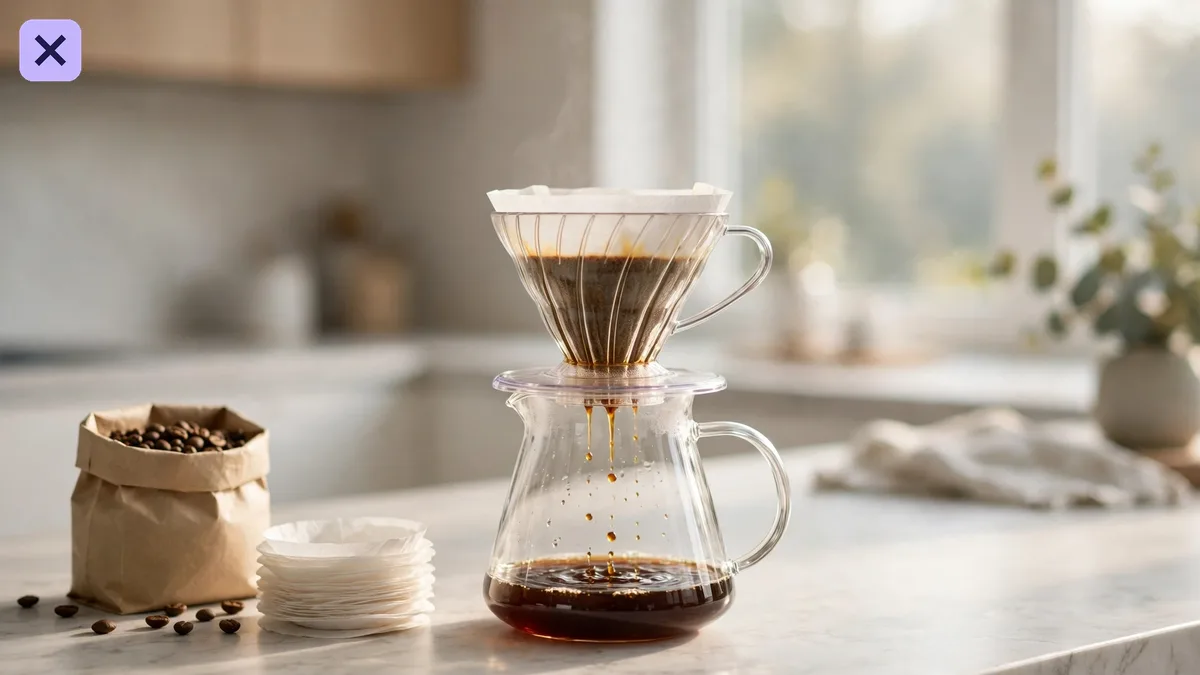
A good coffee filter is the quiet hero of your morning cup. The best coffee filters trap fine grounds and excess oils while letting the sweet, bright flavours through, so the coffee that lands in your mug tastes cleaner, smoother and more like the beans you paid for. In 2026 the choice is wider than ever: bleached and unbleached paper, reusable metal mesh, cloth, and even compostable options all promise a better brew, and the differences between them are real enough to taste.
Most people blame their beans or their brewer when coffee tastes muddy, bitter or gritty, but the filter is often the culprit. A filter that is too coarse lets sediment through. One that is too dense chokes the flow and over-extracts the grounds, turning a bright roast dull and harsh. Getting the filter right is one of the cheapest upgrades in all of coffee, and it takes no new equipment at all.
Key takeaways
- Paper filters brew the cleanest cup because they trap fine sediment and most of the oils that make coffee taste heavy.
- Metal filters keep more body and oils, which suits dark roasts and drinkers who like a fuller, richer mouthfeel.
- Cloth filters sit in the middle, offering a clean cup with more body than paper, but they need careful rinsing and drying.
- Always match the filter shape and size to your brewer, because the wrong fit causes channelling, overflow and uneven extraction.
- Rinse paper filters with hot water before brewing to remove any papery taste and to preheat your brewer.
What a coffee filter actually does
A coffee filter has one job: separate the liquid from the grounds. How it does that job shapes everything about the cup. The tiny holes or fibres in the filter decide which compounds pass through and which stay behind. Very fine particles, known as fines, slip through coarse filters and settle at the bottom of the cup as sludge. Oils pass through metal and cloth easily but are mostly caught by paper. Those oils carry body and some flavour, but they also carry the heavy, sometimes bitter notes that make a cup feel muddy.
Flow rate matters just as much. Water should pass through the bed of grounds steadily and evenly. If the filter drains too slowly, the water spends too long in contact with the grounds and pulls out bitter compounds. If it drains too fast, the water rushes past without extracting the sweet, aromatic compounds that make coffee taste good. The best coffee filters strike a balance: even flow, no clogging, and a clean separation that leaves the cup bright.
That is why the filter deserves as much attention as the beans.
The main types of coffee filter
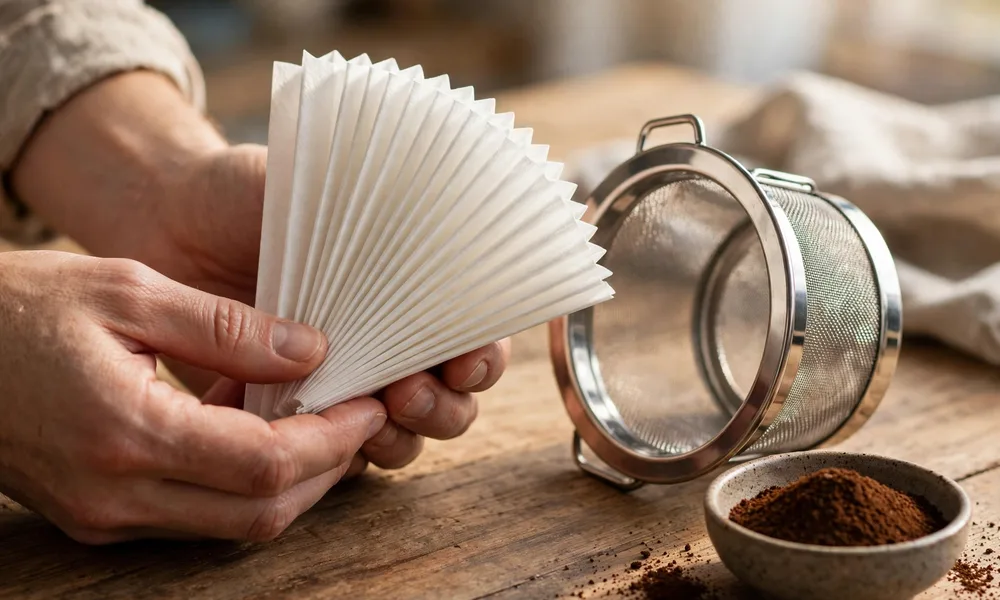
Every filter type trades something away. Paper gives you clarity and loses body. Metal gives you body and loses clarity. Cloth tries to split the difference and asks for more care in return. Understanding those trade-offs is the fastest way to pick the right one for how you actually drink coffee.
Paper filters: the cleanest cup
Paper filters are the default for a reason. They trap nearly all the fines and a large share of the oils, producing a cup that is bright, clear and easy to drink. For light and medium roasts, where the interesting flavours are delicate floral, citrus or stone-fruit notes, paper lets those notes shine without a heavy, oily blanket over them.
There are two kinds of paper to know. Bleached white filters are washed clean during manufacturing and have almost no papery taste, especially after a quick rinse. Unbleached brown filters are less processed and appeal to drinkers who want to avoid chlorine-based bleaching, but they can carry a faint papery note if you skip the rinse. Either way, rinsing with hot water before brewing solves most of the problem and also warms your dripper and carafe.
Paper filters come in cone shapes for pour-over drippers and flat-bottomed basket shapes for automatic drip machines. The shape is not interchangeable, and using a cone filter in a basket brewer, or the reverse, guarantees a poor fit and a poor brew. Check the size number printed on the box, usually 1, 2 or 4, and match it to your brewer.
Metal filters: full body, zero waste
Reusable metal filters are usually made from fine stainless steel mesh, sometimes with a gold-toned coating. They let the coffee oils through, which gives the cup a heavier body and a richer, almost syrupy mouthfeel. Dark roasts, which are all about chocolate, caramel and toasted notes, often taste better through metal than through paper, because the oils carry those flavours.
The trade-off is sediment. Even a fine mesh lets some fines through, so the last few sips can be gritty if you drink to the bottom. Metal filters also demand a coarser grind, because a fine grind will clog the mesh and stall the brew. Cleanup means rinsing the mesh under the tap and tapping out the grounds, and every few weeks a soak in a cleaning solution keeps the tiny holes from clogging with old coffee oils, which can turn rancid and sour the flavour.
Metal wins on running costs: one filter can last for years. For the flavour-chaser who prizes clarity above all, though, metal is the wrong tool.
Cloth filters: the middle path
Cloth filters, usually made from cotton or hemp, sit between paper and metal. They trap the fines that metal lets through but allow more oils than paper, so the cup is clean yet still has body. Fans describe the result as smooth and sweet, with a texture that feels rounder than a paper-brewed cup.
The catch is maintenance. A cloth filter must be rinsed thoroughly after every use and dried completely, or it will grow mould and pick up stale, musty flavours. Most owners keep theirs in a jar of water in the fridge between brews, which works but feels like a chore compared with tossing a paper filter in the bin. Cloth filters also wear out, typically after a few months of daily use, and a worn cloth lets fines through just like a tired metal mesh.
Cloth suits the slow-morning brewer who enjoys the ritual; buy two so one can dry while the other is in use, and boil them occasionally to keep them fresh.
How to choose the right filter for your brewer
Start with the brewer, not the filter. A pour-over dripper designed for cone filters needs a cone filter in the right size. A drip machine needs a basket filter. A French press needs no paper filter at all, though some people add one for a cleaner cup. A pour-over coffee maker will only perform as well as the filter inside it, so the filter is part of the brewer, not an afterthought.
Next, think about your roast. Light roasts reward paper, which preserves their brightness. Dark roasts reward metal or cloth, which preserve their body. Medium roasts suit either, so choose by whether you prefer clarity or richness.
Grind size is the third piece. Paper tolerates a medium-fine grind, metal needs a coarser grind to avoid clogging, and cloth works best with a medium grind. Bitter, sludgy coffee usually means the grind is too fine for the filter; weak, sour coffee usually means it is too coarse.
Finally, be honest about your habits. If you brew in a rush before work, disposable paper is the kindest option. If you brew slowly at the weekend, cloth or metal will reward you.
Coffee filters compared at a glance
| Filter type | Cup clarity | Body | Upkeep | Best for |
|---|---|---|---|---|
| Bleached paper | Excellent | Light | None, disposable | Light and medium roasts |
| Unbleached paper | Excellent | Light | Rinse before brewing | Drinkers avoiding bleached paper |
| Metal mesh | Fair | Full | Rinse, occasional deep clean | Dark roasts, zero-waste brewing |
| Cloth | Good | Medium-full | Rinse, dry fully, boil often | Slow, ritual brewing |
| Compostable paper | Excellent | Light | None, disposable | Eco-minded paper users |
Common coffee filter mistakes
The most common mistake is the wrong size. A filter that is too small folds over and lets grounds spill into the cup. One that is too large bunches up, creates channels where water rushes through one side, and leaves half the grounds under-extracted. Check the number on the box every time you buy, because sizes look similar on the shelf.
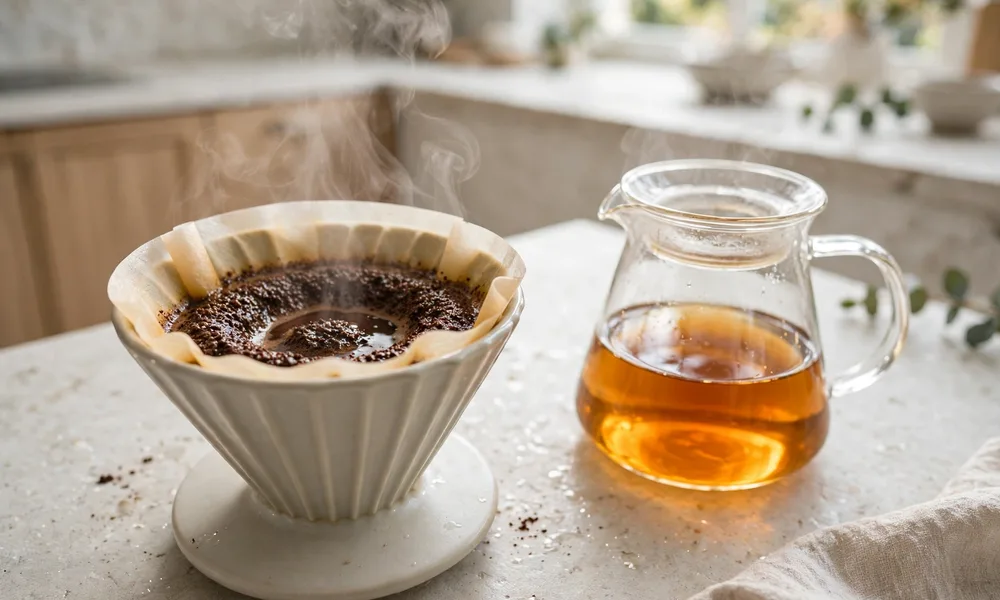
The second mistake is skipping the rinse. Unrinsed paper, especially unbleached paper, can lend a dry, cardboard note to the cup. Thirty seconds under hot water fixes it. The third mistake is reusing a paper filter, which sounds thrifty but leaves old oils and fines in the cup and risks a tear mid-brew. Paper is a single-use item, and treating it as one is part of the deal.
For metal filter users, the big mistake is neglect. A mesh that is never deep-cleaned slowly clogs, and the brew gets slower and more bitter week by week. Soak it in a coffee-machine cleaner or a baking soda solution once a month. For cloth users, the mistake is damp storage. A cloth filter left damp in a drawer will smell musty within days, and that smell goes straight into the coffee.
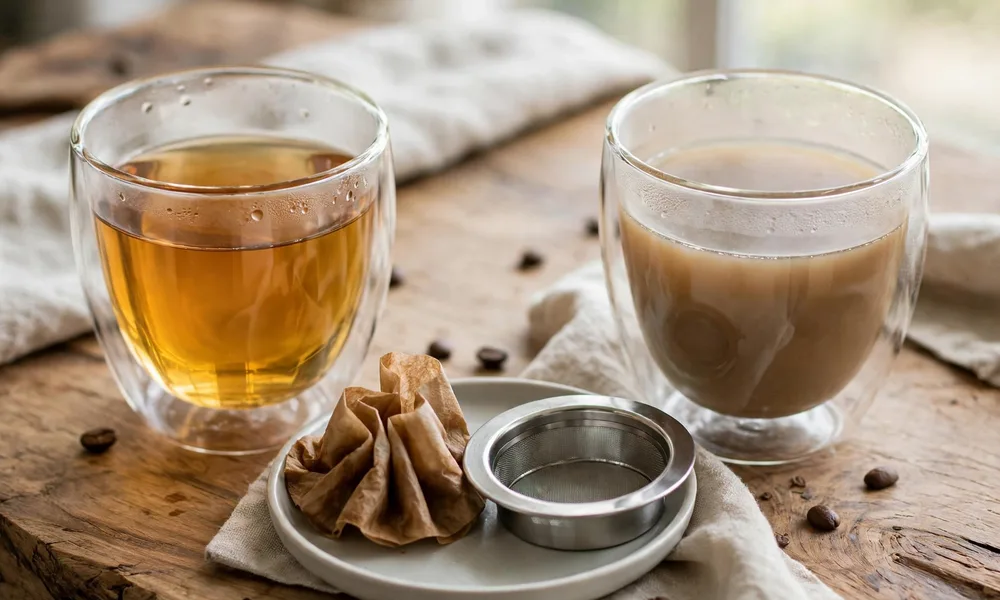
Coffee filter checklist: before you buy
- Match the shape and size exactly to your brewer, cone or basket, and the right number.
- Pick paper for clarity and light roasts, metal for body and dark roasts, cloth for a middle ground.
- Rinse paper filters with hot water before every brew to remove papery taste.
- Use a coarser grind with metal filters so the mesh does not clog and stall the brew.
- Clean reusable filters properly: deep-clean metal monthly and dry cloth completely after every use.
- Keep a spare pack of paper filters in the cupboard so a missing filter never ruins a morning.
Frequently asked questions
Do coffee filters really change the taste?
Yes, noticeably. Paper traps oils and fines for a cleaner, brighter cup, while metal lets oils through for a fuller, heavier cup. The same beans brewed through different filters can taste like two different coffees.
Are bleached or unbleached paper filters better?
Bleached filters have the least papery taste and are the safest choice for flavour. Unbleached filters are less processed and work just as well once rinsed, so the choice comes down to personal preference rather than taste.
Can I reuse a paper coffee filter?
You should not. A used paper filter holds old oils and fines, tears easily on a second use, and can give the coffee a stale, bitter note. Compost it instead and use a fresh one.
Is a metal coffee filter worth it?
Yes, if you like a full-bodied cup and dark roasts. If you prize a clean, bright cup, paper will make you happier.
Why does my coffee taste like paper?
The filter was not rinsed before brewing. Run hot water through the filter for a few seconds before adding grounds, and the papery taste disappears. This matters most with unbleached filters.
How do I stop my pour-over filter from clogging?
Use a slightly coarser grind, pour more gently in the centre rather than at the edges, and avoid very fine, dusty grounds. With metal filters, a monthly deep clean also keeps the mesh flowing freely.
The bottom line
The best coffee filters in 2026 are the ones matched to your brewer, your beans and your habits. Paper brews the cleanest cup and suits light and medium roasts. Metal brews the fullest cup and suits dark roasts and zero-waste kitchens. Cloth splits the difference for brewers who enjoy the ritual and the upkeep. Whichever you choose, fit it properly, rinse it, grind for it, and keep it clean, and your morning coffee will taste noticeably better. If you are still deciding on the brewer itself, our guide to the best drip coffee makers and the best coffee makers will help you pick the machine to go with the filter.