
The best coffee makers in 2026 make it easy to brew cafe-quality coffee at home, whatever your morning looks like. Whether you want a full pot ready before the household wakes up, a slow pour-over ritual on a quiet weekend, or a sharp espresso before work, there is now a machine built exactly for that habit. The range has never been wider, and the gap between a good cup and a great one has never been smaller.
Choosing well matters more than spending more. A simple drip machine with a steady brew temperature can beat a costly espresso maker that is fiddly to clean and hard to dial in. The right coffee maker is the one that matches how much coffee you drink, how much time you want to spend on it, and how much counter space you are willing to give up. Get those three things right and the machine almost chooses itself.
This guide compares the best coffee makers for home use in 2026 across every brew method that matters: drip, pour-over, espresso, French press, single-serve pods, and cold brew. Every style is judged on the same things — flavour, ease of use, capacity, cleaning, and value — so you can compare them fairly and pick the brewer that fits your kitchen and your mornings.
Key takeaways
- Drip coffee makers are the best all-rounders for households, brewing a full pot with almost no effort.
- Pour-over brewers make the cleanest, brightest cup, but they ask for a few minutes of your attention.
- Espresso machines deliver the strongest, richest coffee, yet they need the most practice and the most cleaning.
- French press and cold brew makers are the simplest and cheapest routes to a full-flavoured cup.
- Match the maker to your routine first: capacity, brew temperature, and ease of cleaning matter more than extra features.
The Best Coffee Makers 2026 at a Glance
| Coffee Maker | Best For | Capacity | Effort | Flavour Style |
|---|---|---|---|---|
| Drip Coffee Maker | Families and busy mornings | 8–12 cups | Very low | Smooth and balanced |
| Pour-Over Brewer | Flavour lovers and slow mornings | 1–2 cups | Medium | Clean and bright |
| Espresso Machine | Espresso, lattes, and cappuccinos | 1–2 shots | High | Rich and intense |
| French Press | Full-bodied coffee on a budget | 4–8 cups | Low | Bold and full |
| Single-Serve Pod Maker | One cup, fast, no fuss | 1 cup | Very low | Consistent and mild |
| Cold Brew Maker | Smooth iced coffee in summer | 4–6 cups | Low, but slow | Sweet and low-acid |
Drip Coffee Makers
A drip coffee maker is the workhorse of the home kitchen, and for most households it is still the best coffee maker to buy. You add water and grounds, press a button, and a full pot brews itself while you get on with the morning. Modern drip machines have improved a great deal: the best ones hold a steady brew temperature, spread water evenly over the grounds, and keep the pot warm without scorching the coffee.

Pour-Over Coffee Makers
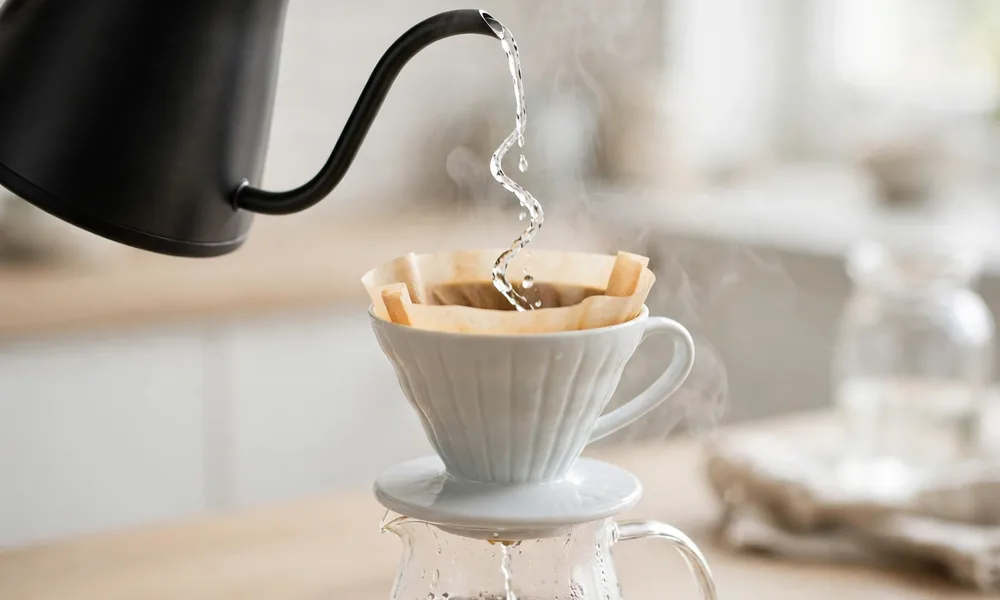
Pour-over brewing is the slowest method on this list and, for many coffee lovers, the most rewarding. You pour hot water over grounds in a paper filter in slow circles, and the coffee drips through into a carafe below. Because you control the pour, you control the flavour: a slow pour makes a stronger cup, a fast pour makes a lighter one. The result is a clean, bright cup where the character of the beans really comes through.
Grind size matters more here than with any other method. A medium-fine grind, roughly like coarse sand, works best for most drippers. Too fine and the water stalls, making bitter coffee; too coarse and it rushes through, making a weak cup. Fresh beans, ground just before brewing, make the biggest difference of all. If you want to go deeper into this style, our guide to the best pour-over coffee makers compares the leading drippers and carafes in detail.
Espresso Machines
An espresso machine is the most ambitious coffee maker you can put in a home kitchen, and the most satisfying when it clicks. Hot water is forced through finely ground coffee under pressure, producing a short, intense shot topped with golden crema. That shot is the base for lattes, cappuccinos, flat whites, and Americanos, so one machine opens up the whole cafe menu at home.
Cleaning is the other commitment. The portafilter, drip tray, and steam wand need attention after every use, and the machine needs descaling every few months. If that sounds like a chore you will skip, a simpler brewer will serve you better. If you are just starting out, our guide to the best espresso machines for beginners covers the friendliest models to learn on, with clear advice on what matters and what does not.

French Press Coffee Makers
The French press is the simplest brewer on this list: grounds and hot water steep together in a jug, then a mesh plunger pushes the grounds to the bottom. There are no filters to buy, no power socket needed, and nothing to break. The result is a bold, full-bodied cup, because the metal mesh lets the coffee oils through that paper filters trap.
Two details make the difference between a great press pot and a gritty one. First, use a coarse grind, roughly like sea salt, so the grounds stay below the mesh instead of slipping through it. Second, serve the coffee straight after pressing, because coffee left sitting on the grounds keeps extracting and turns bitter within minutes. A stainless steel press is the best buy for most people: it survives drops, keeps coffee hotter for longer, and costs little more than a glass one.
Single-Serve Pod Coffee Makers
Single-serve pod makers are built for one thing: a decent cup of coffee in under a minute with no measuring, no grinding, and no cleaning up grounds. You drop in a pod, press a button, and the machine does the rest. For a household where everyone drinks at different times, or for an office desk or a small flat, that convenience is genuinely hard to argue with.
The trade-offs are cost and choice. Pods cost far more per cup than beans or ground coffee, and the range of flavours is limited to what the pod system offers. The coffee itself is consistent and perfectly drinkable, but it rarely reaches the heights of a fresh pour-over or a well-pulled espresso. Some machines now take reusable pods, which cut the running cost and the waste, and are worth looking for if you like the format.
Cold Brew Coffee Makers
Cold brew is coffee steeped in cold water for twelve to twenty-four hours, and the result is unlike any hot-brewed cup. It is naturally sweet, smooth, and low in acidity, which makes it the best choice for iced coffee and for anyone who finds hot coffee harsh on the stomach. A cold brew maker is usually just a jug with a fine mesh filter basket: you add coarse grounds and cold water, leave it in the fridge overnight, and lift the filter out in the morning.
Cold brew makers are cheap, simple, and almost impossible to get wrong, which makes them a great second brewer alongside a drip machine or a pour-over set. If iced coffee is your summer staple, our guide to the best cold brew coffee makers compares the best jugs, filters, and batch sizes to help you pick one.
What to Look for in a Coffee Maker
Whatever style you choose, a few features separate the coffee makers that last from the ones that disappoint. Capacity comes first: buy for the amount of coffee you actually drink, not the amount you imagine drinking. A machine that is too big wastes coffee and counter space, while one that is too small means brewing twice every morning.
How to Brew Better Coffee at Home
The machine is only half the story. Fresh beans, ground just before brewing, make a bigger difference than any upgrade to the brewer itself. Buy beans in small bags, store them sealed and away from light, and grind only what you need for each pot. Pre-ground coffee is fine for drip machines, but it loses flavour within days of opening, so use it quickly.
Coffee Maker Buying Checklist
- Count how many cups you drink each morning and buy a capacity that covers it in one brew.
- Check the brew temperature holds between 92 and 96 degrees for proper extraction.
- Choose a thermal carafe over a hot plate if you drink coffee over more than half an hour.
- Make sure the water tank, carafe, and filter basket are easy to remove and clean.
- Measure your counter space, including height under cupboards, before ordering.
- Work out the running cost: filters, pods, and descaling add up over a year.
Frequently Asked Questions
What is the best coffee maker for home use?
For most households, a drip coffee maker is the best all-rounder: it brews a full pot with almost no effort, it is easy to clean, and it makes smooth, balanced coffee. If you drink one or two cups and enjoy the ritual, a pour-over brewer makes a better cup; if you love lattes and cappuccinos, an espresso machine is the right choice.
How much should I spend on a coffee maker?
A good drip machine or French press costs little and can last for years, while a capable home espresso machine costs considerably more. Spend more only when the extra money buys something you will actually use, such as a thermal carafe, a steady brew temperature, or a proper portafilter. The cheapest machine that brews at the right temperature beats an expensive one that does not.
Which coffee maker makes the strongest coffee?
Espresso machines make the strongest coffee by concentration, since a small shot packs in a lot of dissolved coffee. A French press makes a strong, full-bodied cup too, because the grounds steep directly in the water. If you want a stronger cup from any brewer, use slightly more coffee per cup rather than brewing the same grounds for longer, which only adds bitterness.
Is a pour-over coffee maker worth it?
Yes, if you enjoy the process and drink one or two cups at a time. Pour-over makes a clean, bright cup that shows off good beans better than any other method, and the gear is cheap. It is not worth it if you want coffee fast, or if you need to brew for several people at once.
How often should I clean my coffee maker?
Rinse the carafe and filter basket after every use, wash removable parts with warm soapy water once a week, and descale electric machines every two to three months, or more often in hard-water areas. A clean machine brews noticeably better coffee, and it lasts far longer than one that is left to build up limescale and old coffee oils.
Do I need a coffee grinder as well?
A grinder is the single best upgrade you can make to your coffee, whatever brewer you own. Freshly ground beans taste dramatically better than pre-ground coffee, and a grinder lets you match the grind size to your method. A simple burr grinder is enough to start with and will improve every cup you brew.
The Bottom Line
The best coffee makers in 2026 are the ones that fit your mornings, not the ones with the longest feature list. A drip machine suits busy households, a pour-over suits slow mornings and flavour lovers, an espresso machine suits daily latte drinkers, and a French press or cold brew maker suits anyone who wants great coffee simply and cheaply. Pick the style that matches how you actually drink coffee, check the brew temperature and the cleaning, and spend the money you save on fresh beans. That is the combination that makes the best cup, day after day.


