Egg Slicers That Cut Cleanly Every Time in 2026
An egg slicer is a small kitchen tool with one job, and when it works well it feels almost magical: a hard-boiled egg goes in whole and comes out in neat, even rounds, every slice the same thickness, with no crumbling, no sticking and no torn yolk. The best egg slicers in 2026 do exactly that, time after time, whether you are topping toast, building a salad or plating eggs for guests. The worst ones drag, bend or leave half the egg clinging to the wires. This guide explains how egg slicers work, which designs cut cleanly, and how to choose one that will still be slicing neatly years from now.
Key Takeaways
- Wire egg slicers cut the cleanest slices for most people, because thin taut wires pass through egg white and yolk without dragging.
- Look for a sturdy base and wires that stay tight: loose or sagging wires are the main reason slices come out ragged.
- Stainless steel wires and a solid frame last longest and survive the dishwasher without rusting or bending.
- Chill hard-boiled eggs fully before slicing, and peel them carefully, because a warm or torn egg will crumble under any slicer.
- A good egg slicer costs very little, so buy on build quality and wire tension rather than on extra gadgets or gimmicks.
What an Egg Slicer Actually Does
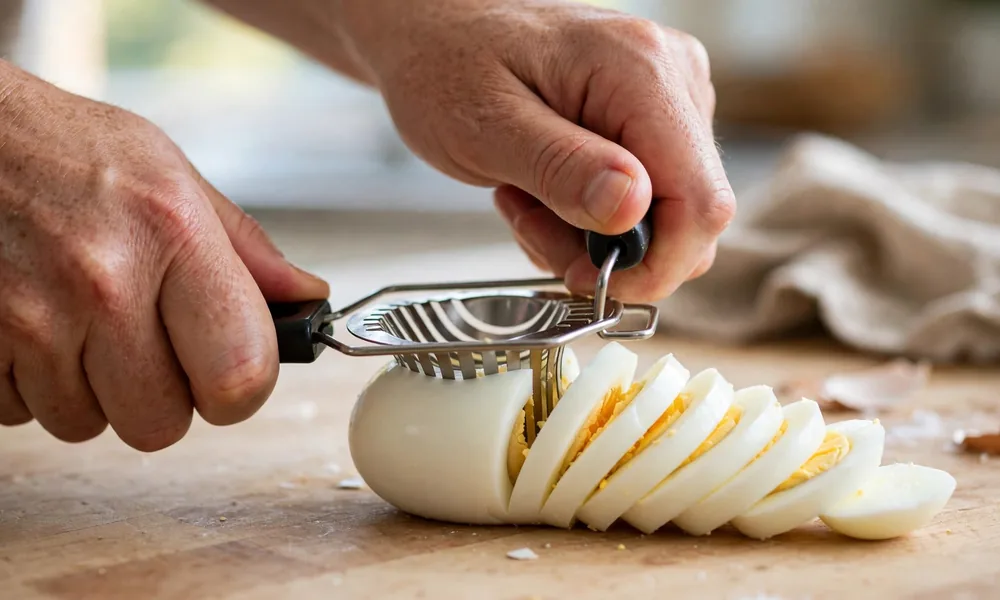
An egg slicer holds a peeled hard-boiled egg in a shallow cup or cradle and presses a set of parallel wires, or sometimes thin blades, down through it. The egg is divided in a single motion into slices of equal thickness, usually around five millimetres apart. That sounds simple, and it is, but the result depends entirely on the tool. A well-made slicer keeps the egg still while the wires pass through it cleanly. A poor one lets the egg roll, squashes it before the wires bite, or leaves the last slice stuck to the frame.
It is worth drawing a clear line here, because egg tools are easily confused. An egg slicer slices a cooked egg; it does not cook anything. An egg cooker steams or boils raw eggs, and egg cups are for serving a soft-boiled egg in its shell at the table. The slicer only earns its place once the egg is cooked, cooled and peeled.
The Main Types of Egg Slicer
Most egg slicers fall into four designs, and each suits a slightly different kitchen. The classic wire slicer is the most common: a hinged frame of parallel stainless steel wires that swings down onto the egg. It is cheap, light and easy to clean, and when the wires are taut it gives the cleanest cut of all. The blade slicer replaces wires with thin stainless steel blades, which are sturdier and less likely to snap, but can drag slightly through a soft yolk if they are not kept sharp and clean.
The wedge slicer cuts the egg into wedges rather than rounds. It uses a star-shaped set of wires or blades and is the right choice for salads and garnishes, where wedges look better and hold their shape on a plate. Finally, the multi-use slicer adds a second cutting direction, often by rotating the egg ninety degrees in the cradle, so it can dice the egg as well as slice it. That is handy for egg salad and sandwiches, but the extra moving parts can make the tool harder to clean and easier to break.
Wire, Blade or Wedge: Which Cuts Cleanest?
For plain round slices, a wire slicer wins. Wires are thinner than blades, so they displace less egg as they pass through, and the yolk stays centred in each slice. Blade slicers are a close second and are the better pick if you are rough with kitchen tools, because a blade will not snap the way a wire can. Wedge slicers are not competing in the same contest: they cut a different shape, and they do it well, but they cannot make the even rounds you want for toast or sandwiches. If you only buy one, buy a wire slicer with a solid base.
The Best Egg Slicers in 2026 at a Glance
| Egg Slicer | Best For | Cutting Style | Why It Stands Out |
|---|---|---|---|
| Classic Wire Slicer | Everyday slicing | Round slices | Taut wires give the cleanest cut for the lowest price |
| Heavy-Duty Stainless Slicer | Daily use | Round slices | Thick frame and tight wires stay true for years |
| Wedge Slicer | Salads and garnishes | Wedges | Even wedges that hold their shape on the plate |
| Blade Slicer | Busy kitchens | Round slices | Sturdy blades that will not snap under pressure |
| Two-Way Dicing Slicer | Egg salad and sandwiches | Slices and dice | Rotating cradle turns slices into neat dice |
| Compact Travel Slicer | Small kitchens | Round slices | Light, slim and easy to store in a crowded drawer |

How to Choose an Egg Slicer That Cuts Cleanly
Start with the wires. Press the frame down gently with your finger and look at how the wires sit: they should be straight, evenly spaced and tight, with no sag in the middle and no wire sitting higher than its neighbours. A wire that sags will push the egg before it cuts it, and that is where ragged slices begin. If you can, choose a slicer whose wires are anchored at both ends in metal rather than plastic, because plastic anchors loosen over time and let the wires go slack.
Next, look at the base. The cradle should be deep enough to stop the egg rolling, but not so deep that the wires cannot reach the bottom. Rubber feet help, because a slicer that slides across the worktop while you press is messy. The hinge should move smoothly and close fully, so the wires meet the base evenly; if it is stiff on one side, the slices will be thicker there.
Material matters more than brand. Stainless steel wires and a steel or sturdy aluminium frame outlast plastic, survive the dishwasher and stay free of rust. Plastic slicers flex under pressure, and that flex is the enemy of a clean cut. Weight is a useful clue: a slicer that feels solid usually cuts better than one that feels flimsy.
Size, Storage and Cleaning
Most egg slicers are about the size of a hand and fit easily in a drawer; a flat profile stores best in a crowded one. Wires rinse clean under a tap, and a soft brush reaches the corners of the cradle. Hand washing keeps wires tighter for longer than a dishwasher, and you should avoid slicers with deep crevices that trap egg.
How to Slice an Egg Cleanly, Step by Step
The slicer does half the work; the egg does the rest. Start with eggs that are properly hard-boiled, with a fully set white and a firm yolk. Cool them completely, ideally in cold water and then in the fridge, because a warm egg is soft and will squash under the wires. Peel carefully under running water, removing every bit of shell and membrane, since a fragment of shell can catch a wire and tear the slice.
Place the egg lengthways in the cradle so the wires cross it at right angles, giving round slices with a yolk in the centre of each one. Close the frame in one smooth, steady motion; a fast, hard press can split the yolk. Lift the frame, slide the slices off, and wipe the wires clean before the next egg.
Common Mistakes That Ruin Clean Slices
The most common mistake is slicing a warm egg. Warm whites are soft and sticky, and they cling to the wires instead of parting cleanly. The second is using eggs that are too fresh: very fresh eggs are harder to peel, and the torn white that results will never slice neatly, whatever the tool. Use eggs that are at least a few days old for boiling, and cool them thoroughly. The third mistake is pressing too hard or at an angle, which squashes the egg before the wires cut it. Let the weight of the frame and a steady hand do the work.
Another error is storing the slicer loose among heavy utensils, where wires get bent. Keep it in a divider. Finally, do not use it on hard or sticky foods: they will bend the wires, and then it will never cut eggs cleanly again.
What Else Can an Egg Slicer Do?
Once you own one, an egg slicer earns its keep beyond breakfast: it slices strawberries, kiwis, mushrooms and soft cheese into even rounds, faster and more evenly than a knife. Just keep hard foods away from it, and wash it after each use so flavours do not transfer.
It pairs well with other simple tools. An avocado slicer works on the same wire principle and is worth having if avocado is a regular breakfast, while a potato masher handles the heavier prep. Small tools like these work best as a set, each doing its one job well.
Checklist: Buying an Egg Slicer
- Wires are straight, evenly spaced and taut, with no sag in the middle.
- The frame is stainless steel or sturdy metal, not thin, flexible plastic.
- The cradle holds the egg firmly and stops it rolling while you press.
- The hinge closes smoothly and the wires meet the base evenly.
- It is easy to clean, with no deep crevices that trap egg.
- It fits your storage, whether that is a drawer divider or a hook.

Frequently Asked Questions
Do egg slicers work on soft-boiled eggs?
No, not well. A soft-boiled egg has a runny yolk and a delicate white that will collapse under the wires. Egg slicers are made for hard-boiled eggs with a fully set white and a firm yolk. For soft-boiled eggs, serve them in an egg cup and eat them with a spoon.
Why do my egg slices keep crumbling?
The usual cause is a warm or under-cooled egg, or wires that have gone slack. Cool the eggs completely in cold water and then in the fridge, peel them carefully, and check that the wires are still taut. If the wires sag, the slicer needs replacing, because slack wires push the egg instead of cutting it.
Can I put an egg slicer in the dishwasher?
Most stainless steel slicers are dishwasher safe, but hand washing keeps the wires tighter for longer. If you do use the dishwasher, place the slicer on the top rack where it will not be knocked about by heavier items, and dry it straight away to prevent water marks.
Wire or blade: which egg slicer is better?
Wire slicers cut the cleanest slices because the wires are thinner than blades and displace less egg. Blade slicers are sturdier and better if you are heavy-handed, since a blade cannot snap the way a wire can. For most people, a well-made wire slicer is the better buy.
How do I clean egg off the wires?
Rinse the slicer under warm running water straight after use, before the egg dries on. A soft brush or an old toothbrush reaches between the wires and into the cradle. Avoid harsh scourers, which can scratch the frame and weaken the wires over time.
Is an egg slicer worth buying?
If you eat hard-boiled eggs more than once a week, yes. It is one of the cheapest kitchen tools you can buy, it makes every plate look better, and it saves the fiddly work of slicing with a knife. If you rarely eat eggs, a sharp knife will do the job well enough.
The Bottom Line
The best egg slicers are sturdy and cheap: taut stainless steel wires, a solid frame, and a cradle that holds the egg still. Choose a wire slicer for the cleanest rounds, a wedge slicer for salads, and a two-way model if you make egg salad often. Chill your eggs fully, peel them carefully, press in one smooth motion, and the slices will come out even every time.