How to Pick a Potato Masher That Works Fast in 2026
A good potato masher turns a pot of boiled potatoes into a smooth, fluffy pile in under a minute, without lumps and without wearing out your wrist. Most mashers look identical on the shelf, yet they perform very differently once the potatoes are hot: some glide through in a few strokes, while others bend, clog, or leave half the pot untouched. This guide explains which designs are quickest, which materials hold up, and how handle length and head shape change the effort involved.
Key Takeaways
- A wide, flat plate head mashes faster than a thin wire loop because it covers more potato with every press.
- A long, sturdy handle with a comfortable grip matters as much as the head, especially for large pots.
- Stainless steel is the safest all-round choice: it will not bend, rust, or stain, and it survives the dishwasher.
- Boil the potatoes until they break apart easily, drain them well, and mash while they are still hot for the smoothest result.
- A potato ricer gives the finest texture of all, but it is slower than a plate masher for big batches.
Why the Right Potato Masher Matters
Mashed potatoes seem simple, yet the tool you use decides whether dinner is ready in five minutes or fifteen, and whether the result is creamy or gluey. A weak masher forces you to press harder and longer, which overworks the starch and turns the potatoes sticky. A strong, well-designed masher does the opposite: it breaks the potatoes down quickly, lets steam escape, and leaves you with a light, even texture. That matters most for large pots and firm, waxy potatoes, where a flimsy masher bends and a small head means dozens of extra presses. Choosing well is not about spending a lot of money: many of the best mashers cost less than a takeaway meal. It is about matching the design to the way you cook.
The Main Types of Potato Mashers Compared
Almost every masher falls into one of four designs, each trading speed against texture in a different way.
| Type | Speed | Texture | Best For | Weakness |
|---|---|---|---|---|
| Wire masher | Moderate | Rustic, slightly lumpy | Small batches, soft potatoes | Bends under pressure, clogs |
| Plate masher | Fast | Smooth and even | Everyday mashing, big pots | Heavier than wire designs |
| Potato ricer | Slow | Finest, fluffiest | Special occasions, gnocchi | Slow for large batches |
| Electric masher | Very fast | Can turn gluey | Very large quantities | Easy to over-mix, harder to clean |
The Wire Masher
The wire masher is the classic zigzag or coiled design most people grew up with. It is light, cheap, and easy to store, and it works well enough on soft, floury potatoes in a small pot. Its weakness is strength: thin wire flexes on firm potatoes, and the loops trap mash. Fine for two people who like a rustic result; for a family, look elsewhere.

The Plate Masher
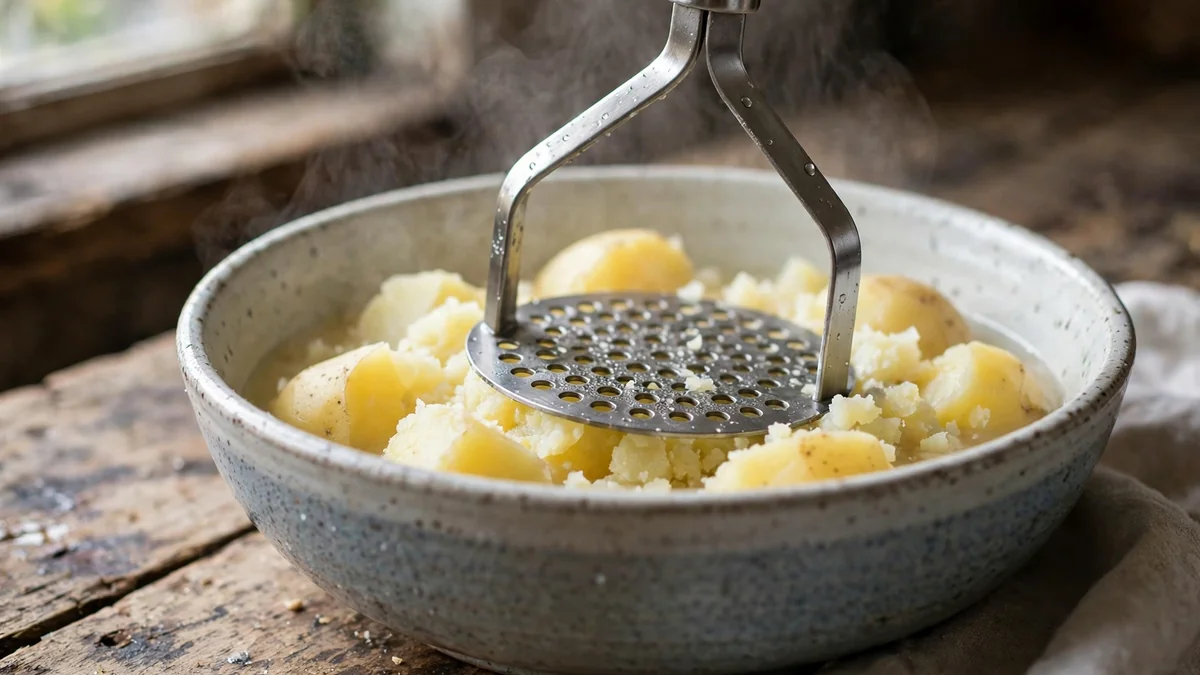
A plate masher has a flat, perforated metal disc at the end of a handle, sometimes with a slight curve or a wavy edge. This is the fastest manual design for most kitchens because the broad head presses a large area of potato at once, and the holes let the mash push through instead of piling up underneath. A good one clears a medium pot in about twenty presses. Look for a plate at least ten centimetres across, a firm handle with no wobble, and holes large enough to pass mash without clogging.
The Potato Ricer
A ricer pushes cooked potato through small holes, producing fine, rice-like strands that fold into butter and milk with almost no effort. The texture is superb: light, lump-free, never gluey. The cost is speed, since you load it in batches. Ricers shine for holiday dinners and gnocchi, but not for feeding eight people quickly on a weeknight.
The Electric Masher
Electric mashers deliver speed but carry a real risk: beating too long breaks down the starch and turns mash gummy, with no way back. If you use a hand mixer, keep the speed low, stop as soon as the lumps are gone, and finish with a fork. Our guide to the best vs worst hand mixers in 2026 explains which mixers handle this job without overworking the potatoes.
What Makes a Masher Fast
Speed comes from four things working together: head size, hole design, handle leverage, and weight. A wide head covers more potato per press, so fewer presses finish the pot. Holes that are large and well spaced let mash flow through instead of building up under the plate, which means each press actually moves potato rather than just squashing it. A long handle gives you leverage, so the same hand pressure produces more force at the head, and it keeps your hands clear of the steam. Weight is the subtle one: a little heft does some of the work for you. The fastest mashers balance all four, and you can feel it within ten seconds.
Stainless steel is the standard: rigid, flavour-free, and happy in boiling water and the dishwasher. Nylon is gentler on non-stick pots but flexes more and can warp near heat. Wooden mashers look charming but are slower to clean and can split. For most kitchens, stainless steel with a comfortable grip is the answer; keep a nylon one only if you mash in non-stick pans.

Handle Comfort and Grip
A thin metal rod digs into your palm after a minute of pressing. Look for a soft, non-slip grip and a rounded end that sits comfortably against your palm. Handles of twenty-five to thirty centimetres suit most pots; shorter ones leave you reaching into the steam of a deep pot. If you have wrist or grip issues, seek out a wide, padded handle that lets you press with your whole hand.
Head Shape and Hole Pattern
Round heads suit round pots, the safe choice for most kitchens. The hole pattern matters more: large holes pass mash easily and rinse clean, while fine holes give a smoother result but clog faster. A wavy or ridged edge cuts through firm potatoes more aggressively, which is worth having if you often cook waxy varieties.
How to Test a Masher Before You Commit
If you can handle a masher before buying, press the head against a hard surface: it should feel completely rigid, with no flex and no wobble at the handle joint. Squeeze the grip and imagine pressing it thirty times. Check the weight and the welds for gaps where food could collect. Buying online, read reviews that mention large batches, since a masher that copes with two potatoes may fail with two kilos, and check comments about cleaning too.
Once it arrives, test it: boil a kilo of floury potatoes, drain, and time the mash. A good plate masher finishes in under a minute. Still fighting lumps after two minutes? The potatoes were probably undercooked; properly cooked potatoes fall apart under a fork.
Getting the Potatoes Right First
Even the best masher cannot rescue badly cooked potatoes. Choose floury varieties such as Maris Piper, King Edward, or Russet; waxy potatoes hold their shape and need more work. Cut even chunks, start in cold salted water, and simmer gently. Drain well, let them steam dry for a minute, and mash while hot. Warm the butter and milk first and add liquid gradually. These steps cost nothing and matter more than any gadget.
Peeling before boiling gives the smoothest mash; boiling unpeeled and peeling hot keeps more flavour. Either way, a sharp peeler helps, and our round-up of the vegetable peelers that glide without the nicks in 2026 is worth a look if your current peeler drags or clogs. Some cooks push potatoes through a food processor for very large batches, but processors overwork starch quickly, and our guide to the best food processors in 2026 is clear that mashing is one job where a simple hand tool usually wins.
Care, Cleaning, and Storage
Rinse a masher immediately after use, before potato dries in the holes. Stainless steel can go in the dishwasher, though a brush gets the holes cleaner by hand. Dry it before storing so water does not sit in the joints, and keep it where heavier items cannot bend the head. Wooden handles need occasional food-safe oil and should never be left soaking. Check the joint every few months and replace the tool if it wobbles.
Common Mistakes to Avoid
The most common mistake is mashing cold or undercooked potatoes, which stay lumpy whatever the tool. The second is over-mashing: stop once smooth, since extra pressing releases starch and turns mash gluey. The third is adding cold milk or butter. The fourth is choosing by looks: a flexing wooden masher or flimsy wire design disappoints every time. The fifth is using metal in a non-stick pot; use nylon or transfer the potatoes to a bowl. The sixth is buying the cheapest option without checking the handle joint, the part most likely to fail.
Your Potato Masher Checklist
- Choose a wide plate head, at least ten centimetres across, for the fastest mashing.
- Pick stainless steel for strength, easy cleaning, and a long working life.
- Make sure the handle is long enough for your largest pot and comfortable to press repeatedly.
- Check that the head is rigid, the joint is solid, and the holes rinse clean easily.
- Match the design to your batch size: plate for everyday, ricer for special occasions.
- Test it on a full pot of hot potatoes within the return window, and send it back if it bends or clogs.
Frequently Asked Questions
What is the fastest type of potato masher?
The flat plate masher. Its wide head covers a large area per press, the holes let mash pass through, and a sturdy handle gives good leverage, so a medium pot is done in about twenty presses.
Are potato ricers better than mashers?
Ricers give a finer, fluffier texture and never make potatoes gluey, but they are slower because you load them in small batches. Use a ricer for texture and a plate masher for speed.
Can I mash potatoes with a hand mixer?
Yes, but keep the speed low and stop as soon as the lumps disappear; high speeds overwork the starch and turn mash sticky. A plate masher gives more control.
What potatoes make the best mash?
Floury varieties such as Maris Piper, King Edward, and Russet give the lightest mash. Waxy potatoes hold their shape and suit salads or roasting better.
Should I buy a stainless steel or nylon masher?
Stainless steel is stronger, longer-lasting, and easier to clean. Choose nylon only if you mash directly in non-stick pots, where metal could scratch the coating.
How do I stop my mashed potatoes going gluey?
Stop as soon as the potatoes are smooth, use warm butter and milk, and never beat at high speed. Overworking is the main cause of gluey mash.
Bottom Line
For most kitchens in 2026, a wide stainless steel plate masher with a comfortable, long handle is the fastest and most reliable choice. It clears a pot quickly, cleans easily, and lasts for years. Add a ricer only if you want the finest possible texture for special meals, and keep the wire masher for small, soft batches. Get the potatoes right first, mash them hot, and stop as soon as they are smooth, and dinner will be on the table sooner, with better mash.