Best Salt Shakers for Everyday Tables in 2026
The best salt shakers for everyday tables in 2026 are the ones you reach for without thinking: they pour a steady, even shake, they never clog in damp weather, and they look right next to the butter dish at breakfast and the roast at Sunday lunch. A bad one announces itself every day: a stuck lid, a damp clump, or a sudden avalanche of salt over a finished plate.
This guide explains what separates a good salt shaker from a frustrating one, from the size of the holes to the material of the body and the way the lid seals. We cover glass, ceramic, stainless steel and wooden shakers, and which salt each one suits best.
Key Takeaways
- Hole size decides everything: fine holes suit fine table salt, larger holes are needed for flaky sea salt, and the wrong match is the main cause of clogging.
- Glass bodies are the most practical choice for everyday use, because you can see at a glance when a refill is due and whether moisture has got in.
- A tight-fitting lid and a dry filling routine matter more than price; most shakers fail because of damp salt, not poor design.
- Stainless steel tops resist corrosion far better than chrome-plated or plain metal ones, especially in humid kitchens.
- Buy a shaker that fits your hand: too tall and it topples, too small and you refill it weekly.

What Makes a Great Salt Shaker
A salt shaker has one job: to release a small, controllable amount of salt, evenly, every time you tip it. The difference between a good shaker and a bad one is rarely the price. It is a handful of small design decisions that add up over hundreds of uses.
First is the flow. A good shaker gives a light dusting with a gentle shake and a heavier pour when you tip it further, and it stops cleanly when you set it down. A bad one gives nothing for three shakes and then a small white landslide. That comes down to hole size: three to five small holes suit fine table salt, while coarse or flaky salt needs fewer, larger holes.
Second is the seal. Salt draws moisture from the air, and once damp it clumps and blocks the holes. A lid that screws on firmly, with a gasket or a snug inner seal, keeps salt dry far longer than a loose push-on cap. This is why very cheap shakers disappoint: the lid is usually the first thing to fail, and once it wobbles, the salt is never dry again. Third is the body. Glass is the most honest material, because you can see the level and condition of the salt. Ceramic looks beautiful and keeps salt a little drier in humid rooms, but you cannot see inside. Stainless steel is tough and modern, but opaque, and cheaper steel can spot or corrode. Wood is warm and traditional, and suits coarse salt best. Finally, a shaker should feel steady in the hand, with a wide base, since tall, narrow shakers get knocked over.
The Best Salt Shakers for Everyday Tables in 2026
The right choice depends on the salt you use, so the shakers below are grouped by type.
Glass Shakers: The Everyday All-Rounder
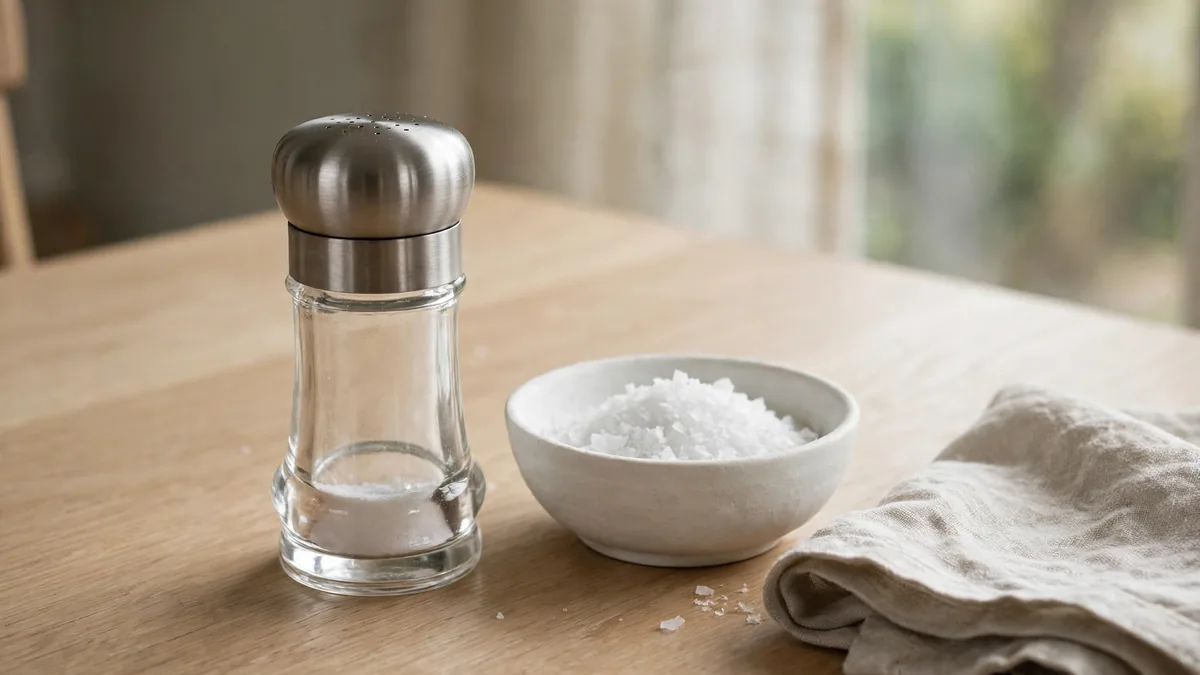
A classic glass shaker with a stainless steel top is still the best choice for most households, and the style has survived every kitchen trend of the last fifty years. You can see the salt level at a glance, the glass does not stain or absorb smells, and a good one is easy to wash and refill. Look for a thick body and a screw-on top with cleanly drilled holes. The one weakness of glass is obvious: it breaks if it falls on a stone floor.
Ceramic Shakers: The Pretty Table Piece
Ceramic shakers earn their place on the table by looking good, and the best ones are just as practical as they are pretty. A glazed ceramic body is non-porous, so it does not absorb moisture the way unglazed pottery can, and it keeps salt drier than glass in a humid kitchen. The trade-off is that you cannot see how much salt is left, and a heavy ceramic shaker can chip a wooden table if set down hard. Choose a steel or ceramic lid, not plastic, which warps and loses its seal.
Stainless Steel Shakers: The Tough, Modern Option
Stainless steel shakers suit busy kitchens and households that want something that will not break. They are light, they do not chip or crack, and a well-made steel shaker has a top that resists corrosion far better than chrome-plated alternatives. The downside is that you cannot see the salt level, and cheaper steel can spot after repeated washing. Buy food-grade steel and avoid anything suspiciously light. Steel is also the best choice for outdoor eating and picnics, where glass is a breakage waiting to happen.

Shakers for Flaky and Coarse Salt
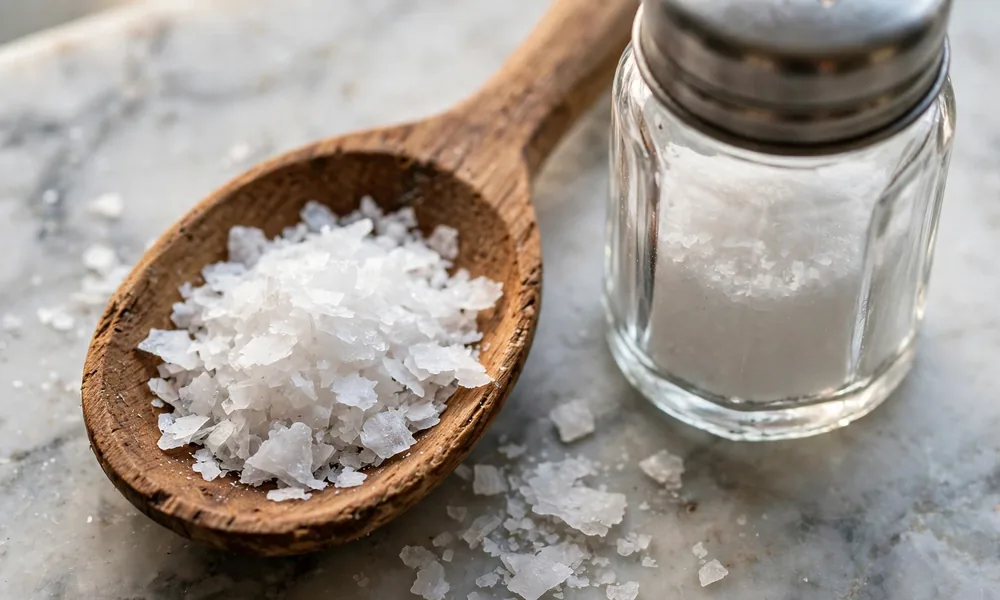
Flaky sea salt and coarse salt need a different shaker from fine table salt, and this is where most people go wrong. Standard shakers have holes too small for flakes, so the salt jams, and the usual response is to shake harder, which ends with a sudden rush of salt when the jam clears. A shaker made for flakes has larger holes, often just two or three, and a wider neck that makes refilling easy.
Matching Sets and Vintage Styles
Matching salt and pepper sets look settled on the table, and buying a pair usually costs less than buying two singles. The best sets are the ones where the two shakers are genuinely different, either in the number of holes or in a clear marking, so guests do not have to guess which is which. Vintage-style shakers can be lovely, but check that the lid screws on firmly, the holes are clean, and the inside is free of rust. A pretty shaker that clogs is just decoration.
Salt Shakers Compared
| Type | Best for | See the level? | Clog risk | Durability |
|---|---|---|---|---|
| Glass with steel top | Fine table salt, everyday use | Yes | Low | Good, but breakable |
| Glazed ceramic | Flaky salt, humid kitchens | No | Low | Good, can chip |
| Stainless steel | Busy kitchens, outdoor eating | No | Low | Excellent |
| Adjustable top | Fine and flaky salt | Depends on body | Very low | Good |
| Wooden shaker | Coarse salt, rustic tables | No | Medium | Fair, swells with damp |
Glass remains the default because it is the only type that lets you see the salt. If you choose ceramic or steel, check the level weekly.
How to Keep a Salt Shaker Working Well
Most salt shaker problems are not design problems. They are maintenance problems, and they are easy to fix. The golden rule is to keep the salt dry from the moment it goes into the shaker. Fill it on a dry day if you can, use a small funnel so salt does not spill around the neck, and wipe the neck clean before you screw the lid back on.
Humidity is the enemy, and kitchens are humid places. If your shaker lives next to the kettle or the hob, move it to the table or a dry shelf instead.
Cleaning matters too. Wash a glass shaker in hot soapy water, rinse well, and let it dry completely before refilling, ideally upside down on a rack overnight. A shaker refilled while still damp will clog within days. Fine table salt flows best, flaky salt needs larger holes, and flavoured or damp salt will jam almost immediately, so keep those in a jar instead.
If you already own a shaker you like but it keeps clogging, try a different salt before you replace it: a finer, drier salt often fixes the problem, and so does a thorough clean and a fresh fill. Our guide to the best salt and pepper mills explains when a mill is the better tool.
Choosing the Right Shaker for Your Table
Start with the salt you actually use. If you cook with fine table salt, a glass shaker with a steel top is the safest buy. If you use flaky sea salt, look for larger holes or an adjustable top. If your kitchen is humid or the shaker will be handled by children, steel is the tougher choice. For a dining table you care about, ceramic or glass looks better than steel.
Think about size next. A shaker that holds about 100 to 150 grams of salt is right for most tables: large enough to last a few weeks, small enough to handle easily. Very large shakers look impressive but go stale, since the salt inside absorbs moisture over months, and very small ones need constant refilling.
Our guide to the best spice jars covers airtight storage that keeps salt and spices dry between refills. And if your shelves are crowded, the best spice racks can give your shakers, jars and bottles a proper home instead of a crowded windowsill.
Before You Buy: A Six-Point Checklist
- Holes: check the size and count against the salt you use, fine holes for fine salt, larger holes for flakes.
- Lid: screw the lid on and off if you can; it should turn smoothly and sit tight with no wobble.
- Material: glass lets you see the level, ceramic and steel hide it, so choose with your habits in mind.
- Size: aim for 100 to 150 grams capacity for everyday tables, larger only if you entertain often.
- Base: a wide, stable base is safer than a tall, narrow one, especially on a busy family table.
- Cleaning: make sure the shaker comes apart easily and the neck is wide enough to wash and refill without a struggle.
Frequently Asked Questions
Why does my salt shaker keep clogging?
Damp salt is almost always the cause. Salt absorbs moisture from the air, clumps, and blocks the holes. Keep the shaker away from steam, fill it with dry salt, make sure the lid seals tightly, and try adding a few grains of dry rice.
How many holes should a salt shaker have?
Three to five small holes suit fine table salt, while flaky or coarse salt needs two or three larger holes. There is no universal rule, so match the holes to the salt you use.
Is glass or ceramic better for a salt shaker?
Glass is more practical, because you can see the salt level and check for moisture. Ceramic looks better on many tables and keeps salt slightly drier in humid rooms, but you have to check the level by opening it.
Can I put sea salt in a normal salt shaker?
Fine sea salt works in a normal shaker, but flaky sea salt will jam standard holes. Use a shaker with larger holes or an adjustable top for flakes, or keep flaky salt in a small cellar for pinching.
How do I clean a salt shaker properly?
Empty it, wash it in hot soapy water, rinse well, and let it dry completely, ideally upside down overnight, before refilling. Never refill a damp shaker, since the fresh salt will clump within days.
Should I buy a matching salt and pepper set?
A matching set looks good and is often good value, but make sure the two shakers are easy to tell apart, either by the number of holes or by a clear marking, so guests do not season with the wrong one.
The Bottom Line
The best salt shakers for everyday tables in 2026 are simple, well-made and honest about what they do: a glass body so you can see the salt, a stainless steel top that screws on tight, holes matched to the salt you use, and a stable base that stays upright. Spend a little more on a proper seal and a solid top, keep the salt dry, and it will serve you well for years.


