
Best Salt and Pepper Mills 2026
There is a small, quiet moment at the end of almost every good meal, just before the first bite, when someone reaches for the pepper mill. The twist is slow, the grind is coarse and uneven, and the smell that rises off the plate is sharper and warmer than anything that comes out of a shaker. It is a tiny ritual, and it is the reason salt and pepper mills have never really gone away, even in kitchens full of gadgets that promised to replace them.
A good mill does more than look handsome on the table. It grinds evenly, so the seasoning lands where it should instead of in dusty clumps or oversized chunks, and it holds enough to last through a week of cooking without constant refilling. The best salt and pepper mills of 2026 are the ones that get those things right, and this guide covers them: classic wooden mills, ceramic mills, steel mills, and the electric models that suit some kitchens better than any manual mill can.
Key Takeaways
- The grinding mechanism matters more than the body, because a cheap mechanism clogs, jams, and grinds unevenly no matter how good the mill looks.
- Ceramic mechanisms suit salt best, since salt corrodes metal parts over time, while hardened steel mechanisms give pepper its sharpest, most even grind.
- A mill that adjusts from fine to coarse is worth paying for, because fine salt suits baking and coarse pepper suits steaks, and one setting cannot do both well.
- Buy a matched pair when you can, but check that the salt and pepper mills are actually different inside, since the two seasonings need different mechanisms.
- Size is a real decision, not an afterthought, because a tall mill holds more and grinds faster, while a short one fits the table and the hand better.
How We Judged
We judged every mill in this guide on the grind first and everything else second. A good mill produces an even grind at every setting, from a fine dust for soups to a coarse crack for a steak, without leaving half the peppercorns untouched or crushing them into powder when coarse was asked for. We looked for mechanisms that turn smoothly under load, knobs and rings that adjust without slipping, and bodies that do not shed flakes of finish into the food.
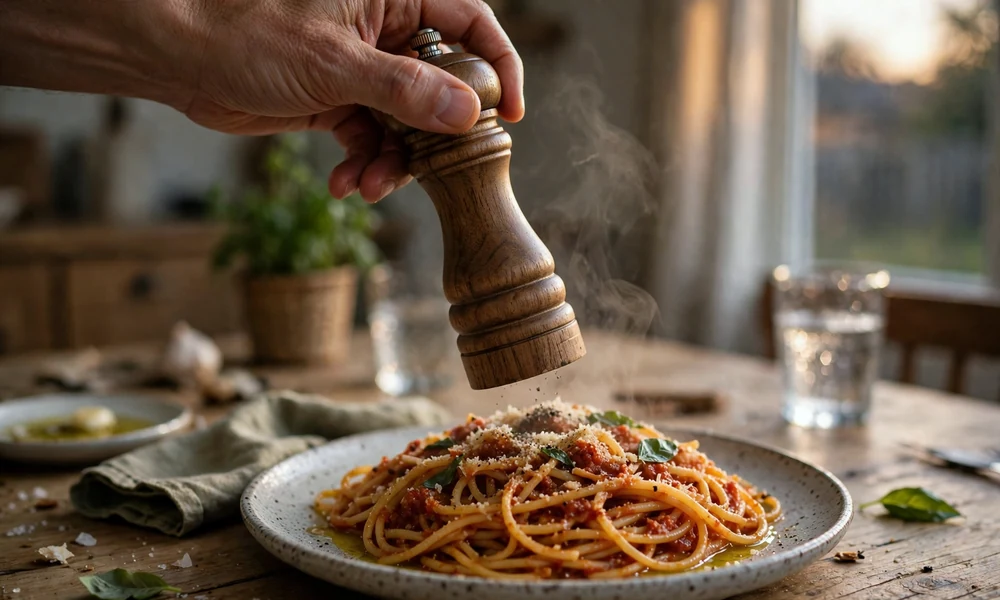
The Classic Wooden Mill
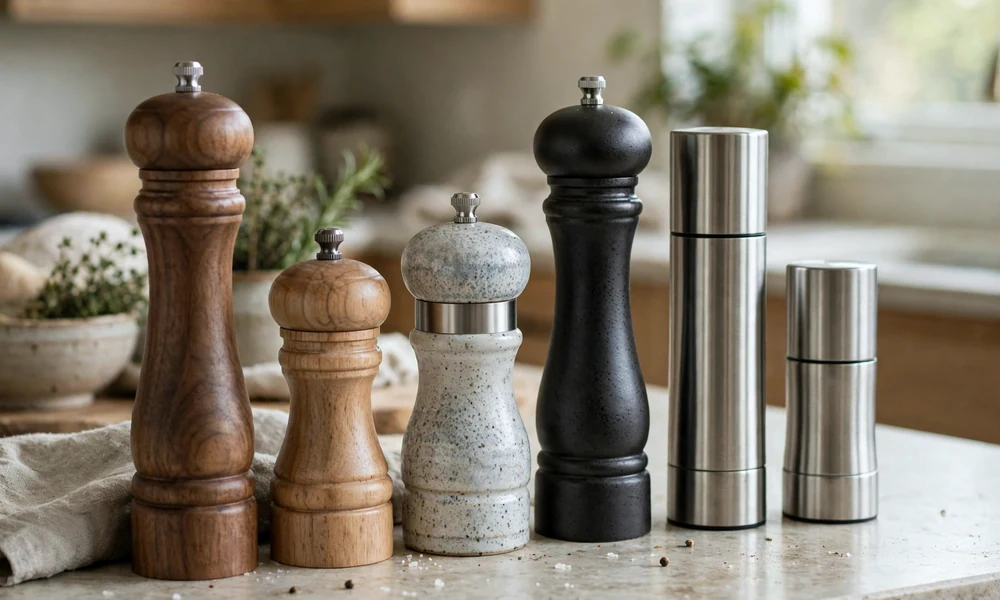
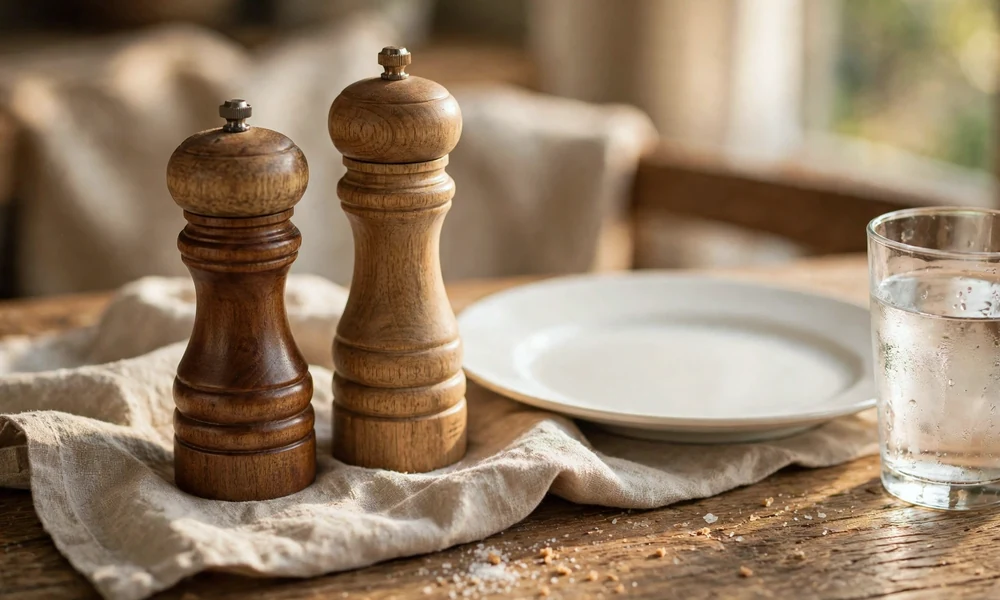
The wooden mill is the shape most people picture when they hear the words salt and pepper mill, and there is a good reason it has lasted. A turned wooden body is warm to hold, heavy enough to stay put on the table, and handsome in a way that suits both a farmhouse kitchen and a formal dining room. The best wooden mills use dense hardwoods such as beech, walnut, or olive wood, which resist dents and moisture far better than soft, pale woods.
What matters inside a wooden mill is the mechanism, and the better makers have used the same designs for decades for a reason. A steel mechanism with a sprung top gives pepper a clean, even crack and lets you set the grind by turning the knob at the top, tighter for fine, looser for coarse. The best wooden pepper mills grind with a smooth, even resistance rather than a gritty catch, and they keep that feel for years because the mechanism is built to be taken apart and cleaned.
Salt is a different problem inside a wooden mill. Salt is corrosive, and a steel mechanism left in contact with it will rust, seize, and eventually flavour the salt with metal. That is why the best wooden salt mills use a ceramic mechanism, which salt cannot corrode, and why a matched pair from a good maker will often have two different mechanisms inside two identical-looking bodies. If you are buying a pair, ask which mechanism is in the salt mill. If the answer is steel, keep looking.
Ceramic Mills for Salt
Ceramic mills have quietly become the best choice for salt, and the reason is simple chemistry. Salt attacks metal, but it cannot touch ceramic, so a ceramic mechanism stays smooth and clean for years where a steel one would have seized long ago. The best ceramic salt mills grind flaky sea salt and coarse kosher salt without clogging, and they do it with a light, even turn that suits hands that find a heavy wooden mill tiring.
The body of a ceramic mill is usually glazed stoneware or porcelain, which means it can be wiped clean in seconds and will not stain from the salt inside. Many ceramic mills are shorter and wider than wooden ones, which makes them stable on the table and easy to grip, and their glazed finish comes in colours that suit a kitchen where the mill is part of the decoration rather than hidden away. A white or speckled ceramic salt mill beside a dark wooden pepper mill is a pairing that works on almost any table.
Stainless Steel Mills
Stainless steel mills suit kitchens that value clean lines and easy cleaning over tradition. A steel body wipes down in a moment, does not stain, and does not absorb smells, which makes it a good choice for a kitchen where the mill lives beside the stove and gets splashed. The best steel mills are heavier than they look, because a solid steel body gives the mill the weight it needs to stay steady while you twist.
Inside, steel mills usually pair a steel body with a ceramic or hardened steel mechanism, and the better ones let you adjust the grind with a ring at the base rather than a knob at the top. A base adjustment is easier to use while cooking, because you can change the setting with one hand while the other holds a pan. It is also less likely to drift during grinding, which is a small annoyance that becomes a real one when the same mill is used for both fine salt and coarse pepper.
Electric Mills
Electric mills divide opinion, and it is worth being honest about why. A battery-powered mill grinds at the touch of a button, which is a genuine help for anyone with arthritis, a weak grip, or a hand full of raw chicken. The best electric mills grind evenly, stop the moment you lift them, and have a small light that shows where the seasoning is landing, which is surprisingly useful over a dark pan at night.
The trade-off is that an electric mill is a machine, and machines need more looking after than a wooden one. Batteries need changing or charging, the mechanism needs cleaning more often because it cannot be taken apart as easily, and a cheap electric mill will grind unevenly and jam on larger peppercorns. The best electric mills use a ceramic mechanism and a motor strong enough to grind coarse pepper without straining, and they are worth buying only if you actually need one-handed grinding rather than simply liking the idea of it.
What Size Should You Buy?
Size is the decision most buyers rush, and it is the one they regret most. A tall mill, around twenty centimetres or more, holds more seasoning, so it needs fewer refills, and its longer body gives more leverage, so each twist grinds more. Tall mills suit the kitchen counter, where they are used for cooking, and they are the best choice if you cook most nights and season generously.
A short mill, around ten to fourteen centimetres, is easier to hold, easier to store, and far more comfortable on a dining table, where it is passed from hand to hand. Short mills need refilling more often, but that is a fair trade for a mill that actually gets used at the table rather than left on the counter. The best compromise for many homes is a tall pair for the kitchen and a short pair for the table, which sounds extravagant until you realise that a good mill lasts for years and the cost per use is tiny.
Filling, Cleaning, and Care
Most mills fail not because they are badly made but because they are badly filled. The commonest mistake is filling a pepper mill with pre-ground pepper, which clogs the mechanism, or filling a salt mill with fine table salt, which cakes in damp air and stops the mill entirely. Peppercorns should be whole and dry, and salt should be coarse or flaky, because the mechanism is designed to crush whole crystals, not to push powder through a narrow gap.
Refilling is simple once you know how the mill opens. Most wooden mills unscrew at the top, most ceramic mills lift off, and most steel mills twist apart at the middle. Fill to about three quarters full rather than to the brim, because a mill that is packed tight grinds poorly and is harder to close. If a mill starts to feel stiff, empty it, tap out the dust, and brush the mechanism clean with a dry brush before refilling. Water is the enemy of every mechanism, so never wash the inside of a mill, and never store one above a steaming pot.
How to Choose the Right Pair
Start with how you cook. If you season at the stove, buy a tall, heavy pair with a ceramic salt mechanism and a steel pepper mechanism, and keep it by the hob. If you season at the table, buy a shorter pair that feels good in the hand and looks good beside the plates. If you cook with both hands full, consider one electric mill for pepper and a manual one for salt, which is a pairing that works better than two electric mills.
Then think about what you season. A cook who grinds mostly black pepper for steaks and pasta needs a mill with a genuinely coarse setting and a mechanism that can handle large peppercorns without jamming. A cook who bakes needs a salt mill with a genuinely fine setting, because coarse salt does not dissolve evenly in dough. A cook who uses flaky sea salt needs a ceramic mechanism with a wide throat, because flakes bridge and clog in narrow mechanisms. The best mill for you is the one that matches the food you actually cook, not the one that looks best in the shop.
Our Verdict
The best salt and pepper mills of 2026 are not the most expensive ones, and they are not the ones with the most features. They are the mills with the best mechanisms, the right material for each seasoning, and a size that suits the way you cook. A classic wooden pair with a steel pepper mechanism and a ceramic salt mechanism is the best choice for most homes, and it is the pair we would buy first. A ceramic salt mill is the best single upgrade for anyone whose salt mill keeps seizing.
Whatever you buy, buy it for the grind rather than the looks, and look after it once it is home. Fill it with whole peppercorns and coarse salt, keep it dry, and clean the mechanism when it stiffens. Do that, and it will still be grinding well in 2036, which is more than can be said for most of the gadgets in the kitchen.
For more on keeping the flavours in your kitchen at their best, see our guide to spice grinders that actually grind fine, and our guide to spice jars that keep flavours fresh for months. And if the mills are for the table rather than the stove, our guide to tablecloths that make everyday dinners feel special will help you finish the setting.


