
A mailbox is one of the few things every home has and almost nobody thinks about until it fails. The door sticks in the rain, the flag snaps off in a frost, or a parcel that should have fitted through the slot ends up back at the depot with a card through the letterbox. The best mailboxes of 2026 fix all of that quietly: they are sized for the way we actually receive post now, built from materials that shrug off winters, and shaped to suit the house they sit beside. This guide walks through the types that are worth buying, the sizes that matter, the security features that are worth paying for, and the installation rules that keep the post arriving without a hitch.
What makes a good mailbox
A good mailbox does four jobs at once. It keeps letters dry, it holds enough for a day or two of post plus the occasional small parcel, it opens and closes smoothly with one hand, and it looks like it belongs on the house. The cheapest boxes usually fail on the first of those: a lid that does not overlap the opening properly will let wind-driven rain in, and once paper gets damp it stays damp. Look for a door with a proper overlap or a drip edge, a hinge that does not wobble, and a seal or at least a tight fit around the opening. A box that rattles in the wind will not last long, because every rattle is a hinge working itself loose.
Curbside mailboxes: the classic at the kerb
The curbside box on a post is still the default for detached houses, and the design has barely changed in a century because it works. The carrier pulls up, drops the post in, raises the flag if there is outgoing mail, and drives on. The best curbside models are made from galvanised or powder-coated steel, or from heavy-duty plastic that does not go brittle in the sun. Steel dents where plastic cracks, so in a street where the box is likely to be clipped by a wing mirror, plastic can be the more forgiving choice. Whichever you pick, the flag should be bright, stiff, and easy to raise with a gloved hand.
Size matters more here than anywhere else. A standard curbside box takes letters and small packets; a large or extra-large model takes a shoebox-sized parcel and a rolled magazine without folding. If you work from home and receive deliveries through the week, the larger size pays for itself within a month of avoided depot trips. A curbside box also sets the tone for the whole front garden, so think of it as part of the kerb appeal rather than an afterthought: a tidy post, a straight box, and a clear house number make the entrance feel cared for. The same care that goes into choosing garden benches for the front of the house applies here, because the mailbox is the first thing a visitor sees up close.
Wall-mounted mailboxes: for doors and porches
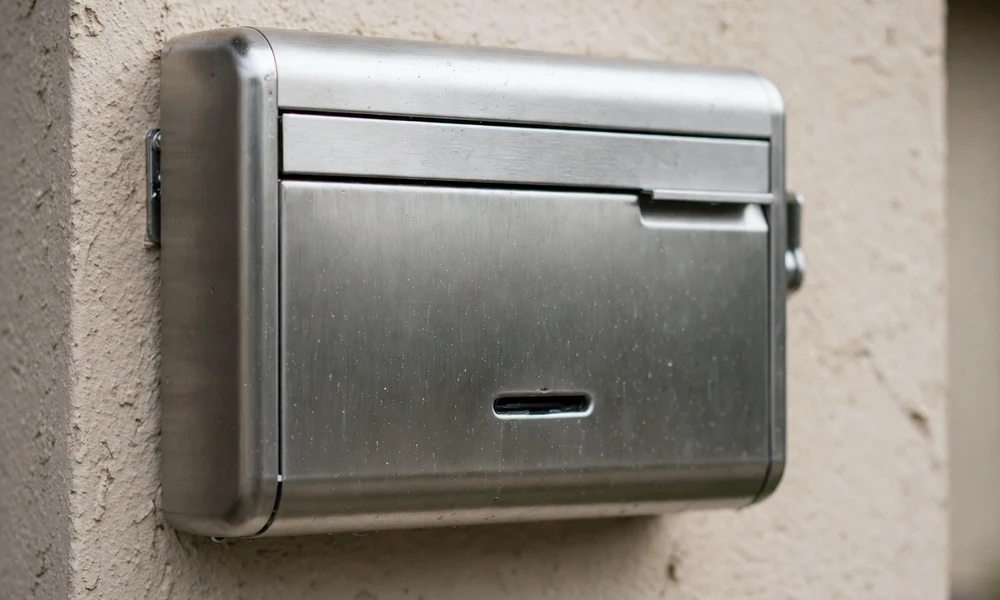
Where the post is delivered to the door rather than the kerb, a wall-mounted box is the right answer. These sit beside the front door, under the porch roof if there is one, and they keep the walk to the kerb out of the morning routine. The best wall-mounted boxes are deeper than they look: a shallow decorative box holds a day of letters and nothing else, while a deep one swallows a small parcel and a thick magazine without a struggle. Look for a top-loading slot with a flap that falls shut on its own, and a front door that opens wide enough to pull a bundle out without tearing the top envelope.
Mounting height matters. The slot should sit roughly at chest height, so the carrier is not stooping and you are not reaching up. Fix the box with proper masonry screws into brick, or into the studs behind a timber wall, and check with a level before you tighten anything, because a box that leans will never look right and its door will never hang true. A wall-mounted box also shares the porch with the lighting, and getting that pairing right changes how the entrance feels after dark. A well-placed lamp above the door makes the box easy to find and use on winter evenings, which is why it is worth looking at outdoor lights that suit the front of the house at the same time as you choose the box.
Locking mailboxes: keeping the post safe
Mail theft is a quiet problem, and a locking mailbox is the simplest answer to it. The idea is simple: the carrier drops letters through a slot that is too narrow for a hand to reach through, and only the key holder can open the retrieval door. The best locking boxes do this without making the carrier’s job awkward. The slot should be wide enough for a thick envelope and a small packet, and the baffle inside should stop anyone fishing letters out with a bent wire. A box that is hard to post into will earn complaints and, eventually, a note asking you to collect your mail elsewhere.

Parcel and large-capacity boxes
The rise of online shopping has quietly changed what a mailbox needs to do. A box built for letters alone is now undersized for many households, and parcel boxes have grown to fill the gap. A good parcel mailbox has a large delivery door with a one-way flap or a drop slot, and a separate locked compartment where parcels sit until you get home. Some have a parcel shelf that drops the delivery into a lower chamber, so the next delivery cannot be reached through the slot. The best of them hold two or three days of parcels without overflowing.
Before you buy one, check the dimensions of what you actually receive. Measure the last five parcels that arrived and buy to the largest of them, not the average. Also check the rules where you live: some streets and some housing associations have rules about the size and style of curbside boxes, and a parcel box that towers over its neighbours can draw a complaint. A parcel box is also heavier than a letter box, so the post needs to be sturdier, set deeper, and set in concrete rather than just pushed into the soil.
Materials that survive the weather
Mailboxes live outside all year, so material choice decides how long they last. Powder-coated steel is the workhorse: strong, affordable, and good-looking when the coating is intact. The weakness is the coating itself, so inspect the edges and the hinge area, where the coating is thinnest, and touch up any chip with matching paint before rust gets a hold. Stainless steel costs more and needs almost no maintenance, though it shows fingerprints and water spots, so it suits a sheltered porch better than an exposed kerb.
Sizing, placement and the rules
Getting the size right starts with a tape measure, not a catalogue. Measure the interior, not the outside, because thick walls and insulation eat into the space. A box that is 30 centimetres deep on the outside may hold barely 25 inside. Check the opening too: a slot that is 25 centimetres wide will take most magazines flat, while a narrower one will fold them. If you receive a lot of A4 envelopes, the interior should be at least 30 centimetres wide so they lie flat rather than curling.
Placement has rules as well as preferences. A curbside box should sit close enough to the road for the carrier to reach it from the vehicle, with the door facing the road and the flag visible. The post should be set so the bottom of the box sits around a metre off the ground, which is the height carriers are used to. Keep the approach clear of overhanging branches, a wheelie bin, or a parked car, because a carrier who cannot reach the box will not leave the post. If you are replacing a box, put the new one in the same spot unless there is a good reason to move it, because carriers build their round around where boxes are, not where they ought to be.

Installing a new mailbox
Installing a curbside box is a Saturday job, and it is worth doing properly rather than quickly. Dig the hole at least 45 centimetres deep, deeper in cold areas where the frost line is lower, and set the post in concrete, not just backfilled soil. Check the post with a level on two faces before the concrete sets, and leave it a full day before you hang the box. A post that leans by a degree on day one will lean by five degrees by next winter, and a leaning box is both ugly and hard to open.
Wall-mounted boxes are simpler, but the fixings matter more. Drill into brick, not mortar, use plugs rated for the weight, and use at least four screws so the box cannot twist. If the wall is timber, find the studs. Test the door a dozen times before you call the job done: it should swing freely, close with a light push, and stay shut in the wind. While you are working on the entrance, it is a good moment to look at the rest of the outdoor space as a whole. The garden and the porch are one first impression, and a tidy entrance is the sum of small choices, from the box to the planting and even the outdoor showers that suit a busy family garden if the house has one.
Keeping a mailbox in good shape
A mailbox needs almost no maintenance, but the little it needs matters. Once a year, oil the hinges and the lock, check the screws and the post for movement, and wash the box inside and out. A damp cloth and mild soap are enough; a pressure washer will strip powder coating and drive water into the seams. If you spot a chip in the paint, sand it lightly and touch it up before the next rain. Check the flag at the same time, because a flag that has gone stiff will not stay up, and a flag that will not stay up is a flag that does not work.
Our verdict
The best mailbox is the one that fits your post, your house, and your street. For most homes, that means a large curbside box in powder-coated steel or heavy-duty plastic, with a bright flag and a post set in concrete. For flats and houses with delivery to the door, a deep wall-mounted box in stainless steel or aluminium is the better buy, and a locking model is worth the extra money wherever mail theft is a worry. Buy for the largest parcel you receive, not the average letter, and spend the extra on the mounting: a good box on a bad post is a bad box within a year.
Measure twice, buy once, and put the box where the carrier can reach it without thinking. Do that, and the most overlooked object on the street will do its job for a decade or more without a second thought.


