
What Is the Best Garden Bench for a Small Yard in 2026?
The best garden bench for a small yard is the one that fits the space you actually have, not the garden you wish you had. A bench that is a few centimetres too long turns a quiet corner into a squeeze, a bench with no back leaves you perched rather than resting, and a bench in the wrong material spends its first winter rotting or rusting. Small yards punish every wrong choice, because there is nowhere to hide a mistake. This guide works through size, material, shape and placement, so the bench you buy in 2026 earns its corner and gets sat on every day.
Key Takeaways
- Measure first: a two-seater of 110 to 130 centimetres suits most small yards, and you need at least 60 centimetres of clear space in front of it.
- Teak and powder-coated metal last longest outdoors; untreated softwood and bare steel fail fastest.
- A bench with a back and armrests is far more comfortable for long sits than a backless slab.
- Place the bench where you already pause in the garden, facing the best view, with morning or evening sun.
- Foldable and storage benches save space in the smallest yards, but check the seat height before you buy.
Start by Measuring the Yard, Not the Bench
Small yards are rarely generous, and a bench a few centimetres too wide can turn a comfortable corner into a daily obstacle. Before you look at a single bench, measure the spot where it will live. Mark the footprint on the ground with masking tape or string, walk around it, and pull out an imaginary chair. Leave at least 60 centimetres of clear space in front of the seat so you can sit down and stand up without shuffling, and at least a metre of walking space on the path people use to cross the garden.
Length is the first decision. A bench for one person needs about 60 centimetres of seat; a bench for two needs 110 to 130 centimetres, which is the sweet spot for most small yards. Seat height matters just as much: 45 to 48 centimetres suits most adults, low enough to sit on comfortably and high enough to stand up from without effort. Depth is usually 40 to 50 centimetres; anything shallower feels like a ledge, and anything deeper eats into the path.
Think about the ground under the bench too. A bench on a patio or stone slabs stays level and dry, while a bench on grass sinks after rain and needs its feet checked every spring. If your only spot is on grass, a bench with wide feet or a low plinth spreads the weight better than one with four thin legs.
The Materials That Last Outdoors
Every outdoor material ages, but the good ones age gracefully and the bad ones fail suddenly. Teak is the classic garden bench wood. Its natural oils repel water and insects, and a well-made teak bench can last twenty years with almost no care beyond an occasional wash. Eucalyptus and acacia look similar at first but need regular oiling to avoid cracking, and they rarely match teak for longevity.
Powder-coated metal is the low-maintenance champion. It never rots, it is light enough to move around the garden, and modern finishes hold their colour for years. Cast iron is the traditional choice for ornate garden benches: heavy, stable and beautiful, but it needs a yearly check for rust at the joints. Bare steel is the material to avoid; it rusts from the inside, stains the patio, and fails without warning.
Recycled plastic and resin benches deserve a mention for small yards, because they are light, weatherproof and need no maintenance at all. The best ones look convincingly like wood from a few steps away, though they can feel less substantial to sit on. Whatever material you choose, check the weight limit per seat and the warranty before you buy, and ask whether replacement slats or cushions are sold separately.
The Bench Types That Suit a Small Yard
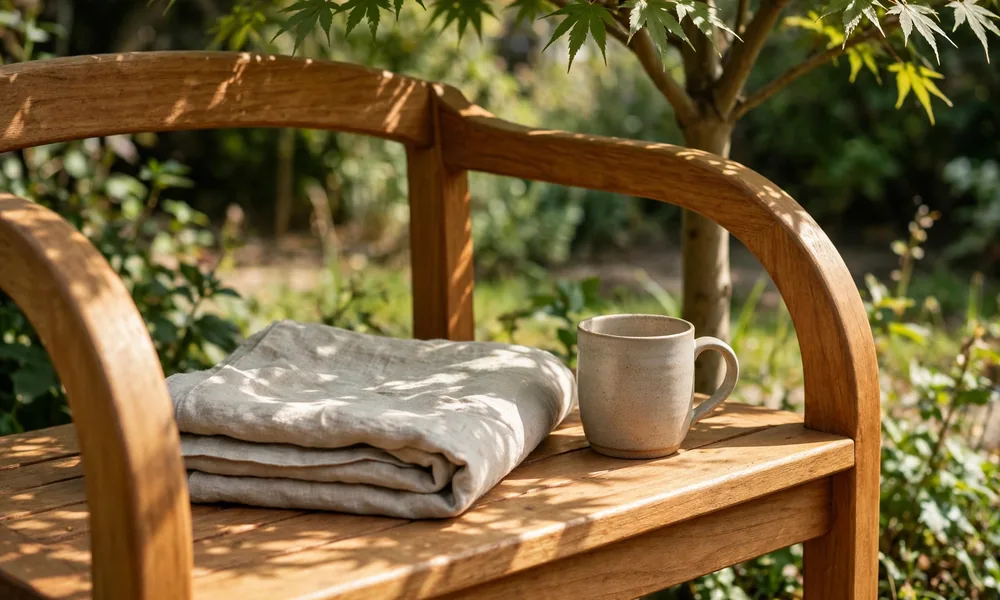
Once the material is settled, the shape decides how the bench actually gets used. The classic two-seater with a back and armrests is the most comfortable choice, and the one most people should buy first. The back supports long sits with a book or a cup of tea, and the armrests help you stand up again.
A backless bench, sometimes called a garden slab or perch bench, suits a different job. It works well against a wall, along a path, or as a seat that doubles as a potting table when you are working. It is easier to move and easier to store, but it is not a bench for long, lazy afternoons, since there is nothing to lean on. A storage bench, with a lift-up seat hiding tools, cushions or toys, is the cleverest choice for the smallest yards, because it removes a whole box of clutter from the garden.
A folding bench is worth considering if your yard is tiny or if you need the space back in winter. Modern folding benches are sturdier than the rickety versions of years ago, but always test the locking mechanism and sit on it properly before committing.
Where to Put a Bench in a Small Yard
Placement decides whether a bench gets used every day or sits empty. The best spot is where you already pause in the garden: the sunny corner by the back door, the end of the path, or the place with the best view of the flower beds. Face the bench toward something worth looking at, not toward the fence or the bins.
Think about the sun through the day. A bench for morning coffee wants the east side of the yard, where the first sun lands; a bench for evening drinks wants the west. If your yard is walled and the sun only visits one corner, put the bench there and accept that it is a fair-weather seat. Shade matters too: a bench under a small tree is lovely in high summer, but it will collect leaves and bird mess, so a washable cushion and a quick weekly wipe are part of the deal. Our guide to why good garden gloves are worth more than you think is a reminder that the practical kit matters as much as the furniture.
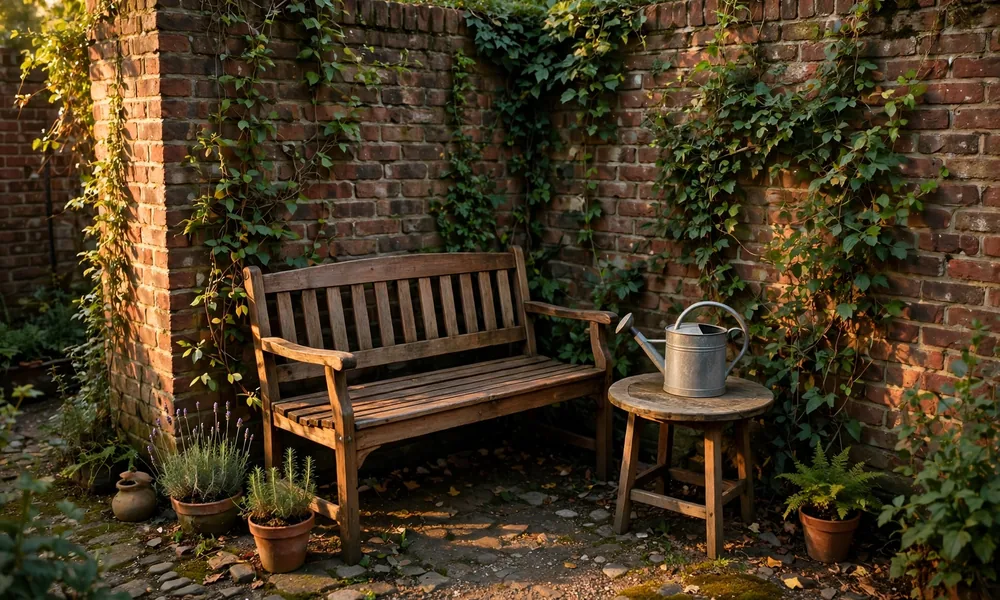
Pairing the bench with the rest of the garden is what makes a small yard feel finished. A small side table or a plant pot beside the bench turns it from a seat into a destination, somewhere you can put a book or a cup down. A bench that belongs to a wider set works too: our round-up of patio furniture that turns your garden into a second living room shows how a bench can anchor a small seating area rather than standing alone. And if your home has a bench by the front door as well, the two jobs are different: an indoor bench is about shoes and storage, which is why our guide to which entryway bench is worth the hallway space treats it as a separate decision.

Comparison Table: Garden Bench Materials for a Small Yard
| Material | Best for | Maintenance | Watch out for |
|---|---|---|---|
| Teak | Long sits, classic look, decades of use | Occasional wash; oil only if you want the colour kept | Expensive; cheap teak substitutes crack without oiling |
| Acacia or eucalyptus | Warm wooden look on a smaller budget | Regular oiling to prevent cracking | Needs honest maintenance or it weathers fast |
| Powder-coated metal | Low maintenance, modern or ornate styles | Wipe clean; check joints yearly for rust | Light designs blow over; seats can get hot in sun |
| Cast iron | Heavy, stable, traditional gardens | Yearly rust check and touch-up paint | Very heavy to move; rust stains the patio |
| Recycled plastic | Wet yards, zero maintenance, families | Almost none; hose it down | Cheap hollow plastic flexes and fades quickly |
| Softwood, untreated | Temporary seating, tight budgets | Constant sealing and painting | Rots within a few seasons; false economy |
Comfort, Cushions and Care
Comfort decides whether a bench gets used every day or sits empty, and it is mostly about the seat. A seat depth of 40 to 50 centimetres lets you sit with your feet flat and your back supported, not perch on the edge. Slightly curved slats are kinder than flat boards, and a small gap between slats lets rain drain through instead of pooling. Cushions make a real difference on a hard bench, but in a small yard they need a home: choose quick-drying foam with a solution-dyed fabric cover that resists fading, and store the cushions in the storage bench or a deck box when rain is coming.
Care is simple if you do it little and often. Wipe a metal bench after rain and touch up any paint chips before rust takes hold. Cover the bench or move it under shelter in the coldest months, and even the toughest bench will last years longer.
Checklist: Buying the Best Garden Bench for a Small Yard
- Measure the spot first, and mark the footprint with tape before you order anything.
- Choose 110 to 130 centimetres long for two people, with a seat height of 45 to 48 centimetres.
- Pick a material you will honestly maintain: teak or powder-coated metal for low effort.
- Choose a back and armrests for long sits, or a backless bench if it doubles as a work seat.
- Place it facing the best view, where the sun lands at the time you will actually sit there.
- Budget for a cover and a cushion at the same time as the bench, not afterwards.
Frequently Asked Questions
What size garden bench is best for a small yard?
A two-seater of 110 to 130 centimetres long, 40 to 50 centimetres deep, with a seat height of 45 to 48 centimetres suits most small yards. Leave at least 60 centimetres of clear space in front of it and a metre of walking space on the path beside it.
What is the best material for a garden bench?
Teak lasts longest and needs the least care, while powder-coated metal is the best low-maintenance alternative. Acacia and eucalyptus look similar to teak but need regular oiling. Avoid untreated softwood and bare steel, which rot and rust within a few seasons.
Should a small garden bench have a back?
Yes, if you want to sit on it for more than a few minutes. A back and armrests make a bench far more comfortable for reading or drinking tea. A backless bench only suits short sits, or a spot where it doubles as a work surface.
Can I leave a garden bench out all winter?
You can, but it will last much longer if you cover it or move it under shelter in the coldest months. Even teak and powder-coated metal benefit from a cover, and cushions should always come indoors for winter.
Where should I put a bench in a small yard?
Where you already pause, facing the best view, with sun at the time you will sit there. A bench angled across a corner feels more generous than one pushed flat against a wall, and it gives you a view down the length of the garden.
Are folding garden benches sturdy enough?
Modern folding benches are sturdier than older designs, but always test the locking mechanism and sit on one properly before buying. They are a good choice for the smallest yards, where you need the space back in winter or want to chase the sun.
The Bottom Line
The best garden bench for a small yard in 2026 is a two-seater of 110 to 130 centimetres in teak or powder-coated metal, with a back and armrests, placed where the sun lands and the view is best. Do that, and a small yard gains a proper seat that gets used every day, instead of a bench that dominates the space and sits empty.


