
Best Foot Massagers 2026
Tired feet change the whole evening. After a long day standing, walking, or sitting at a desk, sore arches and stiff ankles make it hard to relax, and a short session with a good foot massager can take the edge off in a way that simply putting your feet up never quite manages.
The best foot massagers of 2026 are the ones that fit your feet properly, run quietly enough to use while you watch television, and feel good after ten minutes rather than after two. This guide covers the main types, what to look for before you buy, and the mistakes that turn a promising purchase into a cupboard ornament.
Key Takeaways
- Fit comes first, because a massager built for small feet will squeeze large feet, and one built for large feet will barely reach small ones.
- Shiatsu rollers suit deep, kneading pressure, while air compression suits a gentler squeeze and rollers suit a simple rolling motion under the arch.
- Heat helps stiff feet relax, but it should warm up slowly and switch off on its own, never feel hot against bare skin.
- Noise matters more than most buyers expect, since a loud motor ruins the point of a relaxing session in a quiet room.
- Check the cleaning and the cord before you buy, because a washable lining and a long lead make a massager far easier to live with.
Foot Massagers 2026 at a Glance
| Best for | Massager type | Pressure style | Standout strength |
|---|---|---|---|
| Best overall | Shiatsu roller massager | Deep kneading | Works the arch and heel properly |
| Best gentle option | Air compression massager | Soft squeezing | Even pressure without hard nodes |
| Best for tired arches | Roller massager | Rolling underfoot | Simple, quiet, and easy to control |
| Best for cold feet | Heated shiatsu massager | Kneading plus warmth | Warms stiff feet while it works |
| Best for small spaces | Compact open massager | Light rolling | Slides under a desk or beside a chair |
| Best for evenings | Quiet shiatsu massager | Medium kneading | Low hum that fades into the background |
What a Foot Massager Is Really For
A foot massager does a simple job: it works the muscles and soft tissue of the feet so they feel looser and less tired. Standing all day tightens the arches and the calves, while sitting all day leaves the feet stiff from doing nothing, and both problems respond to steady, even pressure applied for ten to twenty minutes.
It is worth knowing what a foot massager is not. It is not a medical device, and it will not fix an injury, a persistent pain, or a circulation problem. Anyone with ongoing foot pain, numbness, diabetes, or a foot injury should talk to a doctor before using one, and everyone else should stop if a session hurts rather than pushing through it.
The Main Types, and Who Each One Suits
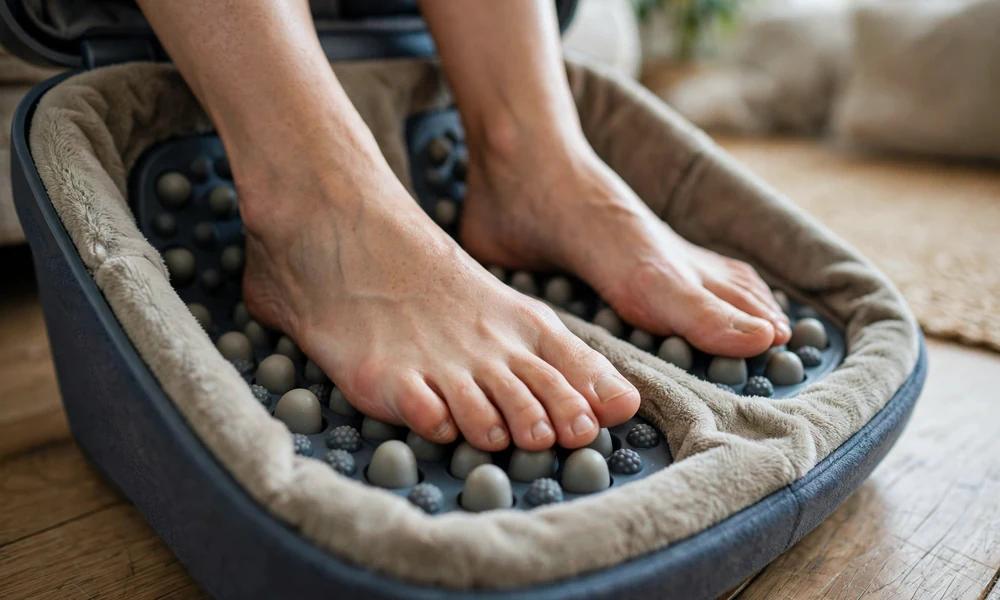
Shiatsu massagers are the most popular type, and for good reason. Small rotating heads knead the sole in a slow, circular motion, much like thumbs working the arch. They suit people who like firm pressure and who feel the benefit most in the middle of the foot and the heel. The downside is intensity: the cheapest shiatsu models can feel harsh, so look for one with at least two or three intensity levels rather than a single on-or-off setting.
Air compression massagers work differently. Instead of hard nodes, airbags inflate and squeeze the foot in waves, from the heel toward the toes or in a steady all-round hold. The pressure feels gentler and more even, which suits sensitive feet, older users, and anyone who found a shiatsu model too rough. They are less good at digging into one tight spot, so if a single knot under the arch is your main problem, compression alone may feel too polite.
Roller massagers are the simplest of the three. A ridged or spiked roller turns slowly under the foot, and you control the pressure by pressing down harder or easing off. There is no motorised kneading and no airbag, which keeps them quiet, light, and cheap. They suit people who want a straightforward tool for the arch and who are happy to do a little of the work themselves, and they are a good first massager for anyone unsure about spending more.
Heated massagers add a warming element to one of the types above, usually shiatsu. The warmth helps stiff feet loosen up faster, especially in winter or after a cold walk home, and most people find a gentle heat more comfortable than a cold plastic surface. Check that the heat has its own switch and at least two settings, because a massager that forces heat on every time will be unwelcome on a warm evening.
Getting the Fit Right
Fit is where most foot massager purchases go wrong. The chambers that hold the feet come in fixed sizes, and a size that suits a small foot will pinch a large one, while a size built for large feet will leave a small foot rattling around without reaching the rollers. Check the stated shoe-size range before you order, and measure it against the largest foot in the household that will use it.
Pressure, Speed, and Controls
Good pressure is adjustable pressure. At least two intensity levels are the minimum worth having, and three is better, because feet feel different at the end of a hard day than they do after a quiet one. A single-speed massager that feels perfect on day one can feel too weak or too strong by the end of the week, and there is nothing you can do about it.
Controls should be simple enough to use without looking. A small remote, or large buttons on top of the unit that you can reach with a toe, beats a fiddly panel hidden under the foot. An automatic timer is the most useful control of all: fifteen or twenty minutes, then the massager switches itself off, so a relaxing session does not turn into an over-long one because you fell asleep in the chair.
Heat and Everyday Comfort
Heat divides buyers more than any other feature. Those who like it love it, and those who do not find it pointless. If you are unsure, choose a model where heat is optional and separate from the massage, so you can try it on cold evenings and leave it off the rest of the time. The heat should feel like a warm towel, never like a hot surface, and it should take a few minutes to build rather than arriving all at once.
Where a Foot Massager Fits in the House
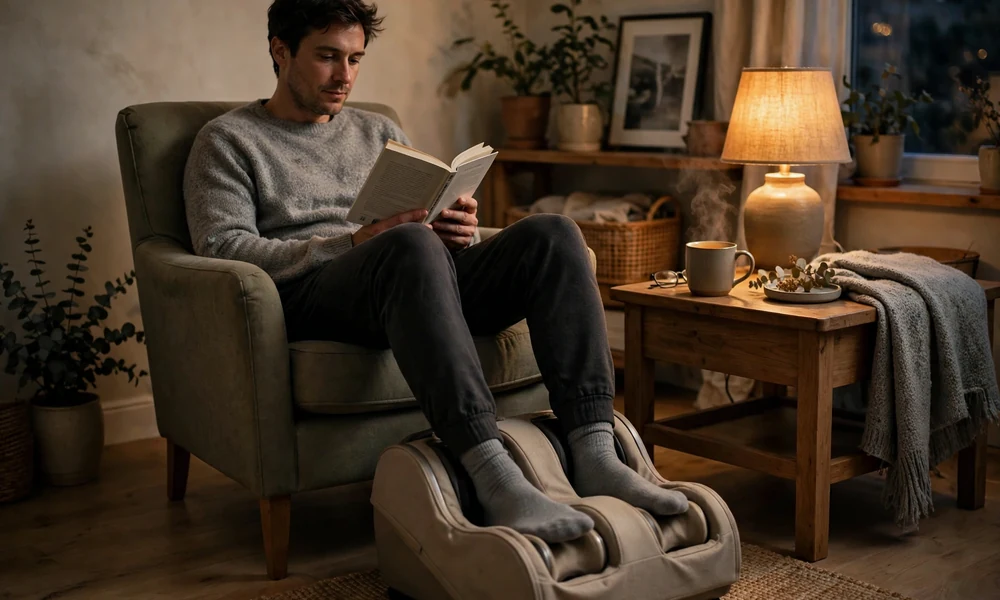
The best place for a foot massager is beside the chair you actually sit in during the evening, not in a spare room or a cupboard. If it lives within arm’s reach of the sofa, it will be used most evenings; if it lives upstairs or behind other things, it will be used twice and forgotten. Measure the space before you buy, and leave room for your knees and for the cord.

A massager also earns its keep at a desk. Short sessions during a break can loosen feet that have sat still for hours, and a compact, quiet model fits under a desk without taking over the room. Our guide to the best ergonomic footrests for long desk days covers the daytime side of foot comfort, and a footrest and a massager work well together: the rest supports the feet all day, and the massager works them in the evening.
Foot Massagers and the Rest of the Recovery Shelf
For the rest of the body, a foot massager is deliberately narrow: it does the feet and nothing else. Anyone who wants the same treatment for shoulders, back, or legs needs a bigger device, and our guide to the best massage chairs of 2026 is the place to start for whole-body sessions. A chair takes up far more room and costs far more, which is exactly why a foot massager suits so many homes: it does one job, in one corner, for a fraction of the price.
For a single tight muscle rather than the whole foot, a handheld tool can be the better choice. Our guide to the best massage guns of 2026 covers devices that target calves, thighs, and shoulders with far more precision than a foot chamber can manage. Many households end up with both: the gun for a knot in the calf, and the foot massager for the end of the day.
Mistakes to Avoid Before You Buy
The most common mistake is buying for the wrong feet. A massager bought as a gift, or bought for the household in general, often fits nobody well. If more than one person will use it, check the size range against the largest and the smallest feet in the house, and favour a model with a wider range and adjustable intensity over one built for a narrow size.
The second mistake is chasing features over fundamentals. Twenty massage modes, a phone app, and coloured lights do not matter if the rollers miss your arch or the motor is too loud to use. Spend the money on fit, adjustable pressure, a washable lining, and a quiet motor first, and treat the extras as a bonus rather than the reason to buy.
Using a Foot Massager Well
A good session is short, regular, and comfortable. Ten to twenty minutes is enough for most people, and daily use beats occasional long sessions. Sit back, let the feet rest in the chambers without forcing them down, and let the pressure do the work rather than pressing harder to chase a stronger feeling.
Frequently Asked Questions
How long should a foot massager session last?
Ten to twenty minutes is the sweet spot for most people. Shorter sessions still help tired feet, and longer ones rarely add much. Use the automatic timer if your model has one, and stop sooner if the pressure starts to feel uncomfortable rather than relaxing.
Can two people with different foot sizes share one massager?
Often, yes, as long as the size range covers both feet and the intensity is adjustable. The smaller-footed person may need a lower setting and thinner socks to feel the rollers properly, while the larger-footed person needs to check the chamber is not pinching the toes.
How do I clean a foot massager?
Remove the lining if it comes out and wash it according to the instructions, and wipe the rest of the unit with a damp cloth. Let everything dry fully before the next use, and never pour water into the chambers of an electric massager that is not designed to hold water.
Bottom Line
The best foot massagers of 2026 are the ones that fit your feet, run quietly, and get used most evenings. Choose shiatsu for deep kneading, air compression for a gentler squeeze, or a simple roller for quiet, straightforward relief, and check the size range, the washable lining, and the cord before you pay. Buy the massager that suits your chair and your feet, use it for ten minutes a day, and tired feet will stop being the thing that ends the evening early.


