
Frozen spinach is the quiet workhorse of the freezer aisle: cheap, keeps for months, and turns into a proper vegetable in about four minutes. The difference between spinach that tastes fresh and green and spinach that tastes grey and watery is rarely the brand. It is the format in the bag, how much water you squeeze out, and what you cook it in.
The same bag can become creamed spinach, a pasta sauce, a soup, a curry, a smoothie, or a pie filling, and each job wants a different format. Chopped spinach melts into sauces; leaf spinach holds its shape in a sauté. This guide explains how to choose between them and how to cook each one properly.
Key Takeaways
- Chopped spinach suits sauces, soups, and fillings, while leaf spinach suits sautés and dishes where the spinach should stay visible.
- Always thaw and squeeze frozen spinach dry before cooking, because the water in the bag is the main reason spinach dishes turn grey and soggy.
- Buy bags with one ingredient, just spinach, and skip the ones with added salt, butter, cheese sauce, or flavourings you did not ask for.
- Frozen spinach keeps most of the iron, folate, and vitamin K of fresh spinach, and it is often the better buy.
- An unopened bag keeps for eight to twelve months in the freezer; once thawed, use the spinach within two days and never refreeze it.
What Frozen Spinach Actually Is
Frozen spinach is fresh spinach washed, blanched for a minute or two, and frozen quickly at its peak. Blanching stops the enzymes that would turn the leaves brown and mushy, and fast freezing keeps ice crystals small so the texture survives. The process is simple, and the ingredient list should be too: spinach, and nothing else.
Most frozen spinach comes from mature leaves, which survive blanching and freezing better than delicate baby spinach and carry more flavour. The leaves are frozen either chopped and pressed into blocks, or left whole and frozen loose in a bag. Both are the same vegetable, but they cook differently.
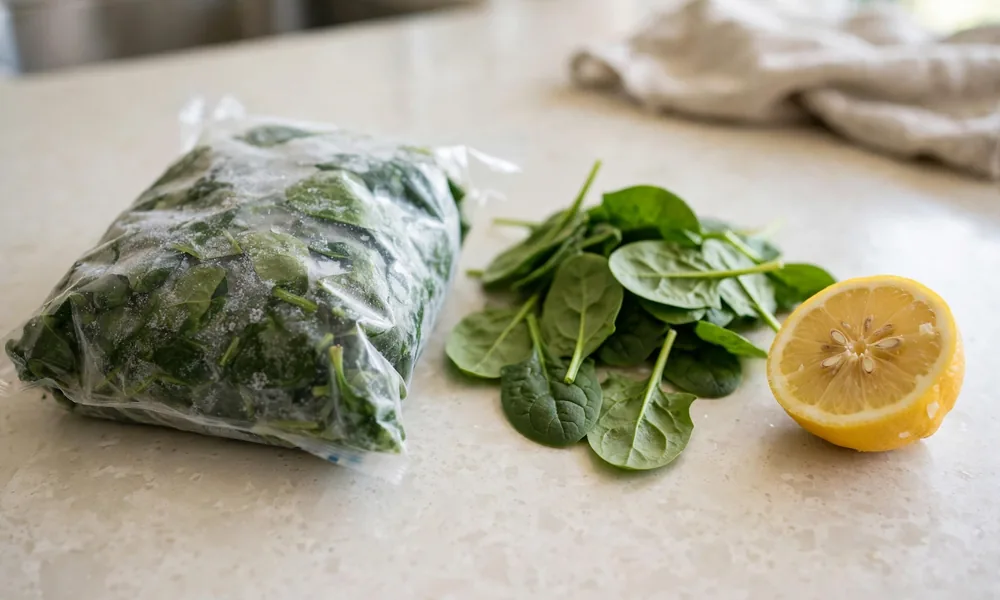
Chopped vs Leaf: The Formats Compared
Frozen spinach comes in three main forms, and choosing the wrong one is the most common reason a dish disappoints.
| Format | Best for | Texture | Effort |
|---|---|---|---|
| Chopped blocks | Sauces, soups, curries, fillings | Soft, melts into dishes | Thaw and squeeze |
| Loose leaf | Sautés, pasta, side dishes | Holds its shape | Cook from frozen |
| Creamed spinach | Steakhouse-style side dish | Rich, smooth, saucy | Heat and serve |
Chopped Blocks: The Sauce Builder
Chopped spinach is pressed into dense blocks, usually about 300 grams each, and it is the most common format. The small pieces melt into a dish in minutes, ideal for sauces, soups, curries, and fillings. The blocks need thawing and a firm squeeze first, because a single block holds a surprising amount of water.
Loose Leaf: The Side Dish
Loose leaf spinach is frozen as whole leaves in a bag, and it is the better choice when the spinach itself is the dish. The leaves hold their shape and cook straight from frozen in a hot pan with garlic and olive oil in about four minutes. It costs a little more than blocks, but it is the only format that works well as a simple side dish.
Creamed Spinach: The Ready-Made Side
Creamed spinach is chopped spinach already cooked in a cream and cheese sauce, sold frozen and ready to heat. It is a steakhouse classic and a good shortcut for a special dinner. The trade-off is that it is far richer and saltier than plain spinach, so buy it for the side dish it is, not as a general-purpose bag.
Reading the Bag: Ingredients, Ice and Additives
Start with the ingredients: the best bags list one thing, spinach. A bag with added salt is still usable, though you will need to season the dish less. A bag with butter, cheese, cream, or flavourings is a prepared dish, not plain spinach.
The spinach should be loose and free-flowing, or a solid block with a clean shape, and the bag should feel dry, not sticky. Large clumps of ice usually mean the spinach has thawed and refrozen, and it will taste flat and watery. A bag with a torn seal should stay on the shelf.
The Nutrition Question
Frozen spinach is one of the few frozen foods nearly as nutritious as the fresh version. Freezing happens within hours of harvest, locking in the iron, folate, vitamin K, and vitamin A that fresh spinach slowly loses on the shelf. A 100-gram serving carries roughly the same nutrients as the same weight of fresh spinach, with a little less vitamin C.
There are two caveats. The first is oxalates, natural compounds that reduce how much of the calcium and iron your body absorbs. Cooking reduces oxalates, and eating spinach with vitamin C, such as lemon juice or tomatoes, helps absorption. The second is sodium: plain frozen spinach contains almost no salt, but creamed versions can contain a lot. Plain spinach is the healthy choice; the prepared versions are a treat.

How to Cook Frozen Spinach Properly
The golden rule is to remove the water before the spinach meets the dish. A thawed block can hold almost its own weight in water, and that water turns sauces thin and grey. Thaw the block in the fridge overnight, in cold water for half an hour, or in the microwave for two minutes, then squeeze it hard in your hands or in a clean tea towel until no more water comes out. That single step is the difference between good spinach and bad spinach.
Loose leaf needs the opposite treatment: cook it straight from frozen in a hot pan with a little oil or butter, because the thin leaves let the water steam off quickly. Add garlic in the last minute so it does not burn, and season only after the spinach has wilted, because salt draws out water. Finish with a squeeze of lemon. Four minutes is usually enough, and five is too many.
Do not boil frozen spinach in a pot of water, and do not cook it for a long time: spinach goes from bright green to dull olive in about two extra minutes.
Five Recipes Where Frozen Spinach Shines
Creamed spinach is the classic, and it takes ten minutes with a block of thawed, squeezed spinach. Warm butter and garlic in a pan, add the spinach, pour in a splash of cream, and stir in grated Parmesan until the sauce clings to the leaves.
Pasta is the second home of frozen spinach. Stir a squeezed block into a tomato or cream sauce in the last three minutes, and the spinach melts in and turns an ordinary pasta into a complete meal. Our guide to pasta sauce explains which jarred sauces hold up best, and a spinach and ricotta filling takes the same idea into shells or lasagne.
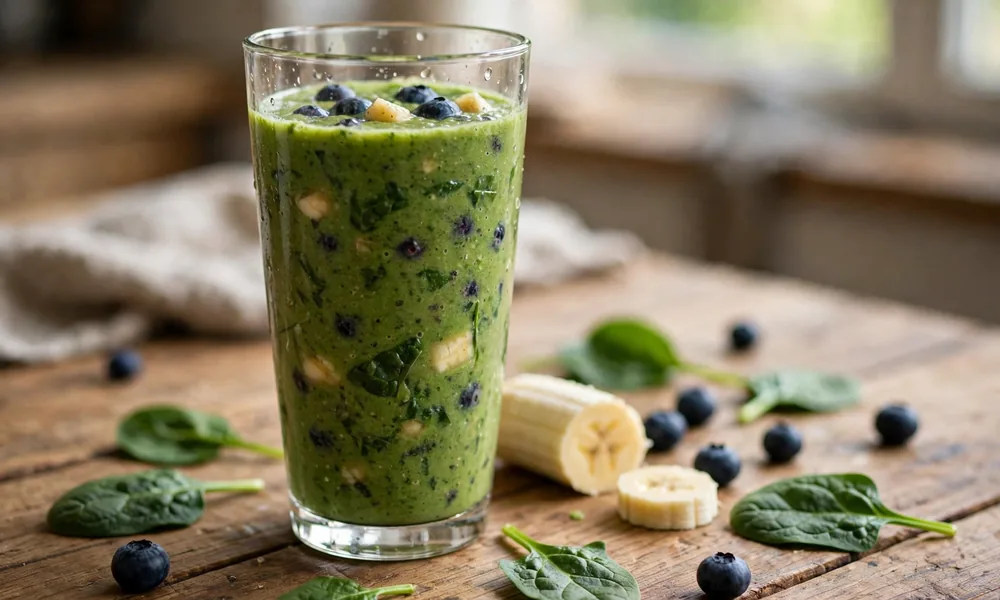
Soups and curries are the third: spinach goes into a lentil soup, a chickpea curry, or a potato soup in the last five minutes, adding colour, iron, and body. Smoothies are the fourth: a handful blends into a fruit smoothie without changing the taste. Our round-up of the best smoothies shows which combinations hide the green best. The fifth is spanakopita and frittata, where squeezed spinach with feta and eggs makes a filling that is hard to improve on.
Frozen, Fresh and Canned Spinach Compared
Fresh spinach wins on texture and looks: a fresh bunch wilts into a bright, tender side dish in two minutes, and baby spinach needs no cooking at all. Its drawback is shelf life, because fresh spinach wilts in the fridge within a few days. It is also the most expensive way to buy spinach by weight.
Frozen spinach wins on value, shelf life, and consistency: it keeps for months, costs less per serving, and is always the same quality. Canned spinach sits last: soft, salty, and grey, it is the only form most cooks should skip. Buy fresh for salads and quick sides, keep frozen for cooking, and leave the canned tin on the shelf.
Storage and Shelf Life
An unopened bag keeps for eight to twelve months in the freezer. Keep it at a steady cold temperature, seal the bag well after opening, and squeeze the air out before you put it back. Write the date on the bag and use the oldest bag first.
Once thawed, spinach should be cooked and eaten within two days, and never refrozen, because refreezing makes it soft, watery, and dull. If you thawed more than you need, cook the extra, let it cool, and freeze the cooked spinach instead, which keeps well for a month.
How Frozen Spinach Fits the Freezer
Frozen spinach makes the most sense as part of a small set of reliable frozen staples. Our guide to the best frozen vegetables covers the wider freezer aisle, and spinach is the most versatile vegetable in it. Keep one bag of chopped blocks and one bag of loose leaf in the freezer, and the fastest healthy meal in your kitchen is always four minutes away.
Frozen Spinach Buying Checklist
- Choose chopped blocks for sauces, soups, and fillings, and loose leaf for sautés and side dishes.
- Read the ingredients and pick the shortest list, ideally just spinach, with no added salt or sauce.
- Check the bag for ice clumps or a wet, sticky feel, which mean it has thawed and refrozen.
- Thaw chopped blocks fully, then squeeze them dry before they go anywhere near a pan.
- Cook loose leaf straight from frozen in a hot pan, and season only after it has wilted.
- Use thawed spinach within two days, and never refreeze it once it has thawed.
Frequently Asked Questions
Is frozen spinach as healthy as fresh spinach?
Almost exactly. Freezing locks in the iron, folate, and vitamin K within hours of harvest. A little vitamin C is lost to blanching, and plain spinach with one ingredient is the healthy choice; creamed versions carry far more salt and fat.
Do I need to thaw frozen spinach before cooking?
It depends on the format. Chopped blocks should be thawed and squeezed dry, because they hold a lot of water. Loose leaf cooks best straight from frozen in a hot pan. Never add a frozen block to a sauce, because the water will thin it.
Why does my frozen spinach always come out soggy?
Because the water was never removed: a thawed block holds almost its own weight in water. Squeeze it hard in your hands or in a clean tea towel until no more water comes out, and the sogginess disappears.
How long does frozen spinach last in the freezer?
Eight to twelve months unopened. Once opened, seal the bag well and use the oldest bag first. Thawed spinach keeps for two days in the fridge and should never be refrozen.
Can I use frozen spinach in smoothies?
Yes, and it is one of the best uses for it. A handful blends into a fruit smoothie without changing the taste, adding iron and folate to breakfast. Blend it with the liquid first for the smoothest result.
Does frozen spinach contain a lot of iron?
It contains a useful amount, though your body absorbs only part of it. Cooking reduces the oxalates that block absorption, and eating spinach with vitamin C, such as lemon juice or tomatoes, helps your body take in more iron.
The Bottom Line
The best frozen spinach in 2026 is plain chopped blocks or loose leaf with a single-ingredient label. Thaw and squeeze the blocks dry, cook the leaf fast and hot, and season at the end. Do that, and a bag that costs very little becomes the fastest route to a healthy meal in your kitchen.


